
SunGold
Hybrid Inverters for Solar Power: Everything You Need to Know
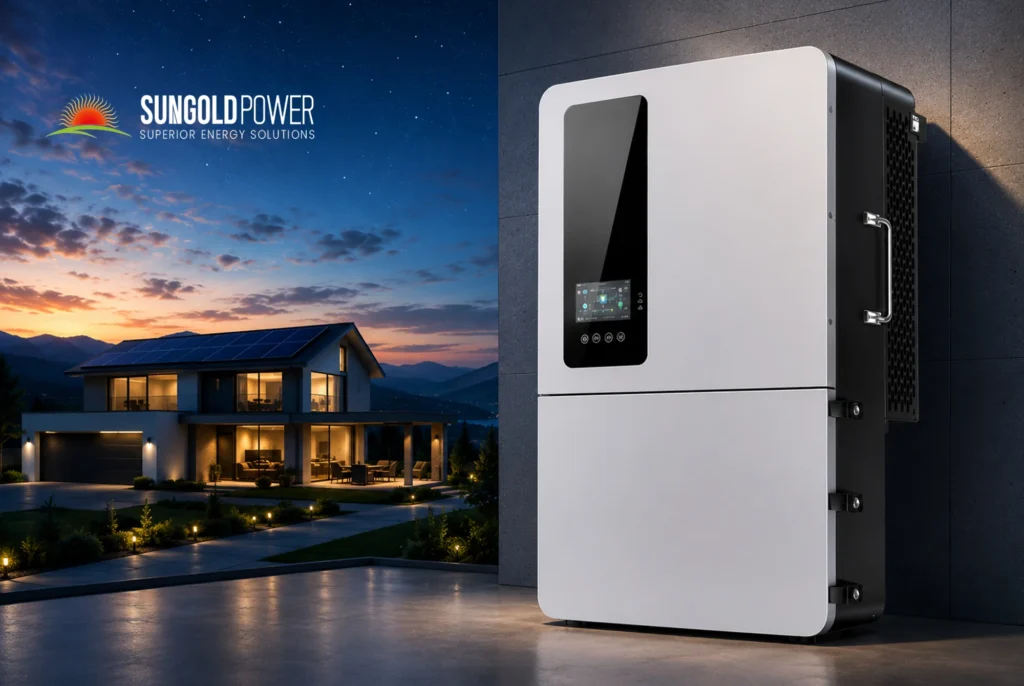
Hybrid Inverter for Solar Power: Everything You Need to Know
A hybrid inverter is the single piece of hardware that fundamentally changes what a solar system can do. Where a grid-tied inverter converts solar energy and sends it to the grid, a hybrid solar inverter adds battery storage management and grid interaction to the same unit — giving the system the ability to store energy, supply backup power during outages, and optimise how solar, battery, and grid resources are used at every hour of the day. If you are evaluating solar for a home, farm, or small business, understanding how hybrid inverters work and where they fit relative to the alternatives will determine whether the system you install actually matches what you need.
Table of Contents
- What Is a Hybrid Solar Inverter
- How a Hybrid Inverter Works — The Energy Flow
- Hybrid Inverter vs Normal Inverter — The Real Differences
- Advantages and Disadvantages of a Hybrid Inverter
- Facts About Hybrid Inverters Worth Knowing Before You Buy
- Disadvantages of Hybrid Inverters — Honest Assessment
- Smart Energy Management With Hybrid Technology
- Scalability — What It Means in Practice
- Frequently Asked Questions
What Is a Hybrid Solar Inverter
A hybrid solar inverter combines four functions that older solar systems handled with separate components: DC-to-AC power conversion from the solar array, battery charge management, battery discharge management, and grid connection management. In a single unit, it monitors what the solar panels are producing, what the household is consuming, what the battery’s current state of charge is, and whether the grid is available — then dispatches energy from the right source in the right priority at every moment.
The term “hybrid” refers specifically to the ability to operate across multiple modes: grid-connected with battery storage, off-grid on battery alone, or passing through grid power when neither solar nor battery is sufficient. What is a hybrid solar inverter in practical terms? It is the device that stops a solar installation from being dependent on the grid for every moment that the sun is not producing at full power.
How a Hybrid Inverter Works — The Energy Flow
Understanding how a hybrid solar inverter works requires following the energy through the system at different points in the day.
During daylight hours when solar production exceeds household load, the hybrid inverter powers all loads directly from the panels and simultaneously directs the surplus into the battery bank through its internal charge management circuit. When the battery reaches full charge and solar continues to produce, the inverter either exports the remainder to the grid under net metering or curtails panel output if neither battery nor grid can absorb it.
When solar production falls below the household load — during cloud cover, early morning, or late afternoon — the inverter draws from the battery to bridge the gap. Only when battery state of charge reaches the configured minimum does the inverter switch to grid power as the supplemental source.
During a grid outage, a standard grid-tied inverter disconnects immediately for safety — it cannot continue powering loads because the grid is unavailable to synchronise with. A hybrid inverter with battery storage continues powering loads from the battery bank, switching to island mode within milliseconds. The transition is fast enough that most household electronics do not register the changeover.
How does a hybrid solar inverter work when both solar and grid are unavailable simultaneously? It draws from the battery bank alone until battery state of charge reaches the minimum threshold, then sheds non-critical loads according to the priority programming set during installation.
Hybrid Inverter vs Normal Inverter — The Real Differences
The hybrid inverter vs normal inverter comparison comes down to what happens when the grid fails and what happens to solar energy that exceeds load.
| Feature | Grid-Tied Inverter | Hybrid Inverter |
|---|---|---|
| Battery storage | No | Yes — built-in management |
| Grid outage behaviour | Disconnects immediately | Continues on battery |
| Excess solar handling | Exports to grid | Charges battery first, then exports |
| Off-grid capability | None | Full, with adequate battery |
| Energy management | Basic | Active priority-based dispatch |
| System complexity | Lower | Higher |
| Upfront cost | Lower | Higher |
A grid-tied inverter is the correct choice when the grid is reliable, net metering compensation is favourable, and backup power is not a priority. The economics of grid-tied are straightforward — export excess, import shortfalls, pay the difference. A hybrid inverter justifies its higher cost when grid reliability is poor, when time-of-use tariffs make battery storage financially advantageous, or when backup power for critical loads is genuinely required.
Advantages and Disadvantages of a Hybrid Inverter
The advantages and disadvantages of a hybrid inverter are both real, and understanding them before specifying a system prevents expensive mismatches between equipment capability and actual requirements.
Advantages:
- Backup power without a generator. Battery storage managed by the hybrid inverter keeps critical loads running through grid outages without fuel, noise, or manual intervention.
- Energy independence from the grid. With adequate solar array and battery bank, a hybrid system can supply the majority of a household’s energy from its own resources across most of the year.
- Time-of-use optimisation. In regions with time-of-use electricity pricing, the hybrid inverter can be programmed to charge the battery during low-rate periods and dispatch stored energy during peak-rate periods, reducing the bill at the grid’s most expensive hours.
- Single unit for multiple functions. Battery management, charge control, solar conversion, and grid interaction in one device reduces installation complexity compared to assembling separate components.
- Scalability. Most modern hybrid inverters support parallel operation — multiple units connected together to increase total output capacity as energy demands grow.
Disadvantages of a hybrid inverter:
- Higher upfront cost. A hybrid inverter with compatible battery storage costs significantly more than a simple grid-tied system. The payback period depends entirely on electricity prices, grid reliability, and how extensively the backup and time-of-use features are used.
- Installation complexity. The battery integration, BMS communication, and mode switching parameters require more careful commissioning than a grid-tied system with no storage.
- Battery replacement over system life. The battery bank has a finite service life — typically 10–15 years for LiFePO4 — and will require replacement during the hybrid inverter’s 15–20 year operational life.
- Requires compatible battery technology. Not all hybrid inverters support all battery chemistries or brands — confirming BMS communication compatibility before purchasing is a non-negotiable step.
Facts About Hybrid Inverters Worth Knowing Before You Buy
Facts about hybrid inverters that marketing materials rarely emphasise directly:
- The inverter is not the limiting factor in most systems — the battery is. A 12kW hybrid inverter paired with a small battery bank will run out of backup capacity within hours under real residential loads. Size the battery bank first based on your actual backup requirement, then size the inverter to match.
- Grid export in island mode is not possible. When the grid is down and the inverter is operating in island mode from battery, there is nowhere to export excess solar production — the inverter manages this by reducing panel input.
- 97%–99% conversion efficiency means something specific. The difference between a 97% efficient and a 99% efficient inverter in a 10kW system represents approximately 200W of continuous loss — compounding to roughly 175kWh of wasted energy per year.
- Parallel scalability has limits. Most hybrid inverters support 4–6 units in parallel. Beyond that, a different system architecture is required. Confirm the specific parallel limit and the wiring configuration requirements before planning an expansion.
- MPPT input capacity and inverter output rating are different numbers. A hybrid inverter rated at 12kW output may accept 18kW of solar input — the oversized PV input is intentional, allowing maximum solar capture under real-world conditions where irradiance is rarely at peak.
Disadvantages of Hybrid Inverters — Honest Assessment
The disadvantages of hybrid inverters deserve direct treatment rather than a single sentence buried in a feature comparison.
The most significant practical disadvantage is the cost of the battery storage that makes the hybrid inverter’s key features — backup power and energy arbitrage — actually useful. A hybrid inverter without adequate battery storage is, in operation, barely distinguishable from a grid-tied inverter. The backup power duration is the battery’s contribution, not the inverter’s. For a household in a region with reliable grid power and flat-rate electricity pricing, the additional cost of hybrid plus battery over a simple grid-tied system may take 12–18 years to recover through operational savings.
The second meaningful disadvantage is that hybrid inverters require more ongoing attention than grid-tied systems. Battery state of health monitoring, BMS firmware updates, and periodic verification of charge and discharge parameters are maintenance tasks that a grid-tied installation simply does not involve. For buyers who want a solar system they can forget about, the lower complexity of a grid-tied installation may be the right choice.
Smart Energy Management With Hybrid Technology
The smart energy management capability of a hybrid inverter is what separates it from simply adding a battery to a grid-tied system. A hybrid inverter’s internal energy management system continuously reads solar production, household consumption, battery state of charge, and grid availability — then dispatches energy in the programmed priority sequence without user intervention.
The SunGoldPower 12kW 48V all-in-one hybrid inverter implements this as a configurable priority stack: solar first, battery second, grid third. Users can adjust the minimum battery state of charge before grid import activates, the maximum battery charge current from the grid, and the target state of charge for different time periods. Real-time monitoring through WiFi shows daily energy output, consumption, and battery status.
Scalability — What It Means in Practice
A single 12kW hybrid inverter handles most residential loads comfortably. But energy needs grow — EV charging, additional HVAC zones, workshop equipment, and household expansion all increase the daily energy budget over the life of a solar system.
The SunGoldPower 12kW unit supports parallel connection of multiple units, scaling total output to 72kW across six units without replacing the original inverter or battery infrastructure. This is the specification that matters for long-term planning: the initial investment in a hybrid system becomes the foundation of a larger system rather than a component that gets replaced when requirements exceed its rating.
Browse our full Hybrid Solar Inverters, Off-Grid Solar Kits, and Solar Battery Storage collections for complete system options.
Frequently Asked Questions
Q: What is a hybrid solar inverter? A hybrid solar inverter combines solar energy conversion, battery charge and discharge management, and grid connection management in a single unit. It can supply loads from solar, battery, and grid sources simultaneously, switching between them automatically based on programmed priority settings and real-time energy availability.
Q: How does a hybrid inverter work during a power outage? When the grid goes down, a hybrid inverter with battery storage switches to island mode within milliseconds, continuing to supply household loads from the battery bank. The transition is fast enough that most electronics do not register the changeover. The duration of backup depends entirely on battery capacity and household load.
Q: What are the main disadvantages of a hybrid inverter? The main disadvantages of a hybrid inverter are the higher upfront cost compared to grid-tied systems, the additional cost and finite service life of the required battery storage, the more complex installation and commissioning process, and the ongoing battery management attention the system requires. Whether these disadvantages are outweighed by the backup power, time-of-use, and energy independence benefits depends on local electricity prices, grid reliability, and specific household requirements.
Q: Hybrid inverter vs normal inverter — when does hybrid make financial sense? Hybrid inverter vs normal inverter economics favour hybrid when grid outages are frequent and backup power is genuinely required, when time-of-use electricity pricing makes daily battery arbitrage worthwhile, or when energy independence from the grid is a stated priority. In regions with reliable grids and flat-rate pricing, the simpler grid-tied system often recovers its cost faster.
Q: How hybrid solar inverter works with different battery types? How hybrid solar inverter works with batteries depends on BMS communication compatibility. Most quality hybrid inverters support LiFePO4 and other lithium-ion chemistries through CAN Bus or RS485 communication protocols. Lead-acid compatibility is also common. Always confirm the specific battery model’s communication protocol against the inverter’s supported protocol list before purchasing — incompatible BMS communication forces the inverter to operate on fixed voltage-based parameters rather than actual battery state data.