
SunGold
Off Grid Home Kits: Build Your Dream Eco-Friendly Home
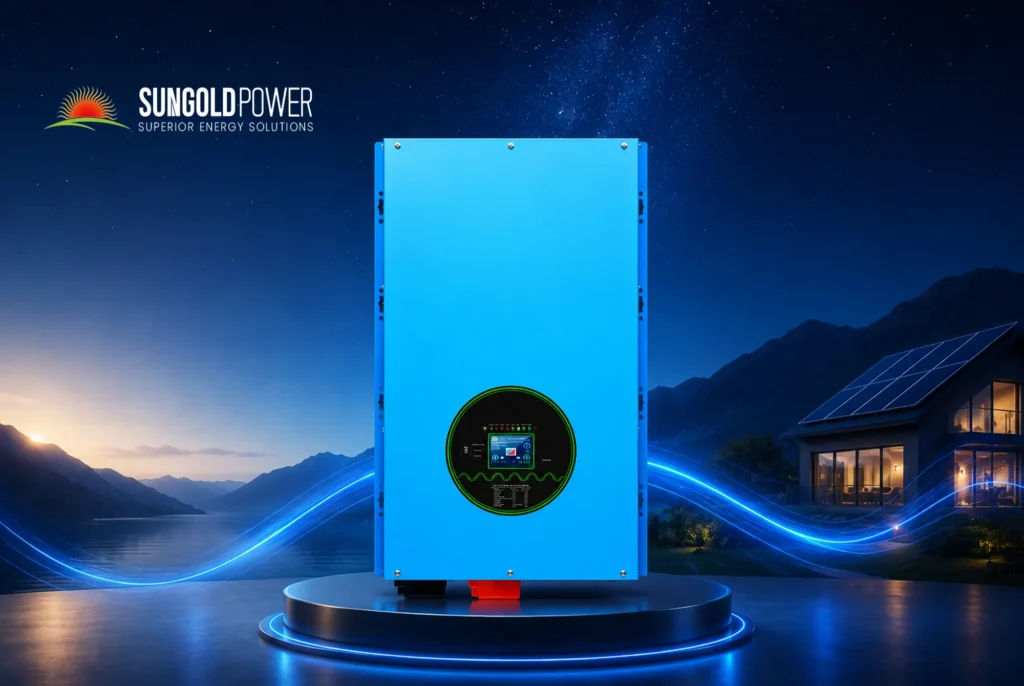
Off Grid Home Kits: The Complete Guide to Solar-Powered Energy Independence
Off grid home kits are the starting point for anyone building or converting a home to run entirely on self-generated solar power. A properly specified kit brings together the panels, batteries, inverter, wiring, and mounting hardware into a matched system that works as a whole rather than requiring the buyer to source and verify compatibility between individual components. For homes, cabins, farms, and small businesses in locations where grid access is unavailable, unreliable, or simply unwanted, the right off-grid solar system turns energy independence from a concept into a working infrastructure.
This guide covers what off-grid home kits include, how they work, what distinguishes a good off-grid solar system from a marginal one, and the considerations that determine which system size and configuration is right for a specific property.
Table of Contents
- What Off Grid Home Kits Include — and Why the Package Matters
- How an Off-Grid Solar System Generates and Stores Power
- Off Grid Home Kits For Sale — What to Look For
- Best Off Grid Home Kits — How to Evaluate Them Honestly
- The Role of Lithium Batteries in Modern Off-Grid Systems
- Sustainable Home Design and Off-Grid Living
- Scalability — Growing the System as Needs Change
- Frequently Asked Questions
What Off Grid Home Kits Include — and Why the Package Matters
A complete off-grid solar kit contains every major system component in a matched and pre-specified configuration. The core components in a quality kit are:
- Solar panels — the array that generates DC electricity from sunlight. Panel wattage, quantity, and total array size determine daily energy production.
- Lithium battery bank — stores the energy generated during daylight for use during the night and during overcast periods. Capacity determines how many hours of autonomy the system provides without solar input.
- Split-phase inverter — converts the battery’s DC power to 120V/240V AC for all household loads. Output rating determines what loads can run simultaneously without exceeding the inverter’s capacity.
- MPPT charge controller — in systems where the charge controller is separate from the inverter, it optimises solar harvest and manages the battery charging profile.
- Mounting hardware and wiring — brackets for panels, cables for array-to-inverter runs, and DC protection hardware.
The reason a kit format matters over buying components separately is compatibility. Every component in a system has to work within the electrical parameters of every other component — panel string voltage within the inverter’s MPPT range, battery voltage matching the inverter’s DC input, charge current within the battery’s maximum charge rate. A pre-specified kit eliminates the engineering work of verifying these parameters independently.
Sungoldpower’s complete off-grid kits include 12–18kW split-phase inverters, LiFePO4 lithium battery banks from 20.48kWh to 51.2kWh, and solar panel arrays from 12 to 36 panels — all matched at the factory. Systems at 13kW split-phase output produce approximately 17.7kWh per day under standard conditions — sufficient for average residential loads including air conditioning, well pumps, refrigerators, and workshop equipment running simultaneously.
How an Off-Grid Solar System Generates and Stores Power
The energy cycle in an off-grid solar system follows a consistent sequence that repeats every day regardless of load or weather conditions.
During daylight, panels generate DC electricity proportional to the irradiance they receive. The MPPT charge controller — whether standalone or integrated into the inverter — continuously tracks the maximum power point of the array and routes that power to the battery bank while simultaneously powering household loads directly from solar. On a fully sunny day with adequate panel capacity, the battery reaches full charge before noon, and the system runs all loads from solar for the remainder of the daylight period.
After dark or when clouds reduce solar production below the household load, the inverter draws from the battery bank. The battery discharges at the rate required to supply the load, and the inverter maintains a stable 120V/240V output to all circuits throughout. This cycle continues until either solar production resumes or the battery reaches its minimum state of charge threshold — at which point the system alerts the owner and sheds non-critical loads according to the priority programming.
A generator connection — supported by most quality off-grid inverters — provides a backup charging source for extended low-sun periods, activating automatically when battery state of charge falls below a configurable threshold.
Off Grid Home Kits For Sale — What to Look For
Off grid home kits for sale vary enormously in quality, and the differences are not always visible in the marketing specifications. These are the factors that separate a system that performs reliably for fifteen years from one that requires expensive repairs within three:
- Battery chemistry. LiFePO4 (Lithium Iron Phosphate) is the only lithium chemistry that delivers the combination of cycle life — 4,000–7,000 cycles — thermal stability, and depth of discharge that off-grid systems demand. Lead-acid alternatives deliver 300–500 cycles at deep discharge levels and require regular maintenance.
- Inverter certification. UL 1741, IEC 62109, and equivalent certifications confirm that the inverter has been independently tested for safety and performance. Uncertified inverters may perform adequately in normal operation but behave unpredictably under fault conditions.
- Inverter output type. Split-phase 120/240V output is required for properties with 240V loads — well pumps, HVAC compressors, electric water heaters. A 120V-only inverter cannot power these loads without additional phase conversion hardware.
- MPPT input headroom. The best off grid home kits use inverters whose maximum PV input capacity exceeds the included panel array by 25–50%. This headroom ensures the system reaches rated output under real-world irradiance conditions, not only at laboratory peak values.
- Parallel scalability. A system that supports 4–6 inverters in parallel is a long-term investment — it grows with the property without requiring architecture replacement.
Best Off Grid Home Kits — How to Evaluate Them Honestly
The best off grid home kits are not necessarily the largest or the most expensive. They are the kits that are correctly sized for the actual daily energy budget of the specific property, with battery capacity that provides meaningful autonomy through the lowest-production days of the year, and with enough inverter capacity to handle peak simultaneous loads without shedding.
A simple sizing framework:
- Calculate the property’s actual daily energy consumption from 12 months of electricity bills or from a load audit — listing every appliance, its wattage, and its daily operating hours.
- Add 20–25% to the daily consumption total to account for inverter efficiency losses, battery round-trip losses, and wiring losses.
- Divide the total by the peak sun hours for the installation location — typically 4–6 hours for most of the continental US.
- The result is the minimum solar array size in kilowatts.
- Size the battery bank to cover 1–2 days of consumption without solar input — the autonomy buffer that carries the system through consecutive overcast days without generator backup.
The Role of Lithium Batteries in Modern Off-Grid Systems
The shift from lead-acid to LiFePO4 lithium batteries is the single development that has made serious off-grid living practical at residential scale. Lead-acid batteries discharge to approximately 50% depth of discharge before accelerated degradation begins. LiFePO4 cells routinely cycle to 80–100% depth of discharge for thousands of cycles without meaningful capacity loss.
In practical terms, a 20kWh LiFePO4 battery bank delivers 16kWh of accessible energy per cycle at 80% depth of discharge. A lead-acid bank nominally rated at 20kWh delivers approximately 10kWh at the same daily cycling depth before its cycle life is significantly compromised. The LiFePO4 bank effectively delivers 60% more usable energy from the same nominal capacity — reducing the total battery bank size required to meet a given autonomy target.
The trade-off is upfront cost. LiFePO4 batteries cost more per kWh of installed capacity than lead-acid. Over the system life, however, the LiFePO4 bank requires no replacement within its 10–15 year warranty period, while a lead-acid bank cycling daily at 50% depth of discharge typically requires replacement every 3–5 years. The total cost of ownership over fifteen years consistently favours LiFePO4 for off-grid solar applications.
Sustainable Home Design and Off-Grid Living
An off-grid solar system is most effective when the home itself is designed to minimise energy demand. Lower consumption means smaller panels, smaller batteries, and lower system cost — or equivalent panels and batteries providing longer autonomy for the same budget.
The most impactful measures for energy-efficient off-grid home design:
- Insulation and air sealing — the single largest variable in heating and cooling energy demand. A well-insulated home consumes 50–70% less HVAC energy than a poorly insulated equivalent, directly reducing the battery bank and panel array required.
- Energy-efficient appliances — LED lighting, ENERGY STAR refrigerators, heat pump water heaters, and inverter-based HVAC systems reduce daily load significantly compared to standard-efficiency alternatives.
- Natural light and ventilation — larger south-facing windows reduce lighting energy demand during daylight hours, and cross-ventilation reduces cooling demand in moderate climates.
- Material selection — low-VOC materials, sustainable construction products, and locally sourced materials reduce the embedded carbon of the building without affecting its energy performance.
These design elements complement the off-grid solar system rather than replacing it — a well-insulated, efficient home paired with a properly sized off-grid kit is more resilient and less expensive to operate than either component alone.
Browse our full Off-Grid Solar Kits, Solar Battery Storage, and Off-Grid Solar Systems collections for complete system options.
Scalability — Growing the System as Needs Change
An off-grid system installed today needs to serve the property’s energy requirements ten years from now — which means EV charging, additional appliances, workshop expansion, or additional occupants may all need to be accommodated by the same inverter infrastructure.
Modern off-grid inverter platforms address this through parallel scalability. Sungoldpower’s 6.5kW and 13kW inverters support up to six units in parallel — single-phase, split-phase, or three-phase depending on installation requirements. A property that starts with one 13kW inverter and a 20kWh battery bank can expand to three inverters at 39kW and multiple battery banks at 60kWh without replacing any existing equipment.
Battery expansion is equally straightforward. Server rack LiFePO4 batteries designed for off-grid systems support up to 32 units in parallel — scaling from 5.12kWh per unit to 163.84kWh in the same architecture. Adding capacity requires connecting additional matched units to the existing busbar with equal-length cables.
Frequently Asked Questions
Q: What is included in a typical off grid home kit? A complete off grid home kit includes solar panels, a lithium battery bank, a split-phase inverter, mounting brackets, DC protection hardware, and wiring cables. Quality kits include all components matched to work together within each other’s electrical parameters — eliminating the compatibility verification that individual component sourcing requires.
Q: What are the best off grid home kits for a full-time residence? The best off grid home kits for a full-time residence are correctly sized for the property’s actual daily consumption — typically 10kWh–30kWh per day for a moderately efficient US household. A 13kW–15kW split-phase inverter, 20kWh–30kWh of LiFePO4 battery storage, and a 12–20 panel solar array covers most average residences. Higher consumption properties — with HVAC, EV charging, and workshop loads — require 15kW–20kW inverter capacity and 30kWh or more of battery storage.
Q: What is an off-grid solar system and how does it differ from grid-tied? An off-grid solar system generates electricity from solar panels, stores it in batteries, and supplies it to household loads entirely independently of the utility grid. A grid-tied system connects to the grid and exports excess production — but cannot supply power during grid outages without battery storage. Off-grid systems provide complete energy independence regardless of grid status, at the cost of higher upfront investment in battery storage.
Q: How much battery storage does an off-grid home need? A residential off-grid system typically needs 1–2 days of consumption autonomy in battery storage — the reserve that carries the system through consecutive low-production days without generator backup. For a house consuming 20kWh per day, this means 20kWh–40kWh of usable battery capacity, which at 80% depth of discharge requires 25kWh–50kWh of nominal LiFePO4 capacity.
Q: What is an off-grid cabin for sale, and how does solar power factor in? An off-grid cabin for sale is a property that operates independently of utility infrastructure — including electricity, water, and waste management. From a solar perspective, these properties require a completely self-contained power system. A well-specified off grid home kit provides everything needed to power a cabin’s electrical loads, with the battery bank sized for the cabin’s typical occupancy patterns — smaller systems for weekend use, larger banks for full-time occupation.