
SunGold
How to Choose the Best Solar Power Hybrid Inverter for Your Home
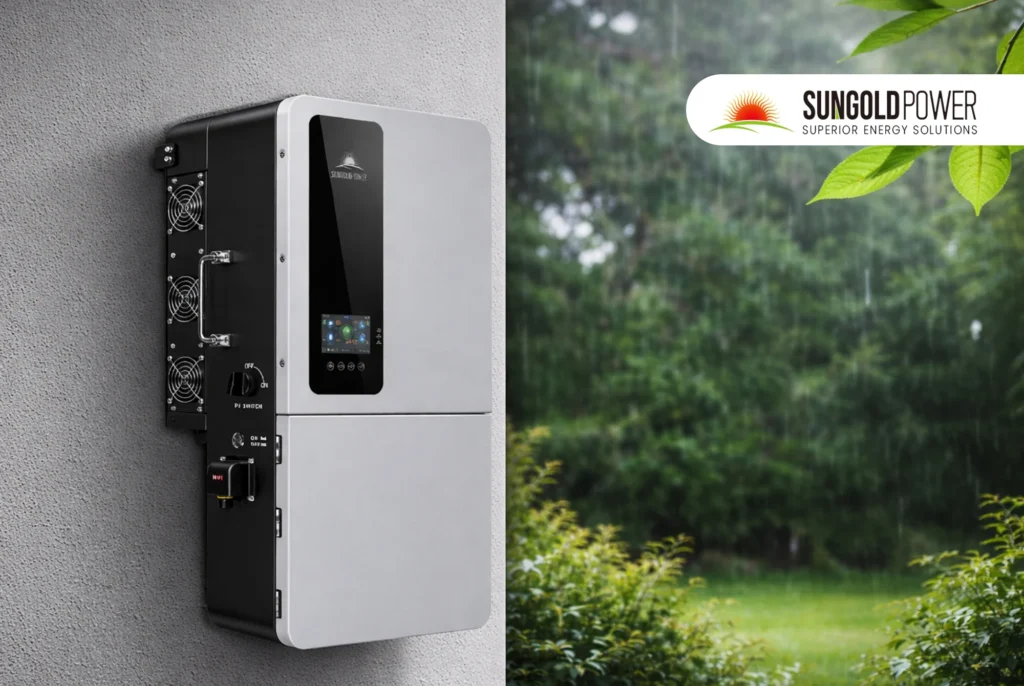
How to Choose the Best Solar Power Hybrid Inverter for Your Home
The best solar power hybrid inverter for home use is not simply the most powerful or the most heavily marketed option — it is the one sized correctly for your actual load, compatible with your battery bank, certified to the relevant safety standards, and backed by a warranty that reflects the manufacturer’s confidence in the product. This guide covers every evaluation criterion that separates a genuinely good hybrid inverter specification from one that sounds impressive on paper but creates operational problems within three years.
Table of Contents
- What a Solar Power Hybrid Inverter Does — and Does Not Do
- How to Choose Solar Power Hybrid Inverter Size
- Conversion Efficiency — What the Numbers Actually Mean
- Battery Compatibility — The Specification That Determines System Longevity
- Grid Interactivity — Net Metering, Export, and Grid-Tied Function
- Safety Certifications for Hybrid Inverters
- Warranty and Long-Term Reliability
- Best Hybrid Inverter for Home — SunGoldPower as a Reference Point
- Frequently Asked Questions
What a Solar Power Hybrid Inverter Does — and Does Not Do
A solar power hybrid inverter manages the energy flow between three sources — the solar array, the battery bank, and the utility grid — and dispatches power to household loads in a configured priority sequence. What it does not do is generate energy. An undersized solar array, an undersized battery bank, or poor system design produces a poor-performing system regardless of how good the inverter is.
Understanding this upfront prevents the most common hybrid inverter purchase mistake: buying the inverter first and then trying to build the rest of the system around it. The correct approach starts with the load — what the household consumes daily, what the peak simultaneous demand is, and how many hours of backup power are required. Those three numbers determine the solar array size, the battery bank size, and the inverter rating that fits the application.
A hybrid inverter vs normal inverter comparison makes this clearer. A normal grid-tied inverter is sized to the array and exports excess to the grid — it is not designed to serve as a backup power source or manage a battery bank. A hybrid inverter is sized to both the array and the load, because it must handle power in both directions at potentially different times of day.
How to Choose Solar Power Hybrid Inverter Size
Sizing the inverter begins with the load — specifically, the peak simultaneous demand that the inverter must supply without distress. This is not the average load but the instantaneous maximum: the combination of appliances that might all be running at the same time during a normal day.
For a typical US household, peak simultaneous demand reaches 8kW–15kW when HVAC, kitchen appliances, laundry, and general loads overlap. A 12kW hybrid inverter handles this comfortably. A 5kW unit would require load management to avoid overload — acceptable for some buyers, inconvenient for others.
Beyond the continuous rating, check the surge capacity. Motor loads — air conditioners, well pumps, refrigerators — draw 3–6 times their running current for the first few seconds of startup. A 12kW inverter with 24kW of surge capacity (2× rated) handles the startup of a 5-ton HVAC compressor without tripping, while a 12kW inverter with only 1.5× surge may not.
The standard guidance for sizing a best hybrid inverter for home use is to size the inverter at 20–30% above the peak simultaneous load — providing headroom for growth, motor inrush, and load diversity without running the inverter at the edge of its continuous rating for extended periods.
For household sizes and expected loads:
| Household Type | Typical Peak Demand | Recommended Inverter Size |
|---|---|---|
| Small home, minimal AC | 5kW–8kW | 8kW–10kW |
| Medium home, central AC | 8kW–12kW | 12kW–15kW |
| Large home, multiple AC zones | 12kW–18kW | 15kW–20kW |
| Small commercial | 15kW–30kW | 2–3 units in parallel |
Conversion Efficiency — What the Numbers Actually Mean
Quality hybrid inverters convert DC power from the battery or solar panels to AC power at 97%–99% efficiency. The difference between 97% and 99% sounds small but compounds significantly across a decade of operation.
In a 12kW system operating at an average of 6kW of load output for 10 hours per day, a 2% efficiency difference represents 120Wh per day — 43.8kWh per year — multiplied by 20 years equals 876kWh of energy that one inverter wastes and the other delivers. At a modest energy value of $0.15/kWh, that represents $131 in wasted energy over 20 years in this example. In larger systems and higher-rate electricity markets, the financial impact is proportionally greater.
What matters more than the published efficiency peak is the efficiency curve across the range of real operating loads. Most inverters publish their peak efficiency at a specific load percentage — often 20–30% of rated output. At 50% rated load and at 100% rated load, efficiency typically drops. The European weighted efficiency standard (EU Eta) averages efficiency across multiple load points and is a more meaningful comparison metric than peak efficiency alone.
Battery Compatibility — The Specification That Determines System Longevity
The interaction between the hybrid inverter and the battery bank’s BMS (Battery Management System) is the specification that most significantly affects how well the system performs across its service life. When BMS communication is active — through CAN Bus or RS485 protocols — the inverter receives real-time state-of-charge data, current limits, and cell-level alarm status directly from the battery. It adjusts charging and discharging parameters in response to actual battery condition rather than operating on fixed voltage-based estimates.
Without BMS communication, the inverter charges the battery to a fixed voltage threshold regardless of whether the battery’s cells are balanced. This can result in chronic slight overcharge or slight undercharge — both of which accelerate capacity fade over hundreds of cycles. Over a 10-year battery service life, the cumulative effect of poorly managed charging is a battery that reaches end of life significantly earlier than its rated cycle count.
Before purchasing a best hybrid inverter 2026 candidate, confirm:
- Which battery communication protocols the inverter supports — CAN Bus and RS485 are the most common.
- Whether the specific battery model you plan to use is on the inverter’s confirmed compatibility list.
- Whether the inverter allows battery parameter customisation — upper charge voltage, lower discharge voltage, charge current limit — for lithium chemistries that specify values outside the inverter’s default lithium profile.
Allow battery upgrades later should be a design requirement, not an afterthought. An inverter that only supports one battery brand or chemistry is a system limitation that constrains future upgrades.
Grid Interactivity — Net Metering, Export, and Grid-Tied Function
A hybrid inverter’s grid interface determines whether the system can participate in net-metering programmes that credit exported solar energy against the electricity bill. Most quality hybrid inverters include a grid-tied function that exports excess solar and battery-charged energy to the grid when configured to do so.
The priority stack in a well-configured hybrid system operates as follows:
- Solar powers loads directly during daylight production.
- Surplus solar charges the battery bank.
- When the battery is full and solar continues producing, excess is exported to the grid.
- When solar and battery are both insufficient, the grid supplies the shortfall.
- During a grid outage, the inverter disconnects from the grid and operates in island mode from battery.
This sequencing maximises self-consumption of solar energy, minimises grid import, and maximises the value of net metering where available. A grid tied inverter in a purely grid-tied system cannot offer island mode operation — the hybrid’s additional capability is the battery management and island mode functionality that grid-tied designs omit.
Safety Certifications for Hybrid Inverters
An inverter at 120V/240V AC output with battery management and grid interconnection handles multiple high-energy electrical interfaces simultaneously. Safety certification by independent testing organisations is not optional for a responsible home installation — it is the mechanism that confirms the inverter behaves safely under fault conditions that the manufacturer designed for, as well as under conditions they did not anticipate.
Key certifications to verify:
- UL 1741 — the primary North American standard for inverters used in distributed energy systems. Mandatory for grid interconnection in most US jurisdictions.
- UL 1741SA or SB — advanced smart inverter functions required in California and Hawaii. If the installation is in a state with Rule 21 or equivalent requirements, verify which UL 1741 variant is required before purchasing.
- IEEE 1547 — grid interconnection standard for distributed energy resources. Required alongside UL 1741 in many interconnection agreements.
- FCC Part 15 Class B — RF emissions compliance for residential electronic equipment.
A certified grid tied power inverter or hybrid protects against the electrical fault scenarios that uncertified equipment may not safely handle — arc faults, anti-islanding failures, battery overvoltage events, and ground faults being the most consequential.
Warranty and Long-Term Reliability
A hybrid inverter is a 15–20 year investment. The warranty covering it should reflect that. A minimum 10-year warranty on the inverter itself — not just 2–3 years on parts — is the benchmark for investment-grade equipment. A manufacturer offering 10 years is demonstrating confidence in the product’s durability; one offering 2 years is transferring the risk of early failure to the buyer.
What the warranty should cover:
- The inverter unit itself for at least 10 years.
- Replacement or repair for component failures, not just defects.
- Access to technical support for commissioning and fault diagnosis during the warranty period.
Premium best hybrid inverter brand manufacturers support their warranties with genuine spare parts availability throughout the warranty period — not just a promise to replace units that may be discontinued within a few years of purchase.
Best Hybrid Inverter for Home — SunGoldPower as a Reference Point
The SunGoldPower 12kW 48V all-in-one hybrid inverter is a reference point for what a quality residential hybrid system looks like. It supports both grid-connected and off-grid applications, achieves high conversion efficiency, communicates with modern lithium battery BMS via standard protocols, and operates in single-phase, split-phase, and three-phase configurations.
The best best 3 phase hybrid inverter or split-phase configuration for a given home depends on the load profile — properties with significant 240V loads need split-phase or three-phase capability, while simpler homes with predominantly 120V loads can function with single-phase output. Confirming the home’s electrical panel configuration and the 240V load requirement is a pre-purchase step that determines which inverter configuration is appropriate.
Browse our full Hybrid Solar Inverters, Off-Grid Solar Systems, and Solar Battery Storage for compatible components and complete system options.
Frequently Asked Questions
Q: What is the best solar power hybrid inverter for home use in 2026? The best solar power hybrid inverter for home in 2026 is correctly sized to the home’s peak simultaneous demand — typically 10kW–15kW for a medium to large residence — with UL 1741 certification, CAN Bus or RS485 battery BMS communication, split-phase 120/240V output for 240V load compatibility, and at least a 10-year manufacturer warranty. SunGoldPower’s 12kW 48V all-in-one unit meets all these criteria for most residential applications.
Q: What is the best hybrid inverter brand for long-term reliability? A best hybrid inverter brand demonstrates reliability through independent safety certification (UL 1741 minimum), published and verifiable efficiency ratings, documented battery compatibility across multiple BMS protocols, a 10-year warranty, and accessible technical support. Brand reputation alone is not sufficient — verify the certifications and warranty terms directly from the product documentation.
Q: How does a hybrid inverter differ from a grid tied power inverter? A grid tied power inverter converts solar DC to AC and synchronises with the grid for net metering — it shuts down automatically during grid outages. A hybrid inverter adds battery management and island mode capability, allowing the system to continue supplying loads from battery during outages. The hybrid is a superset of grid-tied functionality with the added capability of battery storage management.
Q: What does conversion efficiency mean for a hybrid inverter? Conversion efficiency is the percentage of input DC power that emerges as usable AC output. A 99% efficient 12kW inverter wastes 120W as heat and delivers 11,880W. A 97% efficient unit wastes 360W — an additional 240W of continuous loss. Over a 20-year system life at 10kWh daily throughput, that 2% gap represents approximately 730kWh of cumulative wasted energy.
Q: How to choose solar power hybrid inverter battery compatibility? Confirm that the inverter’s supported communication protocols — CAN Bus and RS485 are standard — match the battery BMS communication interface. Then verify the specific battery model against the inverter manufacturer’s confirmed compatibility list. If the battery is not on the list, contact both manufacturers to confirm whether integration is possible with firmware or parameter adjustment, rather than assuming compatibility from voltage and chemistry matching alone.