
What Are the Best Solar Panels — Hybrid 11.4kW 51.2kWh Kit
What are the best solar panels for a hybrid solar system that operates off-grid, on-grid and everything in between? The SGH-11N5E answers with 36 × 450W Bifacial N-Type monocrystalline panels — 16,200W of total solar generation capacity — paired with two 11.4kW 48V split-phase hybrid inverters and 51.2kWh of LiFePO4 battery storage. Unlike pure off-grid kits, this hybrid system supports three distinct operating modes: off-grid independence, hybrid grid-tied operation with energy storage and pure grid-tie operation with optional backup. The result is the most versatile solar electric house system in this range — a residential energy platform that adapts to grid availability, energy pricing and consumption profiles across every condition.
Table of Contents
- Kit Contents by Configuration
- System Specifications
- Three Operating Modes — The Hybrid Advantage
- 36×450W Bifacial N-Type Panels
- 51.2kWh LiFePO4 Battery Storage
- Who Makes the Best Solar Panels for Hybrid Systems
- Hybrid vs Off-Grid — Choosing the Right Architecture
- FAQ
Kit Contents by Configuration
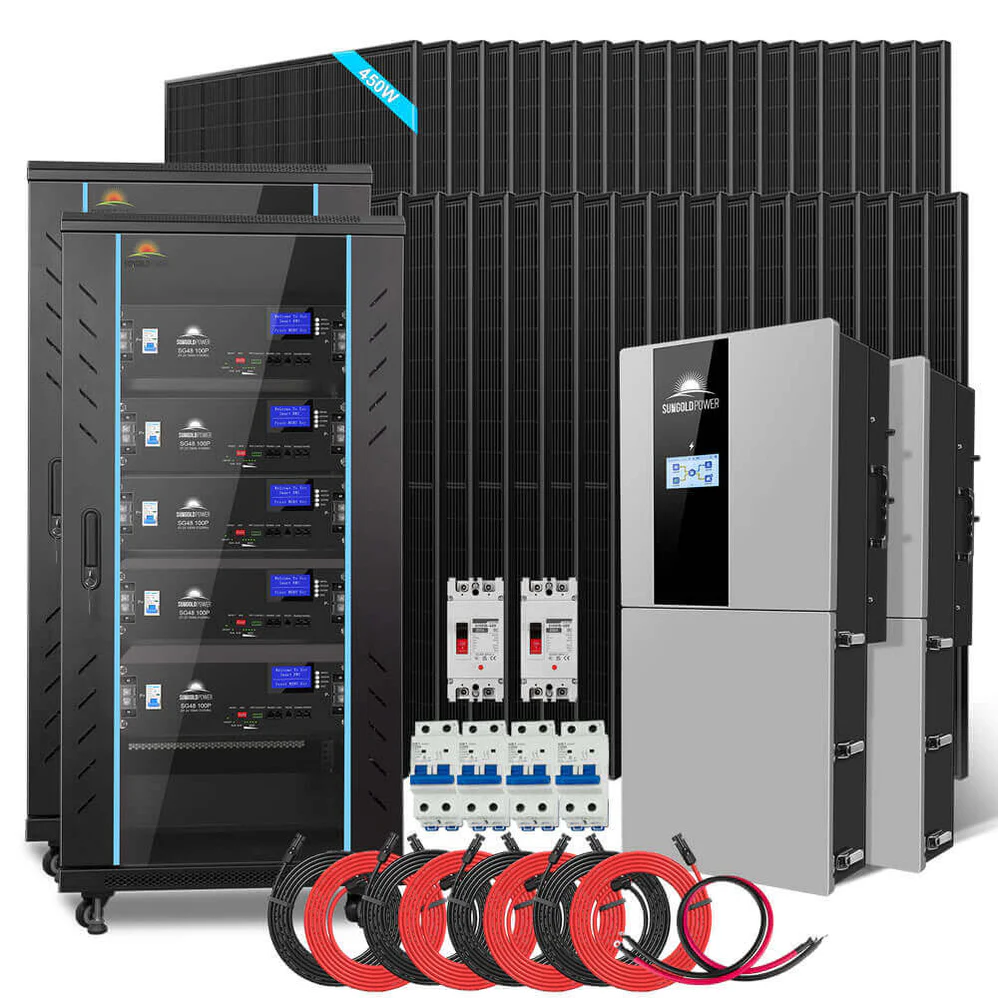
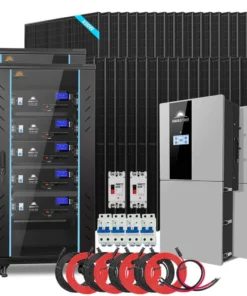
SGH-11N5E (Full Kit with Panels):
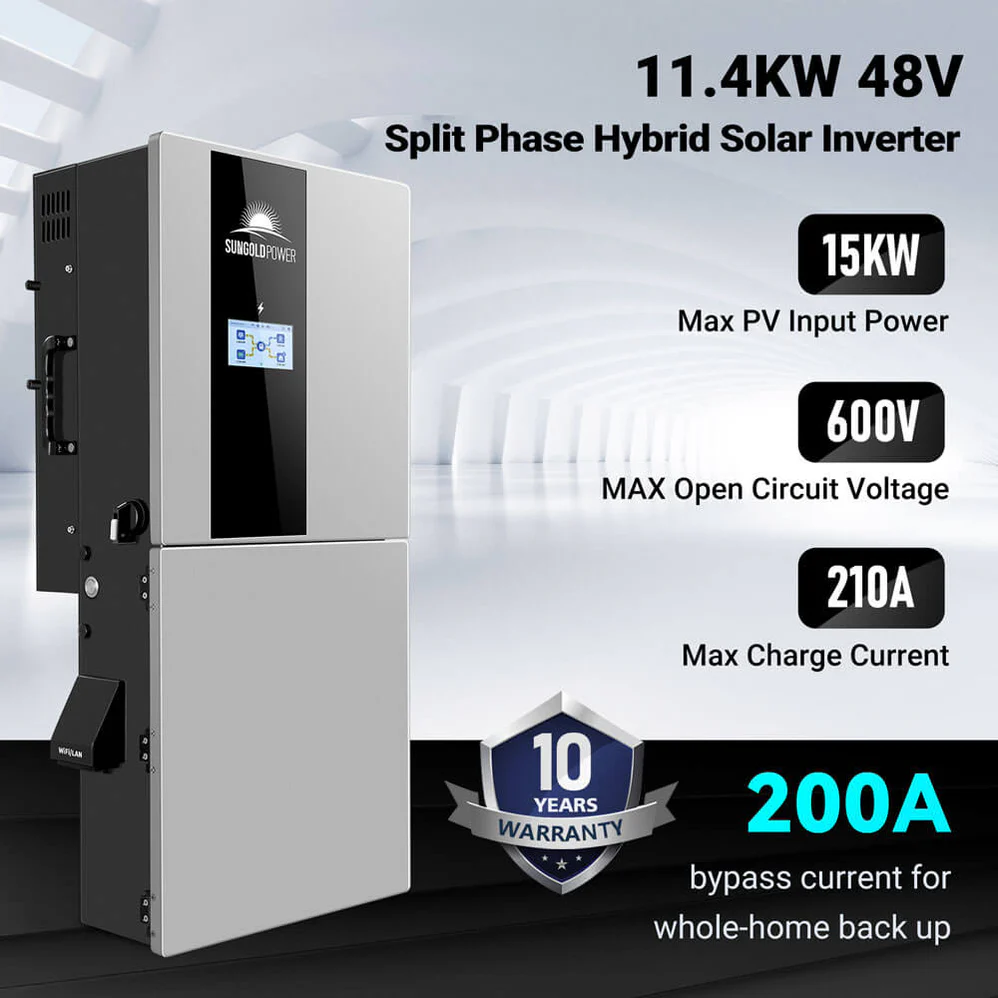
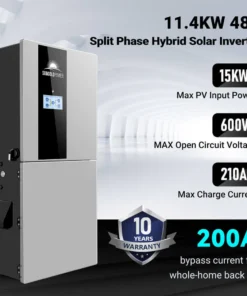
- 2 × 11.4kW 48V Split Phase Hybrid Solar Inverter
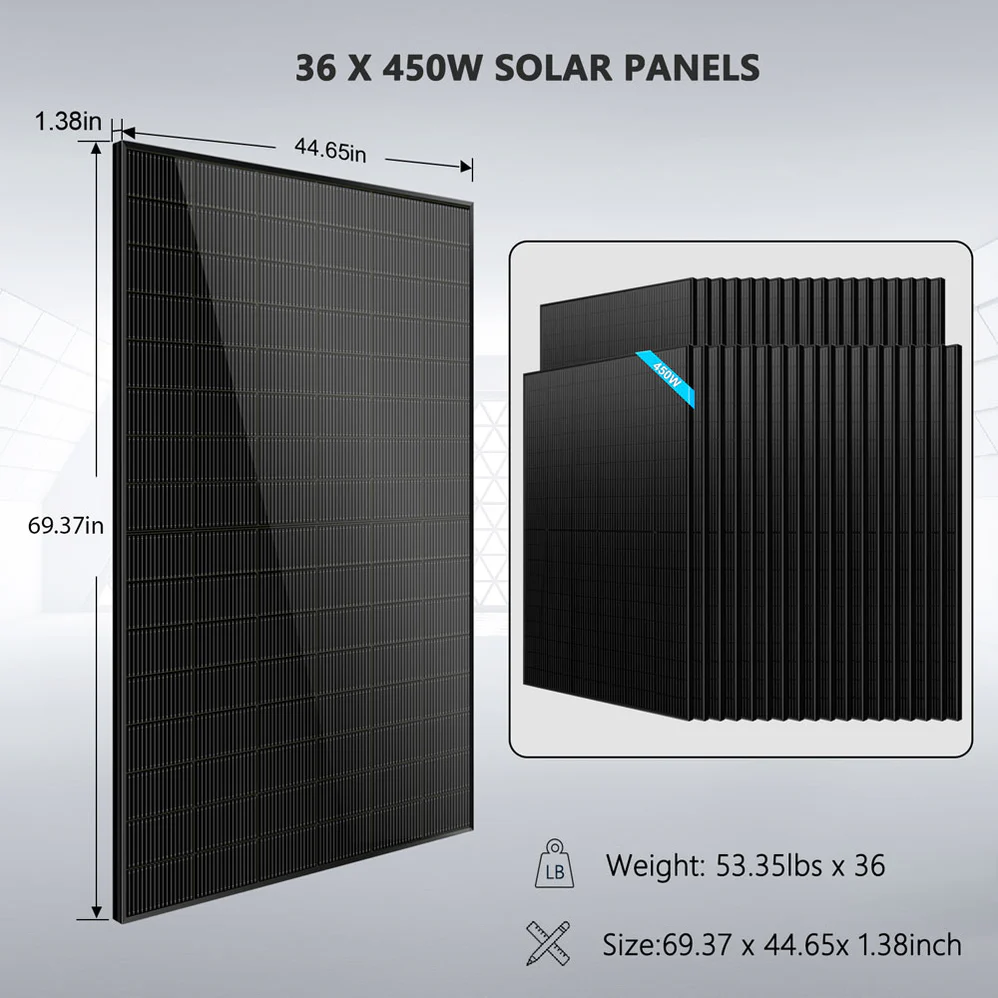
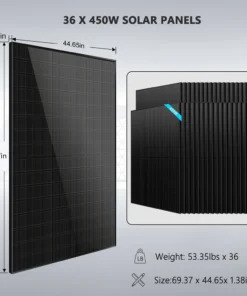
- 36 × 450W Bifacial N-Type Monocrystalline Solar Panels (16,200W)
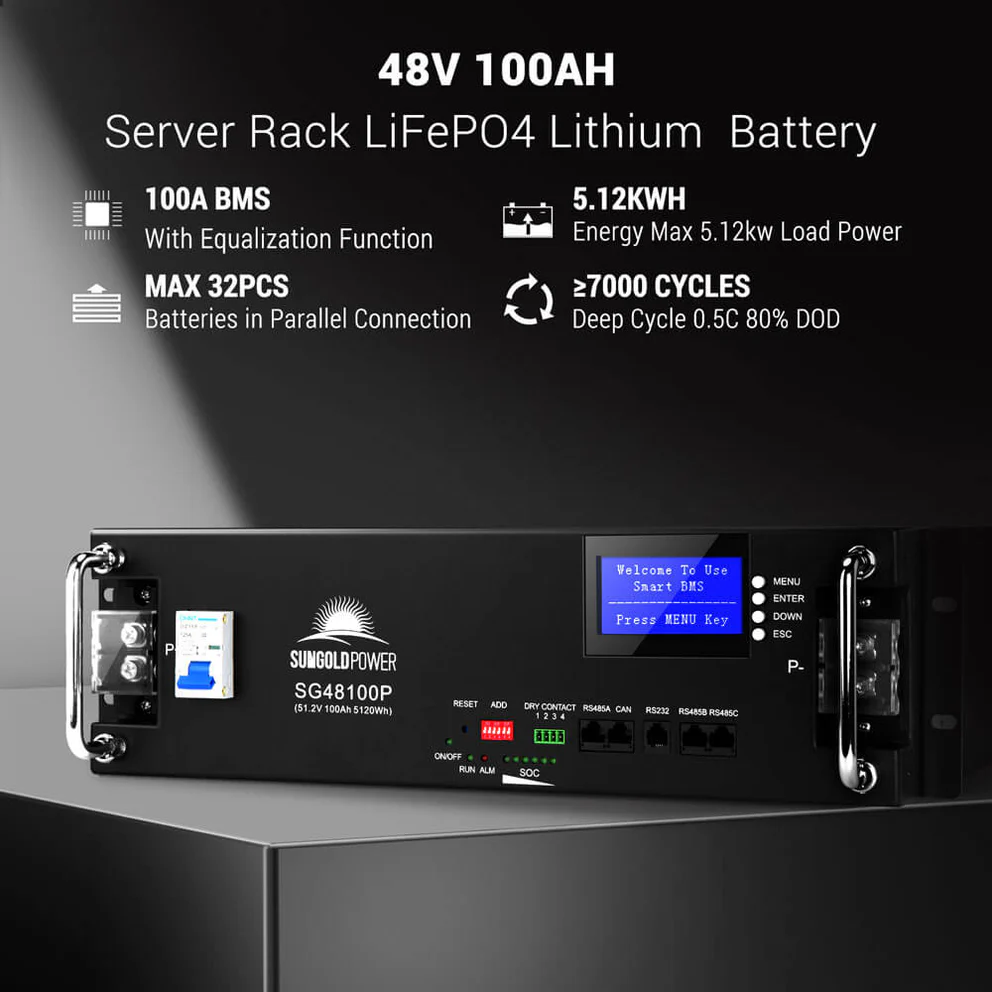
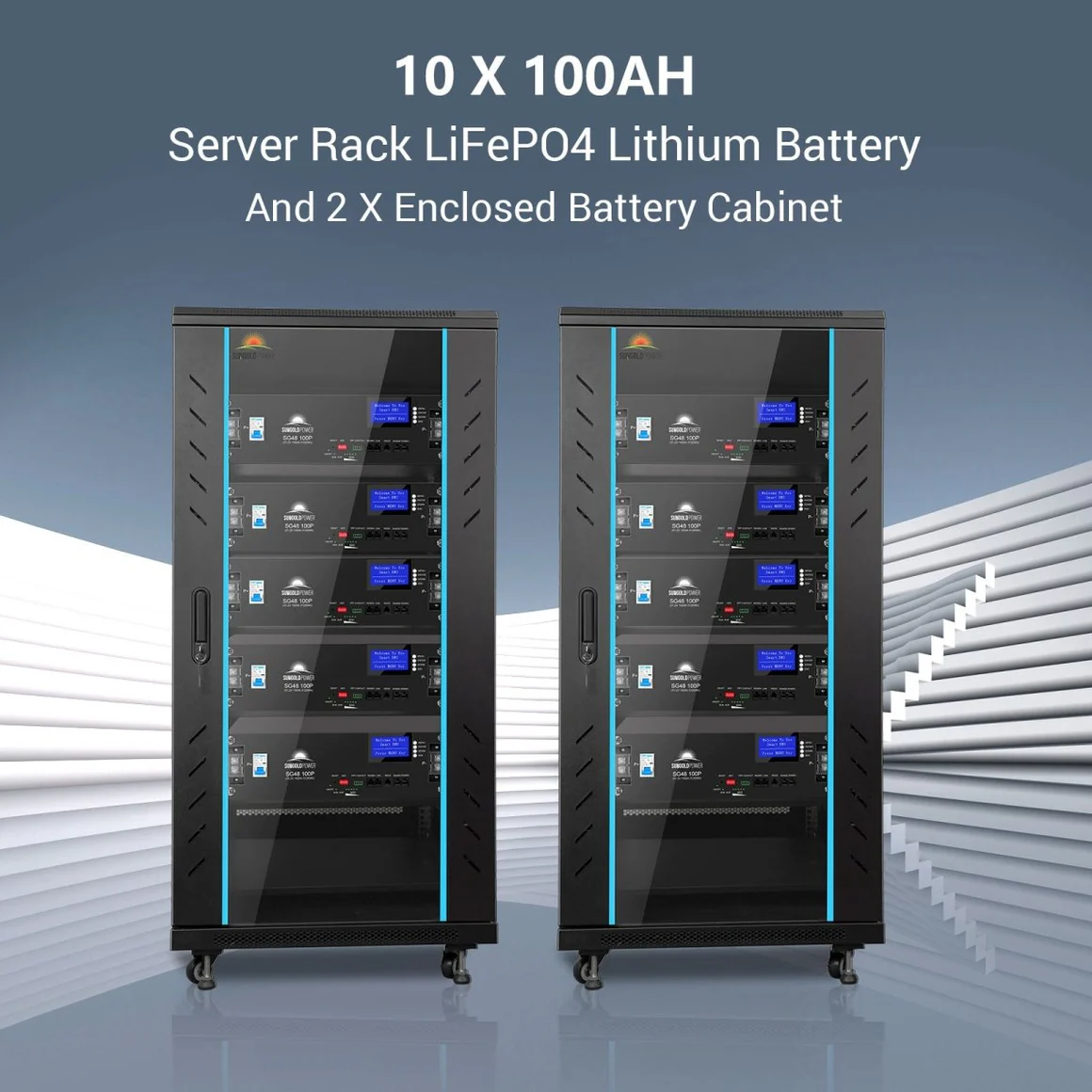
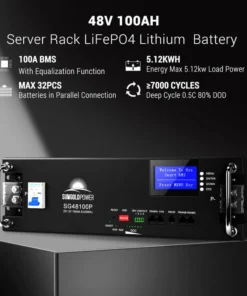
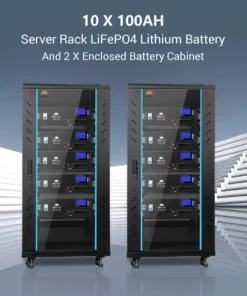
- 10 × 100AH 51.2V LiFePO4 Battery (51.2kWh)
- 2 × Enclosed Battery Cabinet (5×100AH each)
- 4 Sets × 50ft Solar Extension Cables
- 2 × 2/0 AWG Battery Cable
- 4 × 25A PV Breakers
- 2 × 200A DC Breaker
SGH-11N5E-s (Inverter + Battery, No Panels):
- 2 × 11.4kW 48V Split Phase Hybrid Solar Inverter
- 10 × 100AH 51.2V LiFePO4 Battery (51.2kWh)
- 2 × Enclosed Battery Cabinet
- 2 × 2/0 AWG Battery Cable
- 2 × 200A DC Breaker
System Specifications
| Parameter | Detail |
|---|---|
| Total Inverter Output | 22,800W (2 × 11.4kW) |
| DC Voltage | 48V |
| AC Output | 120V/240V Split Phase |
| Inverter Type | Hybrid (Off-Grid / Grid-Tied / Hybrid) |
| Solar Array (Full Kit) | 36 × 450W (16,200W total) |
| Battery Capacity | 10 × 100AH = 51.2kWh |
| Battery Chemistry | LiFePO4 |
Three Operating Modes — The Hybrid Advantage
The SGH-11N5E’s defining specification advantage over pure off-grid kits is its hybrid inverter architecture — supporting three distinct operating modes that pure off-grid systems cannot replicate.
Off-Grid Mode: Complete grid independence — the system generates, stores and consumes electricity entirely from solar and battery, without grid connection. Identical to the operation of dedicated off-grid kits.
Hybrid Mode: Grid connection maintained as backup and export pathway — solar generation powers home loads, excess generation feeds back to the grid, grid power supplements solar during shortfalls and battery storage provides backup during grid outages. This mode reduces utility bills, eliminates outage vulnerability and maximises solar self-consumption simultaneously.
Grid-Tied Mode: Direct grid synchronisation with optional battery backup — providing all the bill-reduction benefits of standard grid-tied solar with the battery-backed outage protection that standard grid-tied systems without storage cannot provide.
The ability to operate in all three modes — and switch between them as circumstances change — makes the SGH-11N5E the most versatile residential solar electric house energy platform in the range.
36×450W Bifacial N-Type Panels
The question “what are the best solar panels” for a hybrid system at this scale is answered by the SGH-11N5E’s panel specification — 36 × 450W Bifacial N-Type monocrystalline, delivering 16,200W of total generation capacity.
N-Type silicon — phosphorus-doped — provides lower light-induced degradation than P-Type alternatives, maintaining rated output more consistently across the system lifetime. Bifacial construction captures rear-face ground-reflected irradiance for 5–25% additional yield above rated front-face output. At 36 panels producing 16,200W, this array generates approximately 64kWh per day from four hours of peak sun — enough to cover large residential consumption, charge 51.2kWh of batteries fully and feed substantial surplus back to the grid in hybrid mode.
Understanding solar panel ratings at this scale: 36 × 450W N-Type bifacial panels maintain their rated output more consistently year-over-year than P-Type equivalents — meaning the rated 16,200W array continues delivering near-rated production in year 15 and year 25, not just in year 1.
51.2kWh LiFePO4 Battery Storage
Ten 100AH 51.2V LiFePO4 batteries in two enclosed cabinets provide 51.2kWh of storage — the largest battery bank of any kit in this product range. At 51.2kWh:
- Full overnight coverage for even the largest residential properties through extended overnight periods
- Multi-day cloudy-weather operation before any grid supplementation is required in hybrid mode
- Complete grid outage backup for days rather than hours
- Sufficient storage to capture the full daily solar generation surplus above daytime consumption
The 2/0 AWG battery cables included in the kit are the high-current-rated connections required for the 22.8kW dual-inverter system — an often-excluded component included as standard in the SGH-11N5E.
Who Makes the Best Solar Panels for Hybrid Systems
“Who makes the best solar panels” for hybrid residential systems is a question that evaluates panel manufacturer quality across cell efficiency, degradation rates, warranty terms and certification standards. The Bifacial N-Type 450W panels in the SGH-11N5E represent the current mainstream premium tier — N-Type silicon with bifacial construction, full UL-equivalent certification and 25–30 year linear power warranty terms that meet the specification requirements of residential mortgage and insurance frameworks.
For a hybrid system representing an investment at this scale, panel quality is not a secondary consideration — it is a primary variable in the system’s 25-year financial performance model.
Hybrid vs Off-Grid — Choosing the Right Architecture
Pure off-grid systems are appropriate where grid connection is unavailable or permanently undesirable. Hybrid systems are appropriate where grid connection exists or could exist — providing the flexibility to take advantage of grid backup, net metering and reduced-cost grid supplementation while maintaining the operational independence of battery storage and solar generation.
The SGH-11N5E-s panel-free configuration allows buyers who already have panels — or who want to source panels separately — to purchase the inverter and battery platform independently and add panels at their own specification.
Explore additional hybrid and off-grid solar kit configurations in our Solar Kits, Hybrid Solar Systems and Solar Panels categories.
FAQ
What are the best solar panels for a hybrid solar kit? What are the best solar panels for a hybrid solar kit depends on the required output, available roof space and budget. For this SGH-11N5E system, 450W Bifacial N-Type monocrystalline panels represent the best solar panels specification — providing high wattage per panel, N-Type low-degradation silicon and bifacial rear-face yield that maximises the 16,200W array’s lifetime generation.
Who makes the best solar panels for hybrid residential systems? Who makes the best solar panels matters most in terms of panel specifications — N-Type bifacial monocrystalline cells from manufacturers with full UL certification, 25–30 year linear power warranties and independently verified solar panel ratings represent the current quality standard. The 450W N-Type bifacial panels in this system meet these criteria across all evaluation dimensions.
What is the solar panel ratings significance for hybrid systems? Solar panel ratings — the certified electrical performance parameters at Standard Test Conditions — determine how much energy the system generates daily. In hybrid systems where surplus generation is sold back to the grid, the panel ratings directly impact the financial return on solar investment. N-Type bifacial panels maintain their rated performance more consistently year-over-year than P-Type alternatives — compounding the financial benefit across the system’s lifetime.
What is a solar electric house and does this system achieve it? A solar electric house is a residence that generates all or the majority of its electricity from solar panels — reducing or eliminating utility bills and providing energy independence. The SGH-11N5E with 16,200W of solar panels and 51.2kWh of storage in hybrid mode achieves this for large properties — generating enough solar energy to cover residential consumption, store surplus and feed additional surplus back to the grid.
What are the three operating modes of this hybrid solar kit? Off-grid mode operates independently of the utility grid. Hybrid mode connects to the grid for backup, excess export and supplementation during solar shortfalls. Grid-tied mode synchronises directly with the grid for bill reduction with optional battery backup during outages. The ability to operate in all three modes — and switch between them — makes the SGH-11N5E uniquely adaptable across every residential energy context.
| Solar Panel Options | SGH-11N5E [with 36x450w solar panels], SGH-11N5E-s [without solar panels] |
|---|
Be the first to review “Hybrid Solar Kit 11.4kW 48V Split Phase 51.2kWh LiFePO4 36×450W N-Type Bifacial (SGH-11N5E)”
Related products
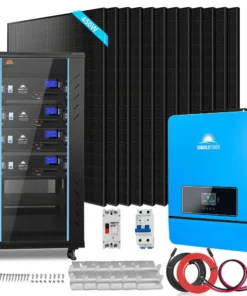
solar system kits
Off-Grid Solar Kit 10KW 48V 120V/240V 20.48KWH LiFePO4 12 x 450W SGR-10K20E
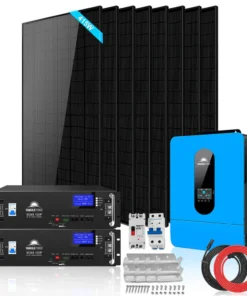
solar system kits
Off-Grid Solar Kit 6.5kW 48V 120V/240V 10.24kWh LiFePO4 8×415W Solar Panels (SGR-6510E)
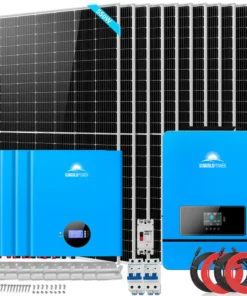
solar system kits
Off-Grid Solar Kit 10kW 10×550W Panels 20.48kWh LiFePO4 Battery 48V 120V/240V (SGM-10K20)
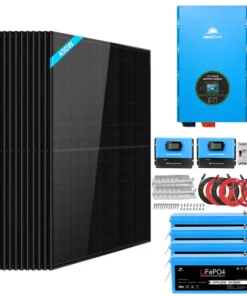
solar system kits
Complete Off-Grid Solar Kit 12kW 48V 120V/240V 10.24kWh Lithium 5400W Solar Panels (SGK-12MAX)
solar system kits
Off-Grid Solar Kit 6kW 24V DC 120V/240V 10.24kWh LiFePO4 6×370W Solar Panels (SGK-PRO62)
solar system kits
solar system kits
Off-Grid Solar Kit 12000W 48V 120V/240V 25.6KWH LiFePO4 12 x 415W SGR-12K20E
solar system kits
Off-Grid Solar Kit 8kW 48V 120V/240V LiFePO4 10.24-16.07kWh 8×415W Solar Panels (SGR-8K10E)
Reviews
There are no reviews yet.