
12 Volt Solar Battery — 2 × 100Ah LiFePO4, 200Ah Total, Self-Heating, Bluetooth BMS, IP65
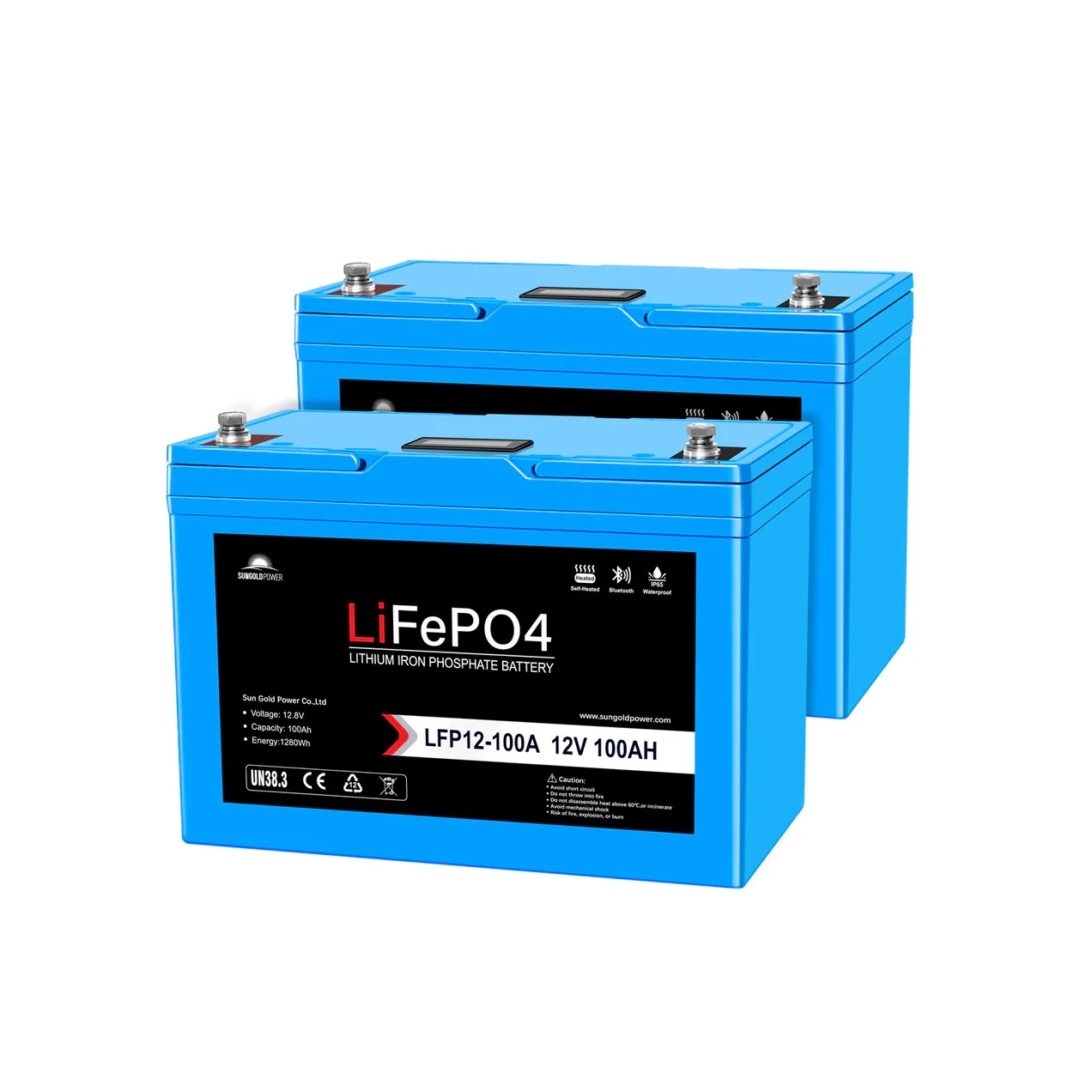
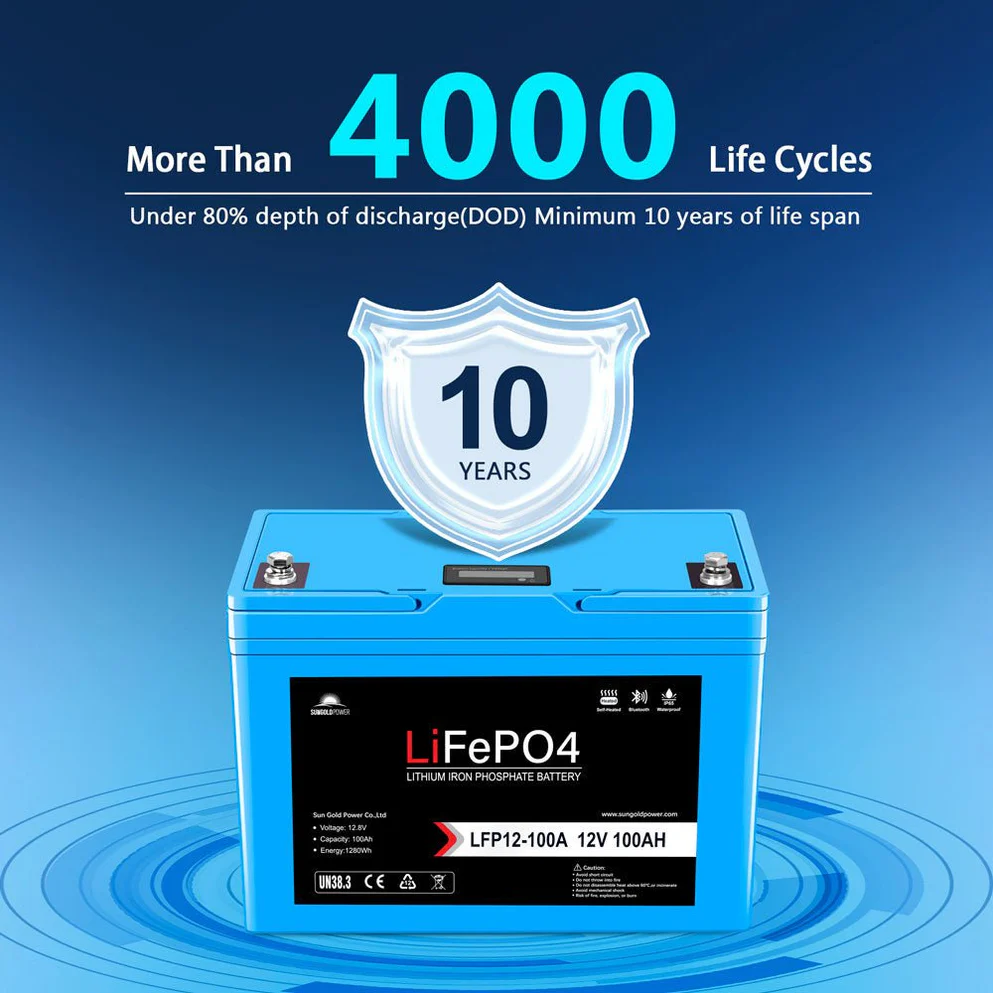
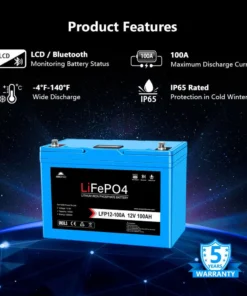
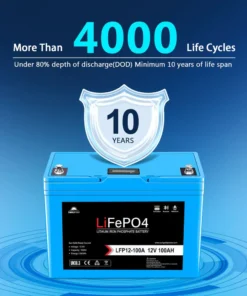
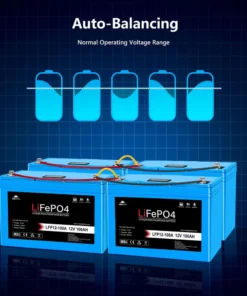
Two SunGoldPower 12V 100Ah units connected in parallel form a 12 volt solar battery bank of 200Ah at 12.8V — 2,560Wh of stored energy — in a two-unit configuration that weighs 45.4 lb total and scales to 400Ah with two additional matching units. Each battery is rated for more than 4,000 cycles at 80% depth of discharge, includes self-heating for cold-climate charging reliability, carries an IP65 weatherproof rating, and communicates with a smartphone via Bluetooth BMS. This is the practical starting point for a 12V solar system moving beyond a single battery — enough capacity to run a typical small off-grid cabin or RV through a full night without relying on a generator.
Table of Contents
- Specifications
- What 200Ah Supports in Real Off-Grid Use
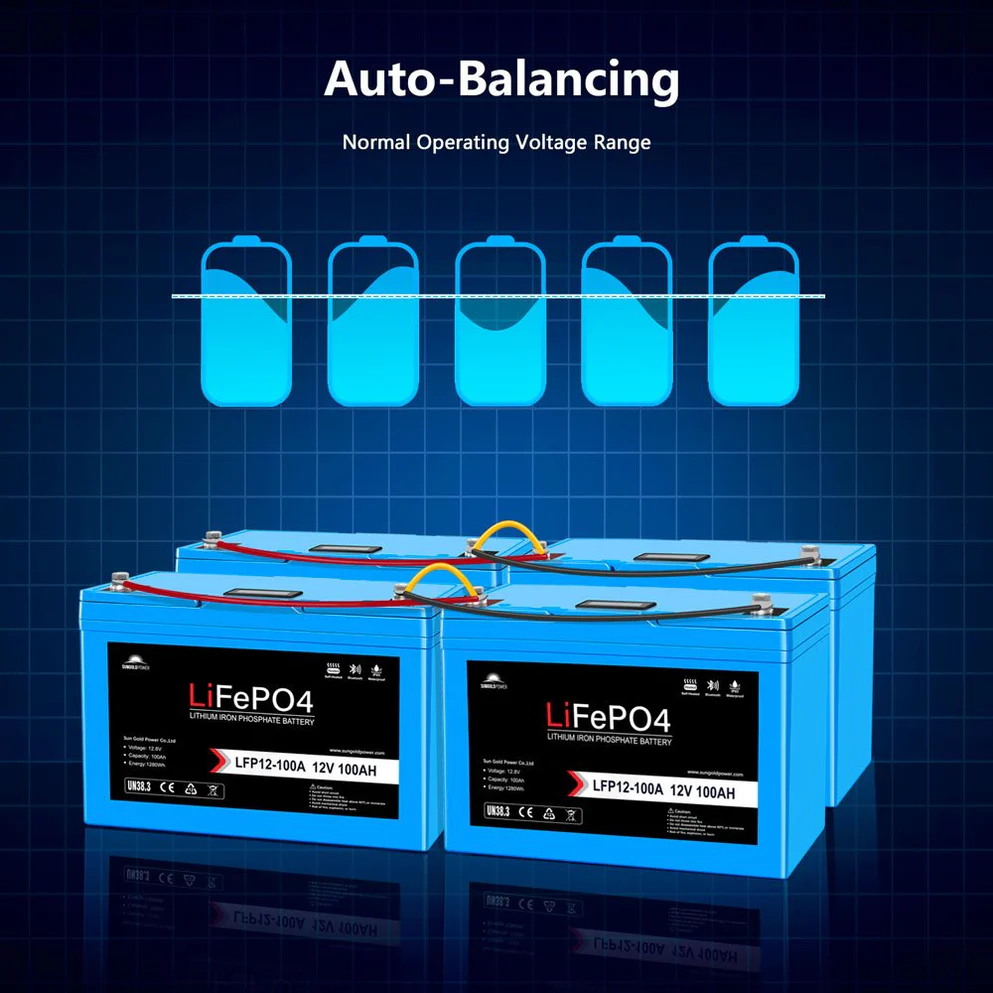
- Starting With Two and Expanding to Four
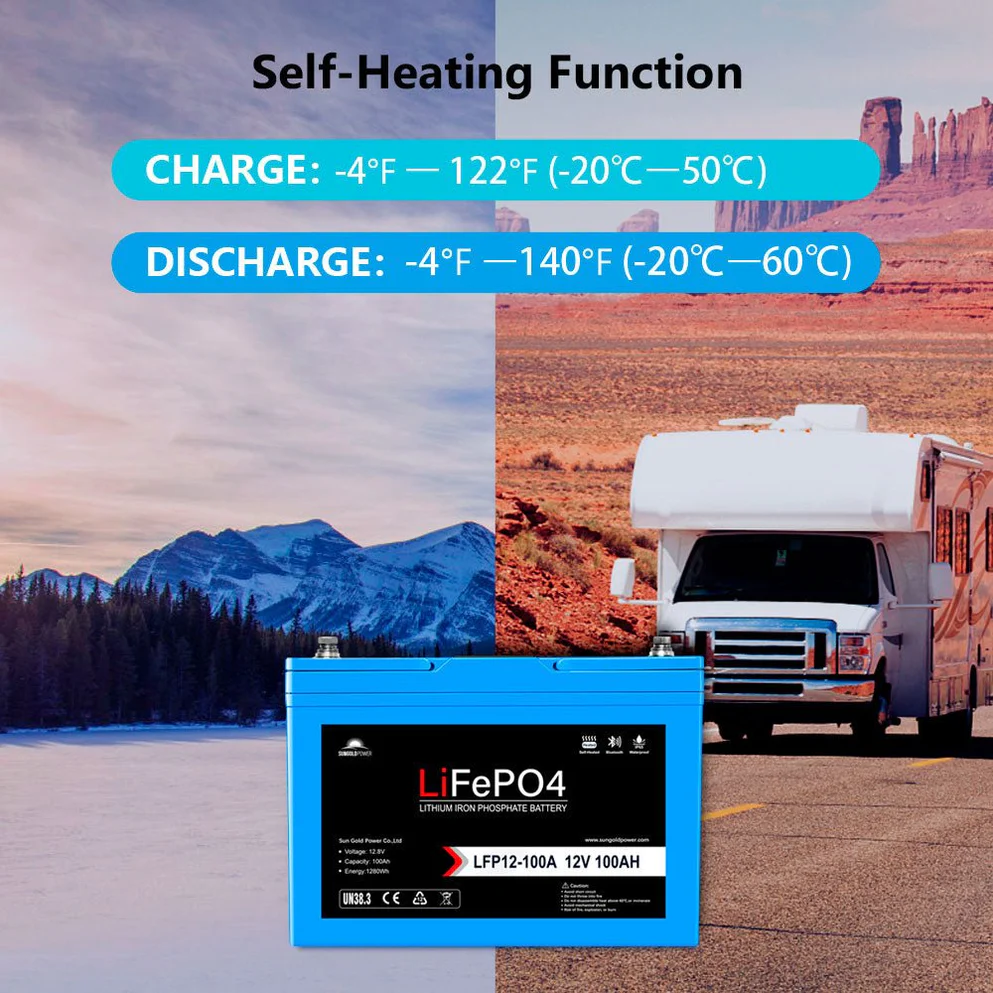
- Cold-Weather Operation and Self-Heating
- IP65 and Build Quality
- Frequently Asked Questions
Specifications
| Specification | Per Unit | 2-Unit Parallel Bank |
|---|---|---|
| Nominal Voltage | 12.8V | 12.8V |
| Nominal Capacity | 100Ah | 200Ah |
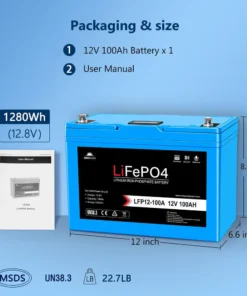
| Energy | 1,280Wh | 2,560Wh |
| Efficiency | >99.5% | >99.5% |
| Voltage Window | 10.8–14.6V | 10.8–14.6V |
| Max Continuous Charge Current | 100A | 200A |
| Peak Discharge Current | 200A (15s + 2s) | 400A |
| Recommended Charge Current | 50A | 100A |
| Recommended Discharge Current | 50A | 100A |
| Cycle Life (0.2C, 77°F, 80% DOD) | ≥4,000 | ≥4,000 |
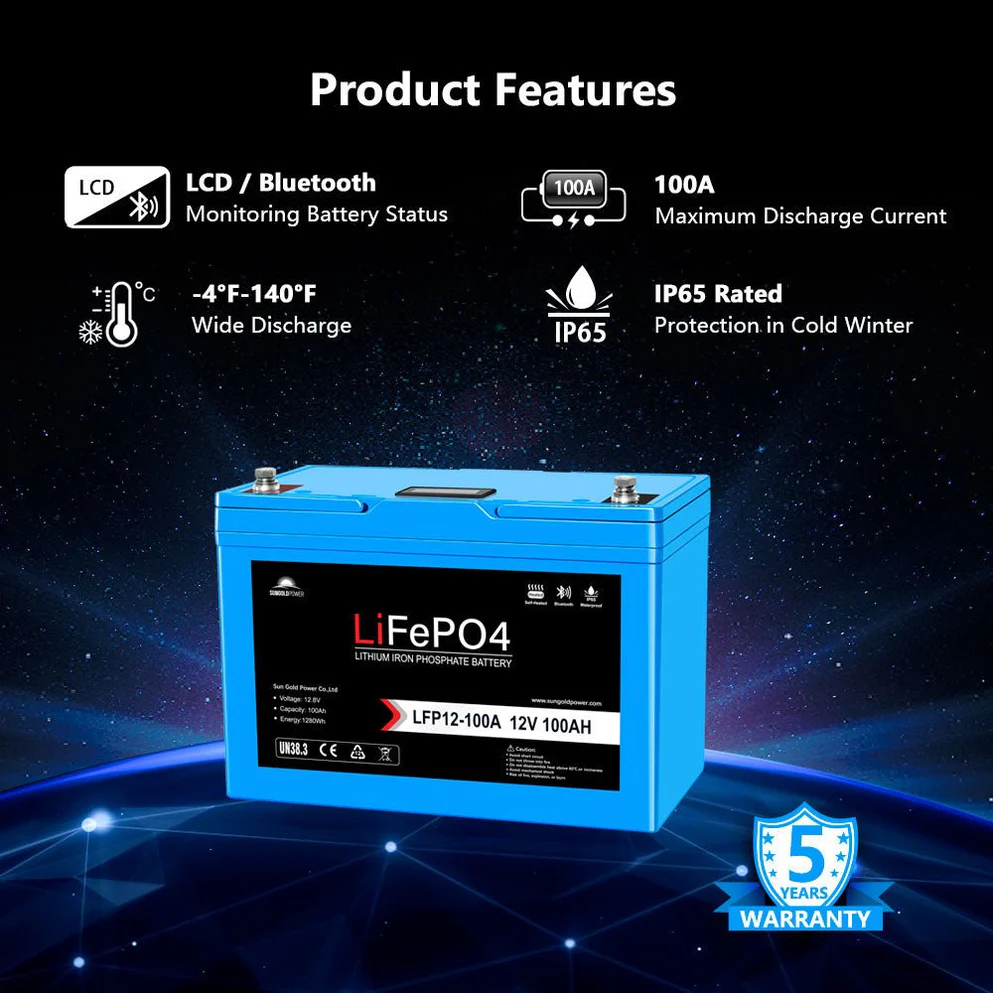
| Charge Temperature | -4°F to 113°F | -4°F to 113°F |
| Discharge Temperature | -4°F to 131°F | -4°F to 131°F |
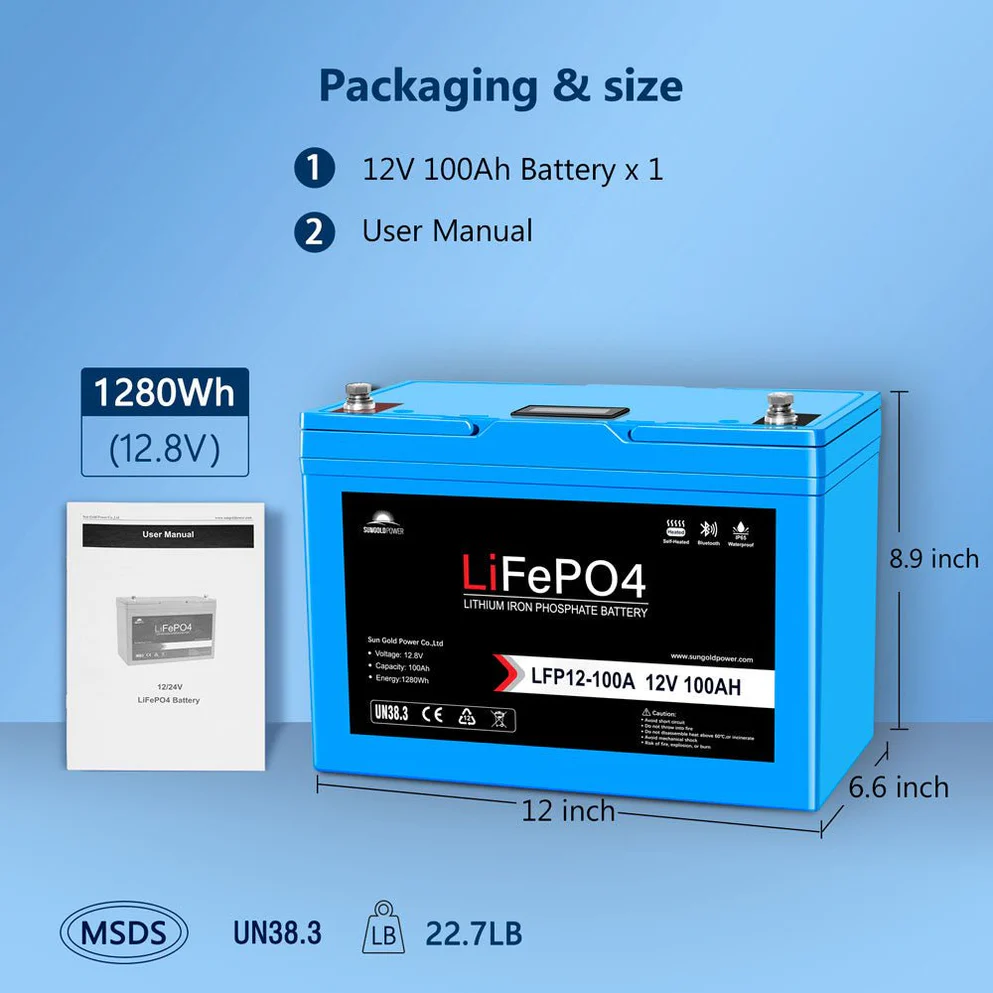
| Dimensions (L×W×H) | 12 × 6.6 × 8.9 in | — |
| Weight per unit | 22.7 lb | 45.4 lb total |
| Terminal Type | M8 | M8 |
| IP Grade | IP65 | IP65 |
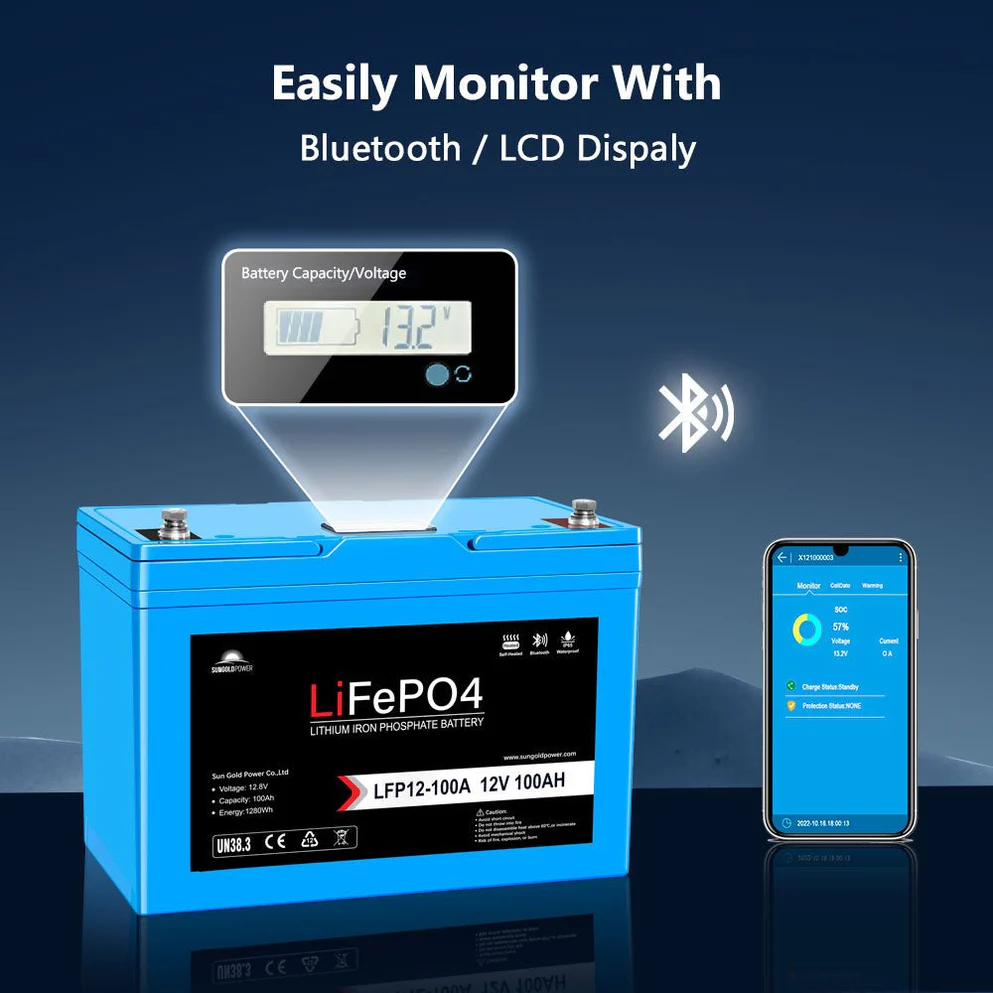
| Monitoring | LCD + Bluetooth per unit | 2 independent BMS |
What 200Ah Supports in Real Off-Grid Use
At 80% depth of discharge, a 200Ah LiFePO4 bank delivers 160Ah — 2,048Wh — of accessible capacity per cycle. The practical overnight coverage that represents:
- A 12V RV refrigerator running continuously for 24 hours — a typical compressor unit draws 3–5Ah per hour, consuming 72–120Ah overnight. A 200Ah bank covers this comfortably and still has meaningful reserve.
- A 1,000W inverter running a laptop, LED lighting, and a fan for four hours — drawing approximately 83A per hour, that is 333Ah — more than the bank’s accessible capacity, so load management or recharging mid-session is required for sustained high loads.
- A low-draw off-grid setup — 30W of LED lighting, a 12V fan, and phone charging averaging 60W combined — consuming 5Ah per hour — the 160Ah accessible capacity covers 32 hours of that profile.
A 12 volt batteries lead-acid bank at 200Ah would deliver 100–120Ah at these discharge rates before voltage sag becomes a problem. The LiFePO4 bank delivers the full 160Ah regardless of rate.
Starting With Two and Expanding to Four
This two-unit configuration is built with expansion in mind. The maximum parallel capacity for this model is four units — meaning two additional 100Ah batteries can be added later to reach 400Ah without replacing the existing hardware. The only requirements for expansion are matching the model exactly and connecting the new units at equal state of charge to the existing bank.
For a battery for 12 volt solar system that is being built incrementally — starting with a smaller solar array and expanding over time — this two-unit starting point avoids over-investing in battery capacity before the solar array is sized to charge it. Add the third and fourth units when the solar array and charge controller are upgraded to support the larger bank.
Cold-Weather Operation and Self-Heating
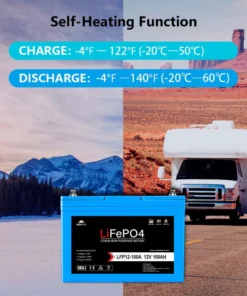
In a two-unit bank, both self-heating elements operate independently and activate simultaneously when overnight temperatures drop the cells below the safe charging threshold. The result is that both units reach charging temperature at the same time each morning — the solar charge begins cleanly on both units together once temperature is satisfied.
The discharge capability of both units continues down to -4°F without heating activation — the bank powers overnight loads through a cold night and begins accepting the morning solar charge as soon as cells are warm enough, all without user intervention.
IP65 and Build Quality
IP65 certification on both units means the two-battery bank is fully sealed against dust and withstands sustained water jets. The ABS enclosure resists impact and remains stable across the full -4°F to 131°F operating temperature range. M8 threaded terminals on both units are the standard size for most solar, inverter, and marine battery cabling hardware — no adapters required in most installations.
Browse our full 12V LiFePO4 Batteries, Solar Battery Storage, and Off-Grid Power Systems for compatible charge controllers, busbars, and inverters.
Frequently Asked Questions
Q: Is this 12 volt solar battery system expandable to 400Ah? Yes. The two-unit bank can expand to four units — 400Ah at 12V — by adding two more matching 12V 100Ah units at the same state of charge. The busbar or connection point must be sized for the expanded bank’s current capacity before adding the additional units.
Q: What charge controller is appropriate for a 200Ah bank? A 30–60A MPPT solar charge controller with a lithium charging profile is appropriate for most 200Ah installations. A 60A controller at 12V outputs approximately 760W from a matching solar array — enough to recharge 160Ah of depleted capacity in approximately two to three hours of peak production.
Q: Can this bank run a 2,000W inverter? At 200A combined discharge current, the two-unit bank delivers approximately 2,560W of DC power at 12.8V — enough to run a 2,000W inverter at or near full load, accounting for inverter efficiency. For extended high-load operation, four units in parallel is the more appropriate configuration.
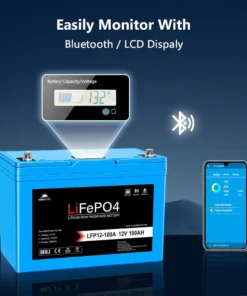
Q: What does the batterie 12v li ion Bluetooth monitor show? The Bluetooth BMS on each unit transmits individual cell voltages, pack state of charge, charge and discharge current, cell temperature, and cycle count to a smartphone app. In a two-unit bank, each unit is monitored independently — confirm that both show consistent data after installation to verify balanced current sharing.
Q: How does the IP65 rating compare to standard battery enclosures? Most off-the-shelf battery enclosures carry no IP rating or an IP20 rating — protection against solid objects above 12mm but no water protection. IP65 adds full dust protection and resistance to sustained water jets, making it the appropriate choice for RV bays exposed to road spray, marine bilge compartments with condensation, and outdoor battery enclosures subject to rain.
Be the first to review “12 Volt Solar Battery 2×100Ah Authentic LiFePO4 IP65”
Related products
Lithium Solar Batteries
Lithium Solar Batteries
Lithium Solar Batteries
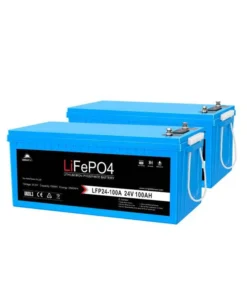
2× 24V 100Ah LiFePO4 Deep Cycle Lithium Battery — Bluetooth / Self-Heating / IP65
Lithium Solar Batteries
Lithium Solar Batteries
Lithium Solar Batteries
Wall-Mounted 5.12kWh LiFePO4 Lithium Battery SG48100M — 48V 100Ah UL1973
Reviews
There are no reviews yet.