
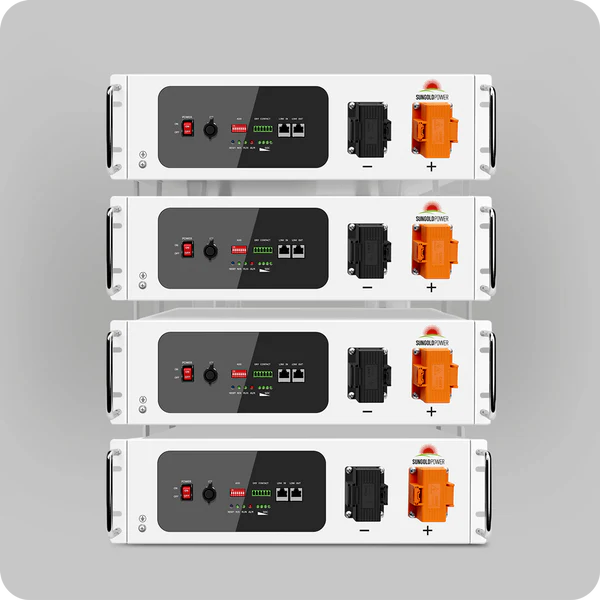
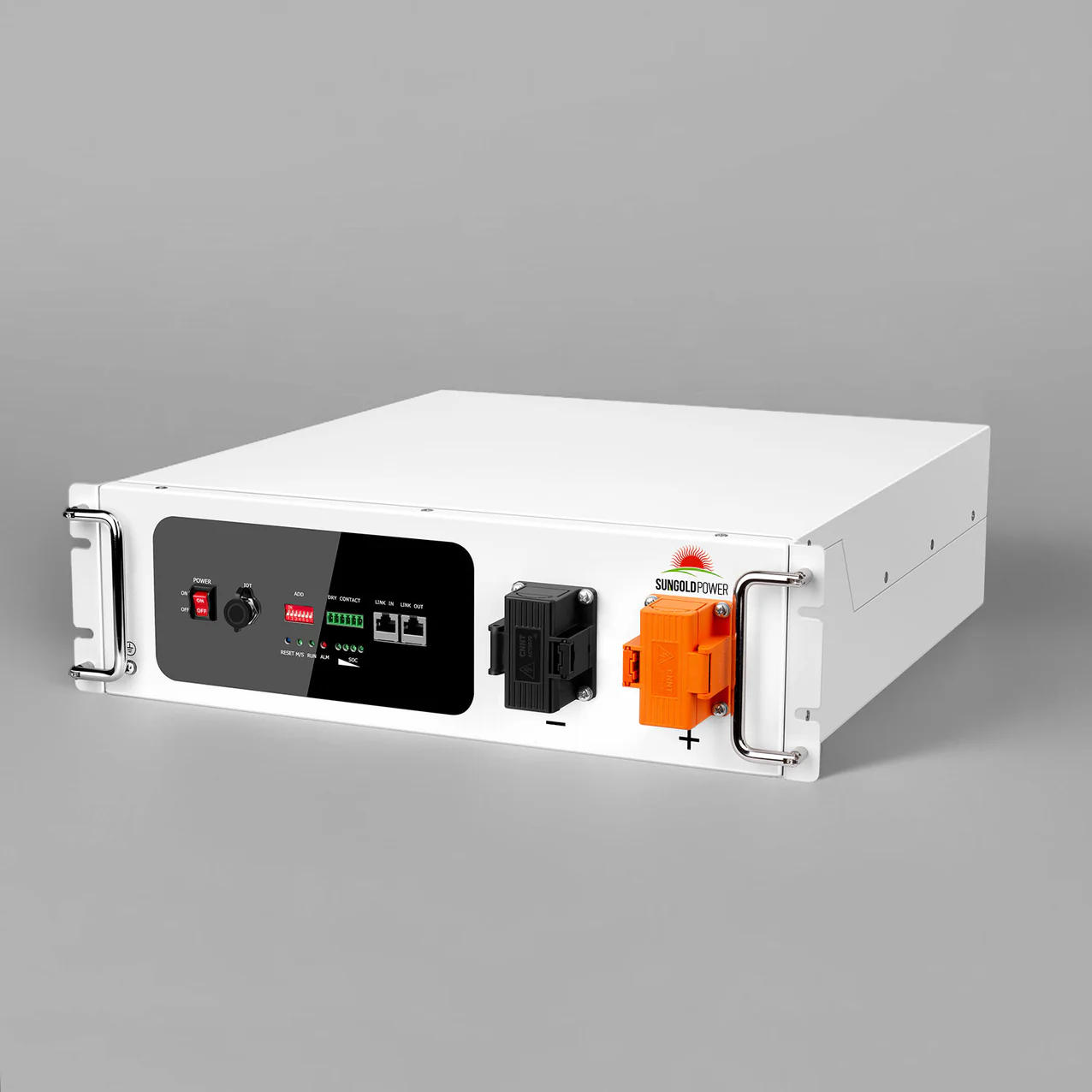
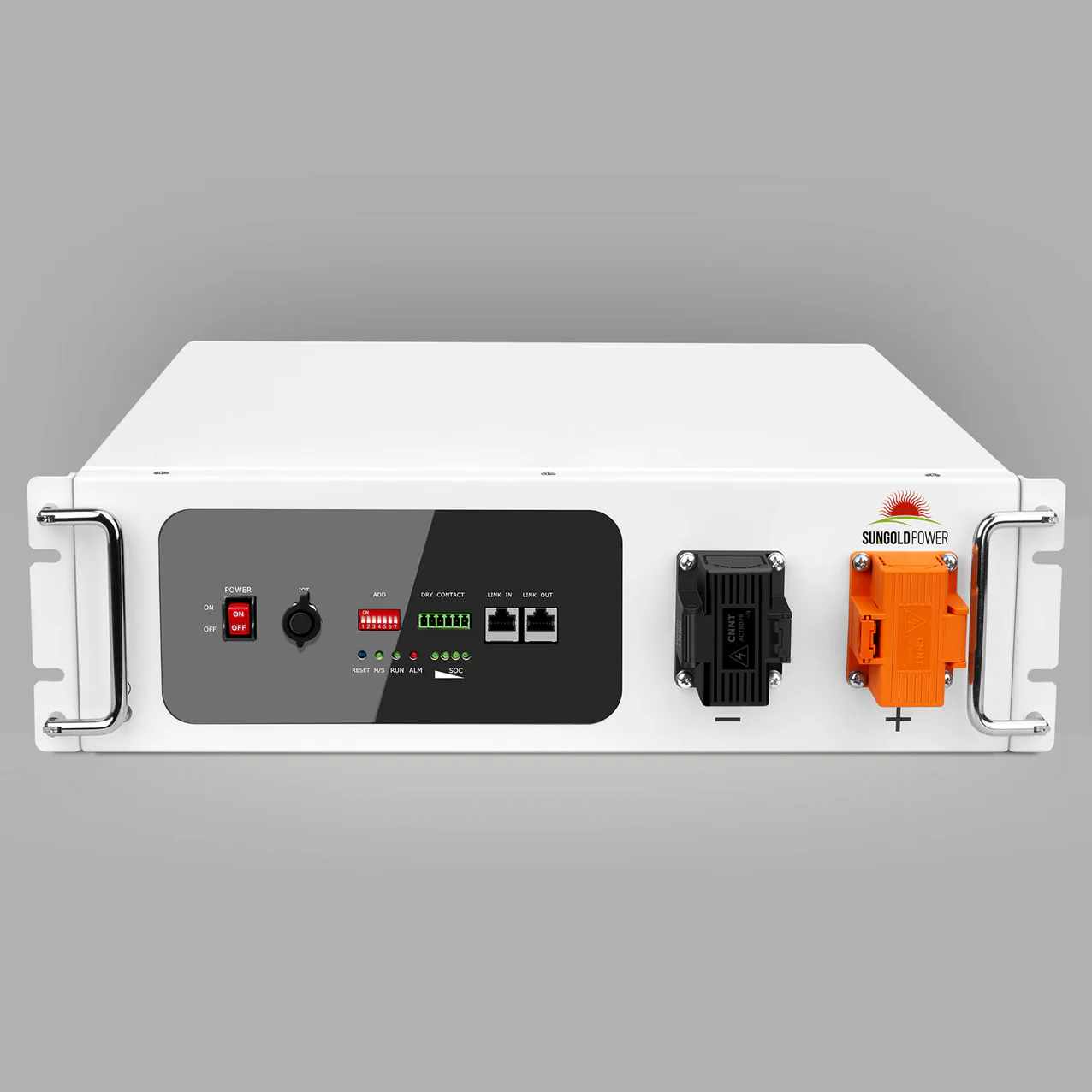
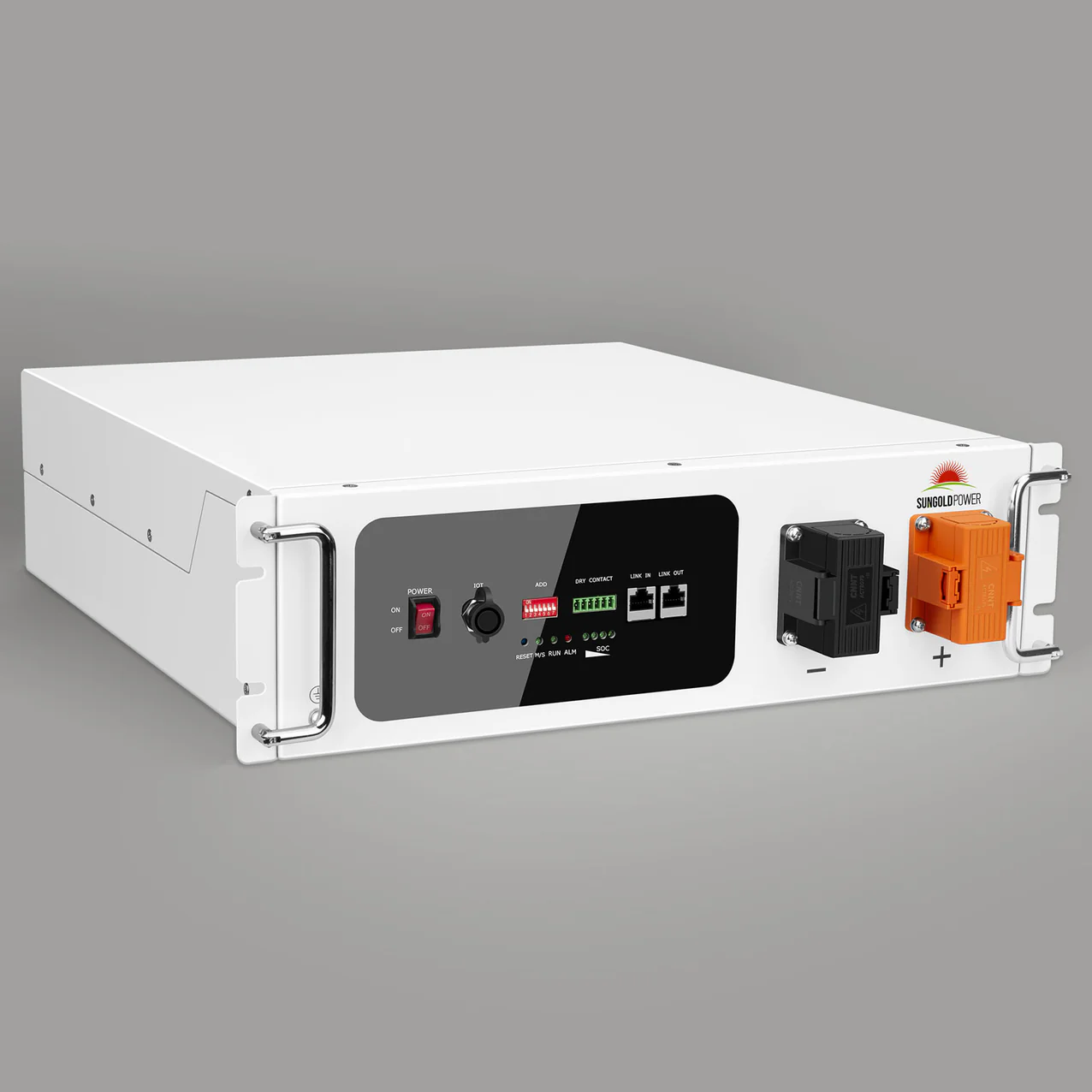
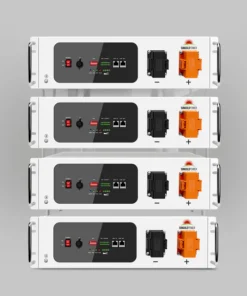
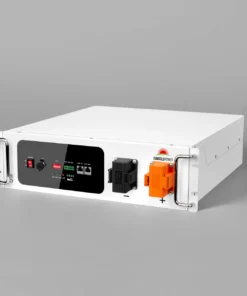
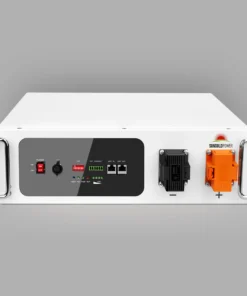
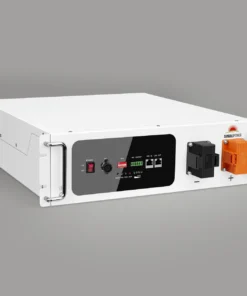
48 Volt Lithium Ion Battery — 4 × SGH48100T Server Rack, 20.48kWh, Self-Heating, 7,000 Cycles
Four SGH48100T units in parallel form a 48 volt lithium ion battery bank of 400Ah and 20.48kWh, with self-heating active on all four units — the maximum-scale self-heating configuration in the SGH48100T range, and the appropriate choice for any installation where cold-weather charging reliability is required at a capacity level that covers the full daily consumption of a residential home. Each unit is rated for more than 7,000 deep cycles, carries UL 1973 certification, communicates via RS485 and CAN Bus, and the bank can expand to 32 units without architecture changes.
Table of Contents
- Specifications
- 20.48kWh With Self-Heating — The Full Cold-Climate Solution
- What Changes at Four Units Compared to Two
- Parallel Wiring Discipline at This Scale
- Inverter Compatibility and BMS Communication
- Frequently Asked Questions
20.48kWh With Self-Heating — The Full Cold-Climate Solution
The four-unit SGH48100T bank is the most capable self-heating 48 volt lithium ion battery configuration in the SunGoldPower server rack range. At 20.48kWh, the bank covers the full daily consumption of a moderately efficient residential home from storage alone — and the self-heating function ensures that every morning solar charge is accepted at full rate regardless of how cold the previous night was.
The combination of capacity and cold-weather reliability solves a problem that affects many northern-latitude off-grid and hybrid installations: the battery bank is large enough to carry overnight loads comfortably, but without self-heating, the morning solar charge is rejected until the sun warms the cells naturally — in winter, this can mean losing two to four hours of production at the point in the day when the panels are already producing at reduced irradiance. The SGH48100T bank eliminates this completely, accepting full charge current as soon as the solar array begins producing each morning.
What Changes at Four Units Compared to Two
The practical difference between the two-unit 10.24kWh and four-unit 20.48kWh bank is not simply twice the capacity — it is a qualitative change in how the system behaves across a week of variable weather.
A 10.24kWh bank in a home consuming 8kWh overnight reaches approximately 20% state of charge by morning after depleting to 80% DOD. After two consecutive overcast days where the solar array charges the bank to only 60% of full by sundown, the bank starts the third night at a deficit. A 20.48kWh bank in the same scenario has twice the reserve — the same two overcast days leave it at a much higher state of charge entering the third night, and the system continues to power loads normally without generator backup.
This is the capacity level where 48v batteries in an off-grid installation shift from being a daily cycling device to being a genuine weather buffer.
Parallel Wiring Discipline at This Scale
Four units in parallel is the configuration where wiring discipline most directly affects long-term performance. The principles are straightforward:
- Equal state of charge before connection. All four units fully charged before being joined. Large equalisation currents between units at different charge levels at this bank scale can damage BMS protection components.
- Equal cable lengths from each unit to the busbar. Measure and cut each cable individually. At four units and 400Ah combined capacity, even a 5% resistance difference between cables causes measurable current imbalance over time.
- Independent connections to the busbar. No daisy-chaining — each of the four units connects directly to the common bus.
- BMS verification after the first full cycle. All four LCD displays should show consistent state of charge at the end of the first charge. Persistent imbalance requires investigation before the bank enters regular service.
Inverter Compatibility and BMS Communication
RS485 and CAN Bus communication covers Growatt, Deye, Sol-Ark, SunGoldPower, Luxpower, EG4, Victron Energy, Schneider, SMA, and Solis. In a four-unit bank, the BMS communication typically runs in a master-slave configuration — confirm the specific daisy-chain cable setup and inverter configuration procedure with SunGoldPower for the inverter being used.
When the BMS communication is properly configured, the inverter receives aggregated state-of-charge data from all four units and manages charge and discharge within the bank’s actual operating limits — preventing the overcharge and over-discharge events that occur when the inverter operates on fixed voltage-based parameters without BMS feedback.
Browse our full 48V Server Rack Batteries, Solar Battery Storage, and Off-Grid Power Systems for compatible inverters and system accessories.
Frequently Asked Questions
Q: What is the usable capacity of the four-unit SGH48100T bank at 80% DOD? At 80% depth of discharge, the 20.48kWh bank provides 16.38kWh of accessible energy per cycle. This covers the full daily consumption of a household averaging 16kWh per day from storage alone, or provides two days of autonomy for a home consuming 8kWh per day — the buffer that makes off-grid solar practical through consecutive overcast days without generator backup.
Q: How does the self-heating function work across all four units simultaneously? Each unit’s heating element operates independently. All four activate when their respective cell temperature sensors read below 41°F, heat their cells to 53.6°F, and open the charge path individually once temperature is satisfied. In a shared equipment space where all four units experience similar ambient temperatures, all four typically complete the heating cycle within a similar timeframe and begin accepting charge simultaneously.
Q: What makes this a better choice than a 48 volt lithium battery without self-heating? A standard LiFePO4 48 volt lithium battery without self-heating rejects charge below approximately 32°F via BMS cutoff. In a cold-climate installation, this means the bank refuses the morning solar charge on cold nights — losing production during the period when panels are already generating at reduced winter irradiance. The SGH48100T’s self-heating eliminates this loss automatically, every morning, without user intervention.
Q: Can the bank be expanded from four units to more without replacing existing units? Yes. The maximum configuration is 32 units — 163.84kWh. Adding SGH48100T units requires connecting them at equal state of charge to the existing busbar with equal-length cables. The busbar and main cables must be resized for the higher combined current if expanding significantly beyond the four-unit baseline.
Q: How to get a 48V battery bank like this commissioned correctly? The commissioning process for a four-unit SGH48100T bank involves four steps: confirm all units are fully charged before parallel connection; install with equal cable lengths to a properly rated busbar; connect BMS communication cables in the master-slave configuration appropriate for the specific inverter; and verify balanced current sharing across all four units during the first complete charge and discharge cycle before declaring the installation operational.
Be the first to review “48 Volt Lithium Ion Battery 4×SGH48100T Authentic 20.48kWh”
Related products
Lithium Solar Batteries
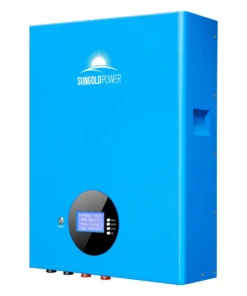
5.12KWH Wall-Mounted LiFePO4 Lithium Battery – Reliable Solar Battery Near Me
Lithium Solar Batteries
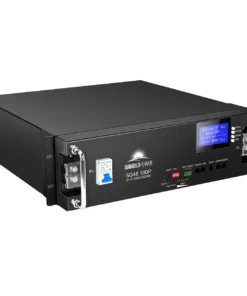
48V 100Ah Server Rack LiFePO4 Lithium Battery SG48100P — UL1973 / UL9540A
Lithium Solar Batteries
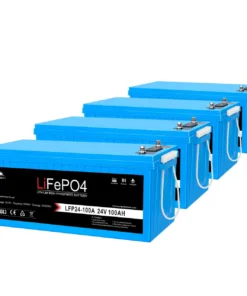
4× 24V 100Ah LiFePO4 Deep Cycle Lithium Battery — Bluetooth / Self-Heating / IP65
Lithium Solar Batteries
Lithium Solar Batteries
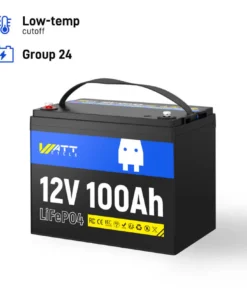
WattCycle 12V 100Ah LiFePO4 Battery – Reliable Power for Solar, RV & Off-Grid Use
Lithium Solar Batteries
Lithium Solar Batteries
PowerMax 51.2V 314Ah Outdoor Energy Storage Battery — UL1973 / UL9540A / CEC Listed
Lithium Solar Batteries
LiFePO4 200Ah Battery – Premium 48V 200Ah LiFePO4 Battery Price & Performance
Reviews
There are no reviews yet.