
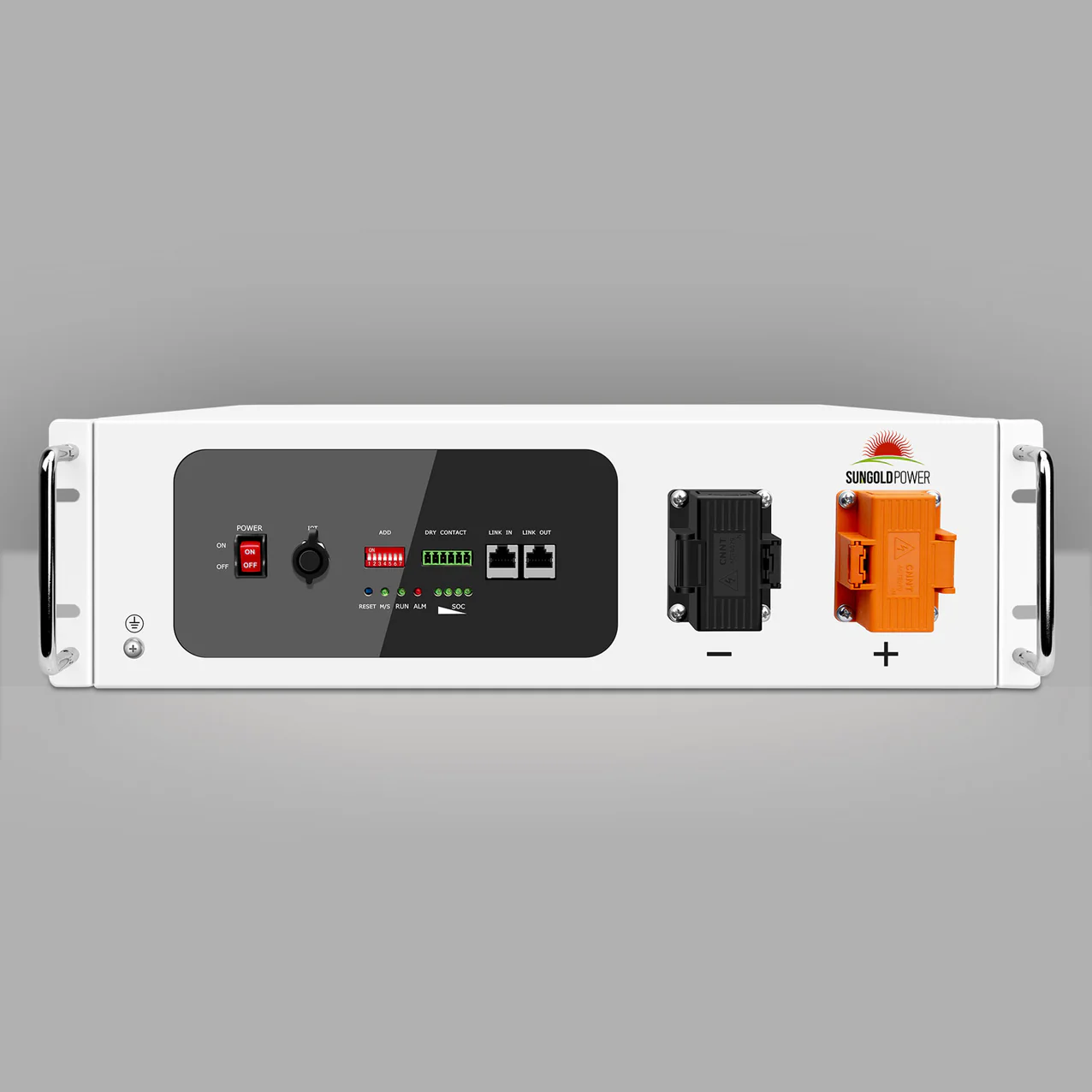
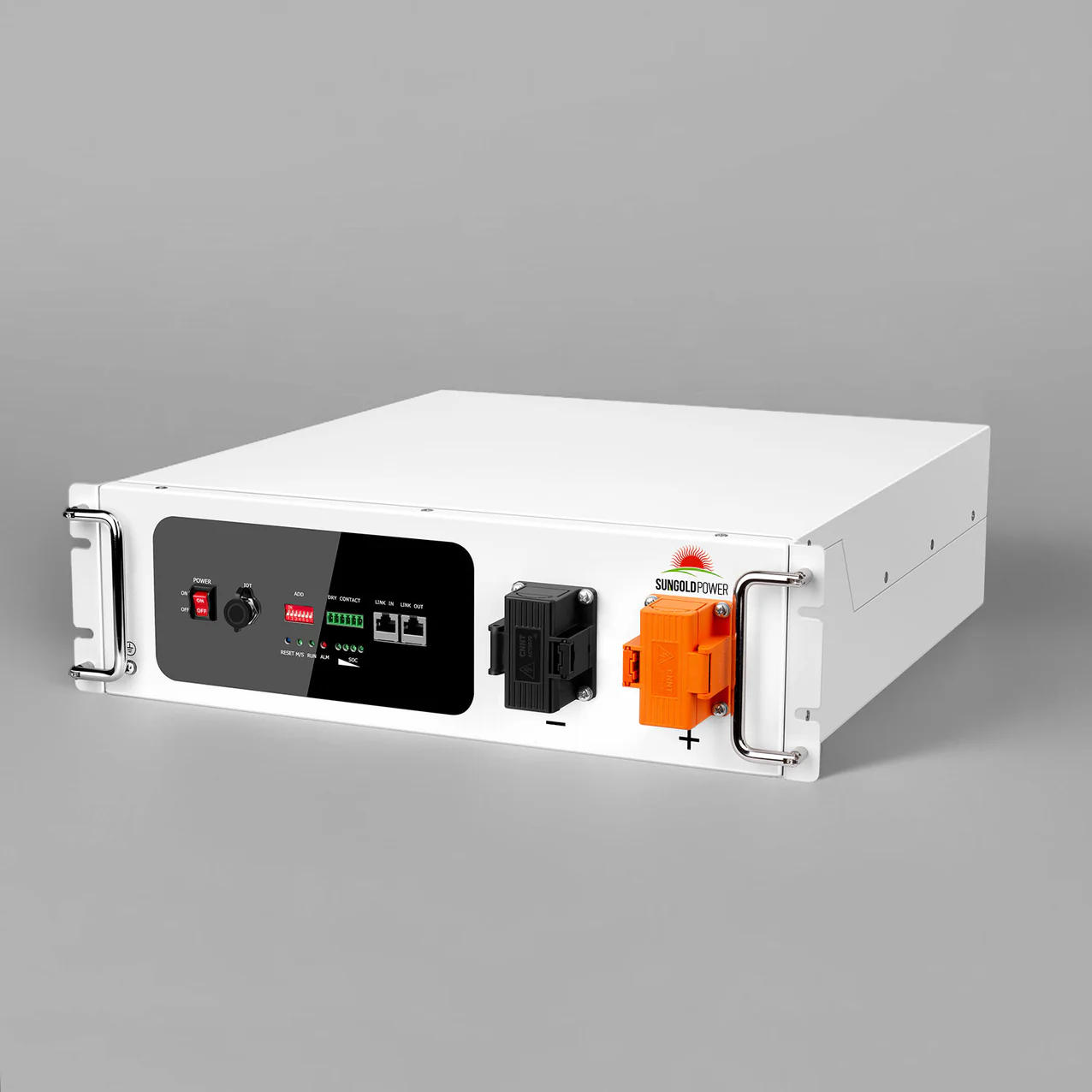
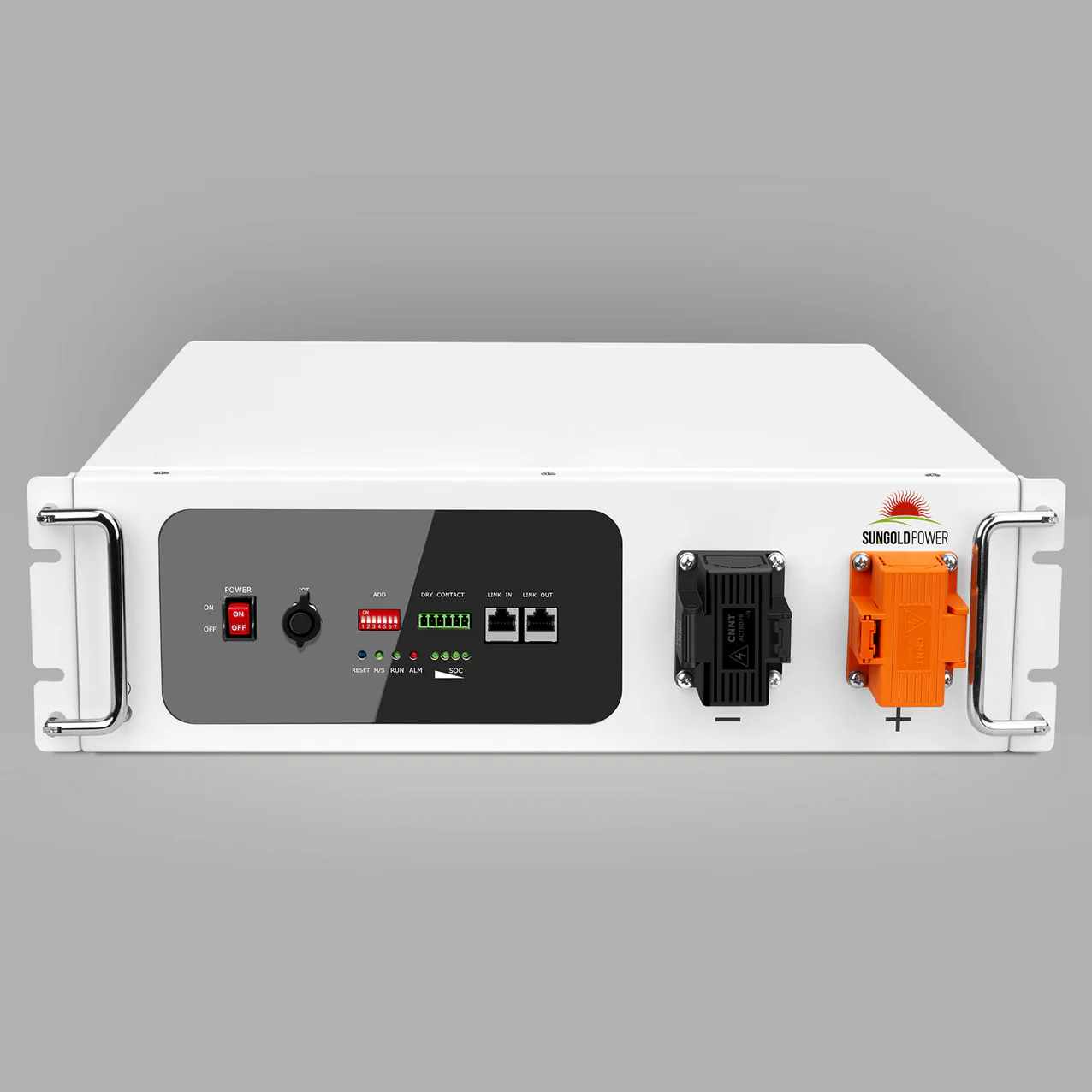
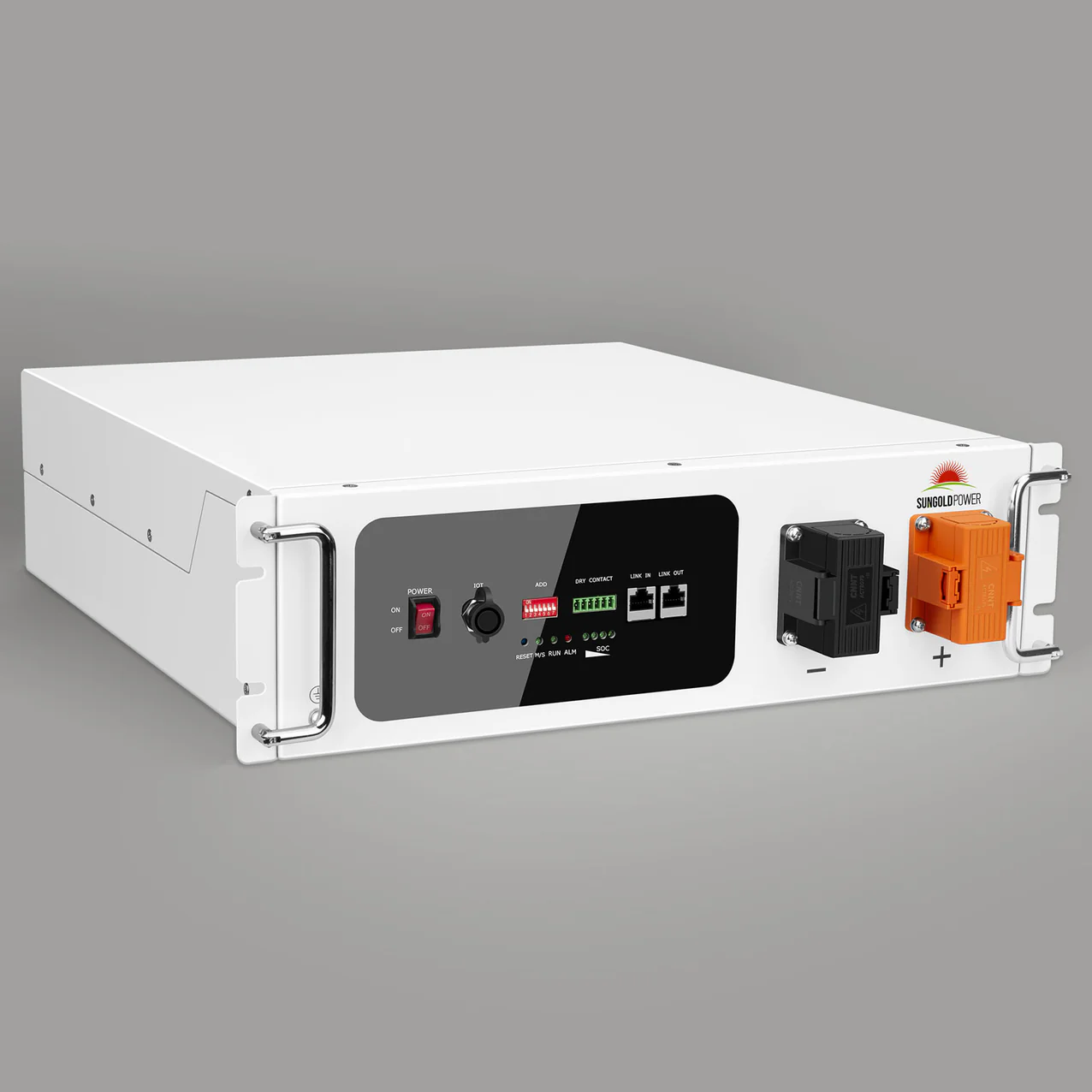
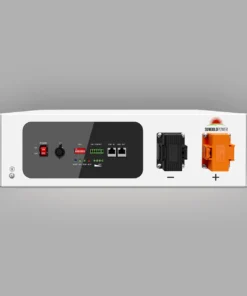
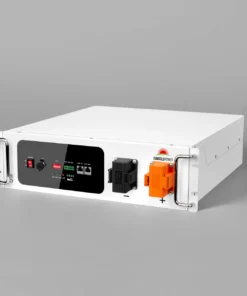
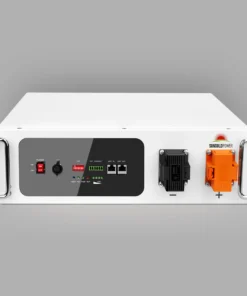
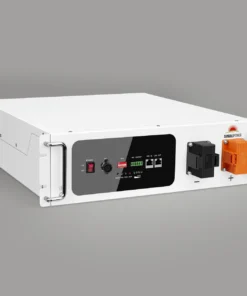
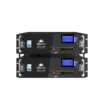
LiFePO4 Battery 48V — SGH48100T Server Rack, 100Ah, Self-Heating, 7,000 Cycles, UL 1973
The SGH48100T is a 3U server rack LiFePO4 battery 48V unit rated at 100Ah and 5.12kWh, with a built-in self-heating system that activates automatically when cell temperature drops below 41°F — the specification that makes this battery reliable in cold climates where standard lithium cells would refuse a charge on a winter morning. With more than 7,000 deep-cycle cycles, a 10-year warranty, a 15-year design life, and UL 1973 certification, this is a purpose-built server rack battery for home energy storage, small commercial systems, and any installation where cold-weather performance is not optional.
Table of Contents
- Self-Heating — How It Works and Why It Matters
- 7,000 Cycles and the 15-Year Design Life
- Intelligent BMS Protection
- Inverter Compatibility and Communication
- Frequently Asked Questions
Self-Heating — How It Works and Why It Matters
Standard LiFePO4 cells cannot be charged safely below approximately 32°F. At lower temperatures, lithium ions move through the electrolyte too slowly to intercalate cleanly into the anode, causing metallic lithium plating that permanently reduces capacity and creates internal resistance that accelerates further degradation. A battery without self-heating protection either refuses to charge at all — via BMS cutoff — or charges in a way that slowly destroys the cells.
The SGH48100T solves this at the hardware level. When the BMS detects cell temperature below 41°F, the heating element activates automatically and warms the cells to 53.6°F before allowing any charge current to flow. The entire process is automatic — no user input, no manual override required. Once cells reach operating temperature, the BMS opens the charge path and the battery accepts its full rated charge current as if it were a warm day.
This matters practically in any installation where overnight temperatures fall below 40°F regularly — which covers the majority of North America outside the Gulf Coast and Southwest desert regions from October through April. For a 48v battery solar system on a cold morning when the panels are already producing, a battery without self-heating rejects that free energy. The SGH48100T accepts it.
The heating range of -13°F to 41°F means the system activates down to -13°F ambient — well below the freezing point and into the temperature range encountered in northern states, Canada, and high-altitude installations year-round.
7,000 Cycles and the 15-Year Design Life
The cycle life specification of more than 7,000 deep cycles is among the highest available for a server rack battery lithium ion 48v in this format. To put that in practical terms: a home energy storage system that completes one full charge and discharge cycle per day takes 7,000 days — just over 19 years — to reach that cycle count. Even at two cycles per day in an aggressive solar self-consumption application, the battery reaches 7,000 cycles after approximately 9.5 years.
The 15-year design life is the manufacturer’s assessment of the battery’s expected service period under normal operating conditions. The 10-year warranty is the legally backed portion of that life expectation — the remaining five years represent expected continued performance beyond the warranty term at reduced but still useful capacity.
Both figures are supported by LiFePO4 chemistry’s inherent advantage in cycle life compared to other lithium-ion chemistries. The iron-phosphate cathode structure is more stable under repeated lithiation and de-lithiation than oxide-based cathodes, resulting in slower capacity fade over hundreds of cycles.
Intelligent BMS Protection
The BMS in the SGH48100T monitors every cell individually and applies protection at the cell level before faults propagate to the pack level:
- Overcharge protection — cuts charge current before any cell reaches the upper voltage limit, preventing the electrolyte decomposition that overcharging causes.
- Over-discharge protection — disconnects the load before any cell falls below the lower voltage limit, preventing the copper dissolution that deep discharge causes in lithium cells.
- Overload and short-circuit protection — hardware-level current interruption within microseconds of a fault event.
- Over-temperature protection — disconnects charge and discharge paths when cell temperature exceeds safe operating limits.
- Low-temperature charge protection — the self-heating function’s BMS integration, described above.
The distinction between a good BMS and a marginal one is the speed and granularity of these protections. Cell-level monitoring catches imbalances before they become faults. Microsecond-level fault response prevents damage that millisecond-level response allows to occur.
Inverter Compatibility and Communication
The SGH48100T communicates via RS485 and CAN Bus protocols with the relevant cables included. Both protocols are supported by the majority of quality residential and commercial inverters currently in the market. Confirmed compatible inverters include Growatt, Deye, Sol-Ark, SunGoldPower, Luxpower, EG4, Victron Energy, Schneider, SMA, and Solis.
When BMS-to-inverter communication is active over CAN or RS485, the inverter receives the battery’s state of charge, voltage, current limits, and alarm status in real time. The inverter adjusts its charge and discharge behaviour based on this data rather than operating on fixed parameters — extending battery life by preventing the overcharge and over-discharge events that fixed-parameter operation causes over time.
Browse our full 48V Server Rack Batteries, Solar Battery Storage, and Off-Grid Power Systems for compatible inverters and system components.
Frequently Asked Questions
Q: What triggers the self-heating function on the SGH48100T? The self-heating activates automatically when cell temperature falls below 41°F (5°C). The heating element warms the cells to 53.6°F (12°C) before the BMS allows charge current to flow. The activation range covers temperatures from -13°F down to 41°F — no user intervention is required at any point in this process.
Q: How does the SGH48100T’s 7,000-cycle rating compare to standard lithium batteries? Most residential LiFePO4 batteries are rated at 4,000–5,000 cycles. The SGH48100T’s 7,000-cycle rating represents a 40–75% increase in rated cycle life, which translates directly to a longer service period before the battery falls below its end-of-life capacity threshold of typically 70–80% of original rated capacity.
Q: What is the 48v battery charger or inverter required for this battery? The SGH48100T charges through a connected hybrid inverter or off-grid inverter with a 48V LiFePO4 charging profile. The RS485 or CAN communication cable connects the battery BMS to the inverter, allowing the inverter to manage charge and discharge parameters based on live BMS data rather than fixed settings.
Q: How many SGH48100T units can be connected in parallel? Up to 32 units can be connected in parallel, scaling total capacity from 5.12kWh to 163.84kWh. At this scale, proper busbar installation and equal cable lengths between each unit and the common bus are required to ensure balanced current sharing across all units.
Q: How to get a 48v battery like the SGH48100T for a home solar system? The SGH48100T is available directly from SunGoldPower and through authorised resellers. For a home solar installation, pair it with a compatible 48V hybrid or off-grid inverter — SunGoldPower’s own inverter range is pre-configured for seamless communication with this battery via CAN or RS485.
| Quantity | 1 Unit, 2 Units, 4 Units |
|---|
Be the first to review “LiFePO4 Battery 48V SGH48100T Authentic Self-Heating 7000”
Related products
Lithium Solar Batteries
Lithium Solar Batteries
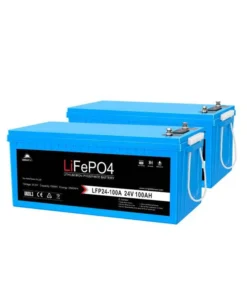
2× 24V 100Ah LiFePO4 Deep Cycle Lithium Battery — Bluetooth / Self-Heating / IP65
Lithium Solar Batteries
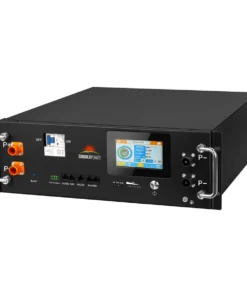
CoreX 5 Pro Server Rack 48V 100Ah Residential Energy Storage Battery — WiFi and Bluetooth
Lithium Solar Batteries
Lithium Solar Batteries
Lithium Solar Batteries
Lithium Solar Batteries
LiFePO4 200Ah Battery – Premium 48V 200Ah LiFePO4 Battery Price & Performance
Reviews
There are no reviews yet.