
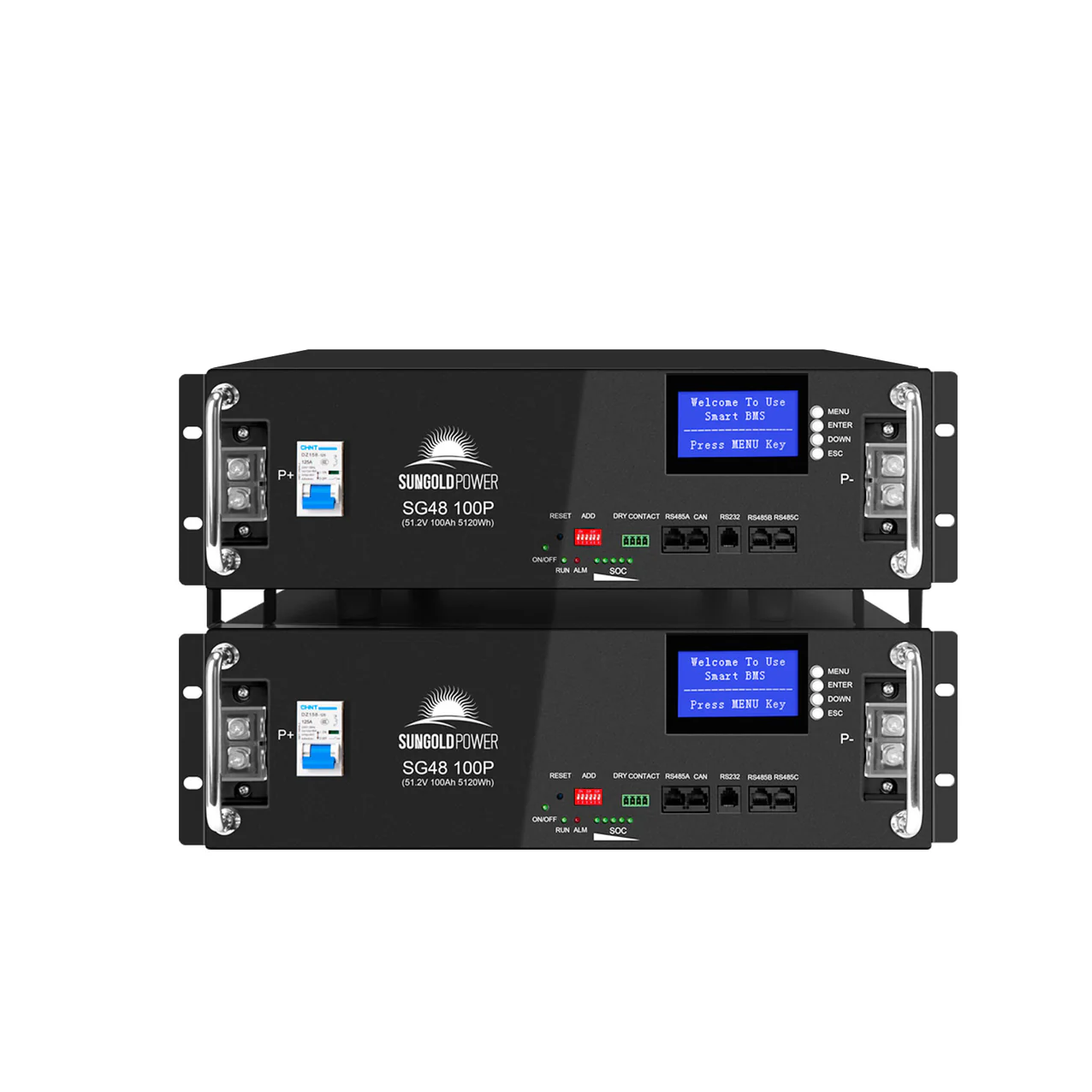
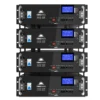
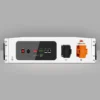
48V Battery Bank — 2 × SG48100P Server Rack LiFePO4, 10.24kWh, UL 1973, UL 9540A
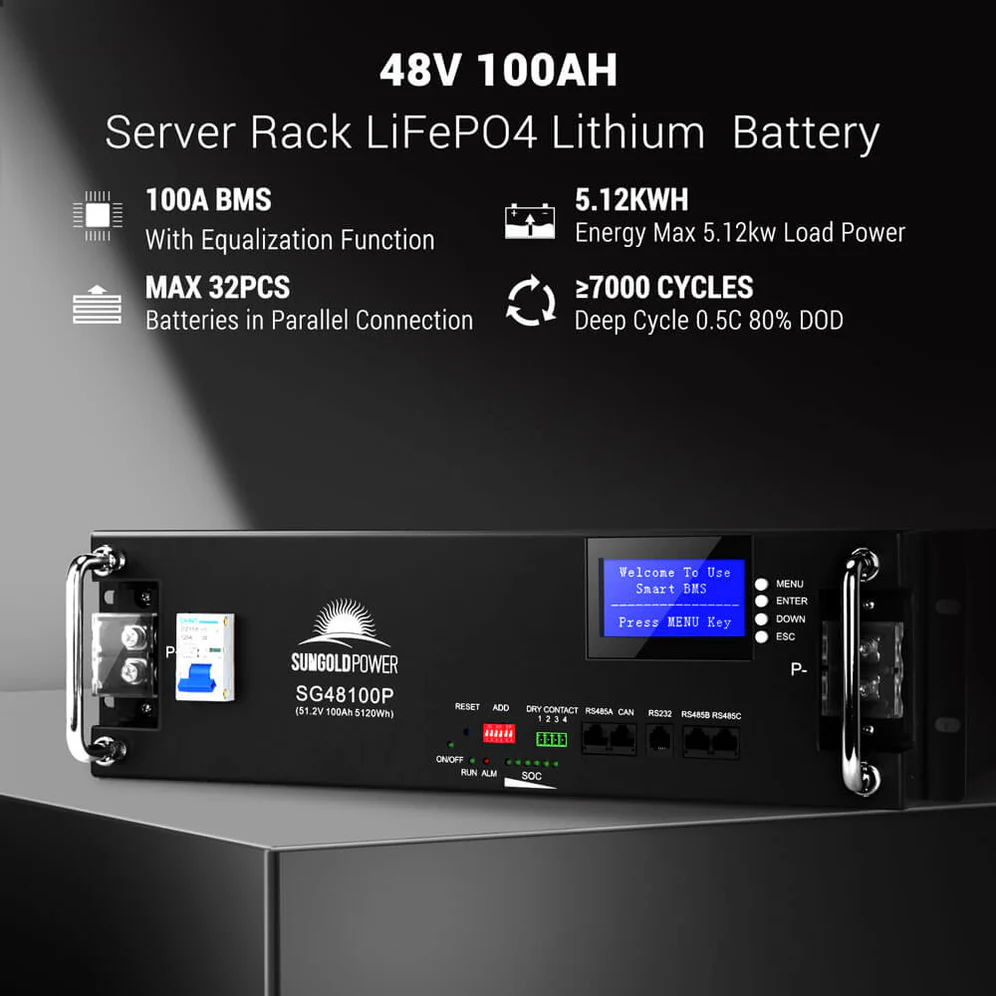
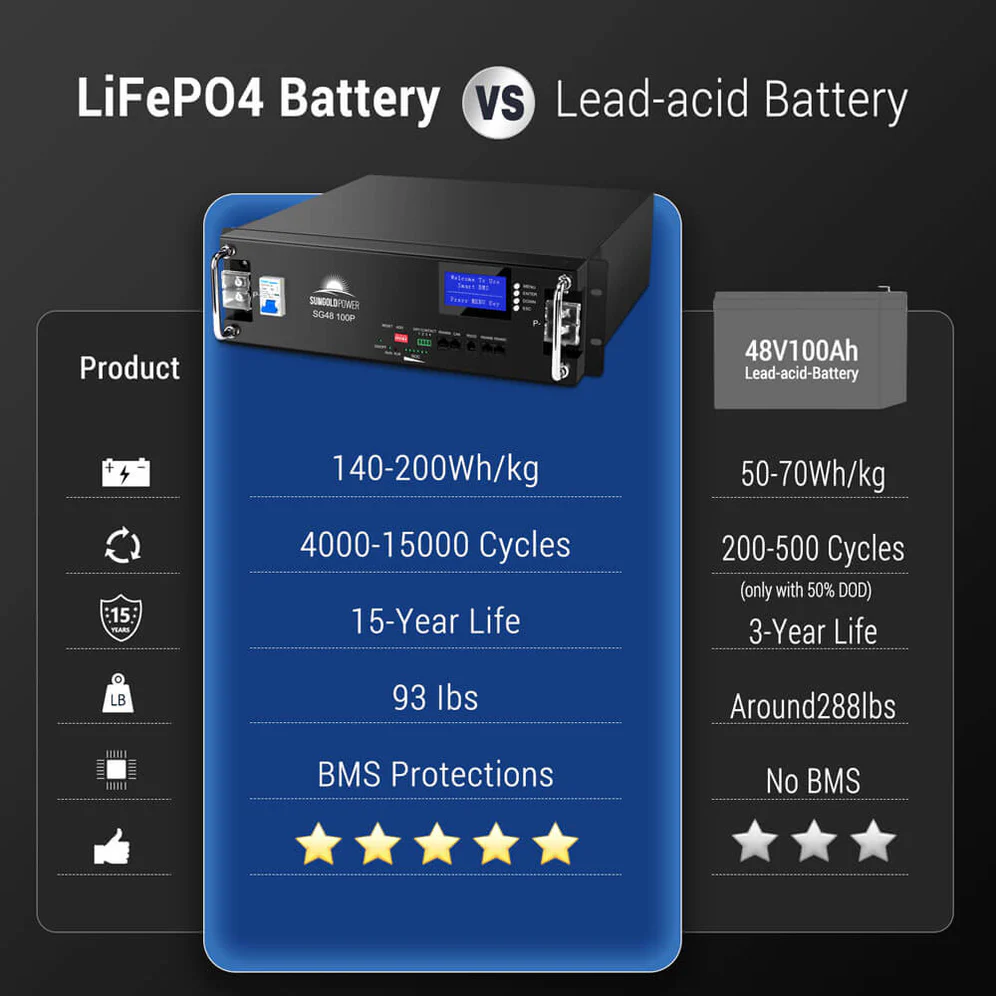
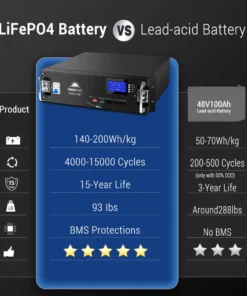
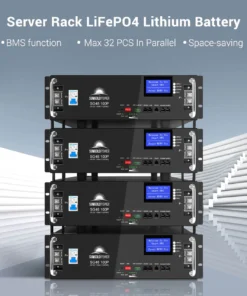
Two SG48100P units form a 48V battery bank of 200Ah and 10.24kWh — double the capacity of a single unit in a parallel configuration that scales cleanly to 32 units without changing the system architecture. Each unit is rated for more than 7,000 deep cycles with a 10-year warranty and a 15-year design life, carries UL 1973 and UL 9540A certifications, and communicates with most major inverters via CAN, RS485, and RS232. This is a practical starting bank for a residential solar storage system that needs more than one day of autonomy, or a commercial installation with moderate daily energy throughput requirements.
Table of Contents
- What 10.24kWh Covers in a Real Installation
- UL 1973 and UL 9540A — What the Certifications Mean
- Intelligent BMS Across Both Units
- Inverter Compatibility
- Frequently Asked Questions
What 10.24kWh Covers in a Real Installation
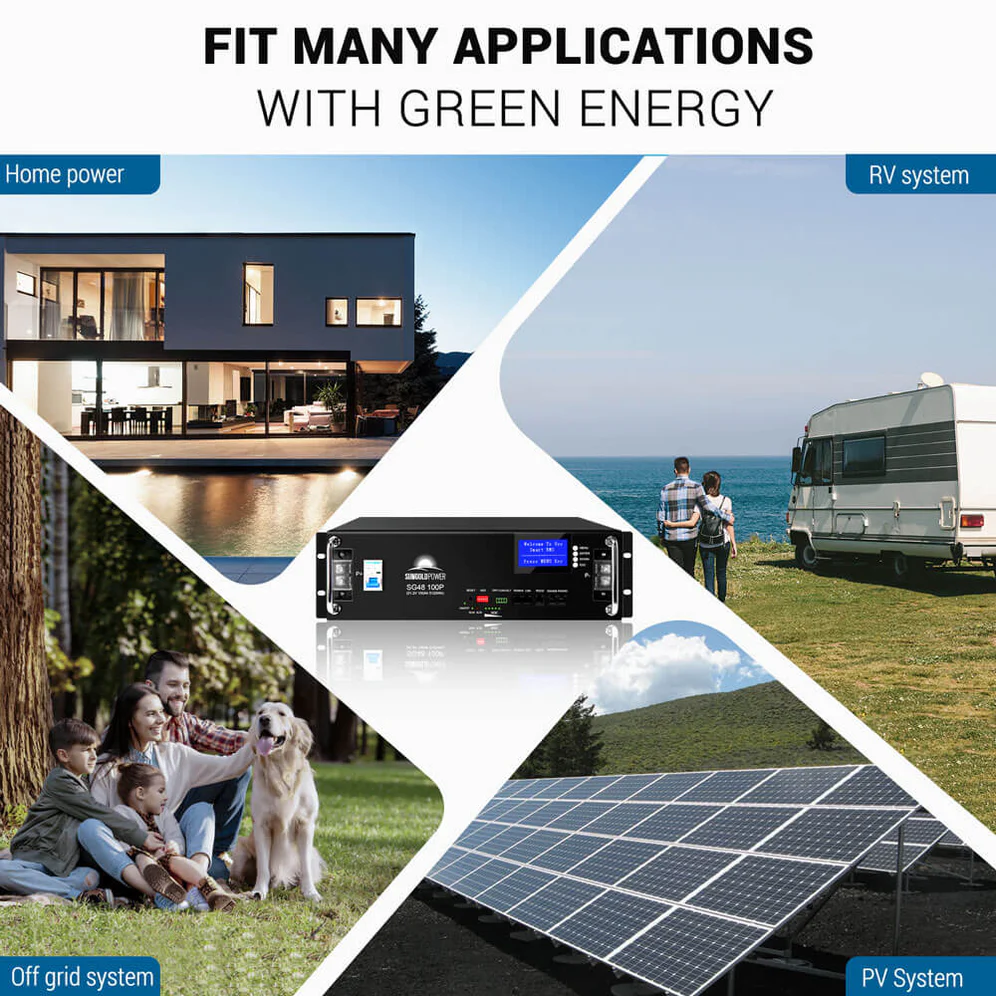
A 10.24kWh 48v battery bank at 80% usable depth of discharge provides 8.19kWh of accessible energy per cycle. In a residential solar storage context:
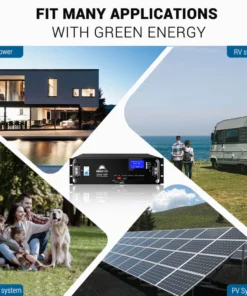
- Average US household consumption runs at approximately 30kWh per day. A 10.24kWh bank covers roughly 27% of that daily consumption from storage alone — meaningful bill reduction in a grid-tied system, or a partial overnight supply in a hybrid off-grid setup.
- A well-insulated off-grid cabin with LED lighting, a refrigerator, a laptop, and fans averaging 15–20kWh per day can run through most or all of a short winter night on a 10.24kWh bank, depending on actual load profile and depth of discharge management.
- A small commercial application — a retail space, office, or workshop running 8–10 hours per day — can offset peak demand charges significantly with 10.24kWh of dispatchable storage cycling once per day.
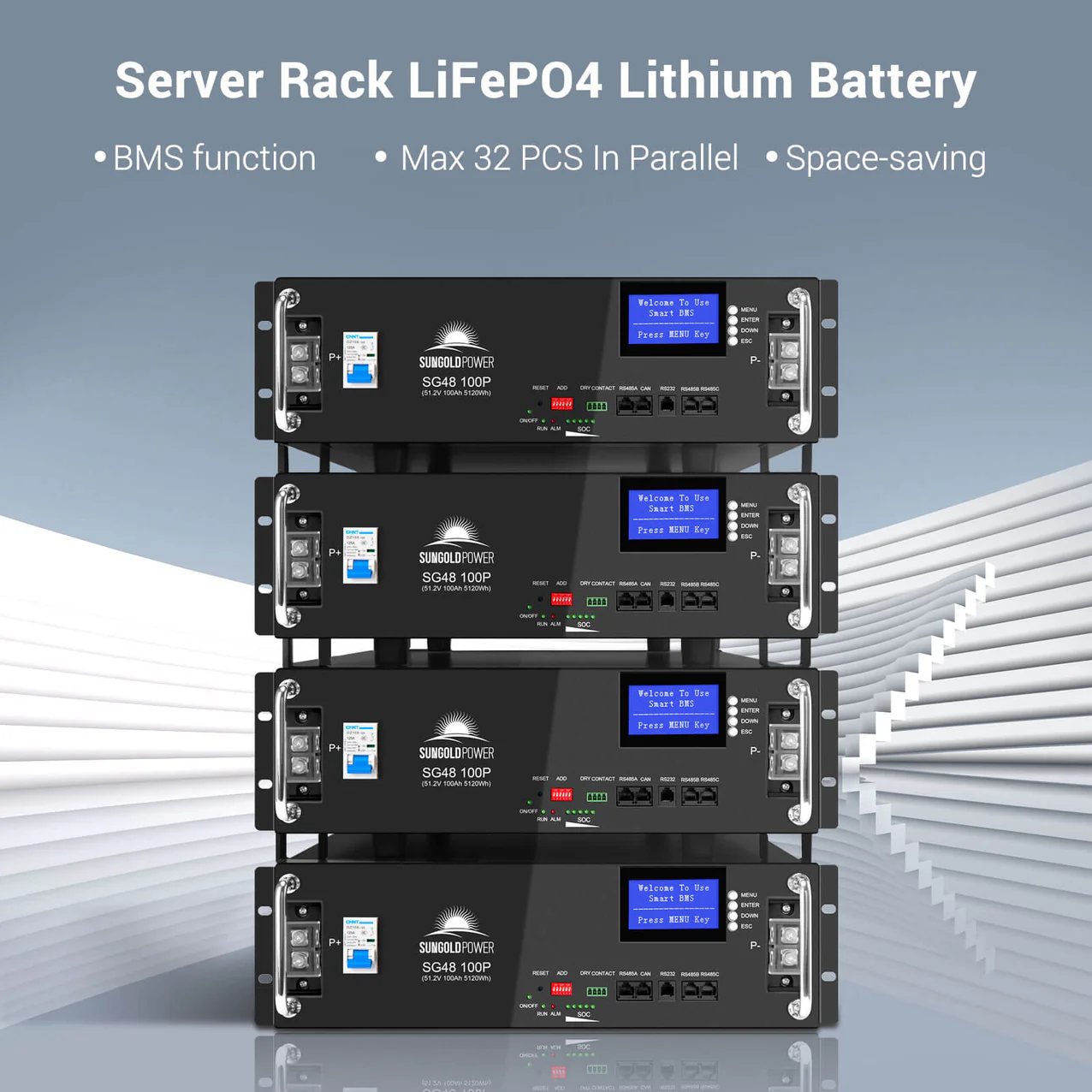
Starting with two units and the 48v battery charger infrastructure scaled for the full 32-unit maximum means the bank can grow to 163.84kWh without any architecture changes — a meaningful long-term planning advantage.
UL 1973 and UL 9540A — What the Certifications Mean
UL 1973 is the American standard for batteries used in stationary, vehicle-propulsion, and light electric rail applications — specifically covering the safety of battery systems used in energy storage at the system level. It evaluates cell quality, BMS functionality, electrical protection, and the battery’s behaviour under fault conditions including overcharge, external short circuit, and thermal abuse.
UL 9540A is the test method for evaluating the fire propagation characteristics of battery energy storage systems. It simulates a cell-level thermal runaway event and measures whether that event propagates to adjacent cells, modules, or units. A battery that passes UL 9540A has demonstrated that a single-cell failure does not cascade into a system-level fire event — the standard specifically relevant to installers and AHJs (authorities having jurisdiction) when approving indoor energy storage installations.
For a homeowner or building owner evaluating a 48v lifepo4 battery for installation in a living space, garage, or commercial premises, both certifications together represent the most complete safety documentation available for a residential-class energy storage product in the US market.
Intelligent BMS Across Both Units
Each SG48100P operates an independent BMS that monitors cell voltage, current, and temperature for its own pack. In a two-unit parallel bank, both BMS units operate simultaneously — each protecting its own cells while the combined bank supplies the inverter load.
The BMS on each unit provides:
- Cell voltage monitoring — individual cell voltage tracking with automatic balancing to maintain uniform charge distribution across all cells.
- Over-current protection — hardware-level current interruption on charge and discharge paths.
- Thermal monitoring — cell temperature tracking with automatic charge and discharge path disconnection on over-temperature events.
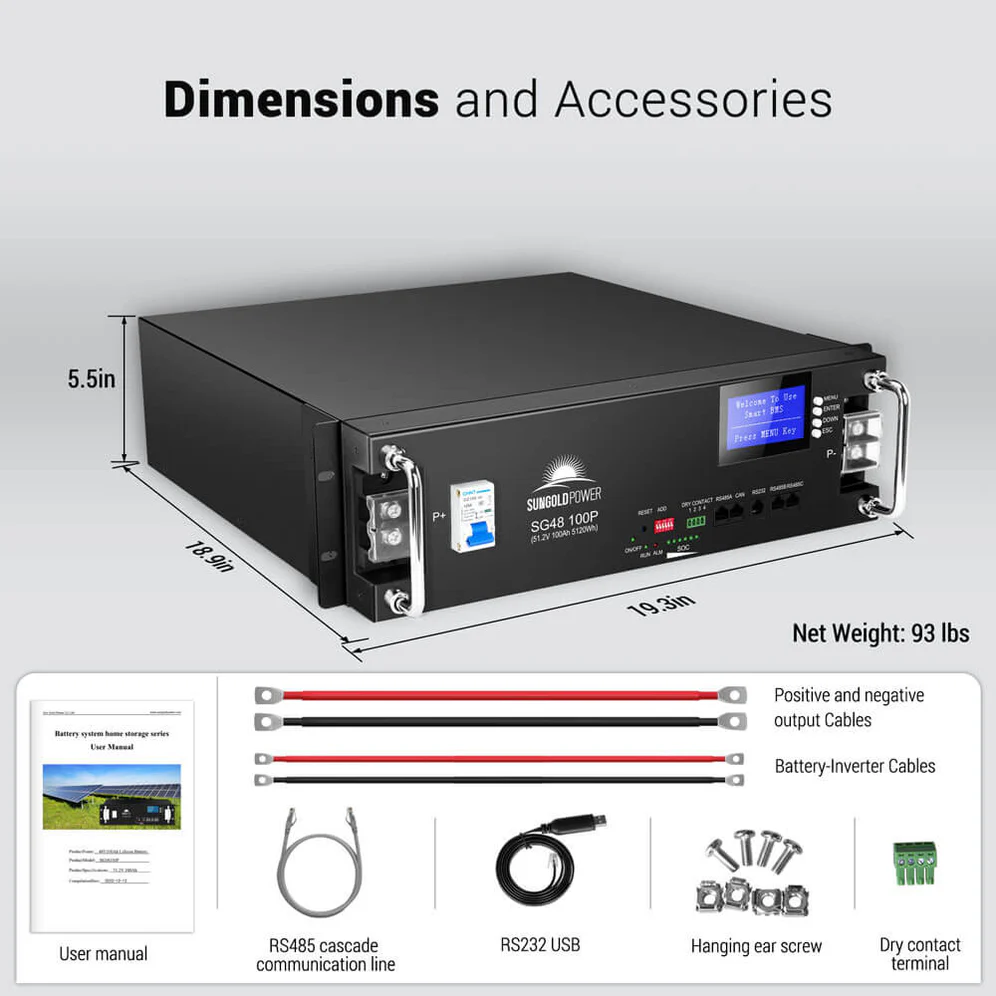
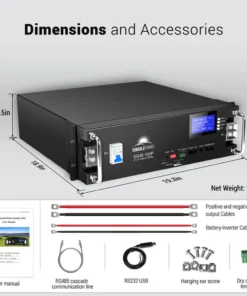
- Communication — CAN, RS485, and RS232 outputs for inverter BMS integration.
After installing the two-unit bank, confirm that both units show balanced current sharing through the first complete charge and discharge cycle before declaring the installation complete.
Inverter Compatibility
The SG48100P is compatible with most inverters in the current market via CAN, RS485, and RS232 communication protocols. Confirmed compatible brands include Growatt, Deye, SunGoldPower, Luxpower, Victron Energy, Schneider, Phocos, and SMK. When the battery communicates with the inverter over any of these protocols, the inverter receives live state-of-charge data, current limits, and alarm states from the BMS — enabling the inverter to manage the battery correctly without relying on voltage-based estimation.
Browse our full 48V Server Rack Batteries, Solar Battery Storage, and Off-Grid Power Systems for compatible inverters and expansion components.
Frequently Asked Questions
Q: Why start a 48V battery bank with two units rather than one? Two units provide 10.24kWh — enough to cover meaningful overnight storage in most residential applications. A single 5.12kWh unit works but limits the system’s ability to carry overnight loads without the solar array recharging before morning demand peaks. Starting at 10.24kWh gives the system enough depth to demonstrate its value in bill reduction and backup coverage from the first full day of operation.
Q: What does UL 9540A certification confirm about these batteries? UL 9540A tests whether a thermal runaway event in a single cell propagates to adjacent cells, modules, or units. A battery passing this test has demonstrated that a single-cell failure remains contained — it does not cascade into a system-level fire. This is the certification that installers and building officials most commonly require for indoor residential and commercial energy storage approvals.
Q: How does a 48v battery solar system use this bank? In a 48v battery solar system, the solar array charges the battery bank through an MPPT charge controller or hybrid inverter during daylight hours. The stored energy is dispatched through the inverter to power household loads at night or during grid outages. The SG48100P communicates its state of charge and current limits to the inverter via CAN or RS485, allowing the inverter to optimise charging and discharging based on actual battery condition.
Q: Can these units be mixed with other SunGoldPower 48V batteries in the same bank? Mixing different battery models in a parallel bank is not recommended. Even batteries with the same nominal voltage and capacity from the same manufacturer can have different internal resistance and BMS parameters that lead to unequal current sharing. Use identical SG48100P units throughout the bank for reliable performance and warranty compliance.
Q: What is the maximum bank size using SG48100P units? The maximum parallel configuration is 32 units, delivering 163.84kWh of total capacity at 51.2V. At that scale, proper busbar design and equal cable lengths from each unit to the common bus are essential for balanced current distribution across all 32 BMS units.
Be the first to review “48V Battery Bank 2×100Ah Authentic LiFePO4 UL1973 Server”
Related products
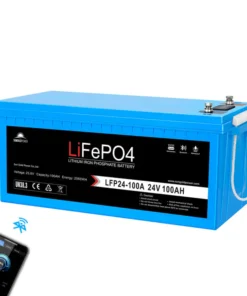
24V Battery
24V 100Ah LiFePO4 Battery – Reliable Deep Cycle Lithium Power for Solar, RV & Off-Grid Applications
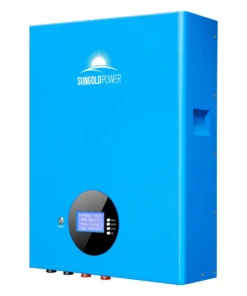
Lithium Solar Batteries
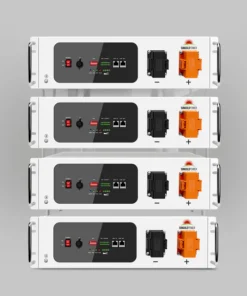
5.12KWH Wall-Mounted LiFePO4 Lithium Battery – Reliable Solar Battery Near Me
Lithium Solar Batteries
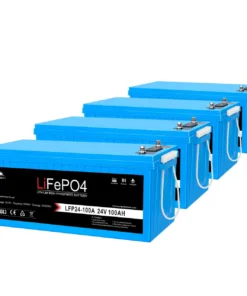
4× 24V 100Ah LiFePO4 Deep Cycle Lithium Battery — Bluetooth / Self-Heating / IP65
Lithium Solar Batteries
Lithium Solar Batteries
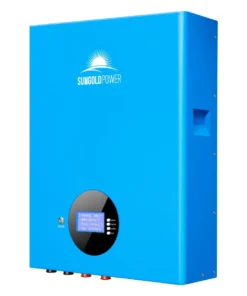
Wall-Mounted 5.12kWh LiFePO4 Lithium Battery SG48100M — 48V 100Ah UL1973
Lithium Solar Batteries
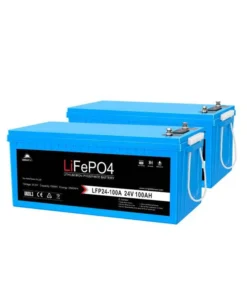
2× 24V 100Ah LiFePO4 Deep Cycle Lithium Battery — Bluetooth / Self-Heating / IP65
Lithium Solar Batteries
PowerMax 51.2V 314Ah Outdoor Energy Storage Battery — UL1973 / UL9540A / CEC Listed
Lithium Solar Batteries
CoreX 5 Pro Server Rack 48V 100Ah Residential Energy Storage Battery — WiFi and Bluetooth
Reviews
There are no reviews yet.