
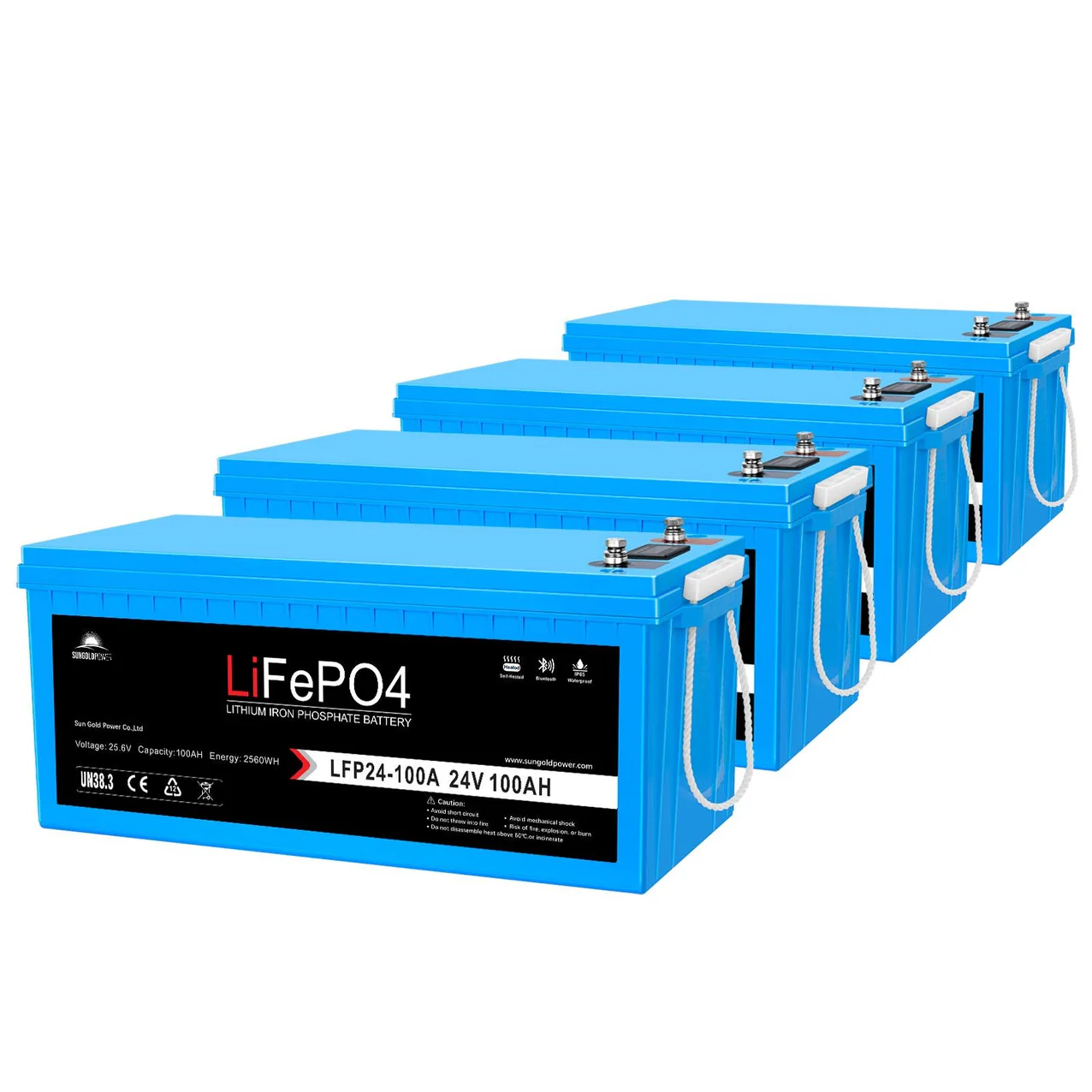
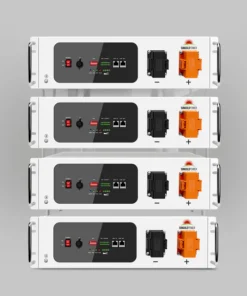
Lithium Solar Batteries 4×24V 100Ah — Authentic 10.24kWh [IP65]
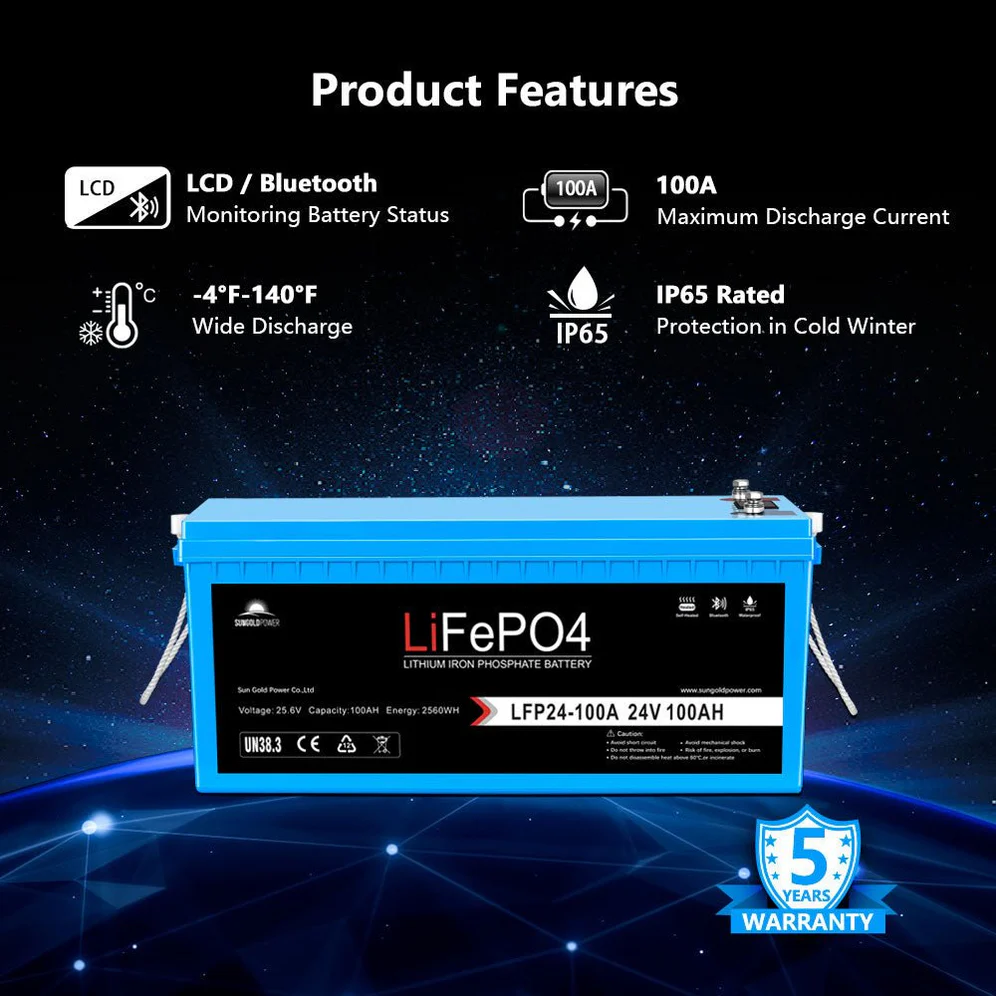
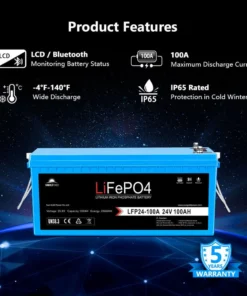
Four matched lithium solar batteries at 24V 100Ah each — configured as a 10.24kWh parallel bank at 24V or as two matched series pairs for a 48V / 200Ah / 10.24kWh bank — this four-unit set is the capacity level where genuine residential off-grid independence becomes practical. Every unit carries Grade A UL1973-certified LiFePO4 cells, a 100A BMS with Bluetooth monitoring, self-heating protection down to 33.8°F and IP65 sealing. At 400Ah total capacity in 24V parallel configuration — or 200Ah at 48V in series-pair configuration — this bank stores enough energy to cover the overnight load of a large off-grid cabin, a full-size residential backup system or a high-consumption marine vessel without solar supplementation.
Table of Contents
- Four-Unit System Specifications
- Two Configuration Options — 24V and 48V
- 10.24kWh — Overnight Independence for Residential Loads
- Four Independent Self-Heating Systems
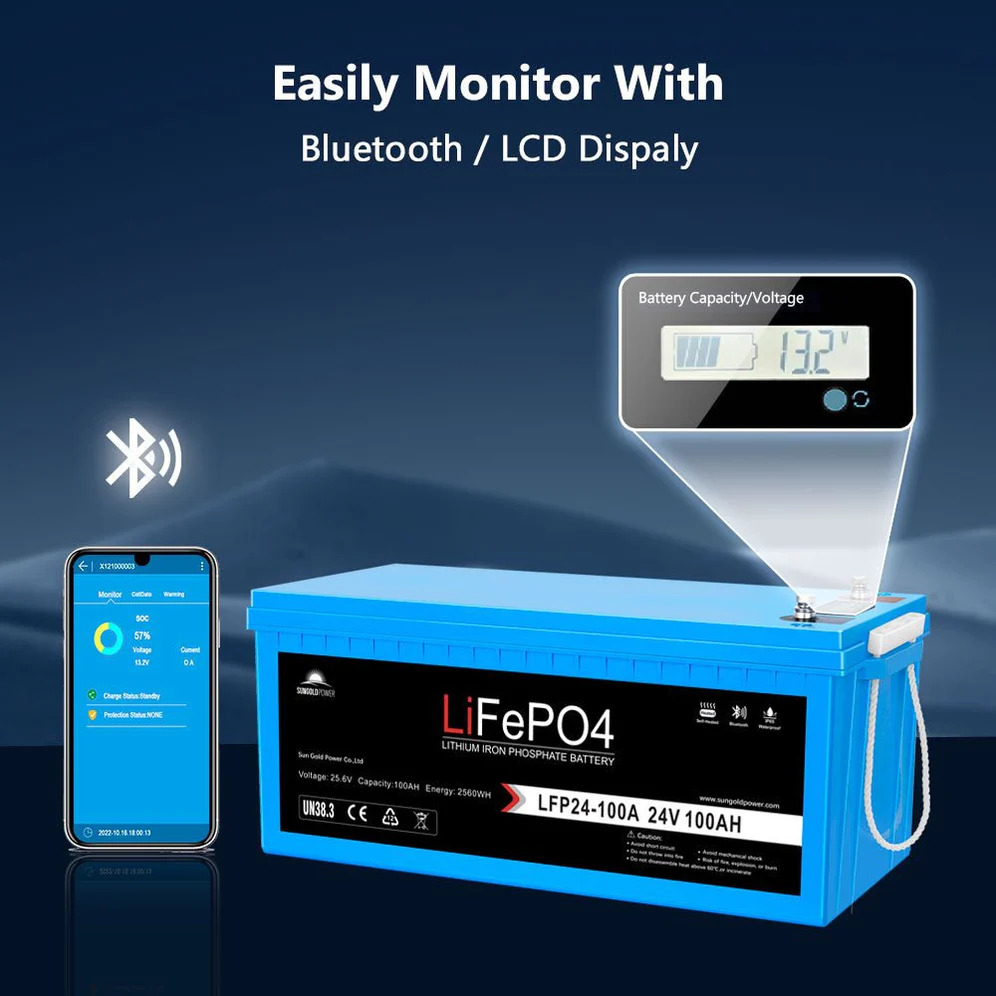
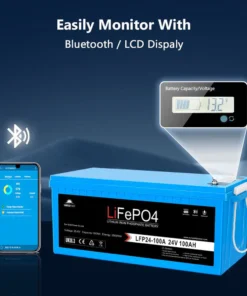
- Four Bluetooth BMS Units — Whole-Bank Monitoring
- Why Matched-Set Purchase Matters for Parallel Banks
- Solar Batteries for Sale — Long-Term Value Calculation
- FAQ
Four-Unit System Specifications
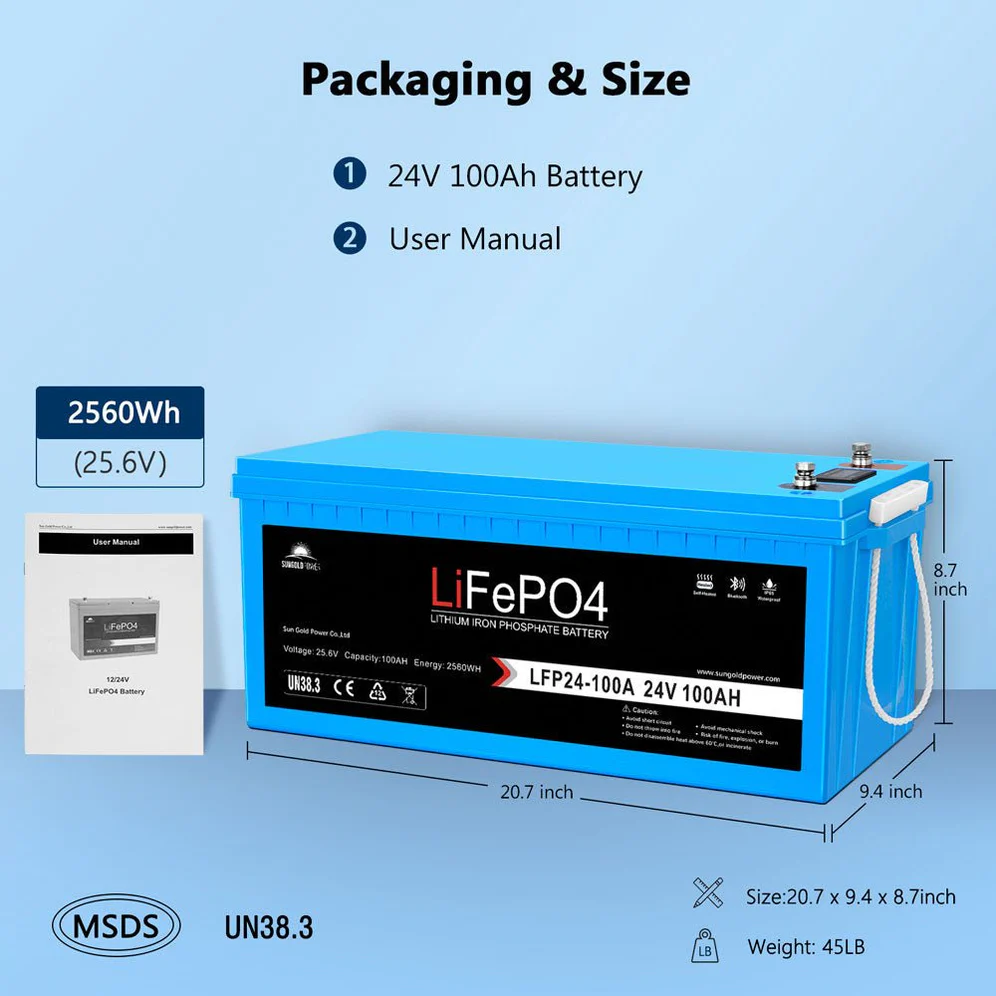
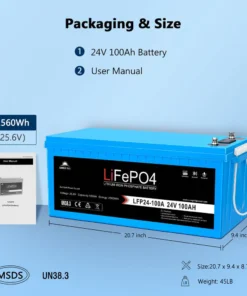
| Parameter | Single Unit | 4 Units Parallel (24V) | 4 Units 2S2P (48V) |
|---|---|---|---|
| Nominal Voltage | 25.6V | 25.6V | 51.2V |
| Nominal Capacity | 100Ah | 400Ah | 200Ah |
| Nominal Energy | 2.56kWh | 10.24kWh | 10.24kWh |
| Max Continuous Charge | 100A | 400A combined | 200A combined |
| Peak Discharge (10s) | 200A | 800A combined | 400A combined |
| Voltage Window | 21.6–29.2V | 21.6–29.2V | 43.2–58.4V |
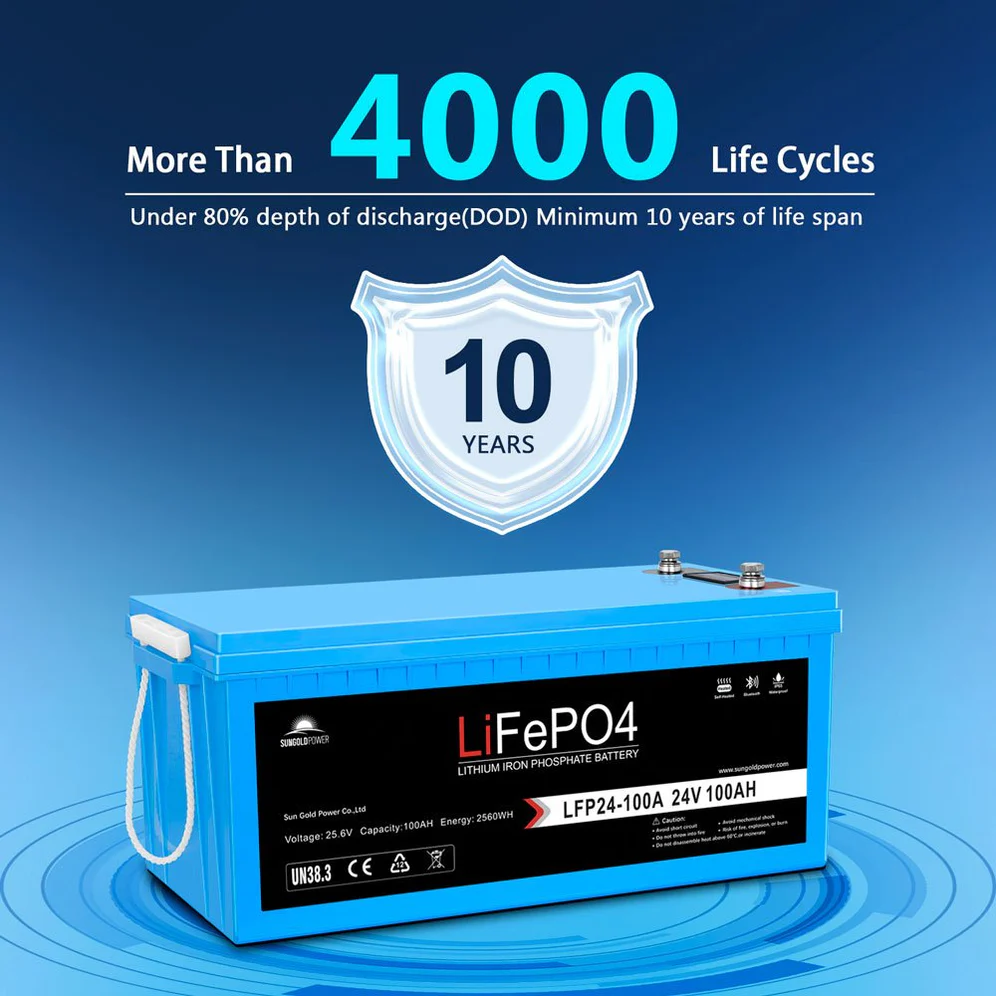
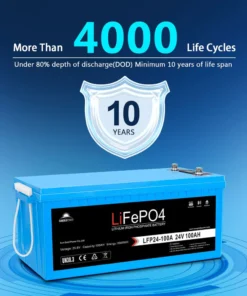
| Cycle Life (80% DOD) | 4,000+ | 4,000+ | 4,000+ |
| Total Weight | 45 lb | 180 lb | 180 lb |
| IP Grade | IP65 | IP65 each | IP65 each |
| Monitoring | Bluetooth M865 | 4 independent units | 4 independent units |
Two Configuration Options — 24V and 48V
The four-unit purchase opens two distinct system architecture options — the configuration decision should be made based on the inverter system being deployed, not reconsidered later.
24V parallel (4P) — 400Ah / 10.24kWh: All four units connected in parallel across a common 24V bus bar. Total capacity is 400Ah at 25.6V nominal. Use when the system inverter is specified for 24V DC input. At 24V, 400Ah provides 10.24kWh of stored energy — the largest 24V bank configuration in this range.
48V series-parallel (2S2P) — 200Ah / 10.24kWh: Two pairs of series-connected units. Each pair: unit A positive to unit B negative, creating a 48V / 100Ah series pair. The two pairs then connect in parallel across a 48V bus bar — creating 48V / 200Ah / 10.24kWh total. Use when the system inverter is specified for 48V DC input. The 48V configuration supports connection to the full range of 48V off-grid inverters in the Sungold product family.
The total energy is identical in both configurations — the choice is a voltage architecture decision.
10.24kWh — Overnight Independence for Residential Loads
At 80% usable depth of discharge from the 10.24kWh total storage, this bank provides 8.19kWh of usable overnight energy. This is the capacity level where genuine overnight independence becomes possible for real residential loads:
- A mid-sized off-grid home consuming 6–8kWh overnight (refrigerator, lighting, standby loads, water pump) runs through the night without solar input and retains 10–30% state of charge at sunrise.
- A large RV or van conversion with air conditioning, refrigerator and full appliance load consuming 4–6kWh overnight retains comfortable reserve capacity.
- A residential backup system powering critical loads during a grid outage — refrigerator, lighting, device charging, medical equipment — supports 24+ hours of independence before requiring solar recharging.
The solar batteries for sale buyer evaluating capacity for genuine off-grid independence will find 10.24kWh to be the threshold at which daily solar cycling — charge during the day, discharge overnight — becomes a sustainable long-term pattern rather than a managed compromise.
Four Independent Self-Heating Systems
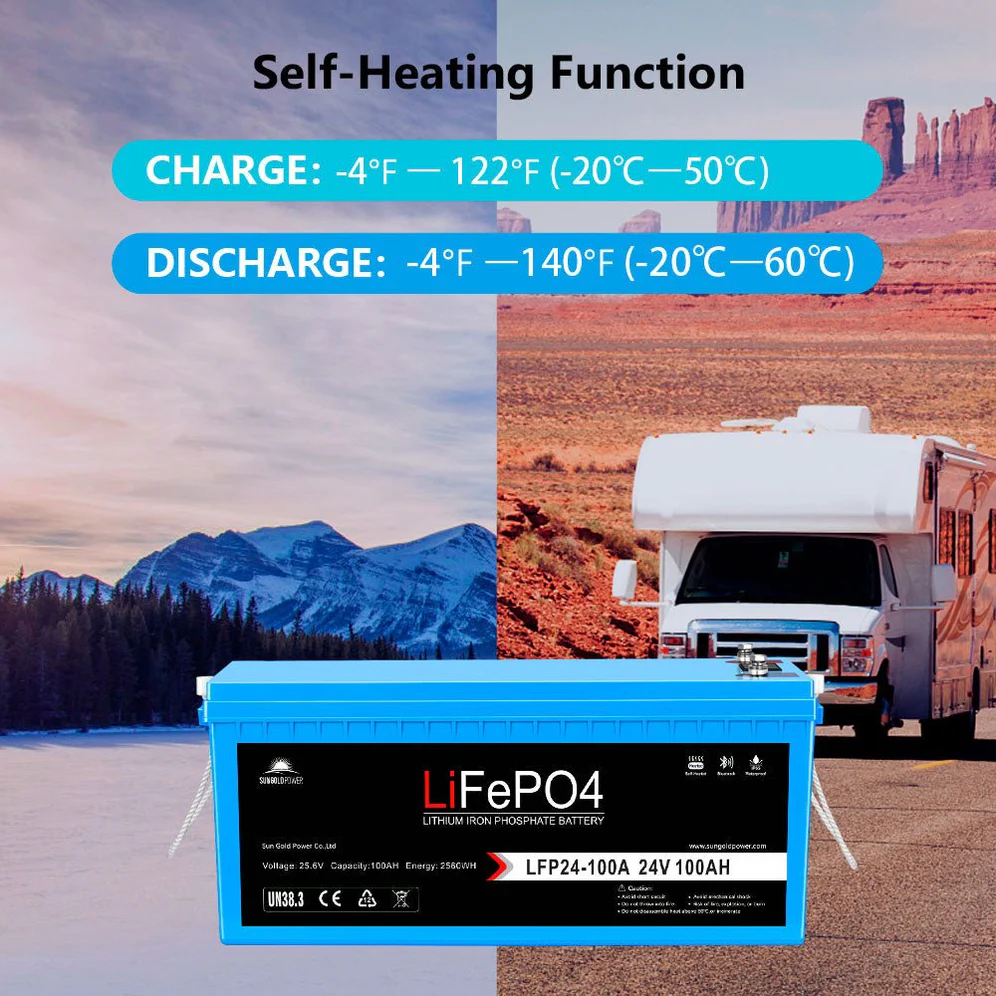
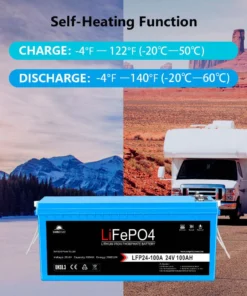
All four units self-heat simultaneously and independently — each activating when its own cell temperature drops below 33.8°F and deactivating at 42.8°F. The independent operation means no single heating failure affects the other units: if one unit’s heating element were to malfunction (an extremely unlikely failure mode for a solid-state function), the remaining three units continue to protect their own cells independently.
For a 10.24kWh 24V solar battery bank installed in a cold-climate environment — an off-grid cabin at altitude, a boat in northern waters, a vehicle in winter-use conditions — the practical consequence is a bank that charges at full rated current every morning regardless of overnight temperature, without manual intervention or the capacity-degrading effects of cold-charging that would progressively destroy a standard LiFePO4 bank.
Four Bluetooth BMS Units — Whole-Bank Monitoring
Each unit transmits independently to the Bluetooth monitoring app — four data streams, four sets of voltage, current, temperature and state-of-charge readings. For a large parallel bank, this granularity of monitoring is diagnostically powerful:
- A unit showing consistently lower state of charge than the others indicates unequal current sharing — likely caused by a cable length or connection resistance imbalance at that unit’s terminals.
- A unit showing higher temperature indicates that it is carrying more discharge current than the others — the same cable resistance diagnosis applies.
- All four units showing identical voltage and SOC confirms a correctly balanced parallel connection with equal cable paths.
Why Matched-Set Purchase Matters for Parallel Banks
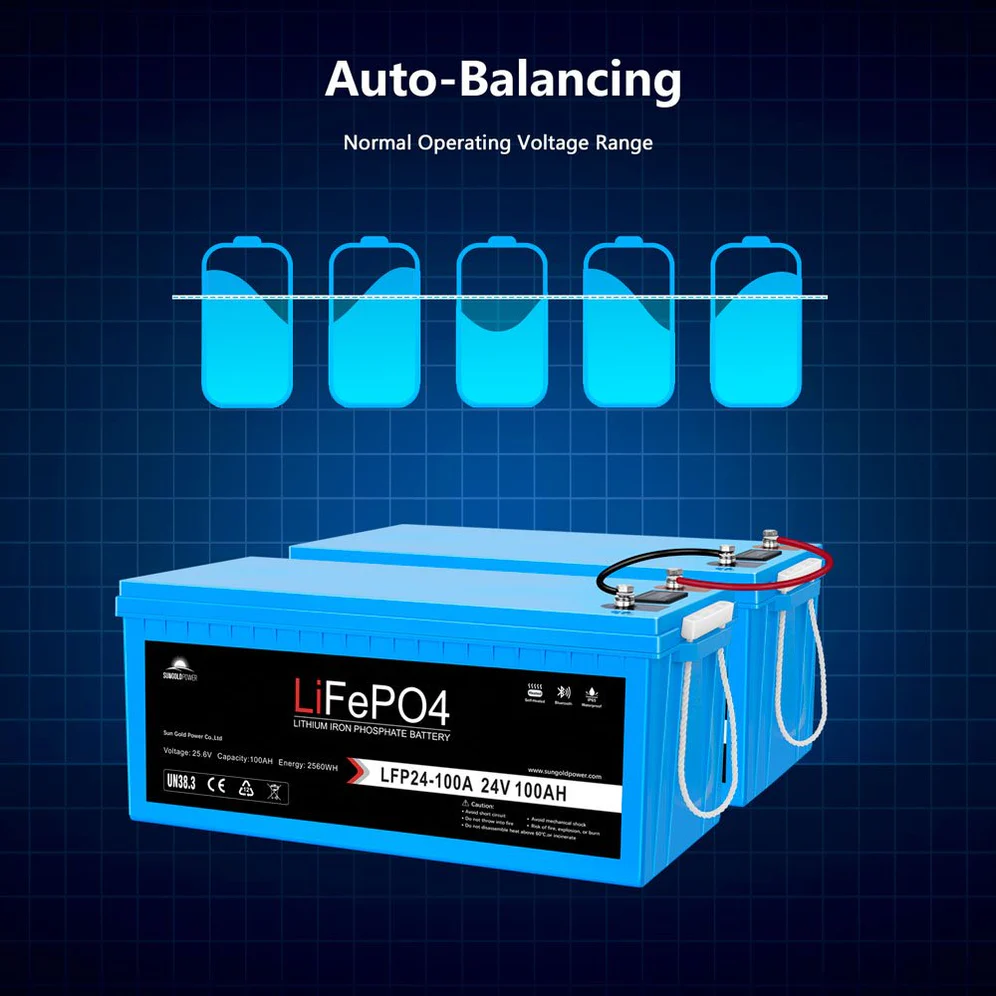
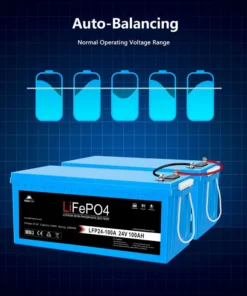
Purchasing four units together from the same production batch — which this listing provides — is the strongest available guarantee that all cells are matched in capacity, internal resistance and initial state of health. LiFePO4 cells age in correlation with their usage history; cells that start matched stay matched throughout their service life.
A parallel bank assembled from units purchased separately over time — different batches, different ages, different levels of prior cycling — will exhibit state-of-charge divergence that the BMS must continuously manage, increasing balancing overhead and accelerating the degradation of the more-aged cells.
Explore compatible inverter systems and MPPT charge controllers in our Solar Battery Storage, Off-Grid Solar Systems and Solar Kits categories.
FAQ
What is the total energy of four lithium solar batteries in this configuration? Four units in 24V parallel deliver 400Ah and 10.24kWh total. Four units in 2S2P (48V) configuration deliver 200Ah at 48V and the same 10.24kWh total — the energy is identical regardless of configuration, only the voltage and current levels change. At 80% depth of discharge, usable energy is approximately 8.19kWh in both configurations.
Can I use this set of solar batteries for sale as a 48V battery bank? Yes — configuring two series pairs in parallel (2S2P) creates a 48V / 200Ah / 10.24kWh bank directly from this four-unit set. This configuration is compatible with 48V inverters including the full Sungold SPH and SGN series. Series connection requires that both units in each pair are at the same state of charge before connecting, and that the correct polarity is maintained — unit A positive to unit B negative for each series pair.
What inverter is compatible with this lithium solar batteries bank? Any 24V or 48V pure sine wave inverter with a battery voltage range covering 21.6–29.2V (24V config) or 43.2–58.4V (48V config) is compatible. The Sungold 3000W 24V inverter charger, the 6000W 48V split-phase units and the full SPH MPPT-integrated inverter series are all compatible with this battery bank.
What is the recommended solar array size for charging a 10.24kWh bank daily? To recharge 8kWh (approximately one night’s draw at 80% DOD) in a 5-hour solar window, the array needs to deliver approximately 1,600W of net charge power after load consumption. A 2,000–3,000W solar array connected through a correctly sized MPPT charge controller typically achieves this while simultaneously powering daytime loads. Larger arrays recharge faster and leave more daily generation headroom.
What is the self-heating energy cost in very cold conditions? The self-heating function consumes a small portion of stored energy to warm the cells from below 33.8°F to 42.8°F. The exact energy consumption depends on ambient temperature and thermal mass. In practice, the energy cost of self-heating is a fraction of a percent of daily storage capacity — negligible compared to the permanent capacity loss that would accumulate from repeated cold-charging without self-heating protection.
Be the first to review “4× 24V 100Ah LiFePO4 Deep Cycle Lithium Battery — Bluetooth / Self-Heating / IP65”
Related products
Lithium Solar Batteries
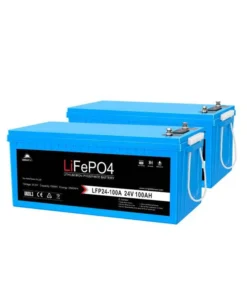
2× 24V 100Ah LiFePO4 Deep Cycle Lithium Battery — Bluetooth / Self-Heating / IP65
Lithium Solar Batteries
Lithium Solar Batteries
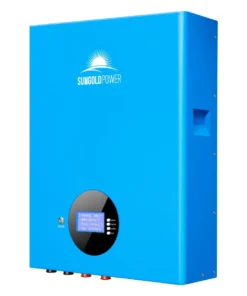
Wall-Mounted 5.12kWh LiFePO4 Lithium Battery SG48100M — 48V 100Ah UL1973
Lithium Solar Batteries
Lithium Solar Batteries
Lithium Solar Batteries
CoreX 5 Pro Server Rack 48V 100Ah Residential Energy Storage Battery — WiFi and Bluetooth
Reviews
There are no reviews yet.