
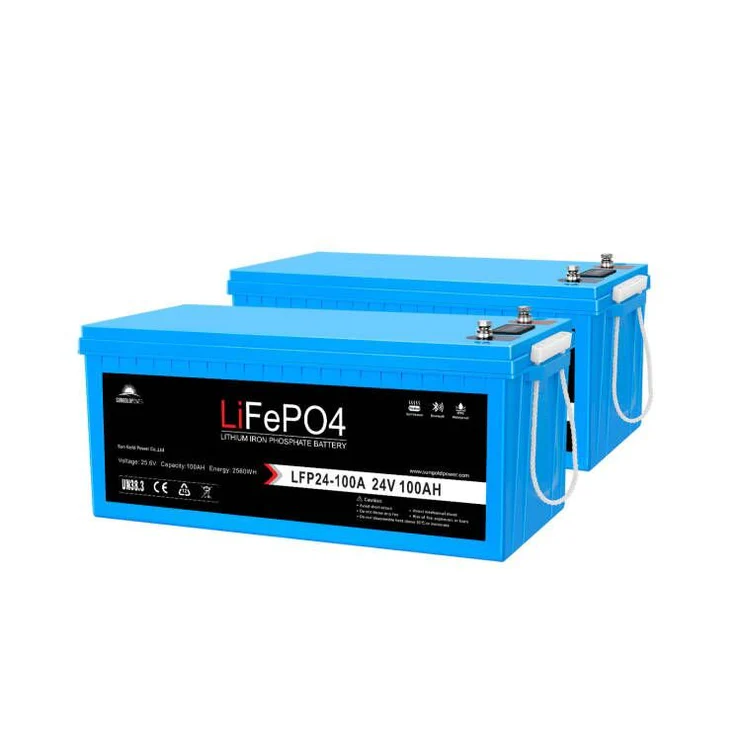
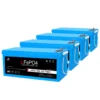
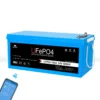
24V Solar Battery 2×100Ah — Authentic 5.12kWh [Self-Heating]
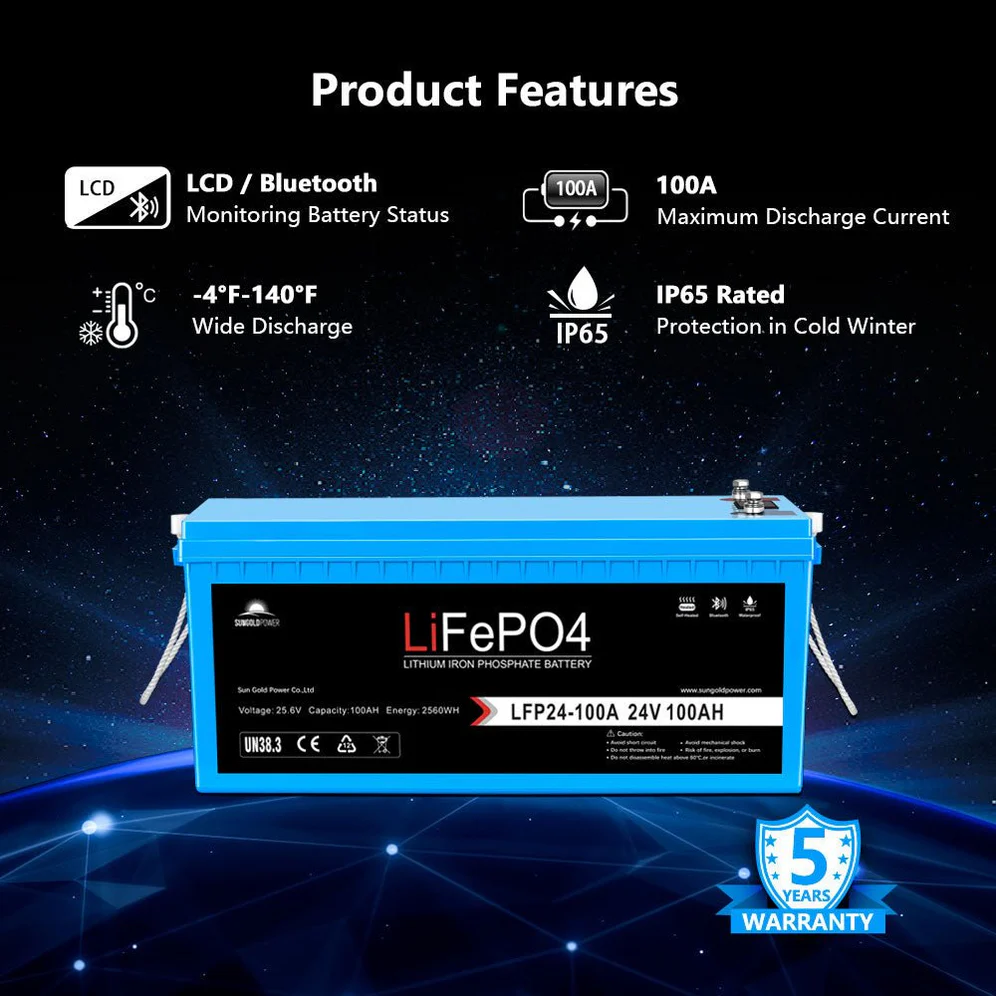
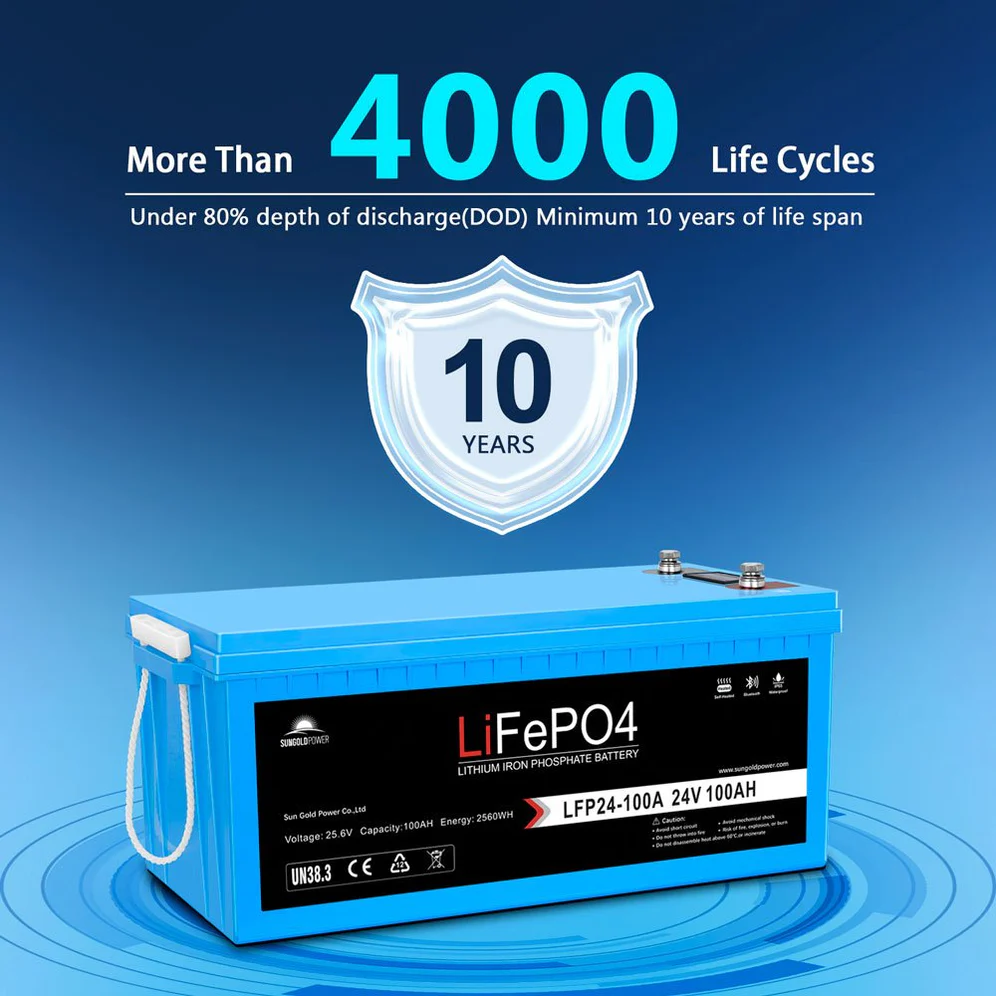
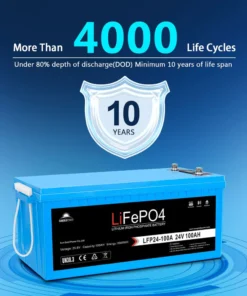
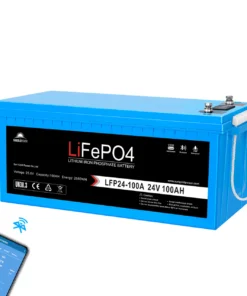
Two matched 24V 100Ah LiFePO4 (Lithium Iron Phosphate) batteries wired in parallel deliver 200Ah and 5.12kWh of storage — the practical minimum for a 24V solar battery charger system serving a full-size RV, van conversion, off-grid cabin or marine vessel requiring overnight power independence. Each unit is identical in specification: 4,000+ cycle rating, self-heating activation below 33.8°F, IP65 sealed ABS enclosure, Bluetooth BMS monitoring and 100A BMS protection. Purchasing this matched pair ensures cells from the same production batch are combined in parallel — the most important factor in a parallel LiFePO4 bank for balanced charge and discharge cycling.
Table of Contents
- Two-Unit Specifications
- Why 5.12kWh Is the Right Starting Capacity
- Parallel Connection — How Two Units Become One System
- Self-Heating in a Two-Battery Bank
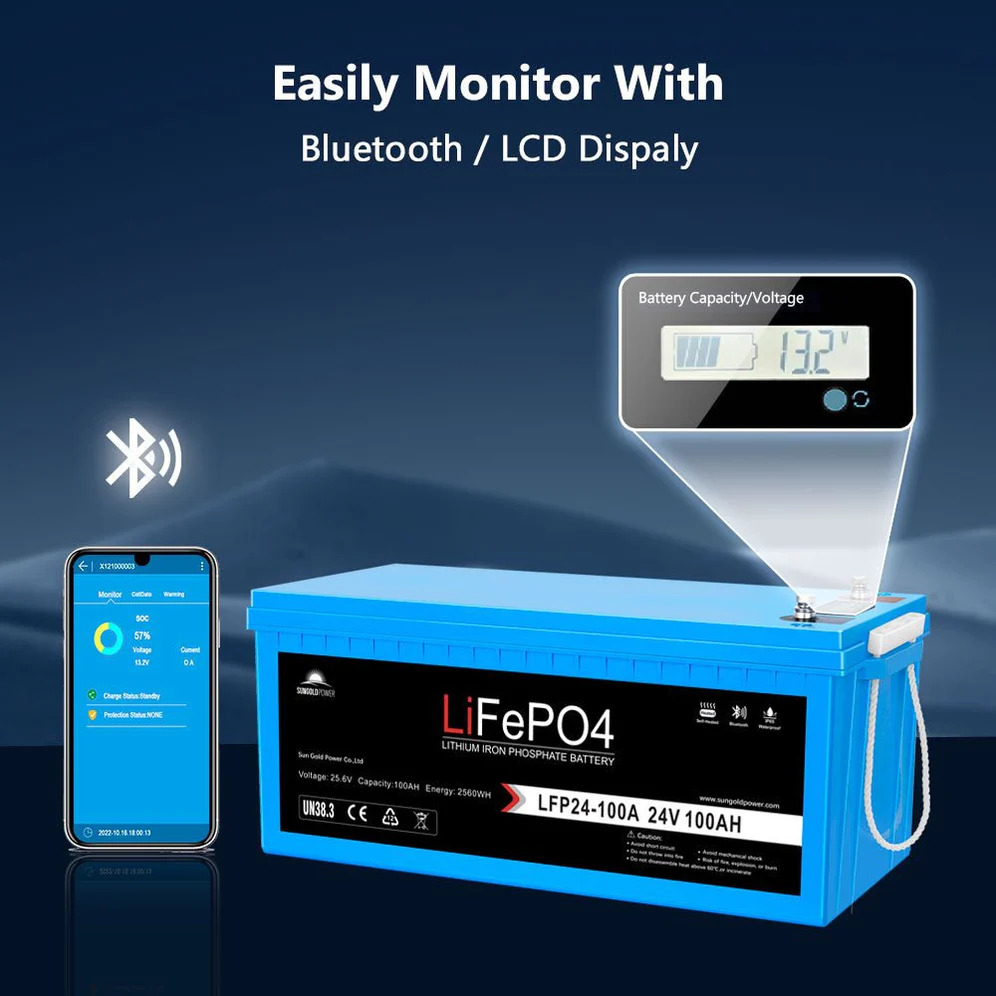
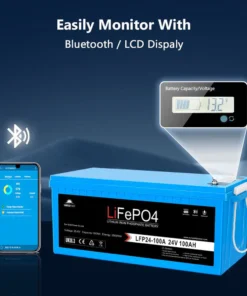
- Bluetooth BMS — Monitoring a Parallel Bank
- Lithium Battery 24V Solar Power System Integration
- Configuring for 48V Output
- FAQ
Two-Unit Specifications
| Parameter | Single Unit | Two Units (Parallel) |
|---|---|---|
| Nominal Voltage | 25.6V | 25.6V (unchanged) |
| Nominal Capacity | 100Ah | 200Ah |
| Nominal Energy | 2,560Wh (2.56kWh) | 5,120Wh (5.12kWh) |
| Max Continuous Charge Current | 100A | 200A combined |
| Peak Discharge Current | 200A (10s) | 400A combined (10s) |
| Recommended Charge Current | 50A | 100A combined |
| Voltage Window | 21.6–29.2V | 21.6–29.2V |
| Cycle Life (80% DOD) | 4,000+ | 4,000+ |
| Weight | 45 lb | 90 lb |
| Dimensions each | 20.7 × 9.4 × 8.7 inch | × 2 units |
| IP Grade | IP65 | IP65 each |
| BMS | 100A Bluetooth M865 | Independent BMS per unit |
| Cell Certification | UL1973 | UL1973 |
| Warranty | 5 Years | 5 Years |
Why 5.12kWh Is the Right Starting Capacity
Battery storage capacity requirements for solar installations are determined by two variables: the nightly consumption load and the desired autonomy — the number of nights the system can run without solar input before reaching the minimum state of charge.
At 5.12kWh total storage and 80% usable depth of discharge, this two-unit bank provides 4.1kWh of usable energy — the practical overnight capacity after the 20% reserve below the depth-of-discharge limit is preserved.
A well-equipped RV with LED lighting, a 12V refrigerator (approximately 50Ah/day draw), device charging, water pump and entertainment typically consumes 100–150Ah per day at 24V — or 2.56–3.84kWh. A 5.12kWh bank covers this profile with room for one additional night of autonomy during consecutive cloudy days before the bank reaches 20% state of charge.
For an off-grid cabin or solar bank installation with higher consumption — air conditioning, appliance loads and workshop equipment — 5.12kWh is a starting point rather than a permanent solution. The parallel expansion architecture allows additional units to be added at any time.
Parallel Connection — How Two Units Become One System
Connecting two 24V LiFePO4 batteries in parallel requires attention to three details that determine whether the parallel bank performs as a matched system or as two batteries fighting each other:
- Matched state of charge at connection: Both batteries should be at the same state of charge — ideally fully charged — before being connected in parallel for the first time. Connecting a fully charged unit to a depleted unit creates a high equalisation current that stresses both batteries.
- Equal-length cables from each battery to the bus bar: Different cable lengths create different resistance paths, causing unequal current distribution during both charge and discharge. Use matched cable lengths from each battery terminal to the positive and negative bus bars.
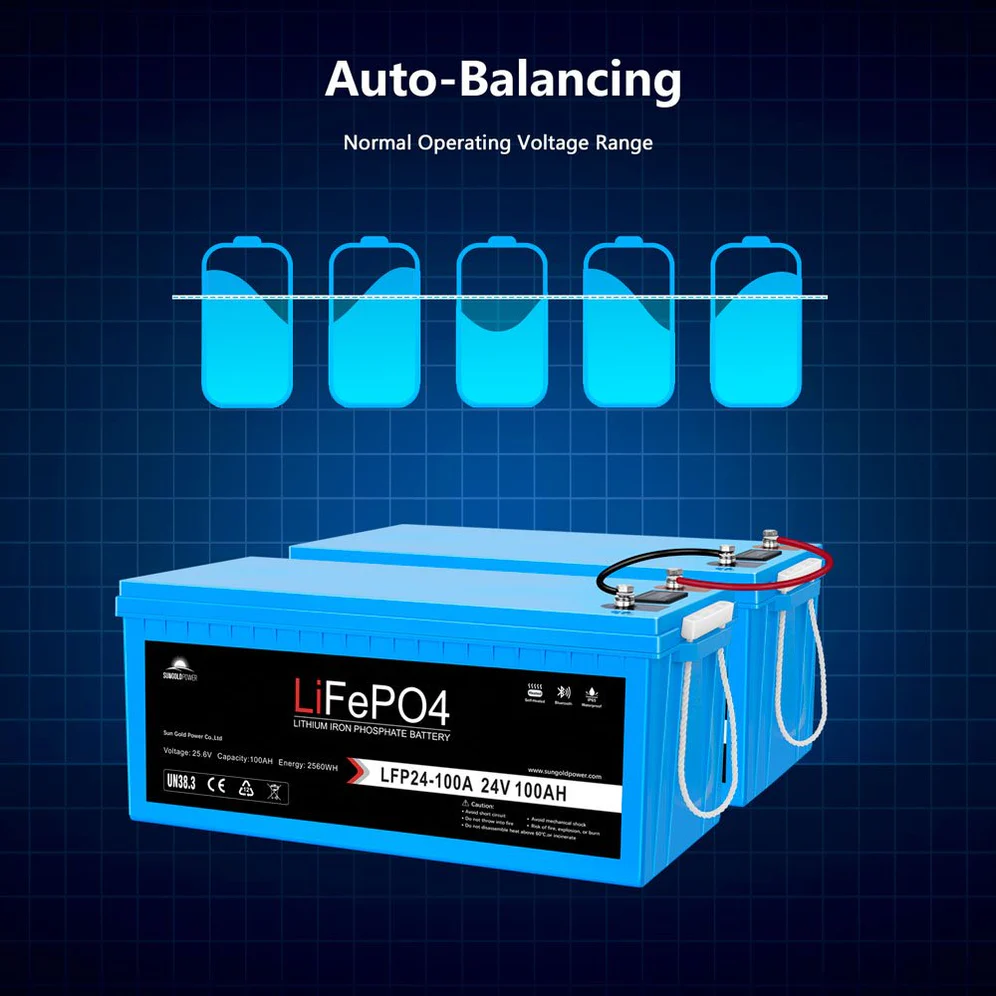
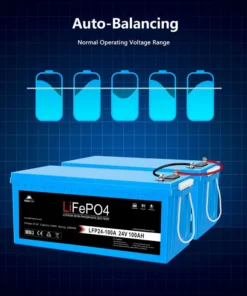
- Independent BMS per unit: Each battery in this pack has its own 100A BMS — the BMS manages cell protection for its own unit independently. This means each unit can disconnect from the parallel bank if its own protection limits are reached, without affecting the other unit.
Self-Heating in a Two-Battery Bank
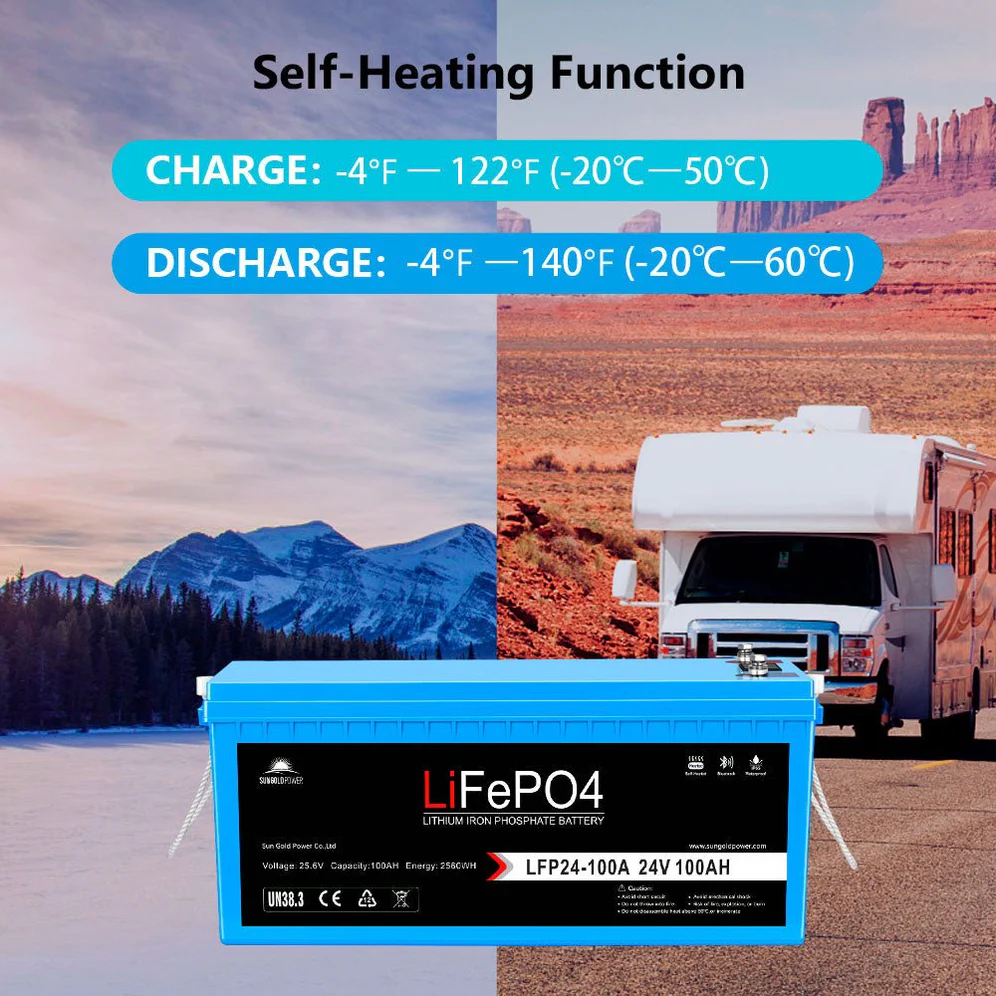
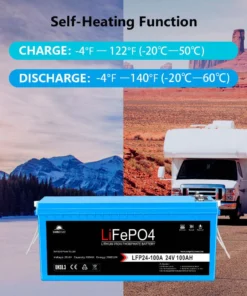
Each unit in this two-battery pack has its own independent self-heating system. Both units self-heat simultaneously when cell temperature drops below 33.8°F — protecting both batteries in the parallel bank from cold-charging damage without requiring any coordination between units.
The practical consequence for winter RV users and cold-climate cabin installations: the lithium battery 24V solar power bank charges correctly even on mornings where the ambient temperature has fallen well below freezing overnight. The solar charge controller begins pushing charge current into the bank at sunrise; the self-heating systems activate automatically if cells are below the threshold and bring cells to the safe charging temperature range before significant charge current flows.
Bluetooth BMS — Monitoring a Parallel Bank
Each unit transmits its own Bluetooth data independently — two units, two Bluetooth devices in the app. For a 24v solar battery charger system monitoring two parallel batteries, viewing both units simultaneously provides:
- Cross-unit voltage comparison: Confirms both units are at the same state of charge and that the parallel connection is balancing correctly.
- Current distribution monitoring: Confirms charge and discharge current is sharing approximately equally between units — a significant imbalance indicates unequal cable resistance or a developing cell issue in one unit.
- Independent temperature data: Both units report cell temperature independently, confirming both self-heating systems are activating and deactivating at the correct thresholds.
Lithium Battery 24V Solar Power System Integration
This two-unit pack connects to any standard 24V MPPT solar charge controller and any 24V pure sine wave inverter. The system design is:
- Solar panels (configured for 24V output) connect to the MPPT charge controller.
- MPPT charge controller output connects to the battery bank positive and negative bus bars.
- Battery bank bus bars connect to the inverter DC input.
- Inverter AC output powers 120V loads.
The 200Ah total capacity requires a charge controller rated for at least 50A — a 60A or 80A MPPT controller sized to the PV array wattage is appropriate. The recommended charge current of 50A per unit (100A combined) means a 100A MPPT controller is the maximum efficient size for this two-unit bank.
Configuring for 48V Output
This matched pair can be reconfigured for 48V output by connecting the two units in series rather than parallel — positive terminal of unit 1 to the negative terminal of unit 2, with the load connected across the free positive and negative terminals. This produces a 48V / 100Ah / 5.12kWh bank rather than a 24V / 200Ah / 5.12kWh bank.
The total energy is identical in both configurations — only the voltage and current levels change. A 48V configuration is appropriate for larger inverter systems where 48V DC bus voltage is specified. For additional parallel 48V capacity, add additional series pairs.
Explore compatible inverters and charge controllers in our Solar Battery Storage, Off-Grid Solar Systems and Solar Kits categories.
FAQ
Is this the best solar battery backup system for home use at 24V? For primary home backup applications, a 24V system at 5.12kWh is a solid starting point for small to mid-sized homes with moderate overnight loads. Larger homes with higher consumption — central air conditioning, electric appliances, office equipment — typically require 20kWh or more of storage. The parallel expansion architecture of this battery allows capacity to grow incrementally without replacing the initial investment, making it an appropriate foundation for a home backup system that may expand over time.
What is the maximum parallel expansion of this 24V solar battery charger system? The 24V 100Ah LiFePO4 unit supports parallel connection for expanding capacity. The source documentation confirms parallel expansion for larger capacity. Maximum parallel unit count — confirm from current SunGoldPower technical documentation before planning a large parallel installation.
How does lithium battery 24V solar power compare to lead-acid at the same bank size? A 24V 200Ah lead-acid bank weighs approximately 130–160 lb for flooded lead-acid or 110–130 lb for AGM — versus 90 lb for this two-unit lithium pack. Usable capacity at 50% DOD for lead-acid (the practical limit for service life preservation) is 100Ah / 2.56kWh — versus 160Ah / 4.1kWh usable at 80% DOD for this LiFePO4 pack. The LiFePO4 pack delivers 60% more usable energy from a lighter, smaller package, with 8–10× the cycle life.
What charger specifications are required for a 24V solar battery bank of this size? The combined recommended charge current for two units in parallel is 100A. A 24V MPPT solar charge controller rated at 60–100A is appropriate — sized to the solar array wattage rather than the maximum battery charge rate. The maximum charge voltage is 29.2V; configure the MPPT controller’s battery voltage and chemistry settings for LiFePO4 at 24V nominal.
Can I mix this two-unit pack with additional units added later? Adding additional units to an existing parallel bank is possible but introduces a risk: cells in new batteries are at different capacity states from aged batteries already in the bank. When adding new units to an existing parallel bank, bring all batteries to the same state of charge before connecting, and verify that the new units have the same chemistry and nominal voltage as existing units. Mixing different production batches or different manufacturers in a parallel bank is not recommended.
Be the first to review “2× 24V 100Ah LiFePO4 Deep Cycle Lithium Battery — Bluetooth / Self-Heating / IP65”
Related products
Lithium Solar Batteries
Lithium Solar Batteries
CoreX 5 Pro Server Rack 48V 100Ah Residential Energy Storage Battery — WiFi and Bluetooth
Lithium Solar Batteries
Lithium Solar Batteries
Lithium Solar Batteries
Reviews
There are no reviews yet.