
12V Solar Battery — 100Ah LiFePO4, Bluetooth BMS, Self-Heating, IP65
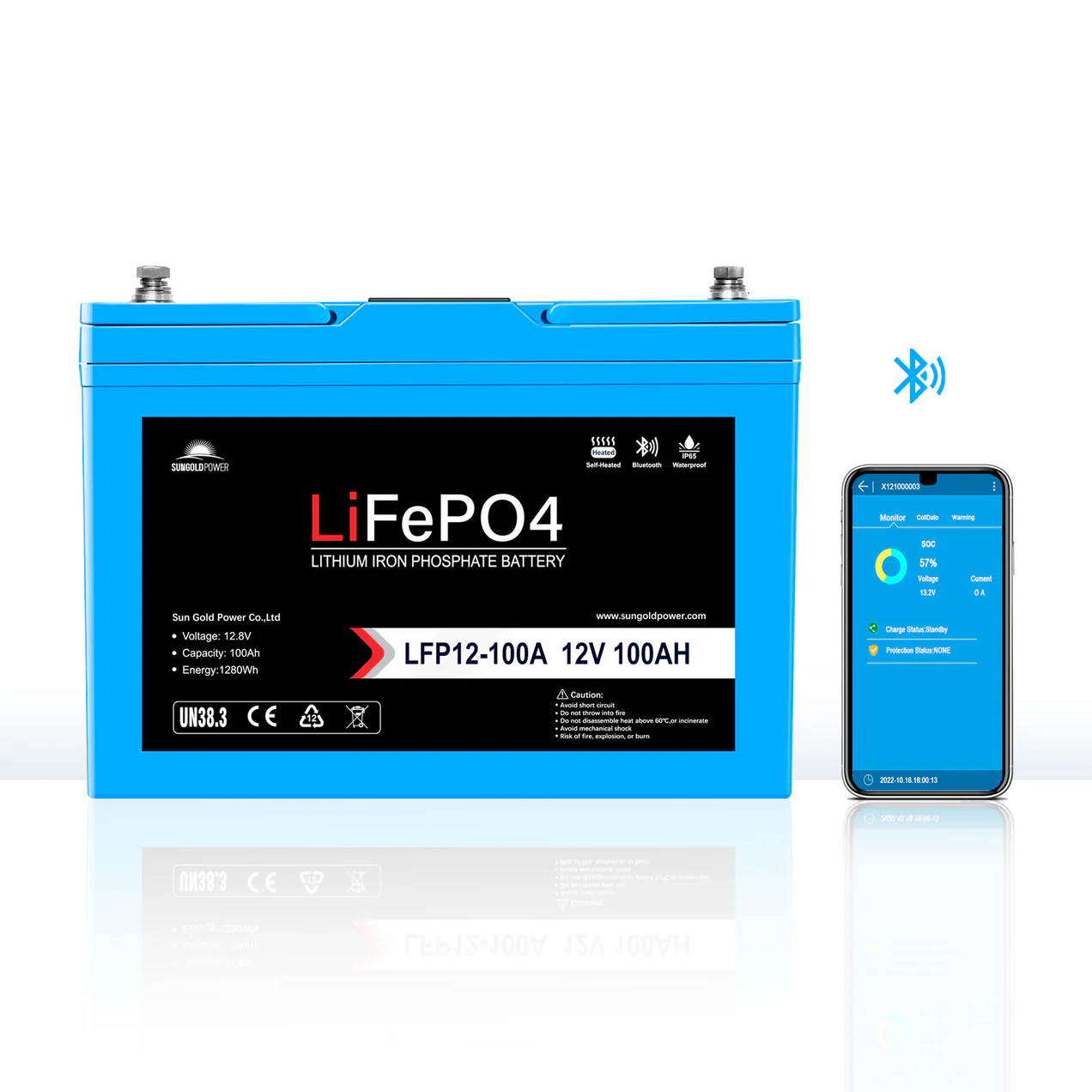
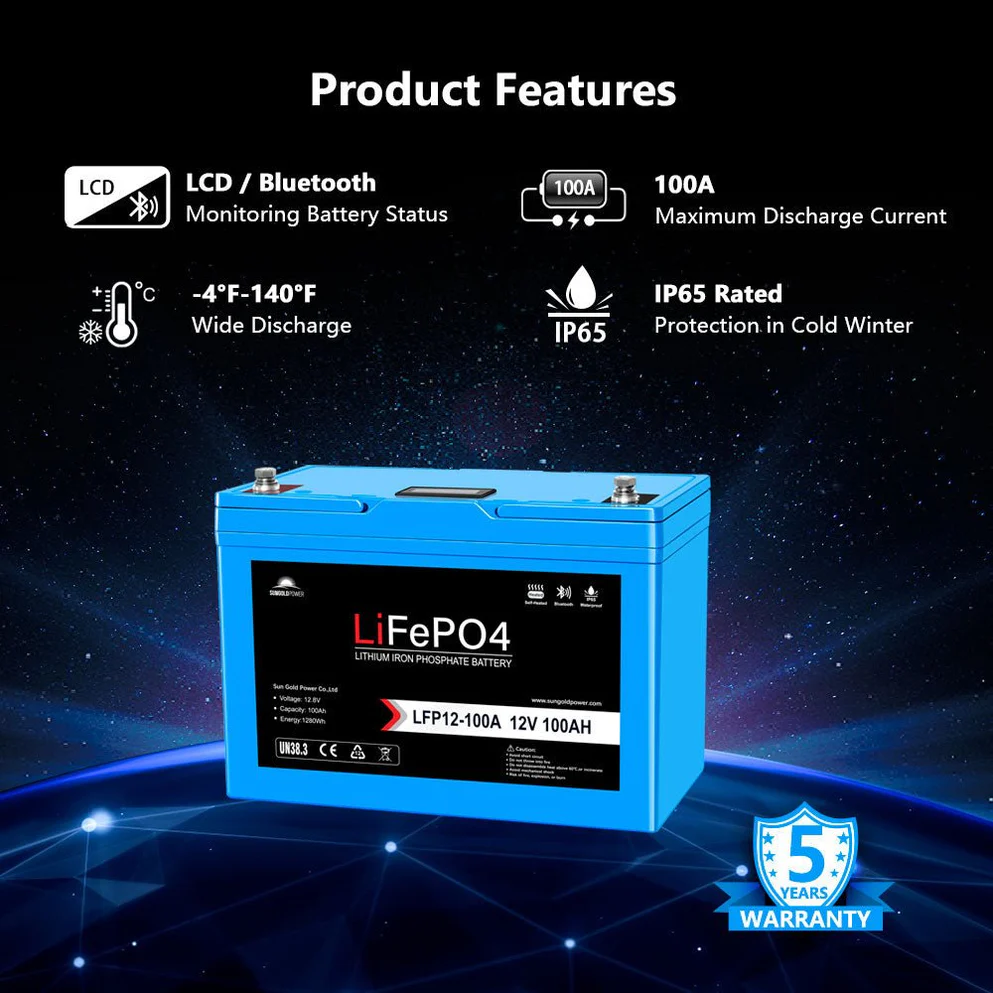
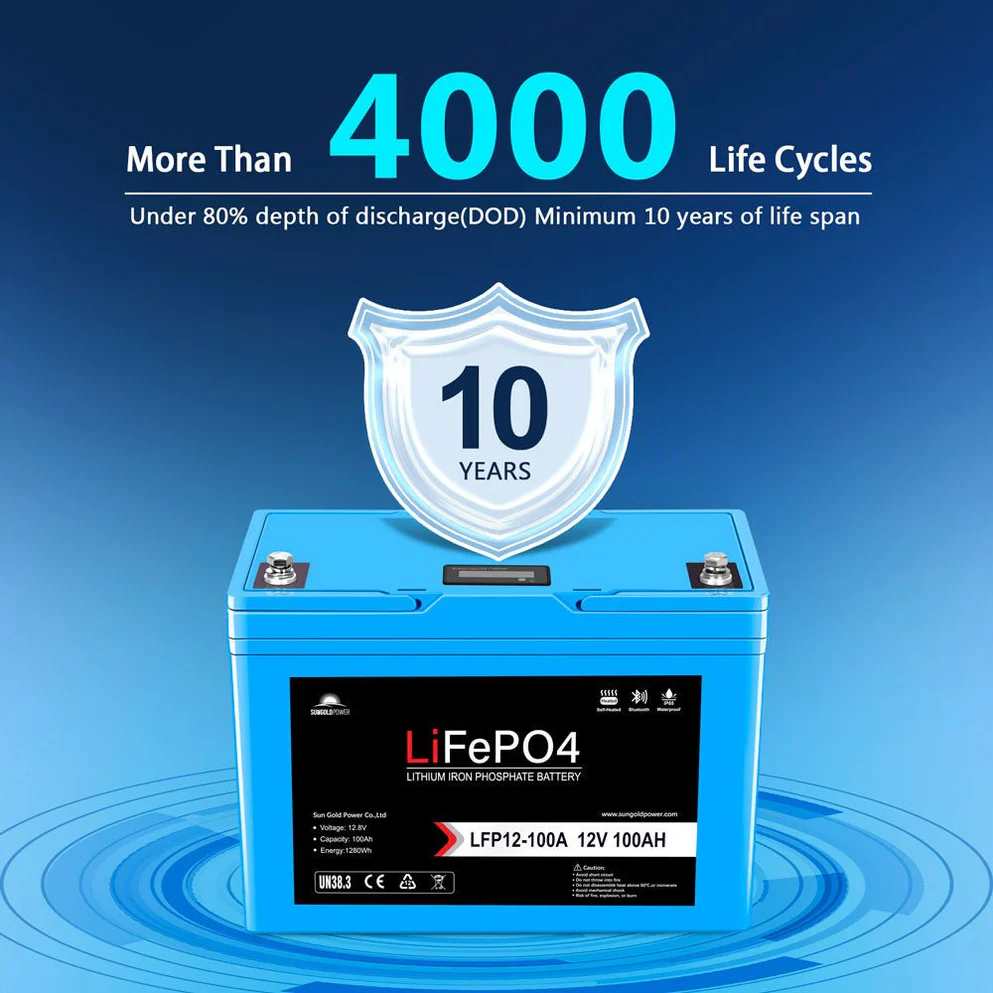
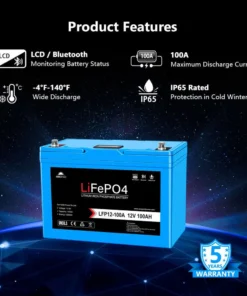
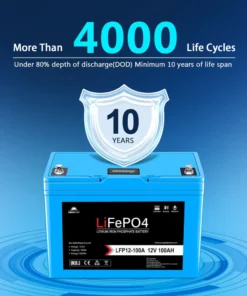
The SunGoldPower 12V 100Ah is a 12V solar battery built on LiFePO4 (Lithium Iron Phosphate) cell chemistry, rated for more than 4,000 cycles at 80% depth of discharge, with a built-in self-heating function, IP65 weatherproof enclosure, and Bluetooth BMS for real-time cell monitoring from a smartphone. At 22.7 lb and 1,280Wh of stored energy, it is a practical choice for solar cell 12V systems running panels in the 100W–400W range, compact RV house banks, portable power setups, and marine auxiliary power — wherever a lightweight, long-cycle lithium battery replaces an aging lead-acid unit.
Table of Contents
- Specifications
- Who This Battery Is Built For
- LiFePO4 vs Lead-Acid — The Numbers That Matter
- Self-Heating and IP65 — Protection Where It Counts
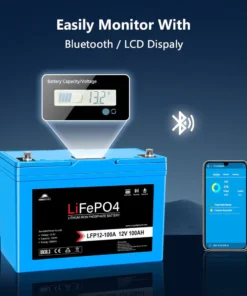
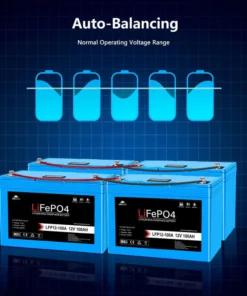
- Bluetooth BMS Monitoring
- Frequently Asked Questions
Specifications
| Specification | Value |
|---|---|
| Nominal Voltage | 12.8V |
| Nominal Capacity | 100Ah |
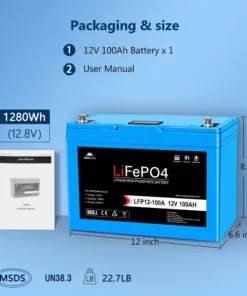
| Energy | 1,280Wh |
| Efficiency | >99.5% |
| Voltage Window | 10.8–14.6V |
| Max Continuous Charge Current | 100A |
| Peak Discharge Current | 200A (15s + 2s) |
| Recommended Charge Current | 50A |
| Recommended Discharge Current | 50A |
| Cycle Life (0.2C, 77°F, 80% DOD) | ≥4,000 |
| Charge Temperature | -4°F to 113°F |
| Discharge Temperature | -4°F to 131°F |
| Case Material | ABS |
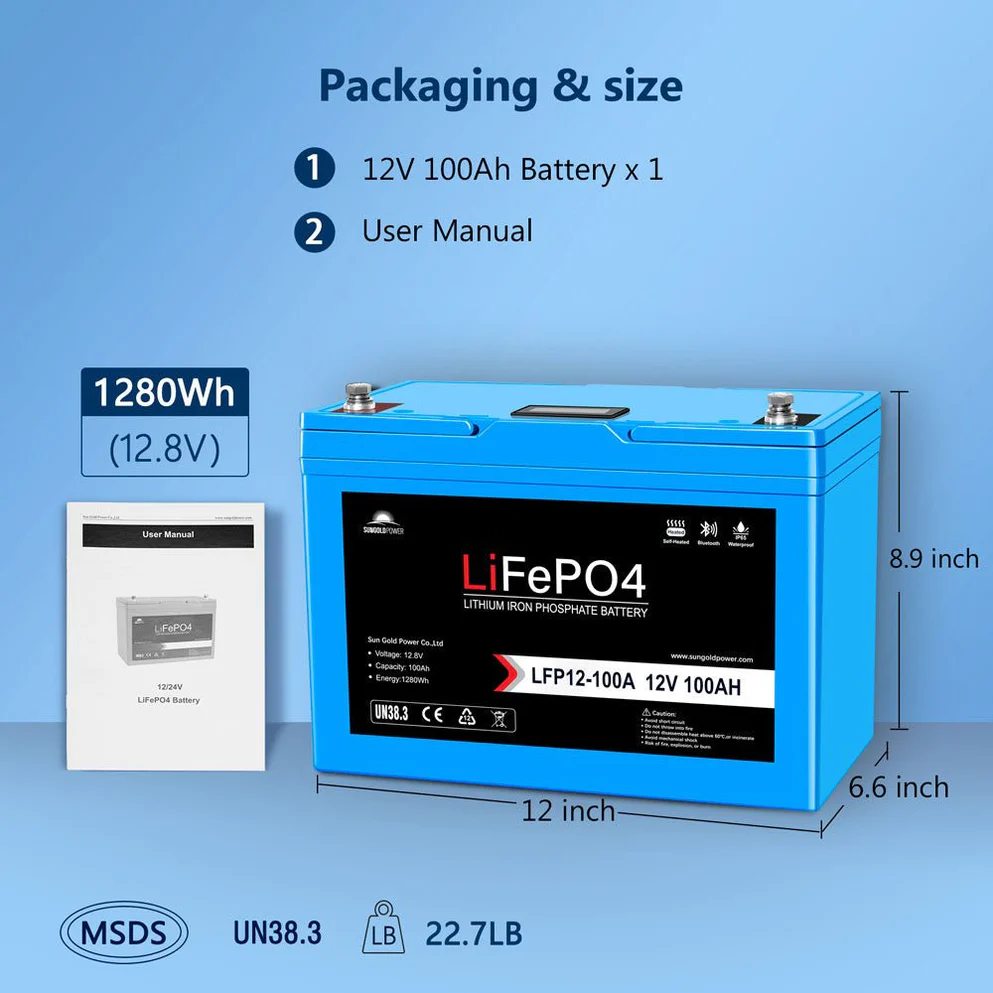
| Dimensions (L×W×H) | 12 × 6.6 × 8.9 in |
| Weight | 22.7 lb |
| Terminal Type | M8 |
| IP Grade | IP65 |
| Monitoring | LCD + Bluetooth |
| Max Parallel | 4 units |
| Max Series | 4 units |
Who This Battery Is Built For
The 12V 100Ah LiFePO4 addresses a specific buyer: someone replacing a lead-acid battery in an existing 12V system — an RV, a sailboat, a van conversion, or a small solar cabin — who wants a direct form-factor upgrade without redesigning the system around a different voltage. At 22.7 lb, it weighs roughly a third of a comparable lead-acid unit, and it fits in the same battery compartment in most installations.
It is also the entry point for a battery for 12v solar panel installations in the 100W–400W range. A 200W solar panel with a 20A MPPT controller charges this battery from 50% state of charge in approximately two to three hours of good sunlight — a straightforward, low-complexity system that a first-time solar installer can commission in a single afternoon.
For buyers who anticipate growing their bank over time, the four-unit parallel capability means this single battery can become part of a 400Ah bank without replacement — add matching units as budget allows.
LiFePO4 vs Lead-Acid — The Numbers That Matter
The comparison that justifies the price difference between a 12 volt lithium battery and a lead-acid equivalent comes down to three numbers: usable capacity, cycle count, and weight.
- Usable capacity: A 100Ah LiFePO4 delivers 80Ah at any discharge rate within its operating range. A 100Ah AGM battery derated at typical RV and solar discharge rates delivers 50–60Ah before voltage sag becomes a problem for connected loads.
- Cycle count: 4,000 cycles at 80% DOD versus 300–500 cycles for a quality AGM at the same discharge depth. Over a ten-year RV season, a single LiFePO4 unit replaces four to six lead-acid replacements.
- Weight: 22.7 lb versus 60–70 lb for a lead-acid 100Ah battery. In an RV or marine installation where every pound of payload matters, this difference is felt immediately.
Self-Heating and IP65 — Protection Where It Counts
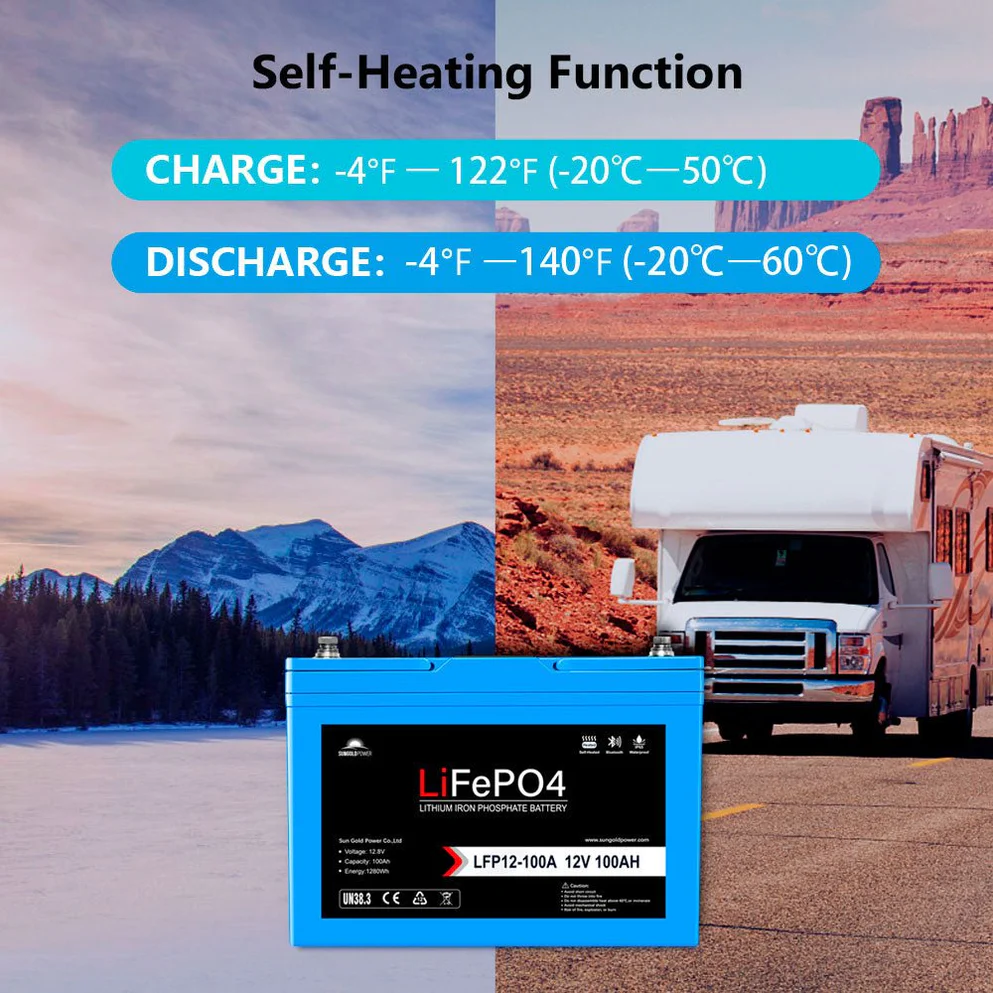
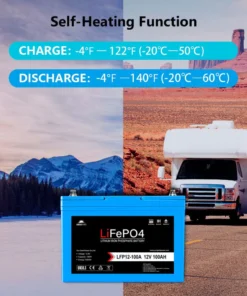
The self-heating function is the specification that matters most to buyers who use their RV or boat in cold climates. Standard LiFePO4 cells reject charge below approximately 32°F — a limitation that renders a solar battery useless for morning charging on a cold night, even if the solar array is producing full power. The built-in heating element in this unit activates automatically when cell temperature drops below the safe threshold, warming the cells before the BMS allows charge current to flow.
The IP65 rating means the enclosure is fully dust-tight and withstands sustained water jets from any direction. In a bilge compartment, an outdoor battery box, or under an RV chassis, this protection level prevents the moisture ingress that shortens the life of unrated enclosures in those environments.
Bluetooth BMS Monitoring
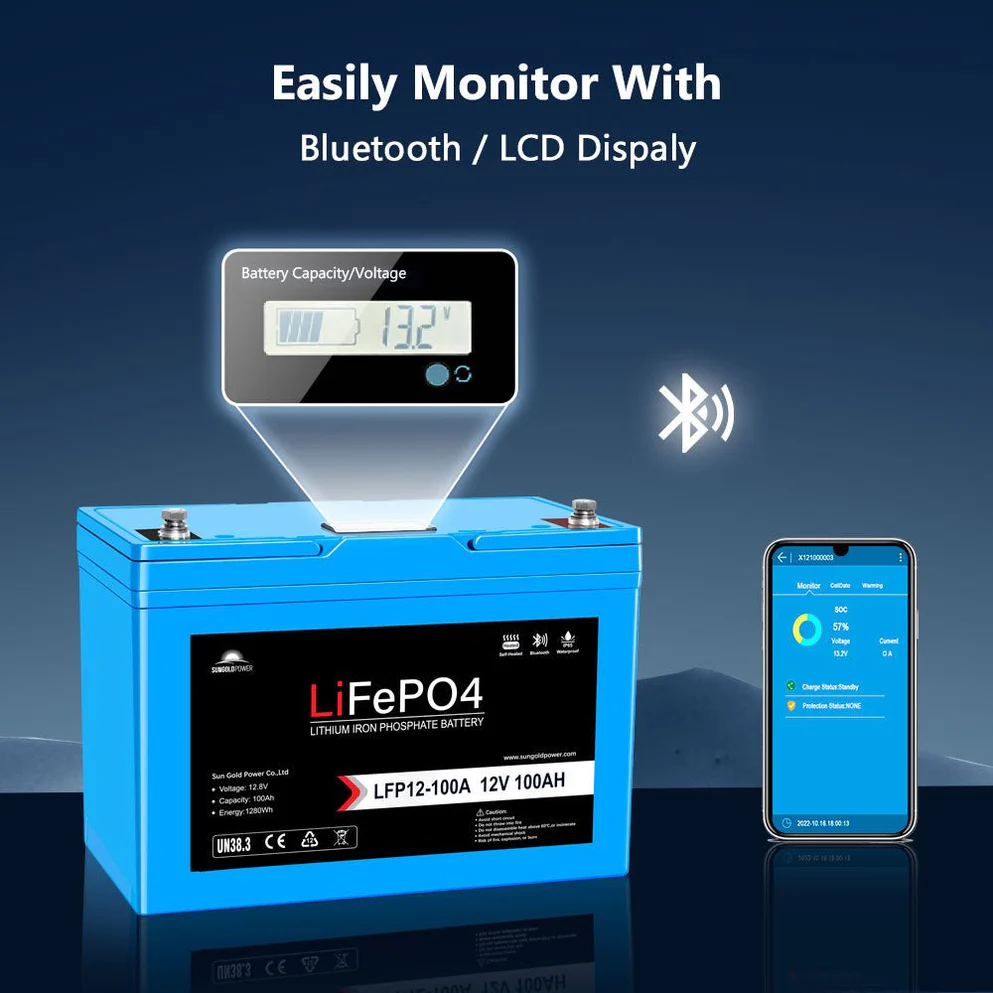
The Bluetooth BMS connects to a dedicated smartphone app and transmits cell-level data without requiring a separate monitoring device. From the app, users see individual cell voltages, pack state of charge, current flow in both directions, temperature at the BMS sensor, and cumulative cycle count.
For a solar cell 12v system, this data answers the questions that a simple voltmeter cannot: Is the charge controller actually pushing the right current? Are all cells balanced? Is the battery reaching full state of charge before sundown? The Bluetooth interface makes those questions answerable without opening the battery compartment or connecting a separate meter.
Browse our full 12V LiFePO4 Batteries, Solar Battery Storage, and Off-Grid Power Systems for compatible charge controllers and system accessories.
Frequently Asked Questions
Q: Is this battery a direct replacement for a 100Ah AGM in an existing 12V system? Yes, in most cases. The voltage window of 10.8–14.6V is compatible with standard 12V solar charge controllers, inverters, and DC loads. Confirm that the charge controller has a lithium battery profile with a maximum charge voltage of 14.4–14.6V — AGM charge profiles set higher equalisation voltages that are not suitable for LiFePO4 chemistry.
Q: What is the self-heating activation threshold? The self-heating function activates when cell temperature drops below the safe charging threshold — approximately 32°F for LiFePO4 chemistry. The BMS blocks charge current until cells reach safe temperature, then opens the charge path automatically. Discharge continues down to -4°F without heating activation.
Q: Can this be used as a battery for 12 volt inverter systems? Yes. The 200A peak discharge current (sustained for 15 seconds plus a 2-second buffer) and the 100A continuous discharge rating make it compatible with 12V inverters up to approximately 1,200W continuous and 2,400W peak. For larger inverters, a parallel bank of two or more units is recommended.
Q: What is a 12v ion battery and how does LiFePO4 compare? A 12v ion battery is a generic term for any lithium-ion battery at 12V nominal voltage. LiFePO4 is a specific lithium-ion chemistry that prioritises thermal stability and cycle life over energy density. Compared to other 12V lithium-ion chemistries such as NMC or NCA, LiFePO4 is significantly more resistant to thermal runaway and offers substantially more cycles at deep discharge levels.
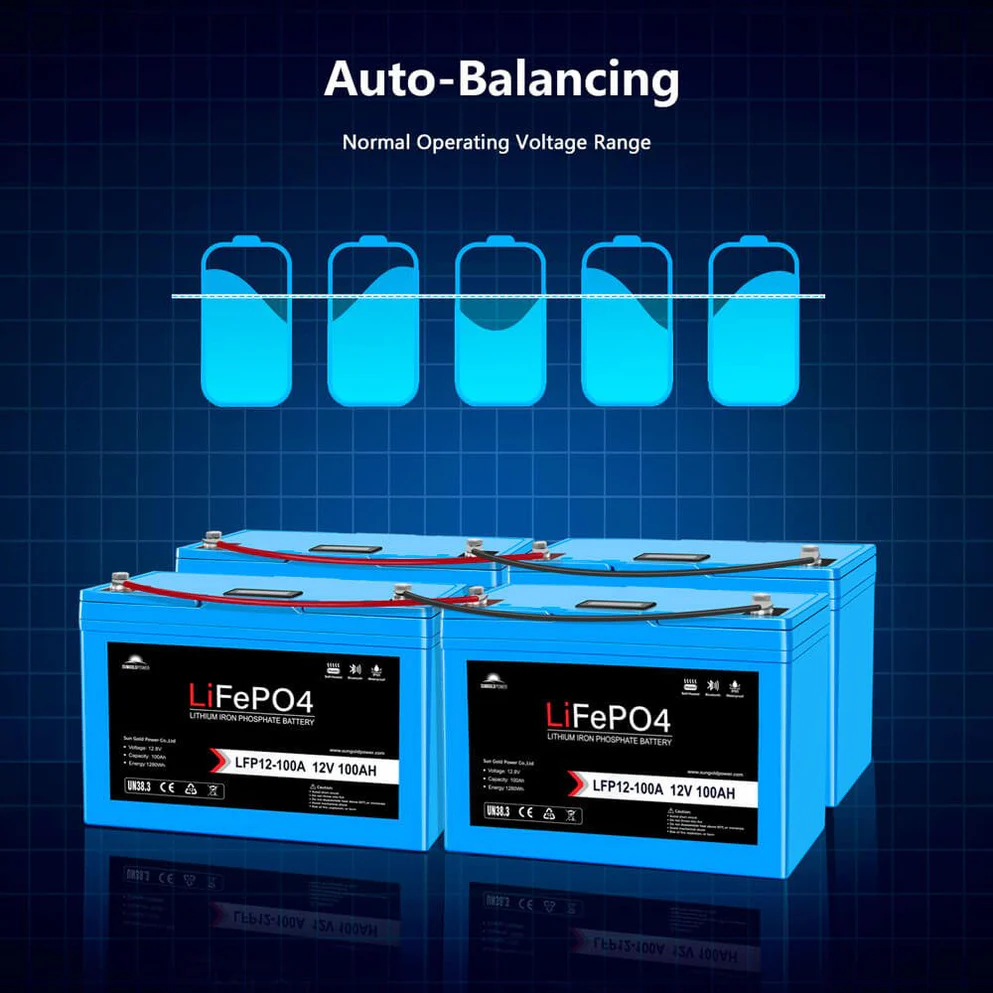
Q: How many of these can be connected in parallel? Up to four units can be connected in parallel, expanding total capacity to 400Ah at 12V. All units in a parallel bank must be the same model and at equal state of charge at the time of connection.
| Quantity | 1 Unit, 2 Units, 4 Units |
|---|
Be the first to review “12V Solar Battery 100Ah Authentic LiFePO4 IP65 BMS”
Related products
Lithium Solar Batteries
Lithium Solar Batteries
Lithium Solar Batteries
Lithium Solar Batteries
Lithium Solar Batteries
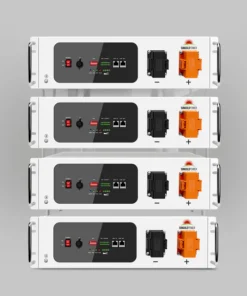
CoreX 5 Pro Server Rack 48V 100Ah Residential Energy Storage Battery — WiFi and Bluetooth
Lithium Solar Batteries
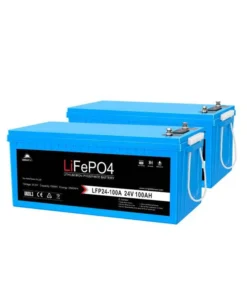
2× 24V 100Ah LiFePO4 Deep Cycle Lithium Battery — Bluetooth / Self-Heating / IP65
24V Battery
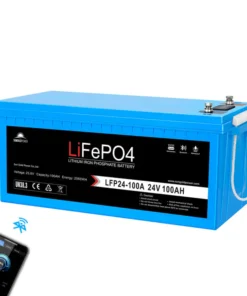
24V 100Ah LiFePO4 Battery – Reliable Deep Cycle Lithium Power for Solar, RV & Off-Grid Applications
Reviews
There are no reviews yet.