
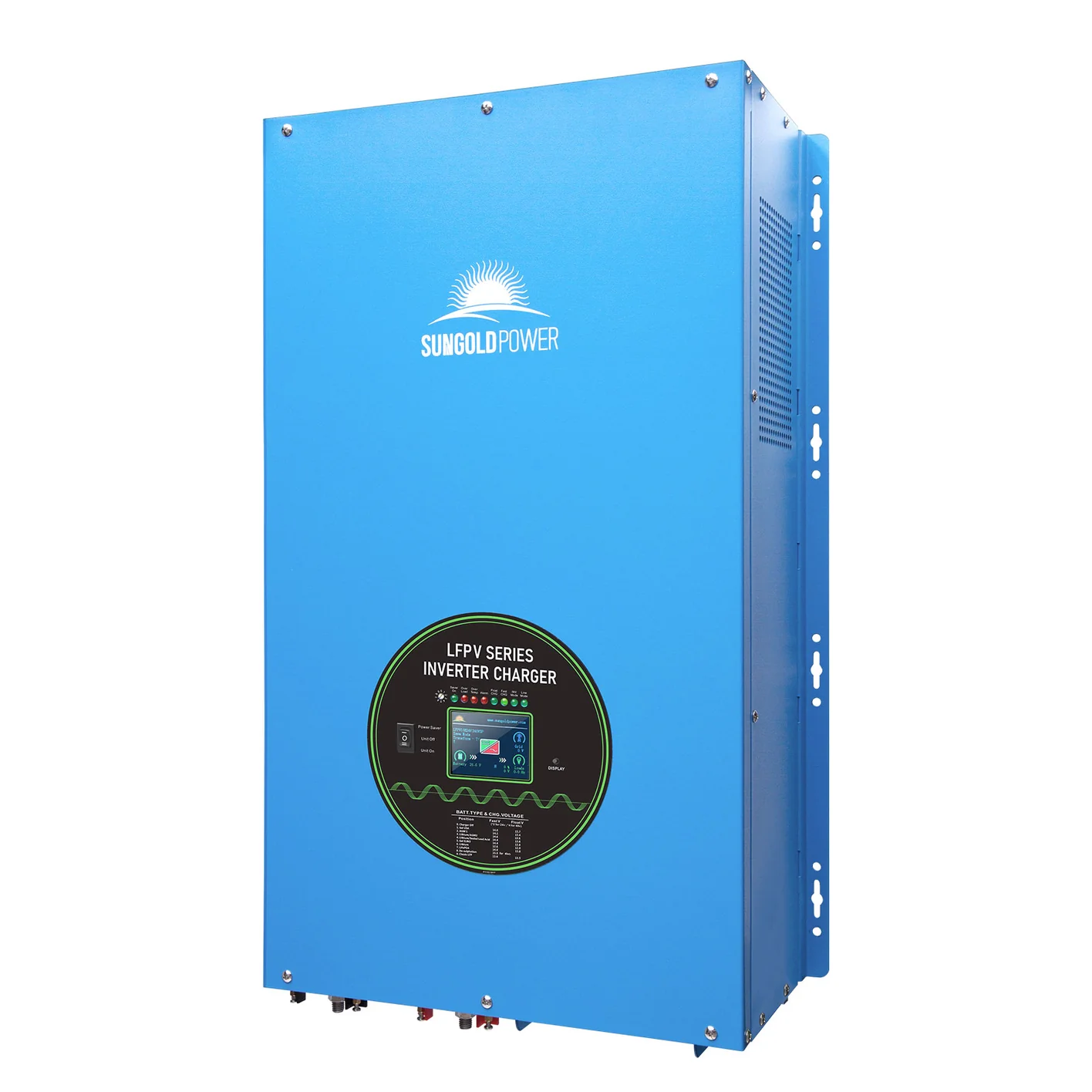
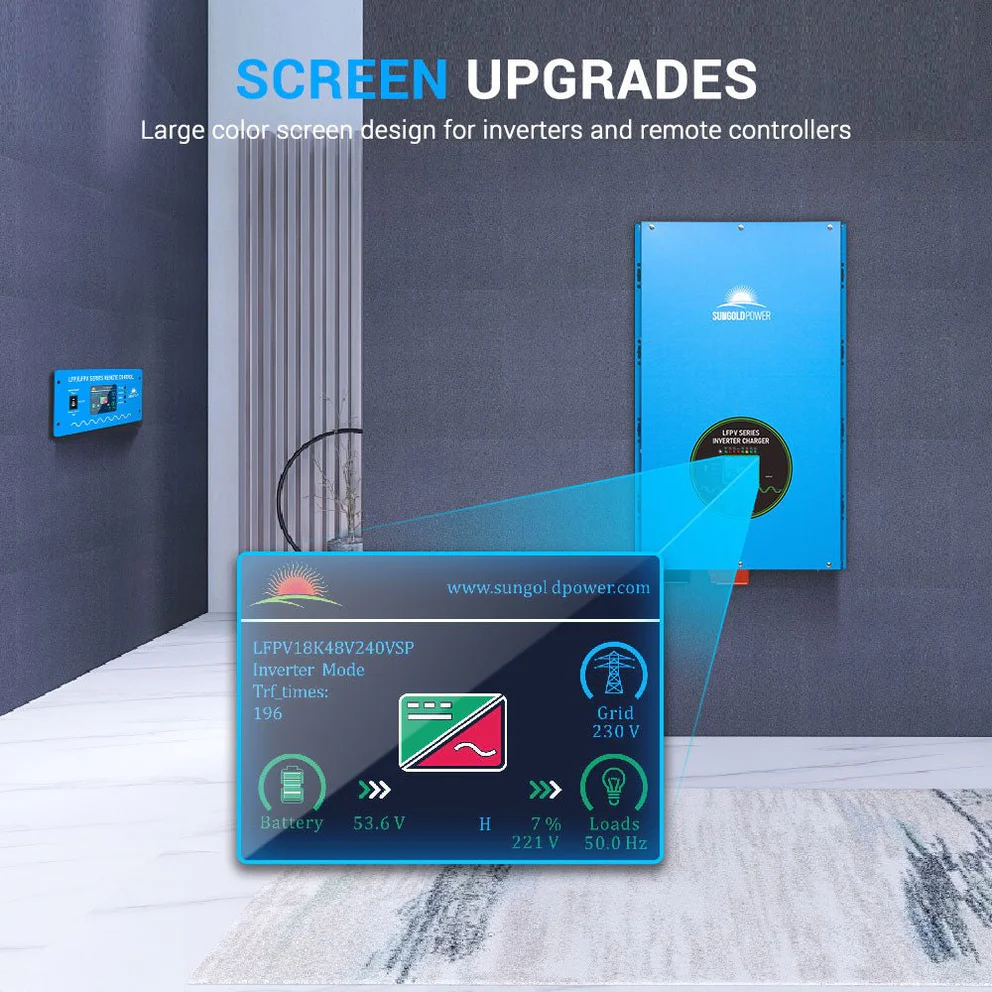
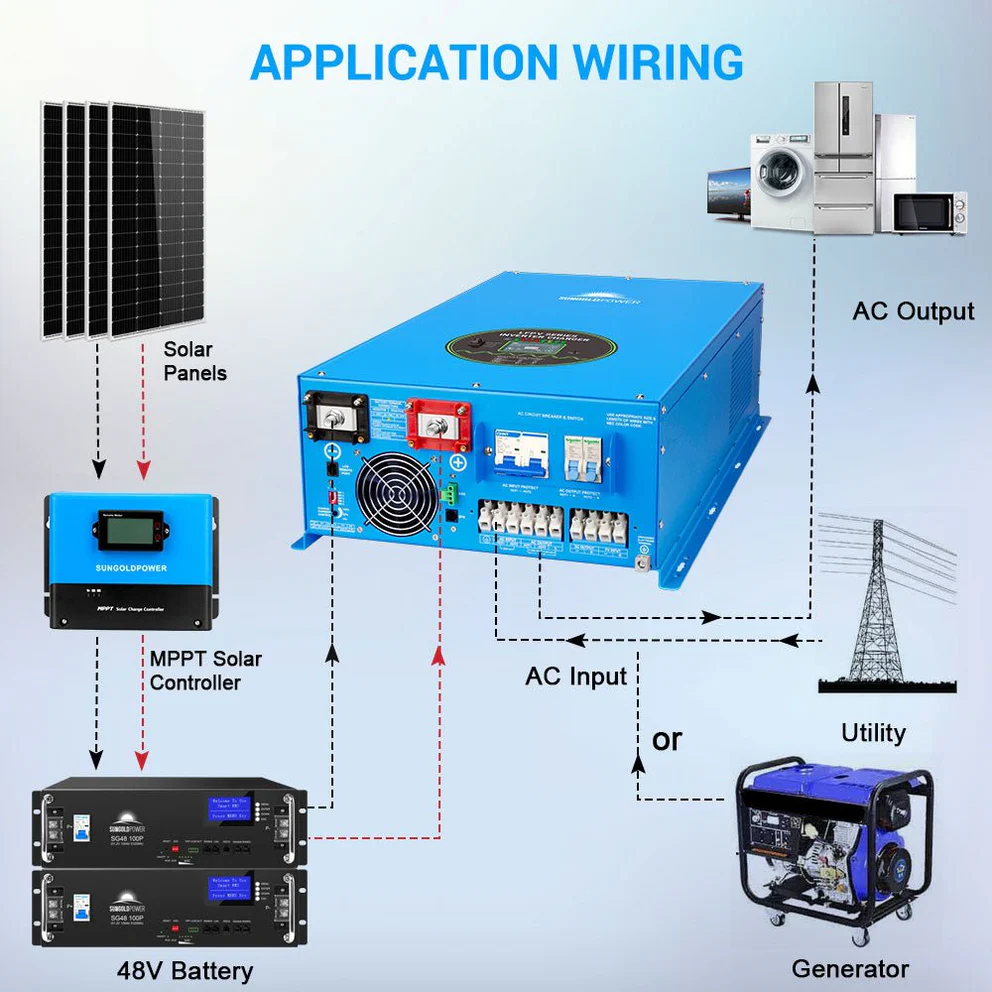
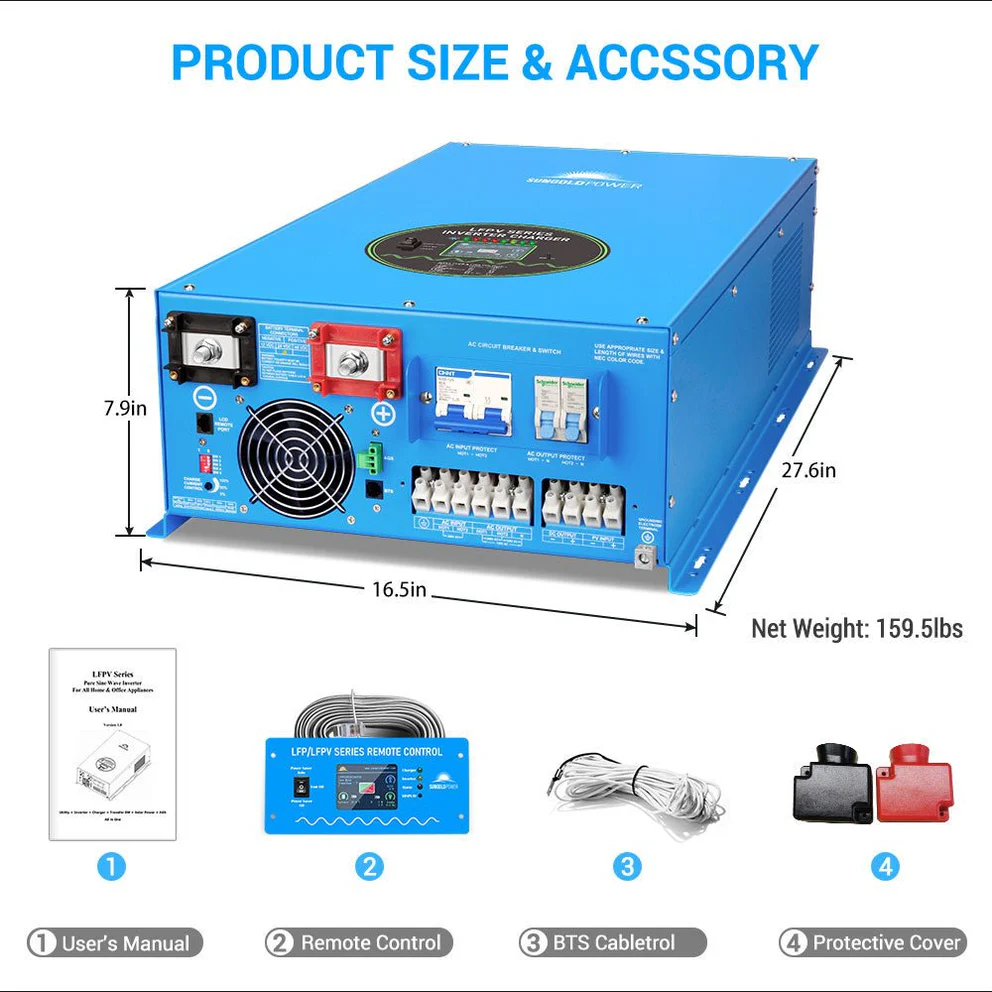


Pure Sine Wave Inverters 12kW 15kW 18kW — 48V Split Phase System
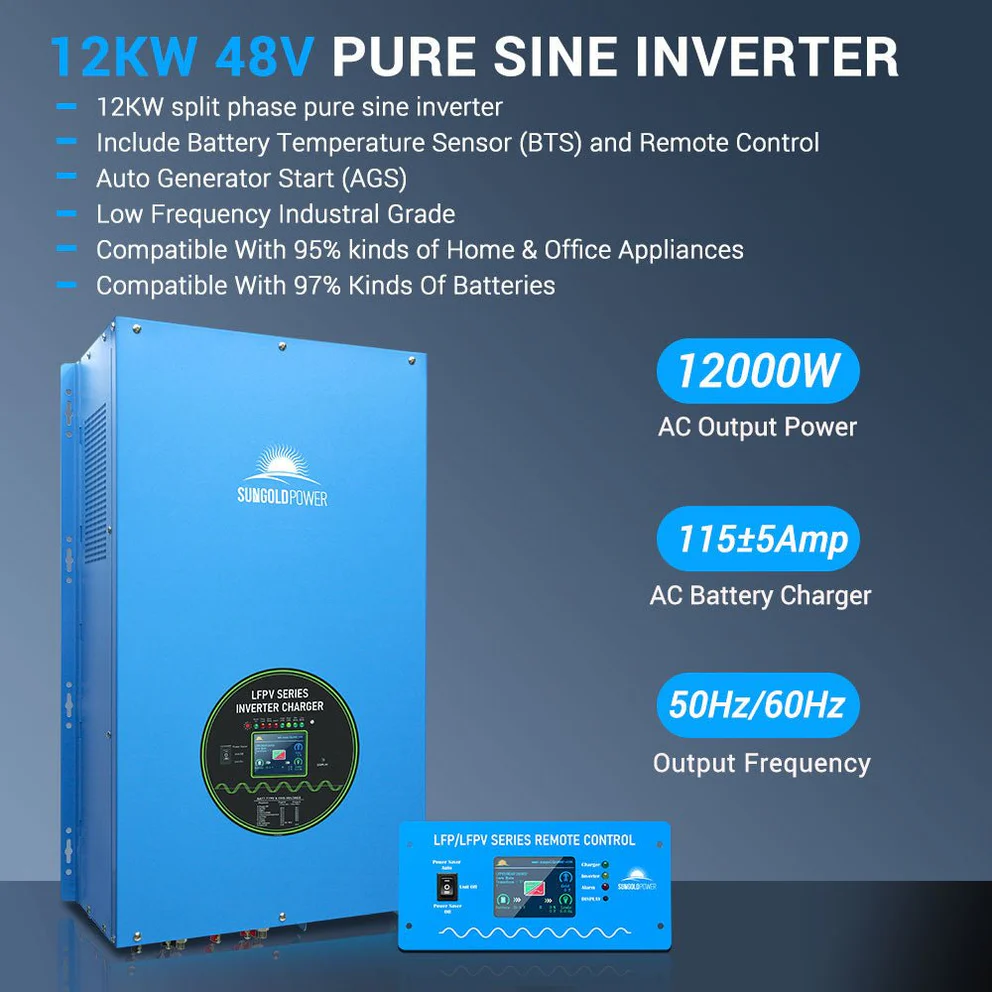
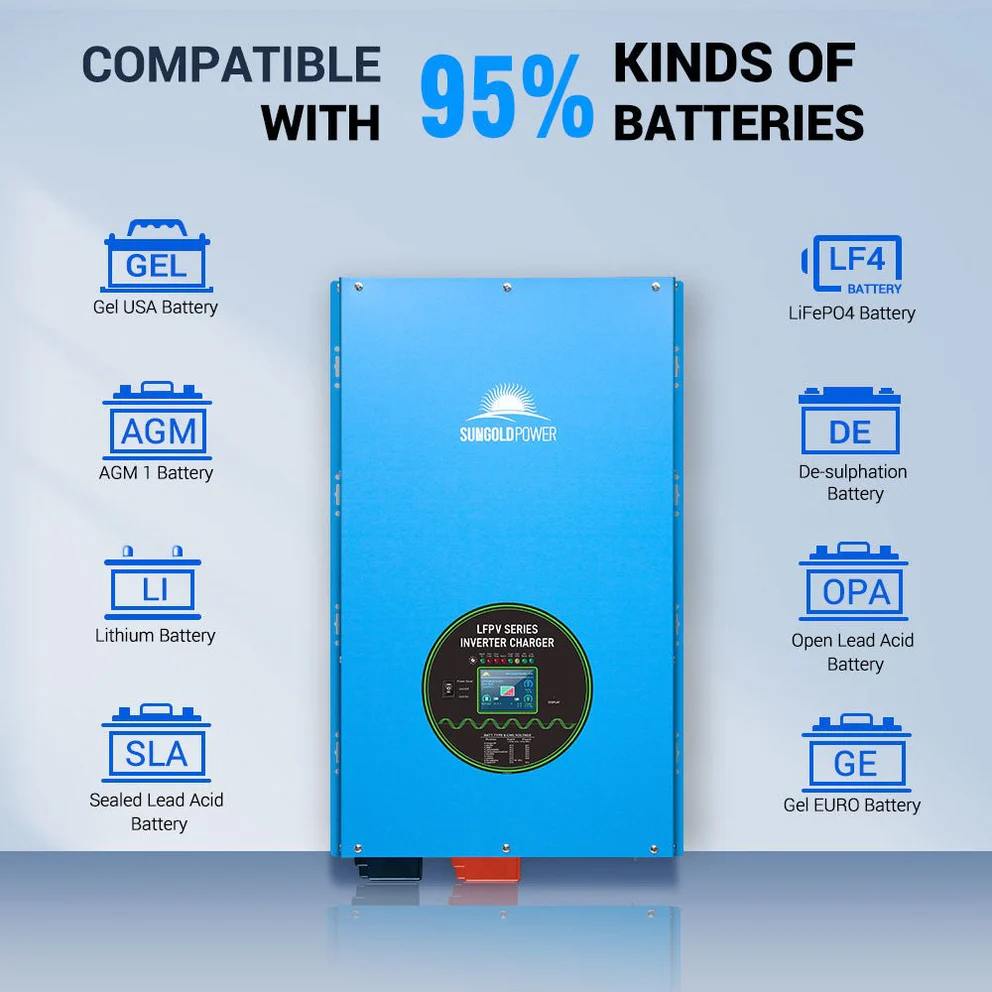
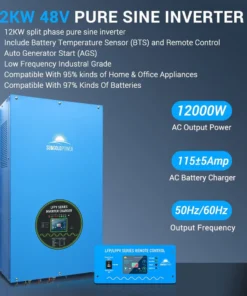
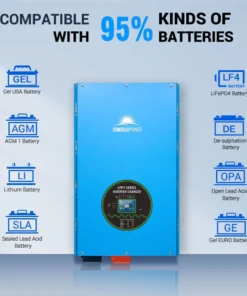
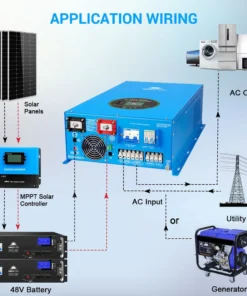
Pure sine wave inverters for large residential, commercial and industrial applications — this 48V split-phase inverter charger range delivers 12kW, 15kW or 18kW of continuous 120V/240V output with identical feature sets across all three output ratings: auto generator start, battery temperature sensing, remote control, 8 battery type compatibility, 300% surge capacity and 8-millisecond transfer time between utility and battery. These are the inverter full sine wave specifications that power entire properties — from small businesses and light commercial operations to large family homes and rural estate facilities — from 48V battery banks with no grid dependency. The only variable across the three configurations is output wattage, charger amperage and idle power — enabling buyers to match inverter capacity precisely to their load profile without paying for unused output headroom.
Table of Contents
- Configuration Comparison — 12kW, 15kW, 18kW
- Shared Feature Set
- Choosing the Right Output Rating
- 300% Surge Capacity Across All Configurations
- Charger Specifications by Configuration
- Auto Generator Start and BTS
- Large Property Applications
- FAQ
Configuration Comparison — 12kW, 15kW, 18kW
| Parameter | 12kW | 15kW | 18kW |
|---|---|---|---|
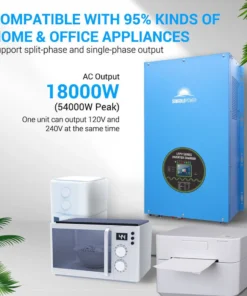
| Continuous Output | 12,000W | 15,000W | 18,000W |
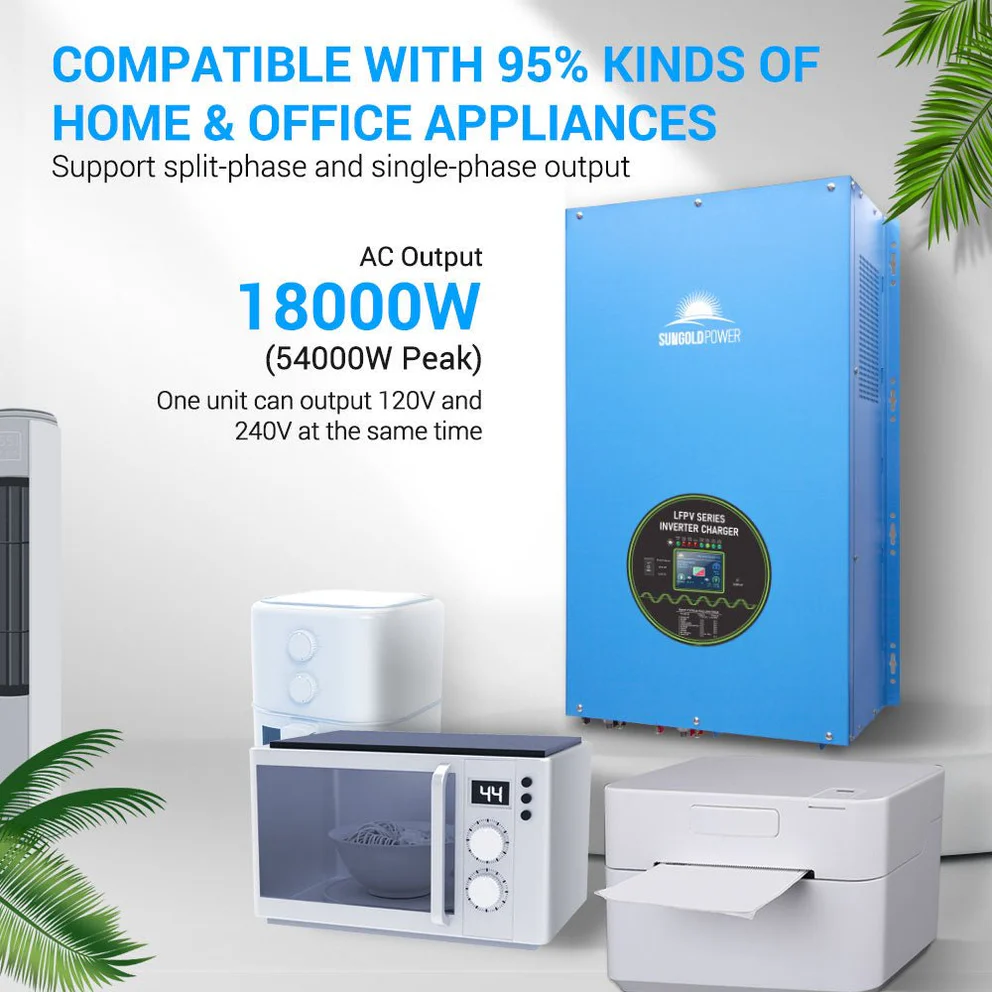
| Surge Rating (20s) | 36,000W | 45,000W | 54,000W |
| DC Voltage | 48V | 48V | 48V |
| AC Output | 120V / 240V | 120V / 240V | 120V / 240V |
| AC Input | 240V | 240V | 240V |
| Battery Charger | 115 ±5A | 100 ±5A | 95 ±5A |
| Idle (saver on) | 40W | 45W | 50W |
| Idle (saver off) | 180W | 225W | 270W |
| Charger Breaker | 80A | 100A | 100A |
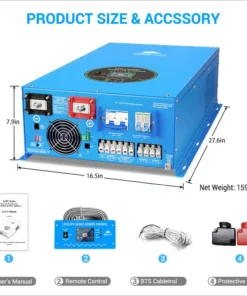
All configurations include: Auto Generator Start, Battery Temperature Sensor, Remote Control, 8 battery voltage selections, 8ms transfer time, PFC charger, 4-step intelligent charging, AC/Battery Priority mode.
Shared Feature Set
Every configuration in this pure sine wave inverters range shares an identical feature platform — the same auto generator start, battery temperature sensor, remote control, transfer switch specification and battery chemistry compatibility regardless of output wattage. This consistency means the decision between 12kW, 15kW and 18kW is purely a load-matching decision — not a feature trade-off.
Auto Generator Start (AGS): Automatic generator activation at configurable low battery threshold with 15-second AC recovery delay before load transfer — protecting equipment from generator output irregularities during startup.
Battery Temperature Sensor (BTS): Temperature-compensated charging voltage adjustment preventing overcharging in heat and undercharging in cold — extending battery service life across seasonal temperature variation.
4-Step Intelligent Charging with PFC: Bulk, absorption, float and equalisation charging stages with Power Factor Correction — maximising charging efficiency and battery longevity across all 8 supported battery chemistries.
AC/Battery Priority Mode: Inverter-preferred UPS configuration for zero-transfer-time operation from battery — with AC input used solely for battery charging rather than direct load supply.
Choosing the Right Output Rating
For buyers evaluating which output rating in these pure sine wave inverters configurations matches their application:
12kW handles large residential properties with central air conditioning, well pump, electric water heater, full kitchen load and workshop equipment within its 12,000W continuous rating. The 36,000W surge capacity starts every single-phase motor load in a typical residential inventory.
15kW provides 3,000W of additional continuous headroom above the 12kW — appropriate for properties where peak simultaneous loads regularly approach or exceed 12kW, or where the additional 9,000W of surge capacity provides better margin for heavy industrial motor starts.
18kW is the highest residential perfect sine wave inverter output available in this range — appropriate for large estates, light commercial operations, agricultural facilities and properties with multiple simultaneous high-draw loads that exceed 15kW peak demand.
300% Surge Capacity Across All Configurations
All three configurations maintain 300% surge capacity for 20 seconds — producing 36kW, 45kW and 54kW of surge respectively. This specification is identical as a percentage across the range — meaning the 18kW configuration provides the same motor-starting reliability per-watt as the 12kW configuration, scaled to the higher continuous output rating.
Charger Specifications by Configuration
The battery charger amperage decreases slightly as output wattage increases — 115A at 12kW, 100A at 15kW and 95A at 18kW — reflecting the thermal management balance between high-output inverter operation and simultaneous high-rate charging. At 95–115 amps into a 48V battery bank, all three configurations deliver 4,560–5,520 watts of charging power — among the highest-rate integrated chargers in the residential inverter charger class.
Auto Generator Start and BTS
The auto generator start specification in these power inverter pure sine configurations includes a 15-second delay before AC load transfer when generator AC input recovers — protecting connected equipment from the output irregularities that occur during generator startup before stable AC is established. This delay is configurable and represents one of the more thoughtful generator protection features in this inverter class.
Large Property Applications
These pure sine wave inverters are the specifications for:
- Large residential homes (3,000+ sq ft) with 240V service panels
- Farms and rural estates with multiple residential and agricultural loads
- Light commercial operations — retail, food service, workshop, office
- Industrial backup applications requiring 120V/240V split-phase continuity
- Off-grid community power systems serving multiple structures from a shared battery bank
Explore the complete inverter charger range in our Inverters, Solar Kits and Off-Grid Power Systems categories.
FAQ
What are pure sine wave inverters at 12kW, 15kW and 18kW used for? Pure sine wave inverters at 12–18kW are used for large residential, commercial and industrial off-grid power applications where the total connected load exceeds what smaller inverters can serve — covering the full electrical load of large properties including central air conditioning, well pump, electric appliances, workshop equipment and complete lighting and entertainment systems simultaneously from a 48V battery bank.
What is an inverter full sine wave at this power level? An inverter full sine wave at 12–18kW provides AC output mathematically identical to utility grid power at the continuous output levels required for large-property electrical replacement. This is not a partial or compromise solution — it is the specification that replaces the utility grid feed for large homes and businesses with zero reduction in appliance performance, equipment operation or electrical capacity.
How do I choose between 12kW, 15kW and 18kW pure sine wave inverters? Choose 12kW if your peak simultaneous load — all appliances running simultaneously — stays within 12,000W. Choose 15kW if your peak simultaneous load regularly approaches or exceeds 12kW. Choose 18kW for large estates, commercial operations and properties with multiple high-draw loads that exceed 15kW peak demand. The surge capacity scales identically (300%) across all three configurations.
What is the perfect sine wave inverter specification benefit of the 8ms transfer time? The 8ms transfer time — typical, with 10ms maximum — provides UPS-class load continuity between utility/generator and battery/inverter power. At 8ms, most sensitive electronics, computers and medical equipment continue operation without disruption during the source transition. The AC/Battery Priority mode provides zero transfer time by operating continuously from the inverter.
What is the power inverter pure sine charger specification difference between 12kW, 15kW and 18kW? The integrated charger amperage decreases as continuous output increases — 115A (12kW), 100A (15kW) and 95A (18kW) — reflecting the thermal balance between simultaneous high-output inverter operation and high-rate charging. All three deliver 4,560–5,520 watts of battery charging power — practical for rapid recovery of large 48V battery banks.
| Inverter Option | LFPV18K48V240VSP [Brand New], LFPV15K48V240VSP, LFPV12K48V240VSP, LFPV18K48V240VSP [Refurbished] |
|---|---|
| Battery Option | Only Inverter, 4 X SG48100P [20.48kwh] |
Be the first to review “12kW / 15kW / 18kW 48V Split Phase Pure Sine Wave Inverter Charger”
Related products
best solar inverter
best solar inverter
best solar inverter
4000W DC 12V Pure Sine Wave Power Inverter With Charger 120VAC
best solar inverter
best solar inverter
best solar inverter
4000W DC 24V Pure Sine Wave Inverter With Charger 120VAC 50/60Hz
best solar inverter
6000W DC 24V/48V Split Phase Pure Sine Wave Inverter with Charger
best solar inverter
Reviews
There are no reviews yet.