


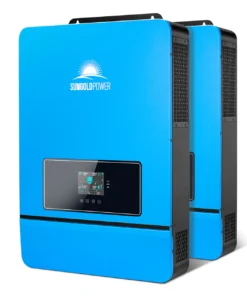
Solar Inverter Charger 12–18kW 48V — Authentic [300% Surge]
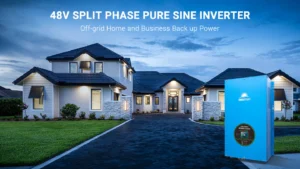
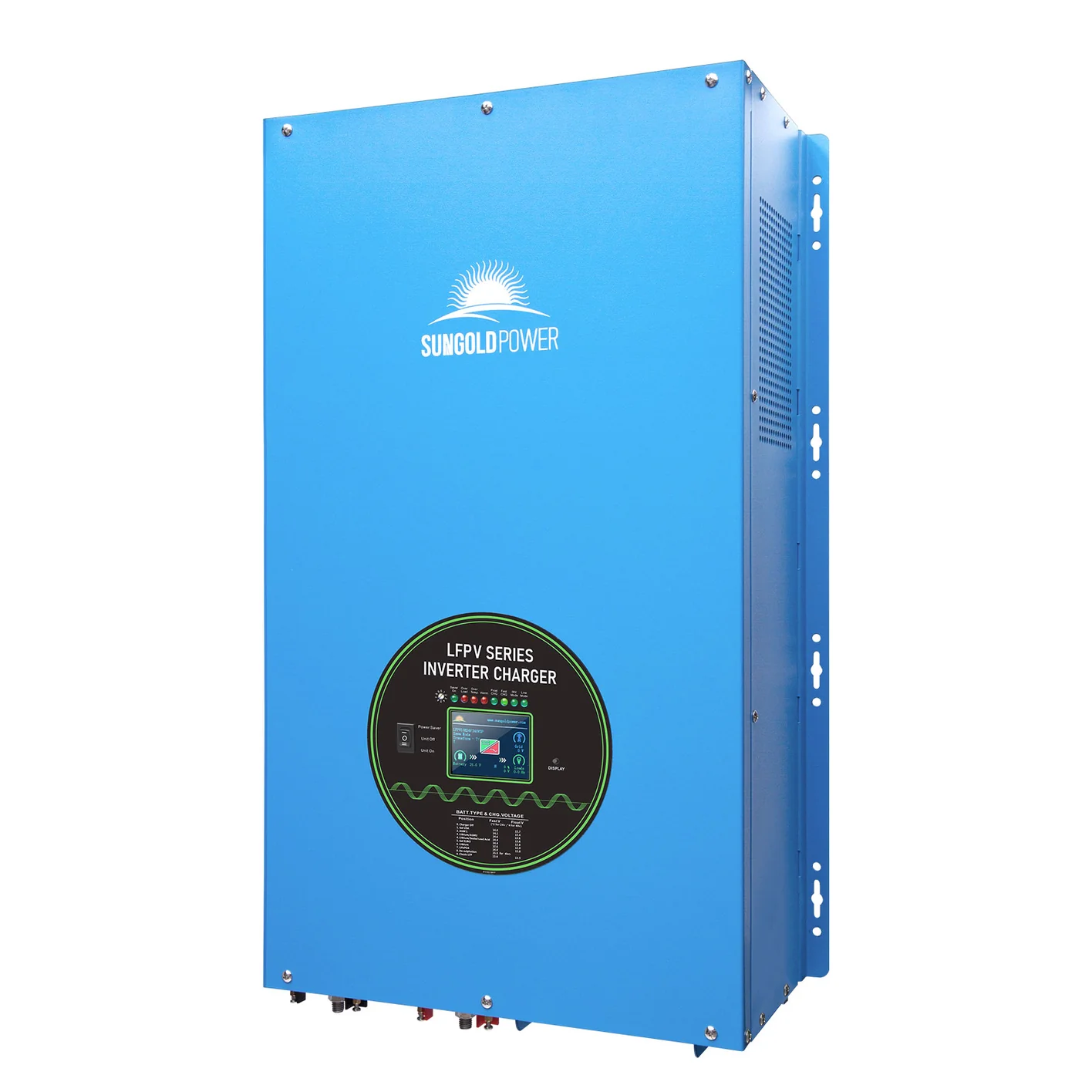
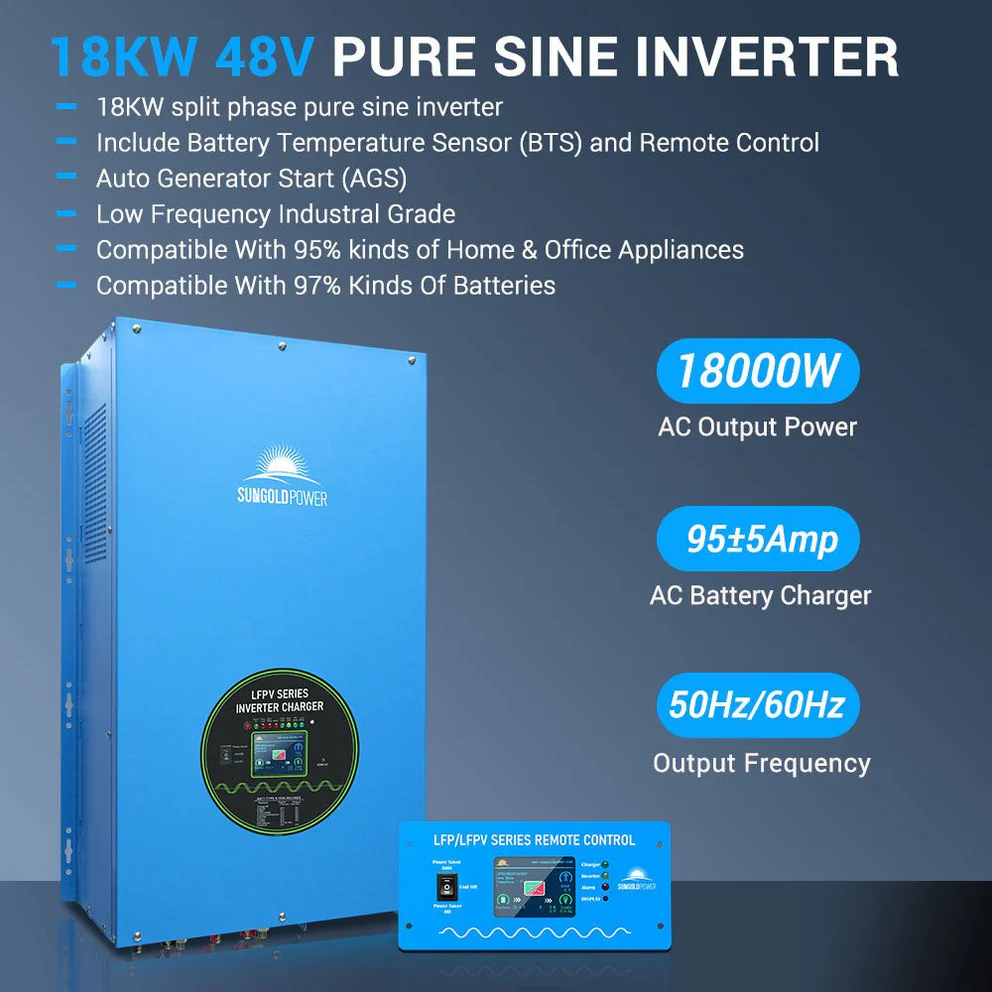
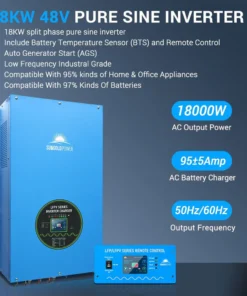
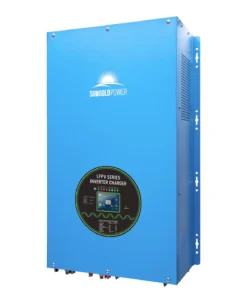
The solar inverter charger that scales to the largest residential and light commercial off-grid loads — this 48V split-phase unit is available in three output ratings: 12kW, 15kW and 18kW, each with identical feature sets and the same professional-grade hardware platform. Pure sine wave output, 300% surge capacity, auto generator start, battery temperature sensing, remote control and 8-battery-type compatibility are standard across all three configurations. The only variables are continuous wattage, surge wattage and charger amperage. Everything else is identical — including the 8-millisecond transfer time that qualifies this home inverter for UPS-class power continuity in residential and commercial applications.

Table of Contents

- Configuration Comparison
- Shared Feature Set — All Three Ratings
- Choosing the Right Output Rating
- Charger Specifications by Configuration
- Home Inverter — Residential Load Coverage
- Solar Power Inverter Home Integration
- FAQ
Configuration Comparison
| Parameter | 12kW | 15kW | 18kW |
|---|---|---|---|
| Continuous Output | 12,000W | 15,000W | 18,000W |
| Surge Rating (20s) | 36,000W | 45,000W | 54,000W |
| DC Input Voltage | 48V DC | 48V DC | 48V DC |
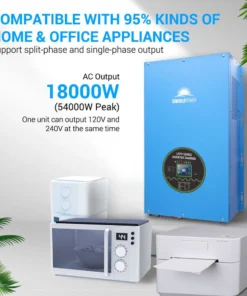
| AC Output | 120V / 240V | 120V / 240V | 120V / 240V |
| AC Input | 240V AC | 240V AC | 240V AC |
| Battery Charger | 115 ±5A | 100 ±5A | 95 ±5A |
| Charger Breaker | 80A | 100A | 100A |
| Idle (saver on) | 40W | 45W | 50W |
| Idle (saver off) | 180W | 225W | 270W |
DC Input Thresholds (all configurations):
| Parameter | Value |
|---|---|
| Nominal Input | 48.0V DC |
| Minimum Start | 40.0 / 42.0V DC |
| Low Battery Alarm | 42.0 / 44.0V DC |
| High Voltage Alarm | 64.0V DC |
| Battery Recover Voltage | 62.0V DC |
| Overcharge Shutdown | 62.8V DC |
| AC Input Range | 184–253V AC / 140–270V AC |
Shared Feature Set — All Three Ratings
Every configuration in this solar inverter charger range carries an identical feature platform — the output wattage is the only variable.
- Auto Generator Start (AGS): Automatic generator activation and shutdown based on configurable battery voltage thresholds. The 15-second AC recovery delay before load transfer protects equipment from generator startup transients.
- Battery Temperature Sensor (BTS): Temperature-compensated charging voltage adjustment across the full operating range. Chemistry-correct charging is preserved regardless of ambient temperature.
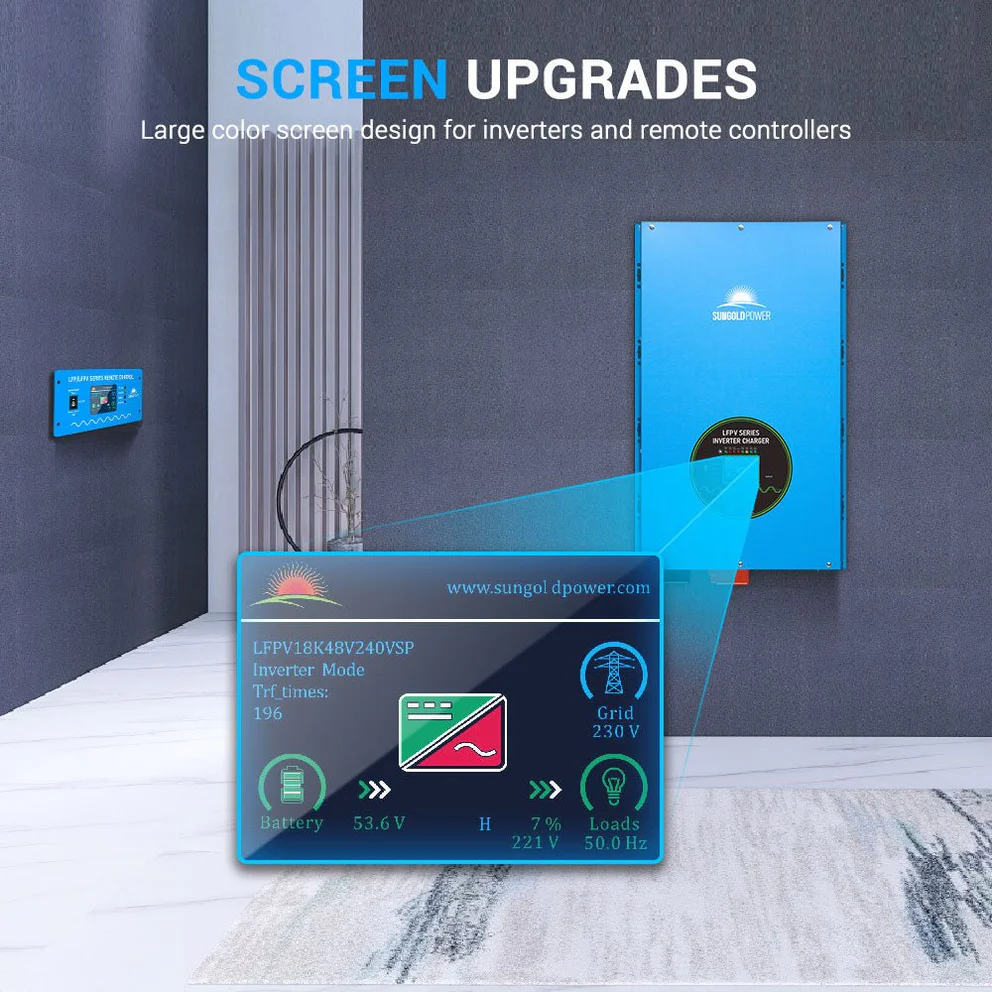
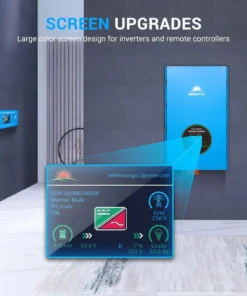
- Remote Control: Included as standard. Enables monitoring and control from a distance — relevant for inverter installations in utility rooms, battery enclosures and remote structures.
- AC/Battery Priority Mode: Inverter-preferred UPS configuration for zero-transfer-time operation from battery output continuously.
- 4-Step Intelligent Charging with PFC: Bulk, absorption, float and equalisation with Power Factor Correction — maximising charger efficiency and battery longevity simultaneously.
- 8ms Transfer Time: Utility-to-battery and battery-to-utility transitions within 8 milliseconds — standard UPS-class transfer speed for load continuity.
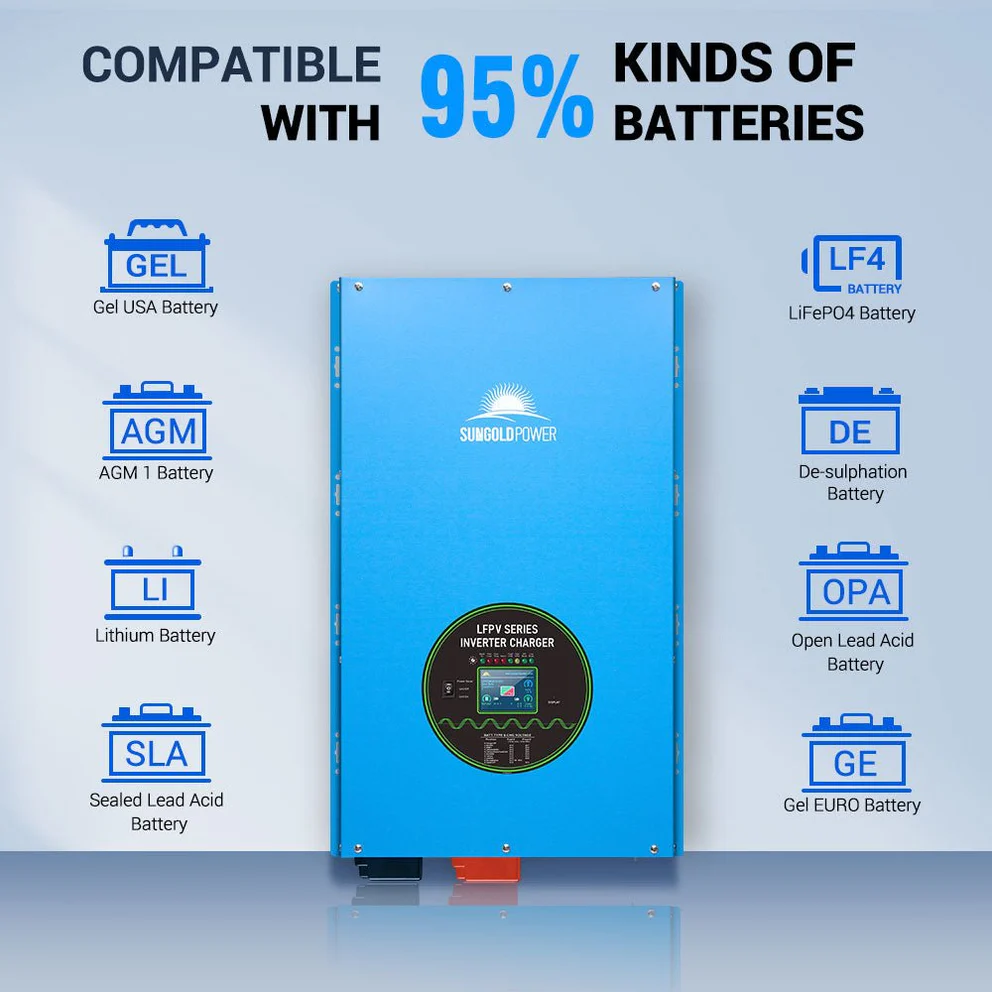
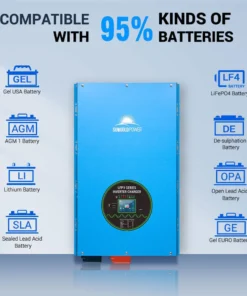
- 8 Battery Type Selections: LiFePO4 (Lithium Iron Phosphate), gel, AGM, sealed lead-acid, flooded lead-acid and user-defined configurations.
Choosing the Right Output Rating
Selecting the correct output rating requires an honest assessment of realistic peak simultaneous load — the total wattage of everything running at the same moment during peak usage periods.
- 12kW handles large residential homes with central air conditioning, well pump, refrigerator, full kitchen load and workshop tools within the 12,000W continuous rating. The 36,000W surge manages every motor start in a standard residential inventory.
- 15kW is appropriate for properties where peak simultaneous load approaches or regularly exceeds 12kW — larger HVAC systems, multiple air conditioning zones, agricultural equipment or combined residential and commercial loads.
- 18kW is the commercial-residential peak specification — appropriate for large estate properties, light commercial operations, hospitality facilities and industrial backup systems where 15kW continuous is genuinely insufficient.
The solar power inverter home rule of thumb: size to 125% of your measured peak simultaneous load, not your average load. Inverters operating continuously at 95–100% of rated output run hotter, age faster and have less surge headroom than units operating at 70–80% of rated capacity.
Charger Specifications by Configuration
Battery charger amperage decreases slightly as continuous output rating increases — a thermal management trade-off between simultaneous high-output inverting and high-rate charging.
- 12kW configuration: 115 ±5A, 80A charger breaker — approximately 5,520W charging power into a 48V bank.
- 15kW configuration: 100 ±5A, 100A charger breaker — approximately 4,800W charging power.
- 18kW configuration: 95 ±5A, 100A charger breaker — approximately 4,560W charging power.
All three deliver high-rate charging appropriate for large residential battery banks. The difference in charger amperage is not operationally significant for battery recovery time at typical battery bank sizes paired with these output ratings.
Home Inverter — Residential Load Coverage
As a home inverter for primary off-grid residential operation, the load coverage across all three configurations includes:
- 240V loads: Central air conditioning, electric water heater, clothes dryer, electric range, well pump and workshop equipment on 240V circuits.
- 120V loads: All standard household outlets, refrigerator, freezer, lighting, entertainment systems and office equipment.
- Motor loads: All standard single-phase motors within the surge rating — HVAC compressors, pump motors, compressors and power tool motors within the 300% surge envelope.
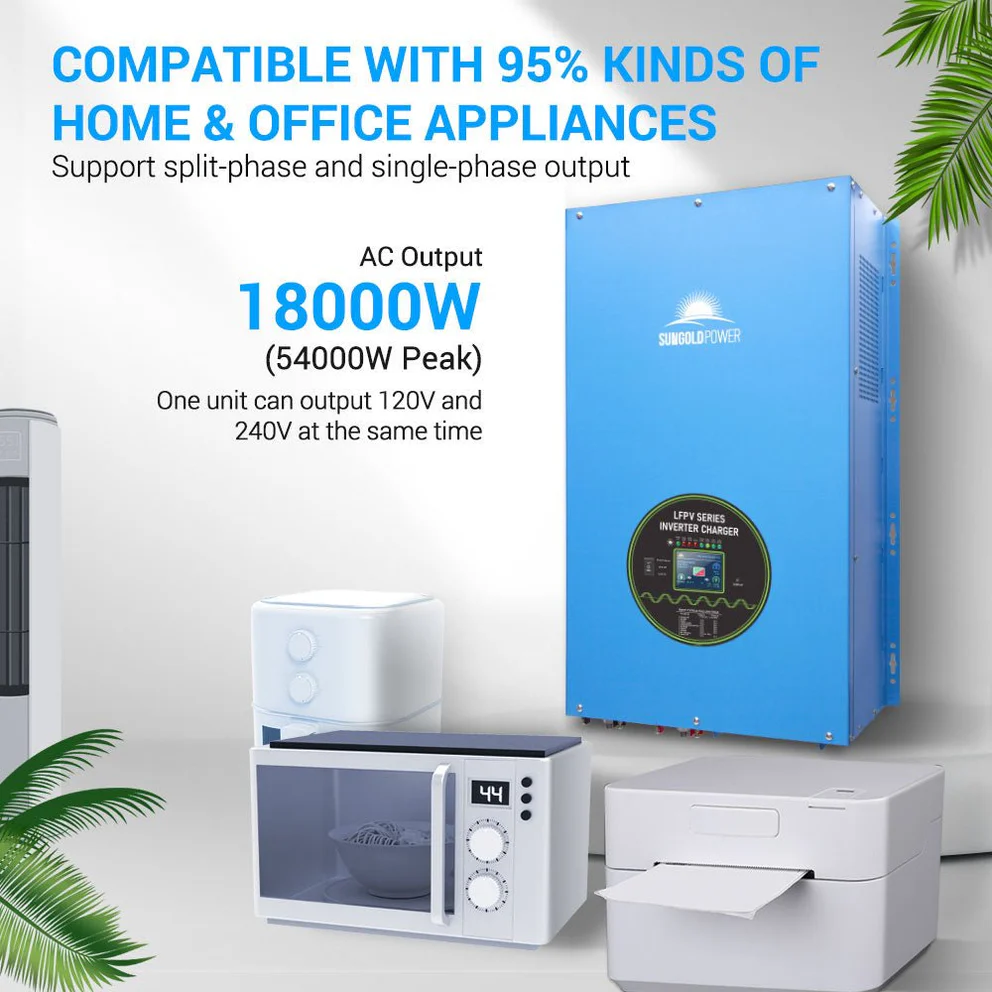
The split-phase 120/240V output directly interfaces with standard North American residential electrical panels. The inverter output connects to the main panel in place of the utility feed — all existing wiring, breakers, outlets and fixtures operate normally from inverter power.
Solar Power Inverter Home Integration
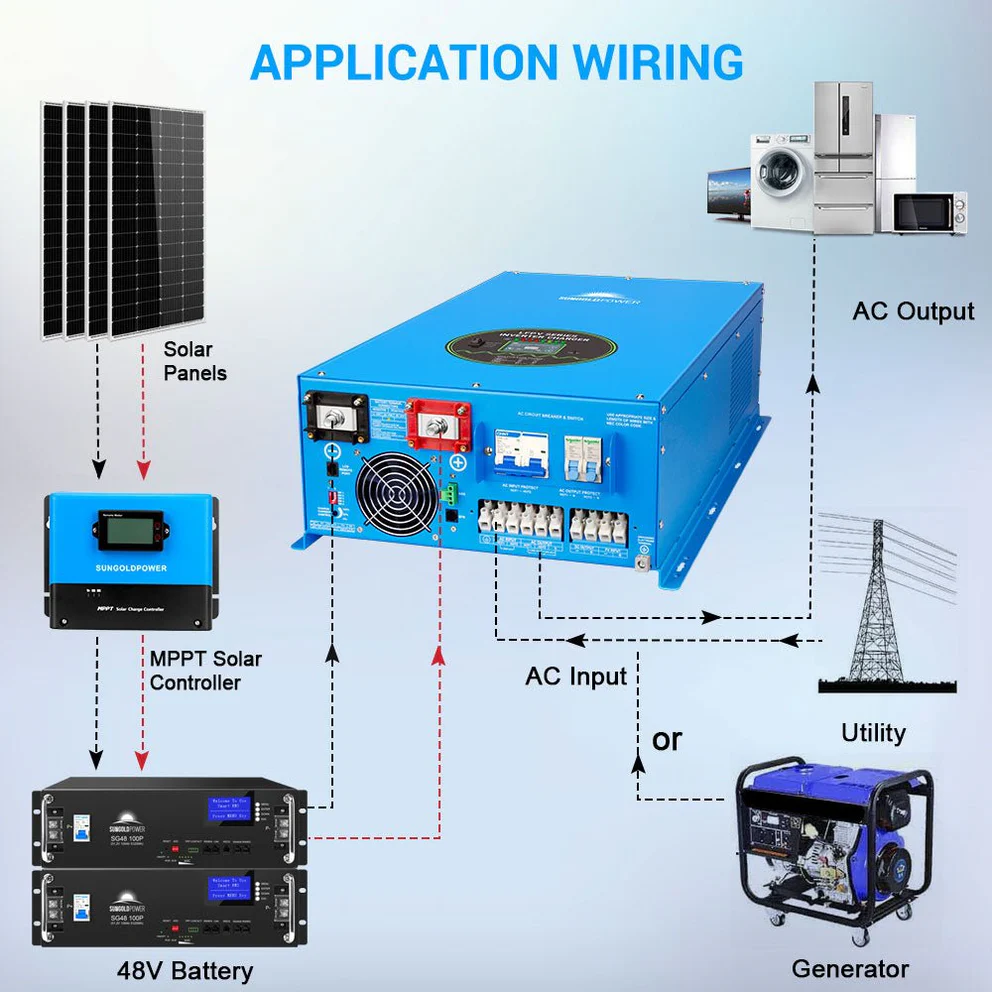
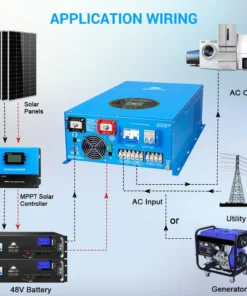
As the core solar power inverter home component in a complete off-grid system, this unit converts DC battery power to AC for the home’s electrical panel. Solar panels feed the battery bank via a separate MPPT charge controller. The inverter’s built-in AC charger provides generator and shore power battery charging independently of the solar pathway.
Explore the complete inverter and solar system range in our Off-Grid Solar Inverters, Solar Kits and Off-Grid Power Systems categories.
FAQ
How do I choose between the 12kW, 15kW and 18kW solar inverter charger configurations? Measure your realistic peak simultaneous load — the total wattage of all appliances running at the same moment during your highest-demand period. Size to 125% of that figure. A property with a 9kW measured peak selects the 12kW. A property with a 12kW measured peak selects the 15kW. If your peak regularly approaches or exceeds 14–15kW, the 18kW configuration is the appropriate choice.
Does this home inverter require a separate solar charge controller? Yes. This inverter charger does not include a built-in MPPT solar charge controller. Solar panels connect to a separate MPPT controller that feeds the 48V battery bank, which the inverter then draws from for AC output. The inverter’s built-in charger handles AC input from a generator or shore power source — not direct PV input. Pair with a correctly sized MPPT controller for complete solar integration.
What battery types does this solar power inverter home unit support? Eight battery voltage selections cover LiFePO4 (Lithium Iron Phosphate), gel, AGM, sealed lead-acid, flooded lead-acid and user-defined configurations. Selecting the correct battery type applies the appropriate charging voltage profile — essential for achieving rated cycle life from any battery chemistry.
Is the AC/Battery Priority mode appropriate for medical equipment? AC/Battery Priority mode runs the inverter continuously from battery output — using AC input solely for charging rather than passing through to loads. This provides zero transfer time for connected loads. For medical equipment where power continuity is clinically critical, this mode is the appropriate configuration. Consult medical equipment documentation for inverter compatibility specifications before connection.
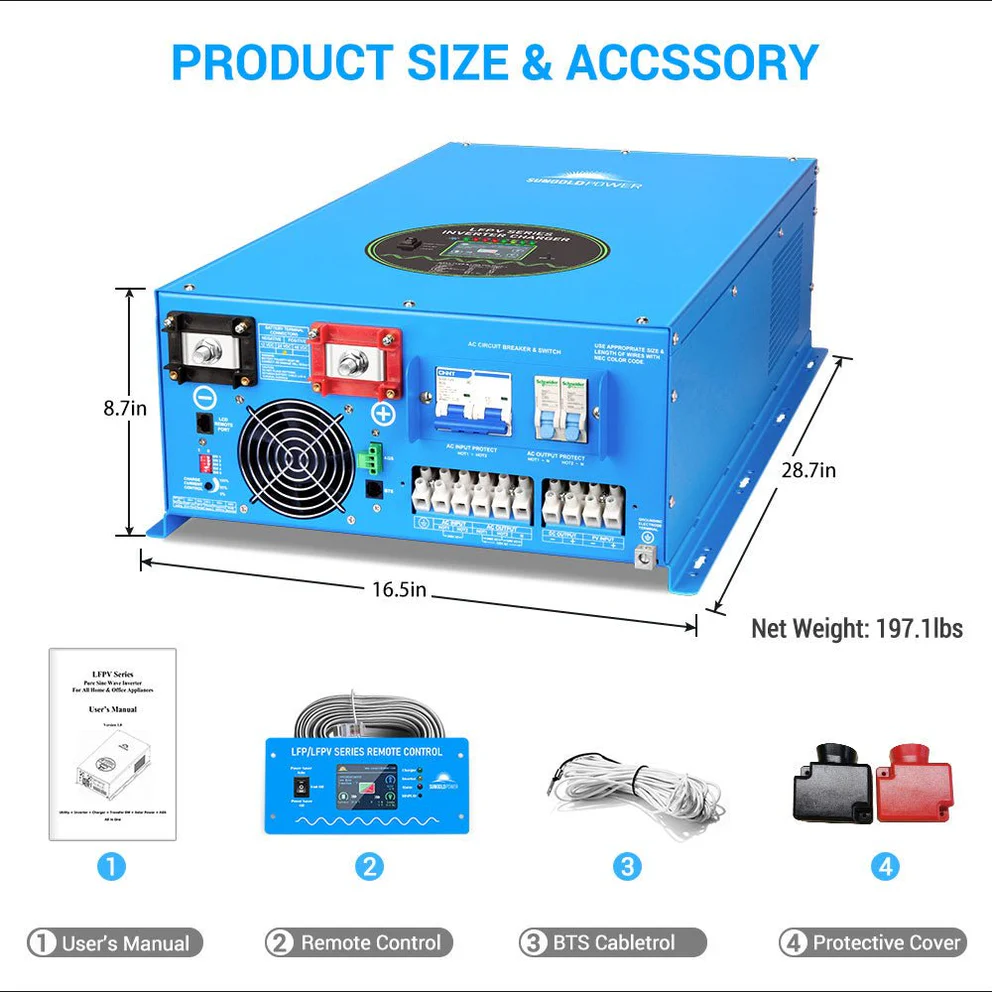
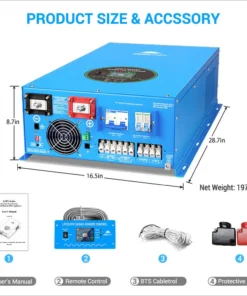
What is included in the packaging for all three configurations? All three configurations include the inverter unit, English manual, remote control and BTS (Battery Temperature Sensor) cable. No solar panels, batteries or MPPT controllers are included — this is the inverter charger component only.
| Inverter Option | LFPV18K48V240VSP [Brand New], LFPV15K48V240VSP, LFPV12K48V240VSP, LFPV18K48V240VSP [Refurbished] |
|---|---|
| Battery Option | 4 X SG48100P [20.48kwh], Only Inverter |
Be the first to review “12kW / 15kW / 18kW 48V Split Phase Pure Sine Wave Inverter Charger”
Related products
best solar inverter
best solar inverter
4000W DC 24V Split Phase Pure Sine Wave Inverter With Charger 120/240VAC
best solar inverter
best solar inverter
best solar inverter
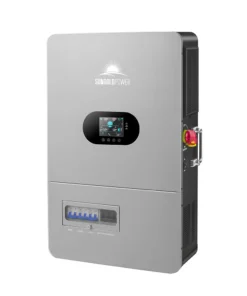
12kW / 15kW / 18kW 48V Split Phase Pure Sine Wave Inverter Charger
best solar inverter
best solar inverter
Reviews
There are no reviews yet.