
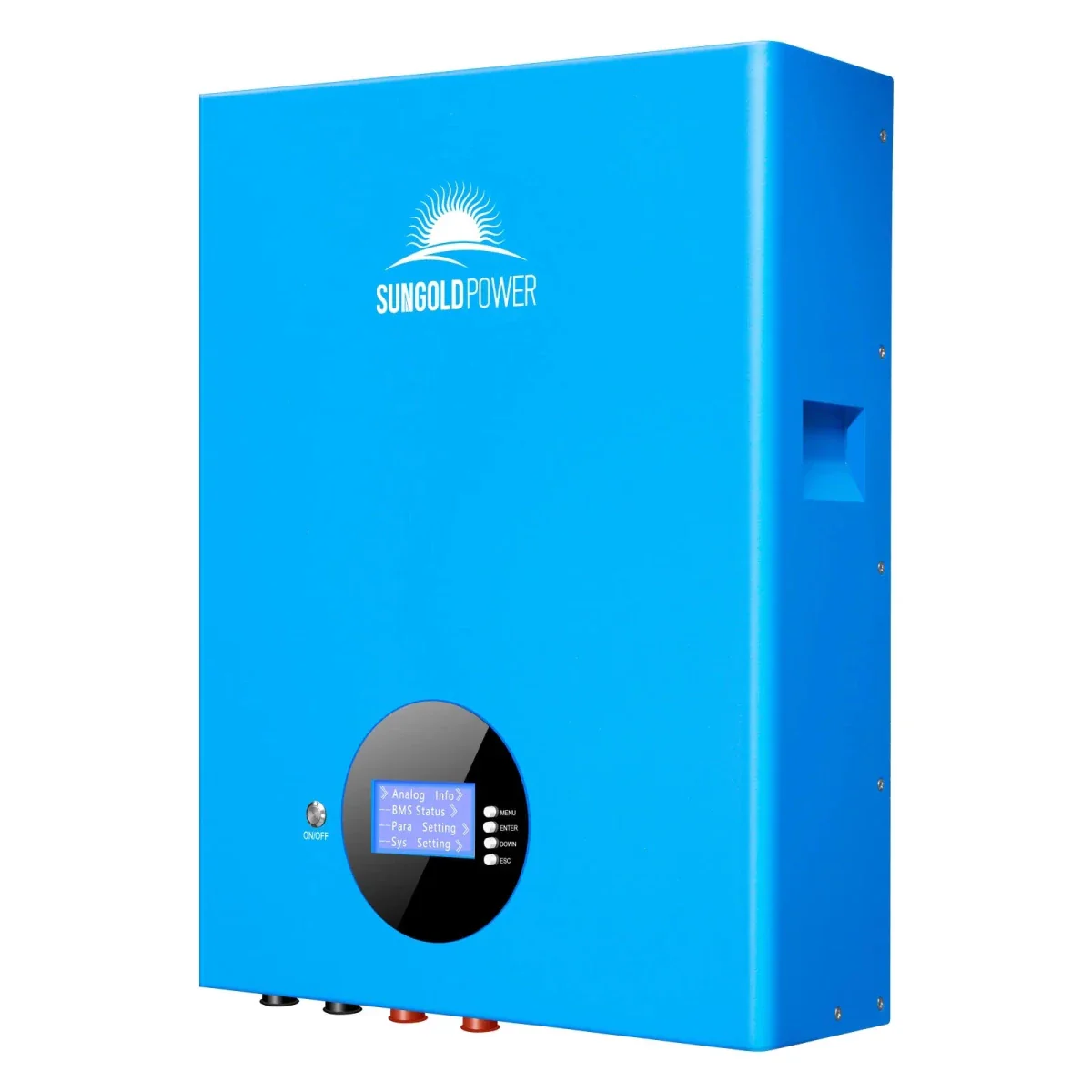
48 Volt Batteries 5.12kWh Wall-Mount — Authentic [32 Parallel]
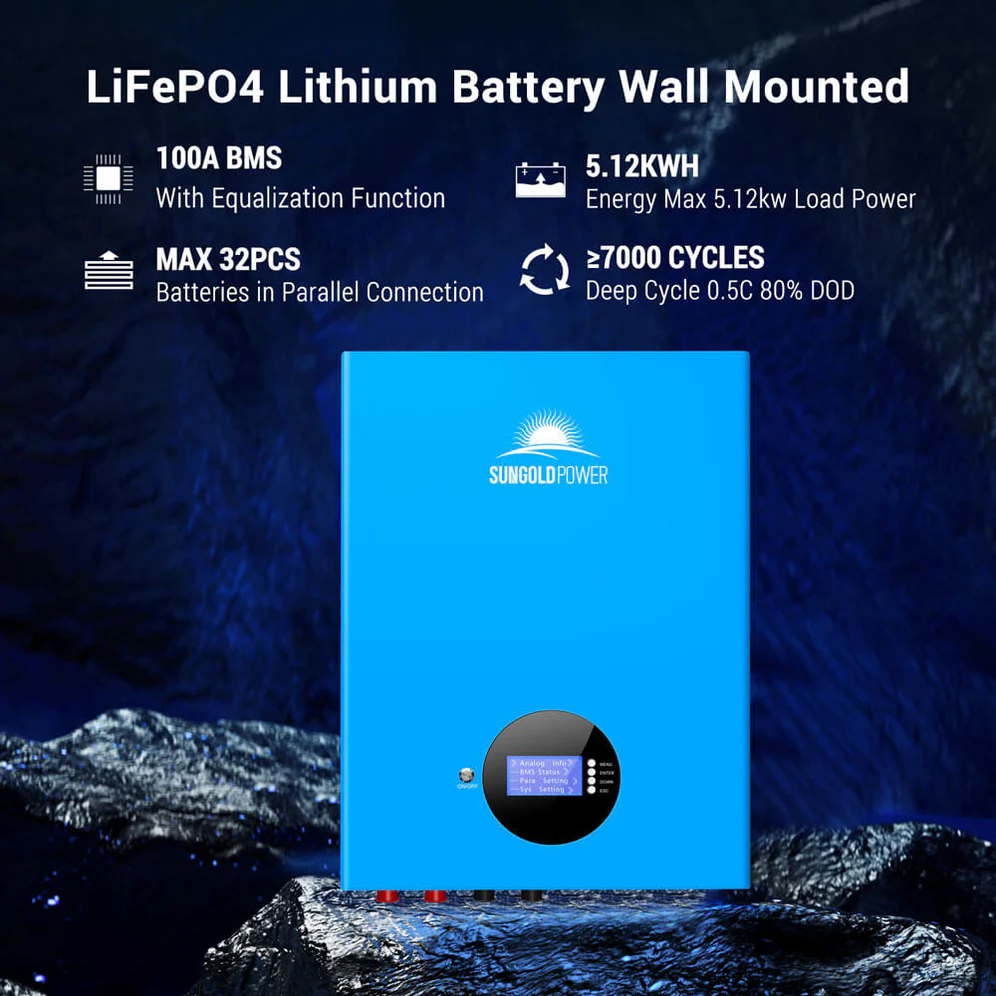
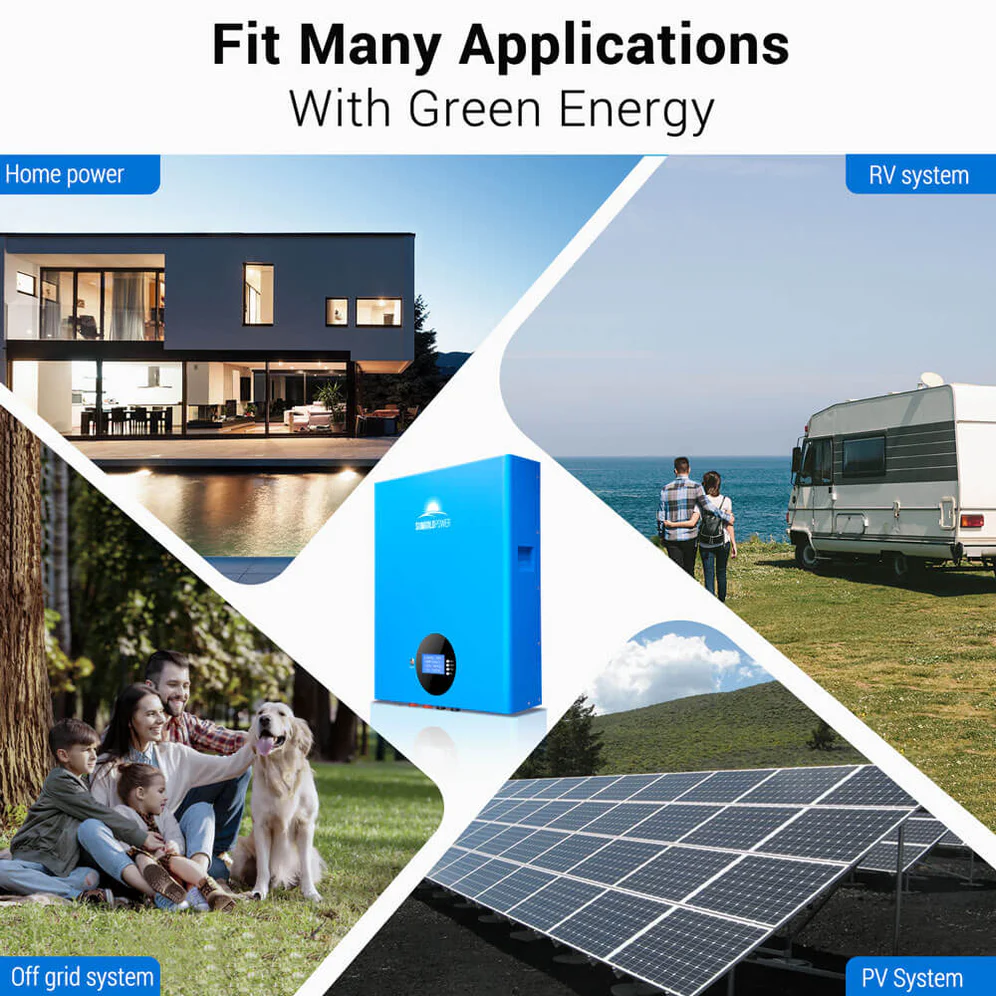
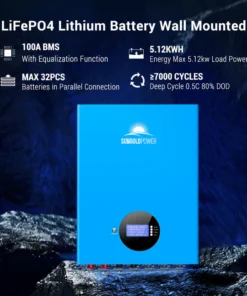
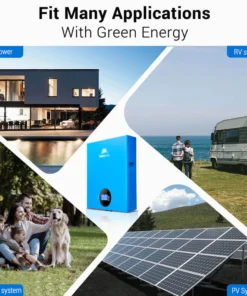
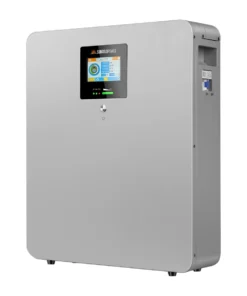
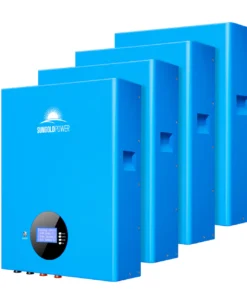
The 48 volt batteries specification for wall-mount residential and commercial energy storage — the SG48100M is a 51.2V 100Ah LiFePO4 (Lithium Iron Phosphate) unit delivering 5.12kWh in a wall-mount ABS enclosure, rated to 7,000+ deep cycles, certified to UL1973, and expandable to 32 units in parallel for 163.84kWh of total storage. The RS232/RS485/CAN multi-protocol communication interfaces confirm compatibility with Growatt, Deye, SunGoldPower, Luxpower, Victron Energy and other leading inverter brands. This is the wall-mount equivalent of the SG48100P server rack unit — the same LiFePO4 chemistry, the same certification stack and the same parallel expansion architecture in a wall-mount format that installs without rack hardware.
Table of Contents
- Complete Product Specifications
- Wall-Mount vs Server Rack — Choosing the Right Form Factor
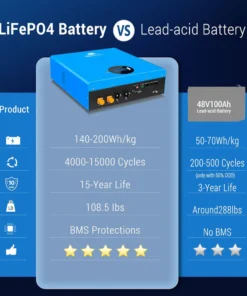
- 7,000 Cycle LiFePO4 Chemistry
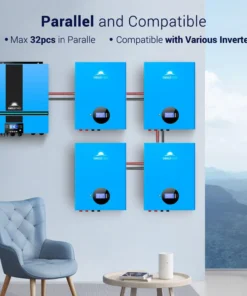
- 32-Unit Parallel Architecture
- UL1973 Certification for Permit-Compliant Installation
- 48V Battery Charger Compatibility
- Multi-Protocol Communication
- FAQ
Complete Product Specifications
| Parameter | SG48100M |
|---|---|
| Chemistry | LiFePO4 (Lithium Iron Phosphate) |
| Nominal Voltage | 51.2V |
| Maximum Charge Voltage | 57.6V |
| Discharge Cutoff Voltage | 43.2V |
| Nominal Capacity | 100Ah |
| Nominal Energy | 5.12kWh |
| Standard Continuous Charge/Discharge | 50A |
| Charge Cutoff Current | 5A |
| Cycle Life | >7,000 cycles |
| Calendar Life | ≥15 Years |
| Charge Temperature Range | 32°F to 113°F (0°C to 45°C) |
| Discharge Temperature Range | -4°F to 140°F (-20°C to 60°C) |
| Storage Temperature | 14°F to 113°F (-10°C to 45°C) |
| Max Modules in Parallel | 32 |
| Max Total Capacity | 163.84kWh |
| Communication Protocol | RS232 / RS485 / CAN |
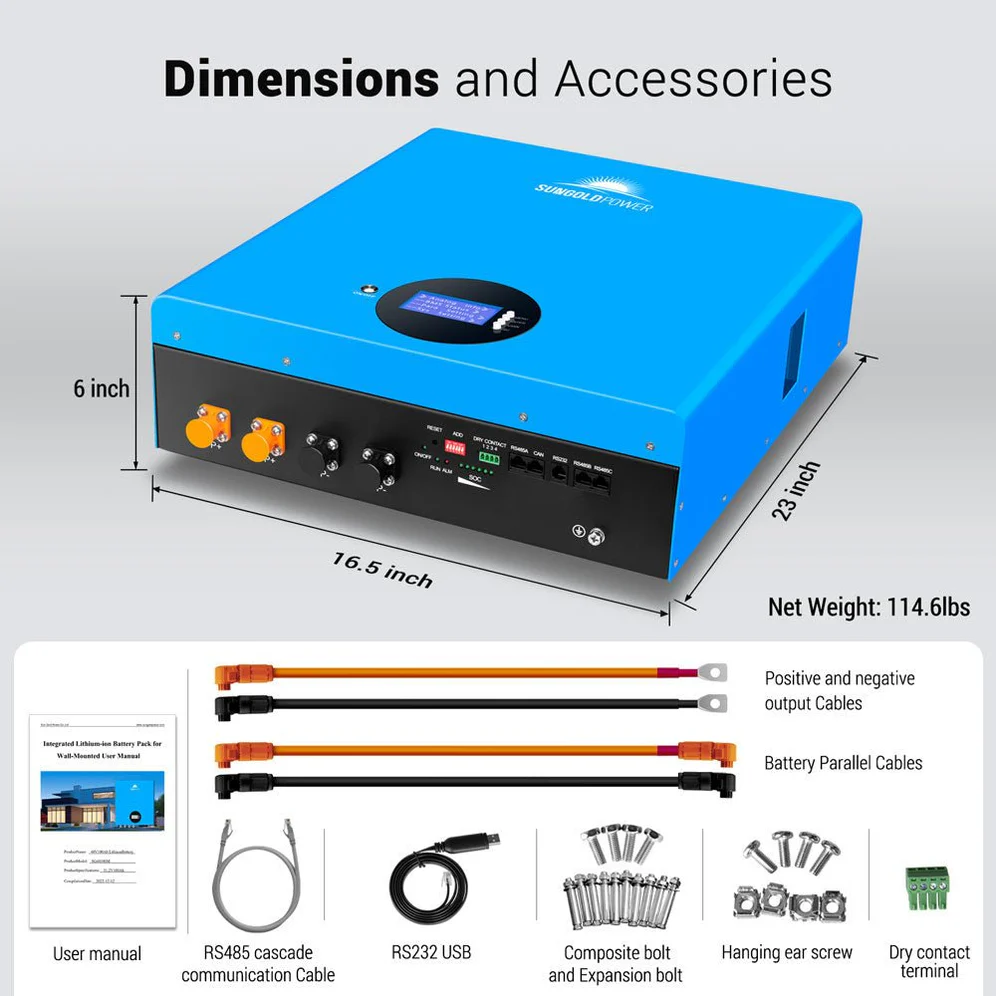
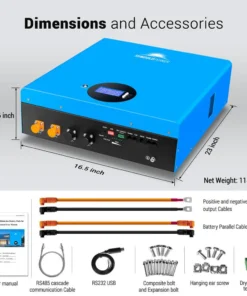
| Unit Dimensions (L×W×H) | 23 × 16.5 × 6 inch |
| Unit Weight | 114.6 lb |
| Certifications | UL1973, CE, UN38.3 |
| Form Factor | Wall-Mount |
Wall-Mount vs Server Rack — Choosing the Right Form Factor
The SG48100M wall-mount and SG48100P server rack unit are technically identical in chemistry, certification and electrical specification — the form factor is the only meaningful difference. Choosing between them is an installation space and preference decision.
Wall-mount (SG48100M) is appropriate when:
- No rack available: Properties without a standard 19-inch equipment rack or enclosed battery cabinet use wall-mount units without purchasing additional rack hardware.
- Distributed installations: Multiple batteries mounted on different walls in different rooms — not possible in a rack format.
- Lower unit count: 1–4 units in residential applications work well in wall-mount format where the total weight per bracket is manageable.
- Retrofit installations: Mounting a 48v battery to an existing wall is often simpler than installing a new equipment rack in an existing space.
Server rack (SG48100P) is appropriate when:
- 8+ units: Rack organisation becomes essential for installations above four units.
- Professional installation appearance: Commercial and industrial settings where organised rack presentation is expected.
- Existing rack infrastructure: Properties with existing equipment racks house the SG48100P directly.
At 114.6 lb per wall-mount unit, the SG48100M requires robust wall attachment to structural members — confirm wall bracket load capacity before mounting multiple units on the same wall.
7,000 Cycle LiFePO4 Chemistry
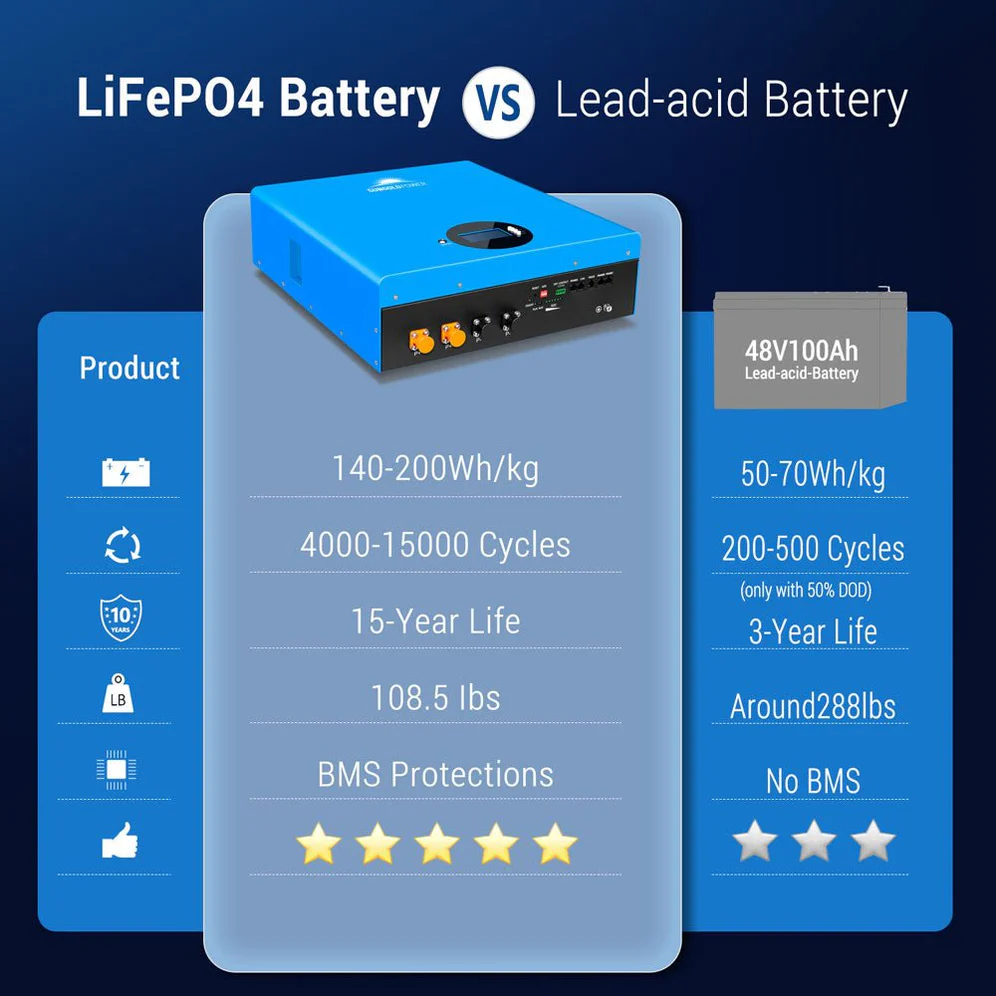
At 7,000 cycles before capacity falls below 80% of rated — measured at standard conditions — the SG48100M’s cell chemistry is optimised for the daily deep cycling that characterises solar energy storage applications. The cycle life specification combined with the ≥15-year calendar life means this battery is warranted to outlast the performance warranty of most solar panels it will be paired with.
LiFePO4 chemistry is the preferred storage chemistry for stationary 48v lifepo4 battery applications due to its inherent thermal stability — LiFePO4 cells do not enter thermal runaway under the abuse conditions (overcharge, puncture, external heat) that cause other lithium chemistries to catch fire. This thermal stability is why UL1973 certification for LiFePO4 batteries carries more weight than the same certification on other lithium chemistries.
32-Unit Parallel Architecture
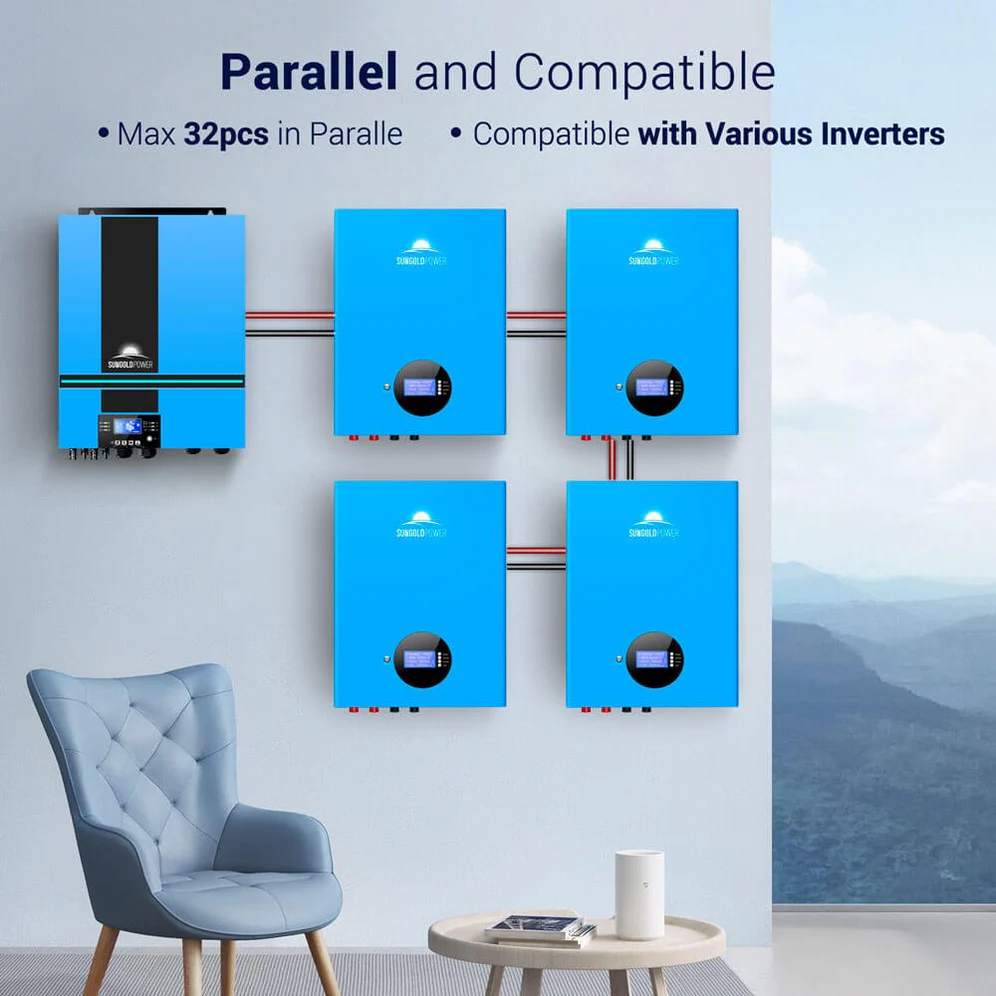
Thirty-two SG48100M units in parallel deliver 163.84kWh of total storage — the same scale as the SG48100P server rack unit. The practical expansion increments for residential and small commercial use:
| Units | Total Energy | Usable at 80% DOD | Overnight for Typical Home |
|---|---|---|---|
| 1 | 5.12kWh | 4.1kWh | Small cabin / backup |
| 2 | 10.24kWh | 8.19kWh | Mid-sized home |
| 4 | 20.48kWh | 16.4kWh | Large home / commercial |
| 8 | 40.96kWh | 32.8kWh | Light commercial / farm |
Each addition is a single cable and communication connection — no system redesign required as the installation grows.
UL1973 Certification for Permit-Compliant Installation
UL1973 is the standard that most US local authorities having jurisdiction (AHJ) require for permitted residential and commercial energy storage system installation. An AHJ reviewing a permit application for an energy storage system will typically require either UL1973 certification or equivalent listing — this certification is increasingly the first document requested by fire marshals, building departments and insurance underwriters reviewing energy storage systems.
The CE and UN38.3 certifications confirm compliance with European and international shipping and electrical safety standards respectively.
48V Battery Charger Compatibility
Any 48V battery charger — including the integrated AC chargers in the Sungold inverter charger series and all MPPT solar charge controllers specified for 51.2V LiFePO4 chemistry — is compatible with the SG48100M. The standard charge voltage of 57.6V and discharge cutoff of 43.2V are the parameters required for inverter and charger configuration.
When configuring an inverter for use with this 48v battery charger system, select the LiFePO4 battery type setting and confirm the bulk charge voltage matches 57.6V and float voltage is set appropriately for the manufacturer’s recommendation. Incorrect voltage settings are the most common cause of premature battery degradation in otherwise correctly installed systems.
Multi-Protocol Communication
RS232, RS485 and CAN simultaneous support enables this battery to communicate with essentially any inverter on the current market — the same broad compatibility as the SG48100P. For 48v batteries buyers who have already selected an inverter and need to confirm battery compatibility: if the inverter supports CAN or RS485 BMS communication with LiFePO4 batteries, the SG48100M is compatible.
Explore compatible inverters and complete off-grid systems in our 48V LiFePO4 Batteries, Off-Grid Solar Inverters and Solar Kits categories.
FAQ
What are 48 volt batteries used for in a residential solar system? 48 volt batteries store DC energy from solar panels for use when solar generation is unavailable — overnight, during cloudy periods and during grid outages. In a residential solar system, the 48V battery bank connects between the MPPT solar charge controller and the inverter, absorbing solar energy during the day and discharging through the inverter to power AC loads at night. 48V is the standard residential energy storage voltage for systems above approximately 3kW of inverter output.
What is the 48v battery charger specification for the SG48100M? The SG48100M charges at a standard continuous rate of 50A to a maximum voltage of 57.6V, with a cutoff current of 5A at full charge. Configure the inverter’s LiFePO4 charging profile to match these parameters — 57.6V bulk/absorption voltage for the 51.2V nominal battery. The charge temperature range is 32°F to 113°F (0°C to 45°C); do not charge below 32°F without external enclosure heating.
Is the SG48100M the same battery as the SG48100P in a different case? The SG48100M (wall-mount) and SG48100P (server rack) share the same LiFePO4 chemistry, capacity (100Ah / 5.12kWh), cycle life (7,000+), communication protocols (RS232/RS485/CAN) and certification basis (UL1973). The wall-mount enclosure of the SG48100M is slightly larger and heavier (114.6 lb vs 93 lb) than the rack-mount SG48100P. The practical difference is installation method — wall brackets versus rack slides. Select based on available installation space and existing rack infrastructure.
What is the 48v lifepo4 battery temperature requirement for cold-climate installations? The SG48100M requires ambient charge temperature above 32°F (0°C). In cold-climate installations where ambient temperature falls below freezing during winter, the battery must either be installed in a heated space or an externally heated enclosure. This unit does not include self-heating — if cold-weather charging in unheated spaces is a requirement, evaluate a battery with integrated self-heating for that installation.
How do I build a 48v battery bank from multiple SG48100M units? Connect units in parallel: positive terminal of each unit to the shared positive bus bar, negative terminal to the shared negative bus bar. Use equal-length cables from each unit to the bus bar — different cable lengths create unequal resistance paths and unequal current sharing. Set all units to the same state of charge before parallel connection. Begin with units from the same production batch for best long-term balance.
| Quantity | 1 Unit, 2 Units, 4 Units |
|---|
Be the first to review “Wall-Mounted 5.12kWh LiFePO4 Lithium Battery SG48100M — 48V 100Ah UL1973”
Related products
Lithium Solar Batteries
Lithium Solar Batteries
Lithium Solar Batteries
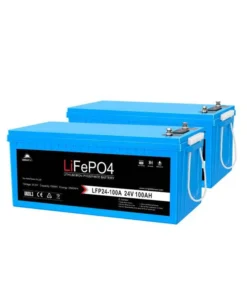
2× 24V 100Ah LiFePO4 Deep Cycle Lithium Battery — Bluetooth / Self-Heating / IP65
Lithium Solar Batteries
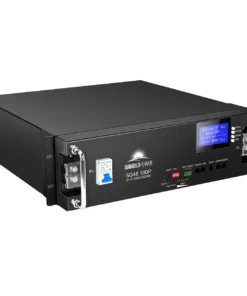
48V 100Ah Server Rack LiFePO4 Lithium Battery SG48100P — UL1973 / UL9540A
Lithium Solar Batteries
Lithium Solar Batteries
Reviews
There are no reviews yet.