
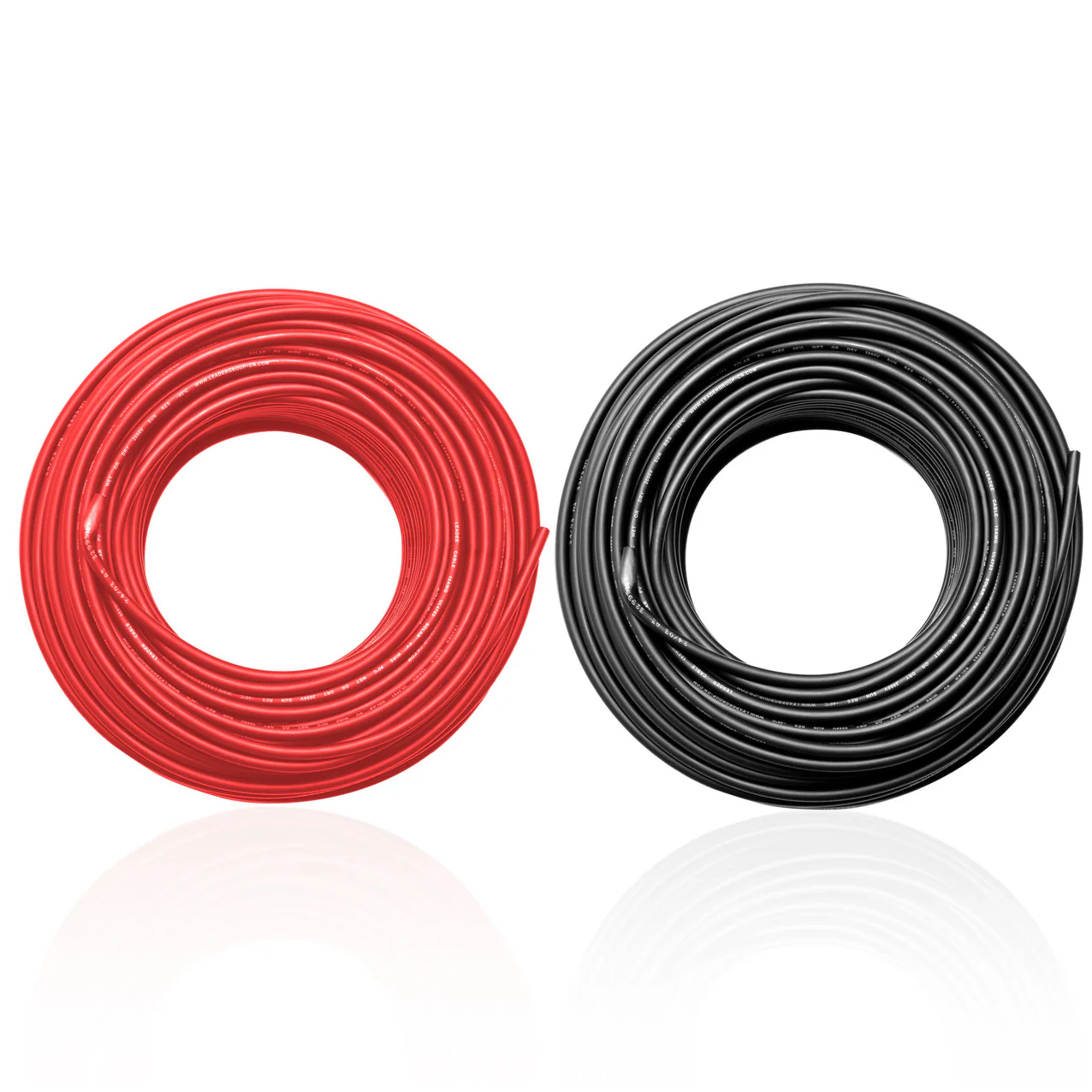
Solar Cable — 200 Feet UV-Resistant PV Wire, Solar Panel Extension, Charge Controller and Inverter Runs
This 200-foot solar cable is purpose-built outdoor PV wiring for the panel-to-controller and panel-to-inverter runs in solar installations where standard electrical wire is not rated for the operating conditions solar arrays impose. UV radiation, outdoor temperature extremes, and continuous DC current at panel operating voltages degrade standard wire insulation within a few years — solar-specific cable is engineered to maintain insulation integrity across the 25-year service life of the panels it connects. At 200 feet, this spool provides enough run length for most residential ground-mount and rooftop array wiring requirements in a single purchase.
Table of Contents
- Why Standard Electrical Wire Fails in Solar Applications
- Planning 200 Feet of Cable for a Residential Array
- Solar Panel Extension Cable — Connecting Panels to Charge Controllers and Inverters
- Voltage Drop and Current Capacity — Sizing the Run Correctly
- Frequently Asked Questions
Why Standard Electrical Wire Fails in Solar Applications
Standard THHN or Romex electrical wire is designed for indoor installation in conduit, walls, and junction boxes — not for continuous outdoor UV exposure, extreme temperature cycling, and DC voltage at solar operating levels. The insulation on standard wire is not UV-stabilised, meaning sunlight breaks down the polymer molecular structure over time, eventually causing cracking, brittleness, and insulation failure. In a rooftop solar installation where the cable is exposed to direct sun for 25 years, this is a documented failure mode — not a theoretical one.
Solar cables are manufactured with UV-stabilised insulation compounds specifically selected to maintain flexibility and dielectric strength across decades of outdoor exposure. The insulation is also rated for the temperature range experienced at roof surfaces — which can reach 160°F on a dark roof membrane on a summer afternoon — rather than the 60°C (140°F) rating of standard THHN, which is marginal for the most demanding summer conditions in southern states.
The DC voltage rating is the second critical distinction. Solar arrays operate at DC voltages — up to 600V in residential systems and up to 1,000V or 1,500V in larger commercial configurations. Standard AC-rated wire is not certified for these DC voltage levels. The arc suppression behaviour of DC current in a fault condition is fundamentally different from AC — DC arcs sustain much more readily than AC arcs, making DC voltage ratings a safety requirement rather than a theoretical specification.
Planning 200 Feet of Cable for a Residential Array
200 feet of cable covers the most common residential solar wiring scenarios in a single purchase:
- A rooftop array to basement equipment room: A typical two-story home with the array on the south-facing roof and the inverter in the basement might require 60–80 feet of cable for the down-run from the roof to the equipment room, plus lateral runs along the roof to reach each string’s combiner point. 200 feet covers this layout with room for the lateral runs.
- A ground-mount array at the back of a property: A ground-mount array 50 feet from the garage where the inverter is located requires 50 feet for the main run plus additional length for the panel-to-panel connections within the array. 200 feet accommodates most backyard installations within a property-line distance.
- Multi-string combiner wiring: Each string in a multi-string array requires its own cable run to the combiner box or charge controller. 200 feet spread across two or three strings of 60–80 feet each covers a moderate-sized residential array completely.
For installations where the total run exceeds 200 feet, additional cable can be purchased and spliced at a weatherproof junction box — though minimising splice points reduces both installation labour and long-term maintenance requirements.
Solar Panel Extension Cable — Connecting Panels to Charge Controllers and Inverters
As a solar panel extension cable, this wiring connects the panel output leads — which are typically cut to 3–4 feet from the factory — to the charge controller or inverter input, which may be located tens of feet away in the equipment room. The cable runs this distance while carrying the full short-circuit current of the array in worst-case conditions.
For a standard residential MPPT charge controller application, the cable carries the string current at the panel’s maximum power point voltage. For a 48V system with panels in strings of 4–6 panels, the string voltage typically falls in the 120V–200V DC range at operating conditions. The cable must be rated for the open-circuit voltage of the string — which is higher than operating voltage and must be within the cable’s DC voltage rating.
The connection between the solar panel cable and the controller or inverter is typically made through MC4 connectors at the panel end and terminal block connections at the controller end. Confirm that the cable supplied is pre-terminated with MC4 connectors or supplied as bare wire requiring field termination — this determines whether additional connector tooling is required for installation.
Voltage Drop and Current Capacity — Sizing the Run Correctly
Voltage drop in a solar cable run reduces the voltage that arrives at the charge controller below the string’s actual operating voltage, reducing the energy delivered to the battery. The National Electrical Code recommends limiting voltage drop to 2–3% in PV source circuits. A longer run and a smaller conductor diameter both increase voltage drop for the same current.
For any installation, verify the specific cable gauge against a voltage drop calculator using the actual run length, operating current, and system voltage before cutting the cable. The standard recommendation for residential PV source circuits is 10AWG for runs up to approximately 50 feet at typical residential string currents, with 8AWG for longer runs — but the correct gauge depends entirely on the current, voltage, and run length of the specific installation.
Browse our full Solar Accessories, MPPT Charge Controllers, and Off-Grid Solar Kits for compatible controllers, connectors, and complete system components.
Frequently Asked Questions
Q: What gauge is this solar cable? The conductor gauge is not specified in the available product data. This is the most critical specification for determining whether the cable is appropriate for a given installation — the gauge determines the current-carrying capacity and the maximum run length before voltage drop exceeds safe limits. Confirm with SunGoldPower before purchasing for a specific application.
Q: Is this solar panel cable suitable for outdoor installation? Solar-specific PV cable is designed for outdoor direct burial and exposed installation, including UV exposure, temperature extremes, and wet conditions. However, outdoor suitability must be confirmed against the specific cable’s listed ratings — confirm UV resistance, temperature rating, and outdoor certification with SunGoldPower before specifying for a permanently exposed outdoor installation.
Q: What is the difference between solar cables and standard electrical wire for PV? Standard electrical wire is not UV-stabilised, is rated for AC voltage rather than DC voltage, and is not designed for the temperature extremes of roof surface installations. Solar cables use UV-stabilised insulation, carry DC voltage ratings appropriate for PV system voltages up to 600V or higher, and are rated for the full outdoor temperature range encountered in rooftop and ground-mount applications.
Q: How far can 200 feet of solar panel extension cable run without excessive voltage drop? The acceptable run length depends entirely on the conductor gauge, the operating current, and the system voltage. At 10AWG, a 30A circuit at 48V can run approximately 40 feet before voltage drop reaches 3%. At 8AWG, the same circuit runs approximately 65 feet. Confirm the cable gauge and use a voltage drop calculator for the specific installation parameters — do not assume the 200-foot length can be used as a single run without this check.
Q: Can solar cables be used underground? Direct burial requires a specific “direct burial” cable rating in addition to UV resistance — not all outdoor-rated solar cable is rated for underground installation. Confirm the burial rating with SunGoldPower if underground conduit-free installation is planned. For most residential applications, running the cable through outdoor-rated conduit from the array to the equipment room is the preferred approach regardless of cable rating.
Be the first to review “Solar Cable 200 Feet Authentic UV Resistant [PV Extension]”
Related products
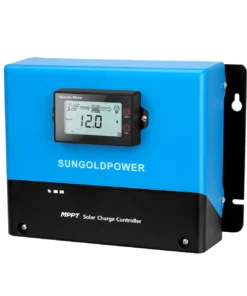
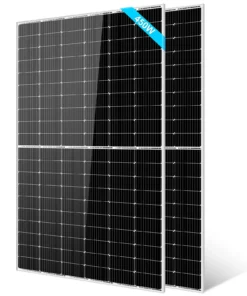
premium solar panels
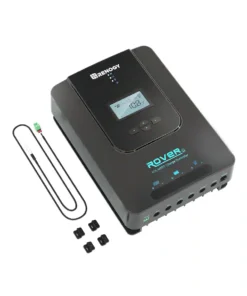
solar system kits
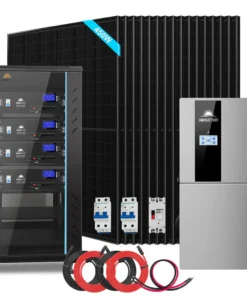
Hybrid Solar Kit 11.4KW 48V Split Phase 20.48KWH-51.2KWH LiFePO4 450W SGH-11N2E SGH-11N5E
premium solar panels
premium solar panels
440W Mono Black N-Type Solar Panel SGN-440-SW5 UL CEC Listed
Reviews
There are no reviews yet.