
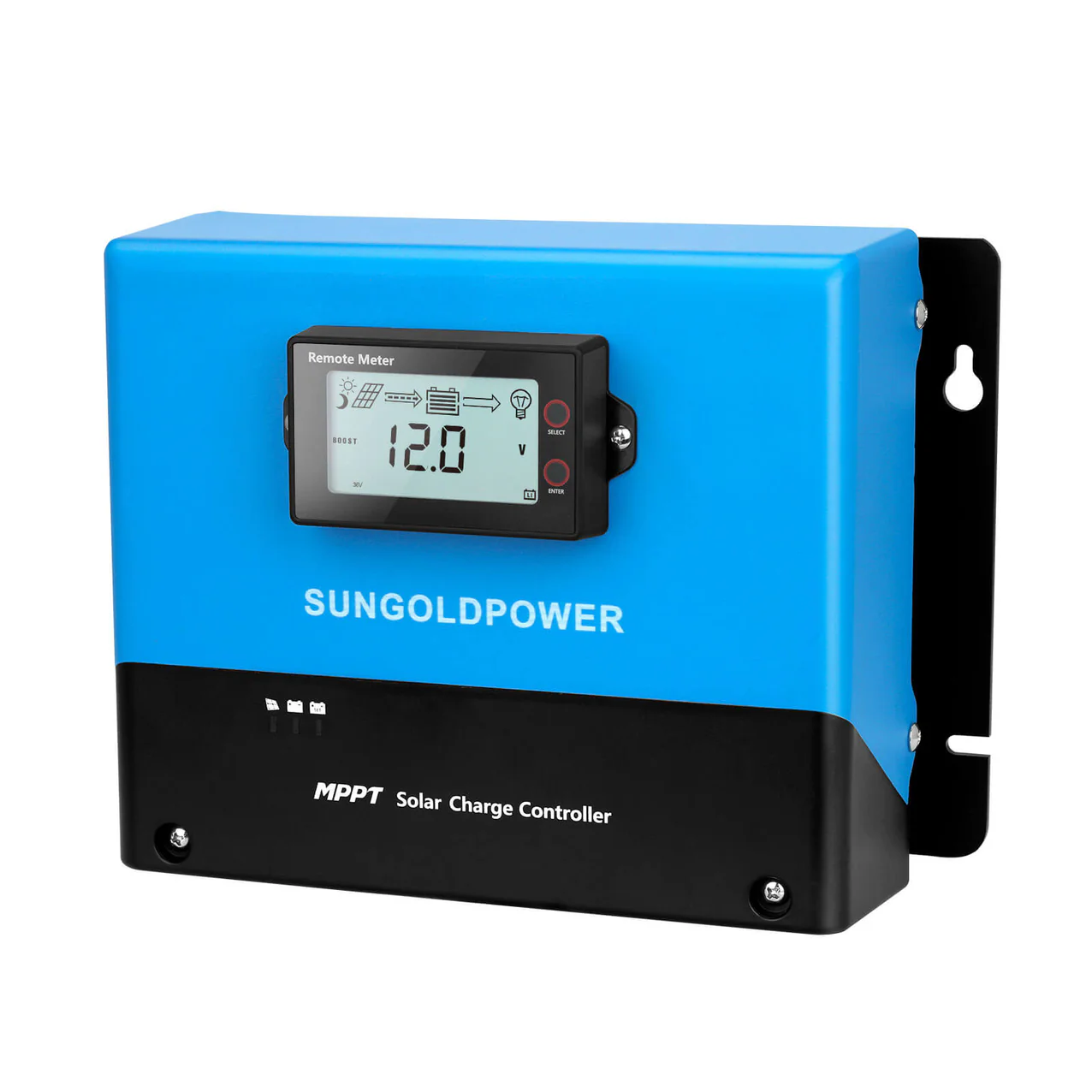
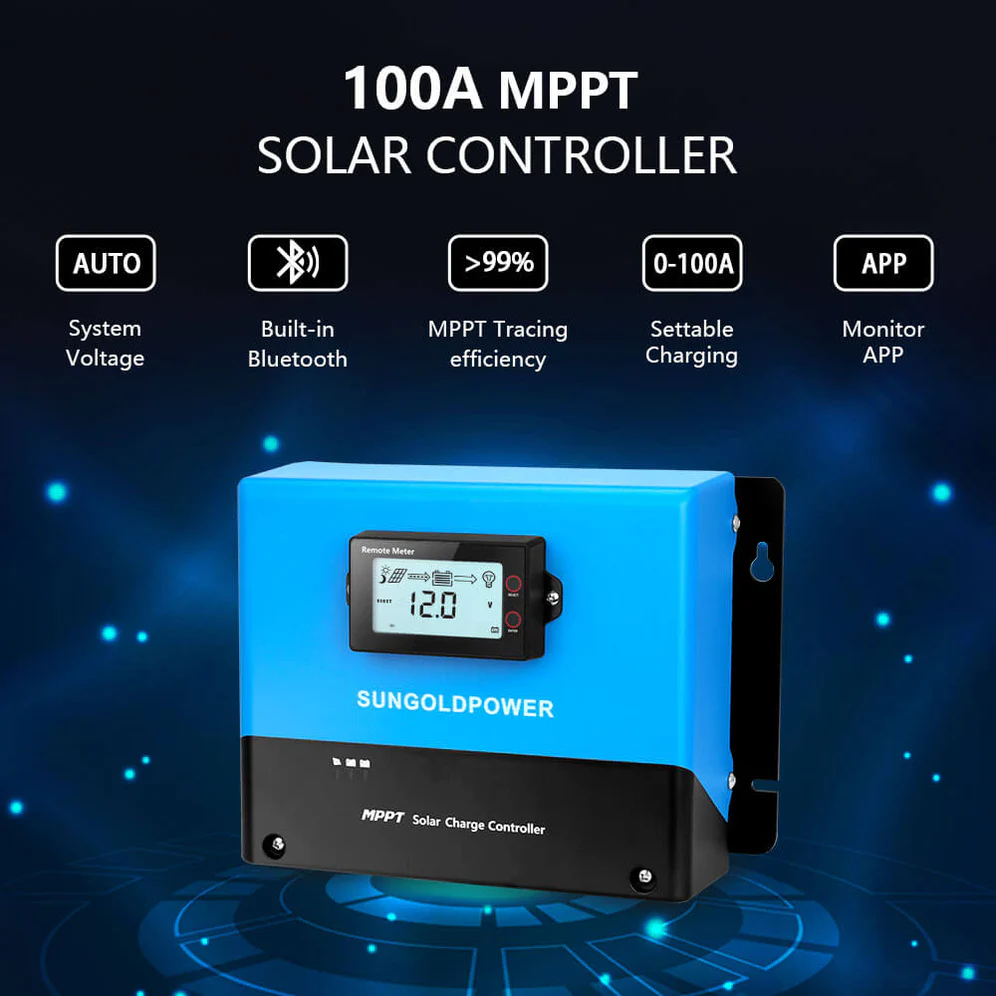
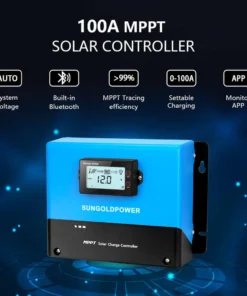
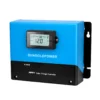
The SGC4825100A is a 100A MPPT solar charge controller rated at 99.9% tracking efficiency, built for off-grid solar systems where extracting maximum power from the panel array is the design priority. Automatic voltage detection across 12V, 24V, 36V, and 48V eliminates manual configuration, a 250V maximum open-circuit PV input handles high-voltage panel strings, and built-in Bluetooth 4.0 BLE pairs the controller directly to a smartphone app for real-time system monitoring. At 48V, a single unit accepts up to 5,280W of PV input — parallel operation removes that ceiling entirely.
Table of Contents
- Specifications
- 99.9% MPPT Tracking — The Difference Between Maximum and Wasted Power
- Auto-Voltage Detection From 12V to 48V Makes This Controller System-Agnostic
- Bluetooth 4.0 and Isolated RS485 — Two Monitoring Channels, Two Different Purposes
- Maximum PV Input Capacity by System Voltage
- Frequently Asked Questions
Specifications
| Specification | Value |
|---|---|
| Model | SGC4825100A |
| System Voltage | 12V / 24V / 36V / 48V — auto-detect |
| Max PV Open-Circuit Voltage | 250V |
| Max PV Input — 12V | 1,320W |
| Max PV Input — 24V | 2,640W |
| Max PV Input — 36V | 3,960W |
| Max PV Input — 48V | 5,280W |
| Rated Charge Current | 100A |
| Battery Voltage Range | 9V–64V |
| MPPT Tracking Efficiency | >99% |
| Self-Consumption | 0.54W |
| Temperature Compensation | -3mV/°C/2V (default) |
| Communication | TTL / Isolated RS485 |
| Bluetooth | Built-in 4.0 BLE |
| Display | LCD |
| Protection Grade | IP32 |
| Operating Temperature | -35°C to +65°C |
| Weight | 12.5 lb |
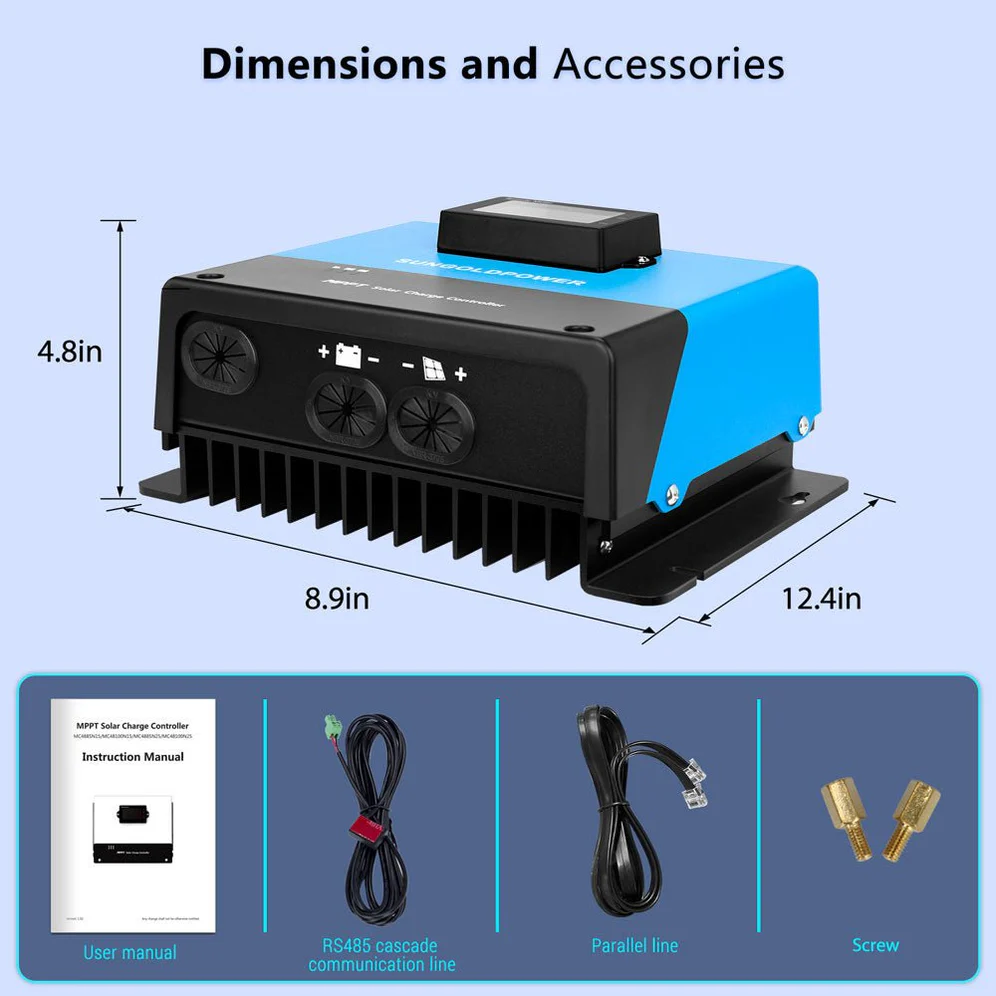
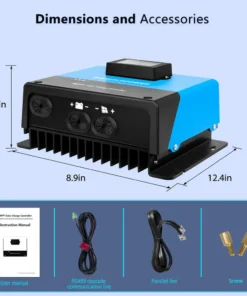
| Dimensions (L×W×H) | 12.4 × 8.9 × 4.8 inch |
| Supported Battery Types | Lithium, Sealed, AGM, User-Defined |
| Parallel Operation | Supported |
99.9% MPPT Tracking — The Difference Between Maximum and Wasted Power
A solar panel’s maximum power point moves constantly — shifting with every change in irradiance, temperature, shading, and panel aging. MPPT tracking continuously locates that point and holds the array there, converting the voltage difference between panel operating voltage and battery charging voltage into usable current through an internal DC-DC conversion stage. The alternative — a PWM controller that ties the panel directly to the battery — forces the array to operate at battery voltage regardless of where maximum power sits, wasting every watt in the gap between the two.
At 99.9% tracking efficiency, the SGC4825100A extracts all but a fraction of a percent of the available array power at every point in the solar day. For a 5,280W array at 48V operating over six hours of peak production, the difference between 99.9% and 90% tracking efficiency is over 3,000Wh lost per day — compounding across every day of the system’s service life into a meaningful reduction in total lifetime energy delivered to the battery bank.
The 0.54W self-consumption means the controller draws almost nothing from the battery at night — a small but non-trivial specification in systems where parasitic loads accumulate across multiple devices over months of operation.
Auto-Voltage Detection From 12V to 48V Makes This Controller System-Agnostic
The auto-detection function reads the connected battery terminal voltage at startup, identifies the voltage class — 12V, 24V, 36V, or 48V — and configures all charging parameters accordingly without requiring manual input. For installers working across multiple system types, this eliminates the misconfiguration failure mode where a controller set manually to 24V gets connected to a 12V battery and applies charge voltages that damage the bank on the first charge cycle.
The 9V–64V battery voltage range provides operating headroom above 58.4V — the full-charge voltage of a 48V LiFePO4 pack — and below 12V nominal to work with partially depleted lead-acid banks without triggering false voltage-class identification. This range covers the complete spectrum of battery voltages encountered in practical 12V through 48V off-grid and rv solar controller installations.
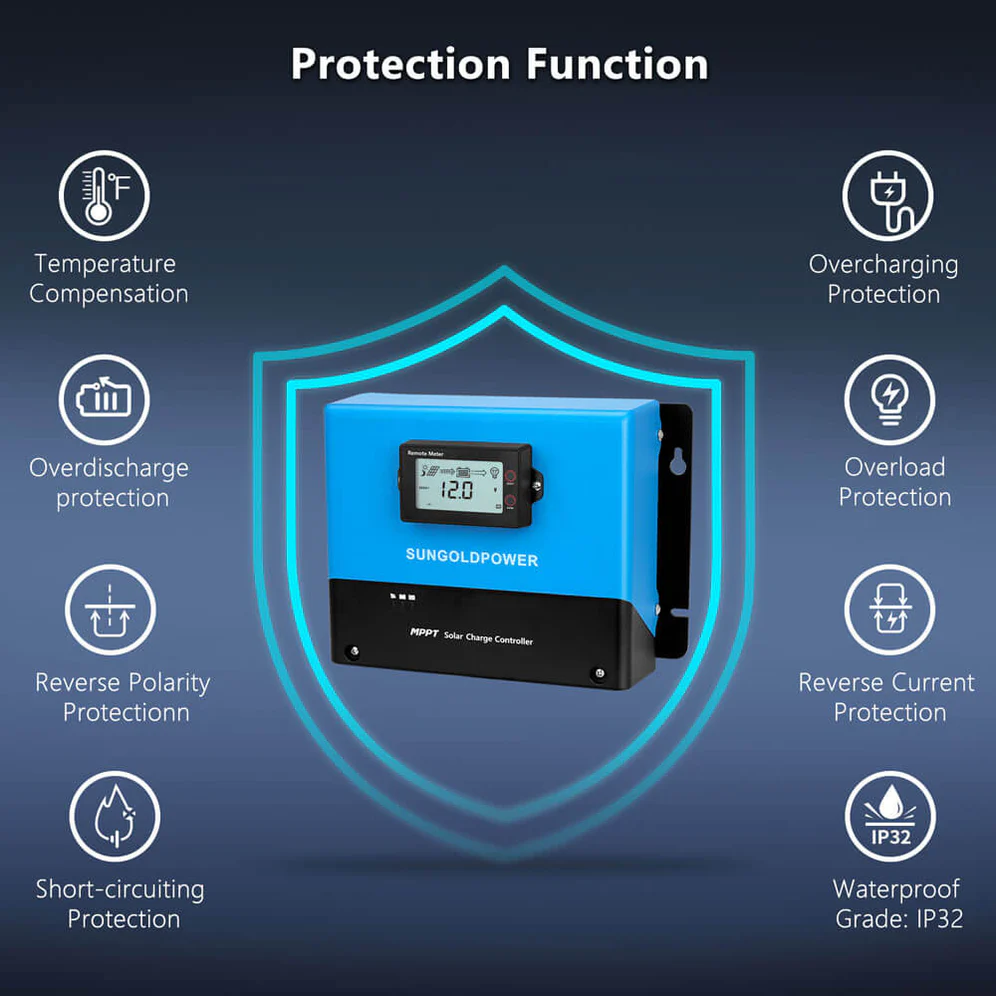
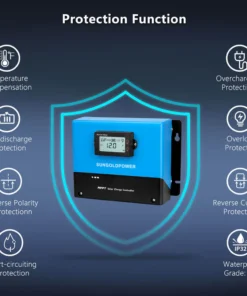
Temperature compensation at -3mV/°C/2V adjusts the absorption and float charge voltages as battery temperature changes — critical for outdoor and vehicle-mounted battery banks where temperature swings between night and midday significantly affect the optimal charging voltage. Without temperature compensation, a controller applies the same charge voltage to a cold winter battery that it applies to a warm summer battery — overcharging in cold conditions and undercharging when temperatures are high.
Bluetooth 4.0 and Isolated RS485 — Two Monitoring Channels, Two Different Purposes
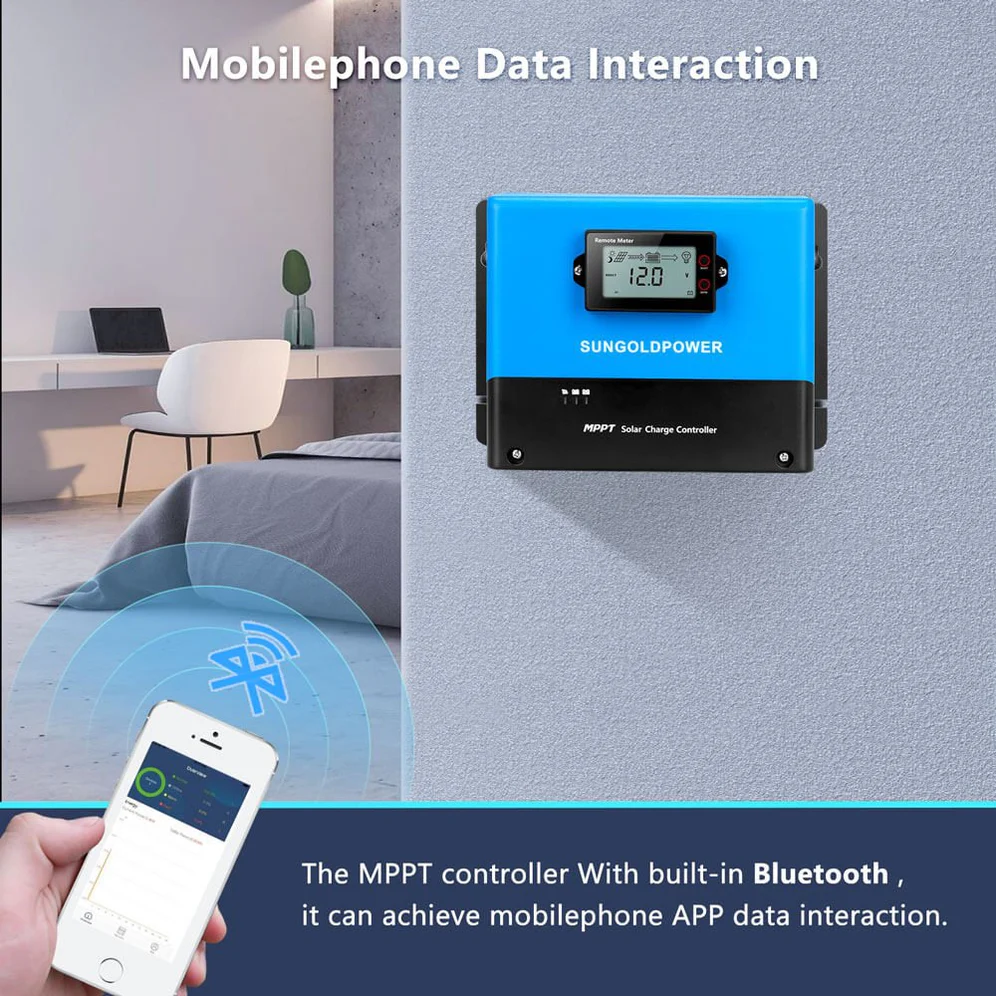
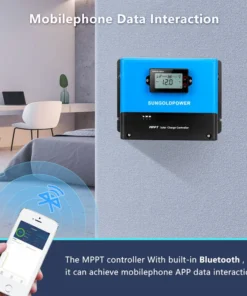
Built-in Bluetooth 4.0 BLE connects directly to a smartphone without requiring a WiFi router, internet access, or additional hardware. The app displays real-time PV input power, battery voltage, charge current, state of charge, accumulated energy production, and active protection events. For a residential solar system charge controller installed in a utility room or outdoor enclosure, this Bluetooth interface is how most owners will interact with the system day-to-day — a quick check from a phone rather than a trip to read the LCD.
Isolated RS485 serves a fundamentally different purpose. It provides hardwired integration with central monitoring systems, building management platforms, and data loggers — the isolation barrier protecting signal integrity by breaking ground loops that corrupt communications in systems where multiple devices share a common ground reference. The “isolated” designation is significant: non-isolated RS485 in an off-grid solar system with a chassis ground reference can produce intermittent communication errors that appear to be software problems but are actually ground loop interference.
Both interfaces operate simultaneously. TTL communication provides a third channel for development and diagnostic access. The LCD on the controller face displays the same core data — system voltage, charge current, battery state of charge, and protection status — locally without requiring a connected phone or remote system.
Maximum PV Input Capacity by System Voltage
The rated 100A charge current is constant across all voltage classes. PV input power scales proportionally because power equals current multiplied by voltage. At 48V, 100A of charge current corresponds to 4,800W of battery-side power — which requires a PV array of approximately 5,280W to deliver after conversion losses.
| System Voltage | Max PV Input | Typical Panel Count |
|---|---|---|
| 12V | 1,320W | 4–6 panels at 200W–250W |
| 24V | 2,640W | 6–8 panels at 350W–415W |
| 36V | 3,960W | 8–12 panels at 370W–415W |
| 48V | 5,280W | 10–16 panels at 370W–450W |
For arrays larger than 5,280W at 48V, parallel operation with additional SGC4825100A units multiplies both the maximum charge current and PV input capacity proportionally — two controllers deliver 200A and 10,560W, three deliver 300A and 15,840W, continuing until the battery bank’s maximum charge current is the binding constraint.
Browse our full Solar Charge Controllers, Off-Grid Solar Kits, and Solar Battery Storage collections for compatible batteries, inverters, and complete system components.
Frequently Asked Questions
Q: What is the practical advantage of 99.9% MPPT efficiency over a 90% controller? Over a 5,280W array at 48V operating six hours daily, a 99.9% efficient MPPT solar charge controller delivers approximately 3,100Wh more to the battery than a 90% efficient alternative under identical conditions. At 365 days per year, that gap exceeds 1,100kWh annually — roughly 10% of an average US household’s total electricity consumption, from a controller efficiency difference alone.
Q: What is a régulateur MPPT 100 amp? “Régulateur MPPT 100 amp” is the French-language term for a 100A MPPT solar charge controller — the same device described on this page. French-speaking buyers in Quebec, Canada, France, and francophone Africa use this terminology. The SGC4825100A functions identically regardless of the language used to search for it and is shipped globally.
Q: Can the auto-voltage detection be overridden if needed? Yes. While the automatic detection handles the majority of installations correctly, the LCD and programming interface allow manual voltage class selection if the auto-detection reads incorrectly — which can occur when the battery is extremely deeply discharged and its terminal voltage falls below the threshold for accurate class identification. Manual override corrects this immediately.
Q: What solar charge controllers are compatible for parallel operation? Parallel operation requires identical SGC4825100A units — the same model, firmware version, and configuration settings. Mixing different charge controller models in a parallel bank creates mismatched control algorithms that fight each other rather than sharing the load cooperatively. Confirm the specific parallel wiring configuration in the product manual before commissioning a multi-controller installation.
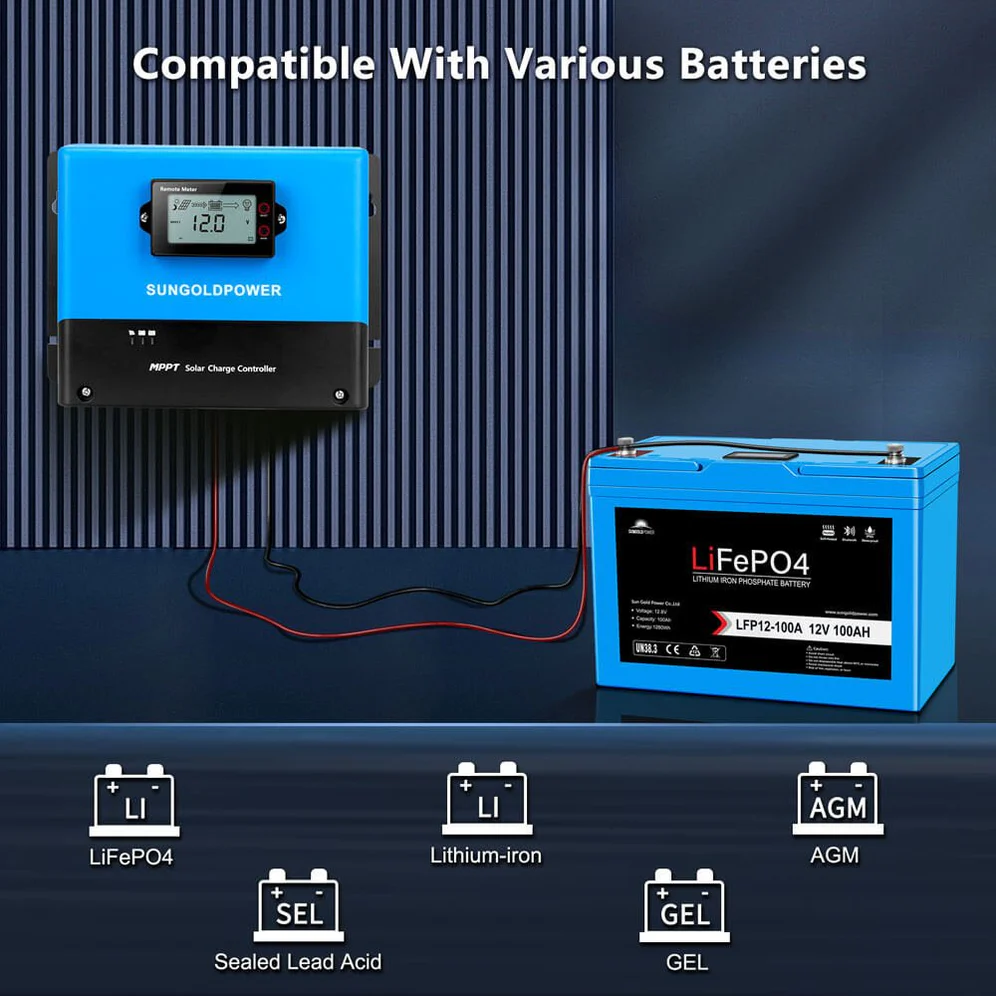
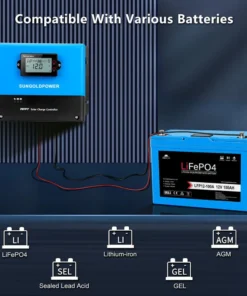
Q: What battery types does the SGC4825100A support? The controller supports lithium (LiFePO4 and other lithium-ion chemistries), sealed lead-acid, AGM, and user-defined custom profiles. For lithium batteries, use the lithium profile and confirm the specific upper charge voltage against the battery manufacturer’s specification — different LiFePO4 manufacturers specify slightly different absorption voltages between 14.4V and 14.6V at 12V nominal.
Be the first to review “MPPT Solar Charge Controller 100A Authentic [Bluetooth]”
Related products
solar system kits
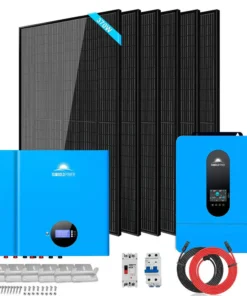
Off-Grid Solar Kit 13kW 48V 120V/240V 20.48kWh LiFePO4 14×415W Solar Panels (SGR-13KM)
solar system kits
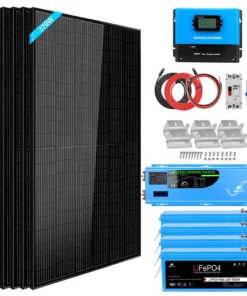
Off-Grid Solar Kit 6.5kW 48V 120V/240V 10.24kWh LiFePO4 6×370W Solar Panels (SGM-6510M)
solar system kits
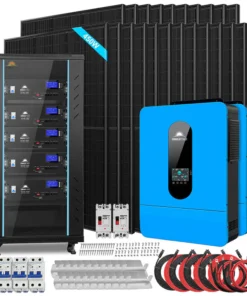
Off-Grid Solar Kit 6kW 24V/48V 120V/240V 10.24kWh LiFePO4 6×370W Solar Panels (SGK-PRO64/SGK-PRO62)
solar system kits
Off-Grid Solar Kit 13000W 48V 120V/240V 25.6KWH LiFePO4 22 x 450W SGR-13K25E

Reviews
There are no reviews yet.