
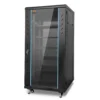
Battery Rack — 5-Layer Vertical Stacking for 3U Server Rack Batteries, Heavy-Duty Steel
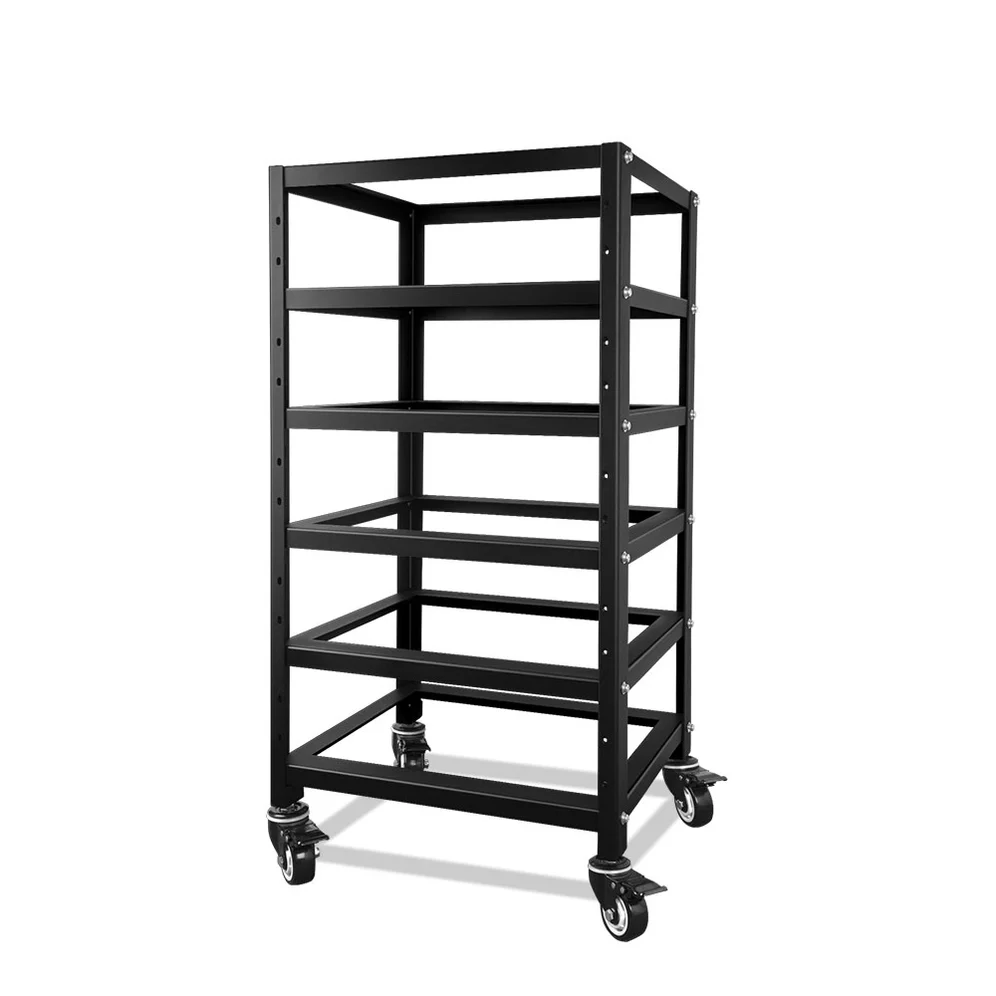
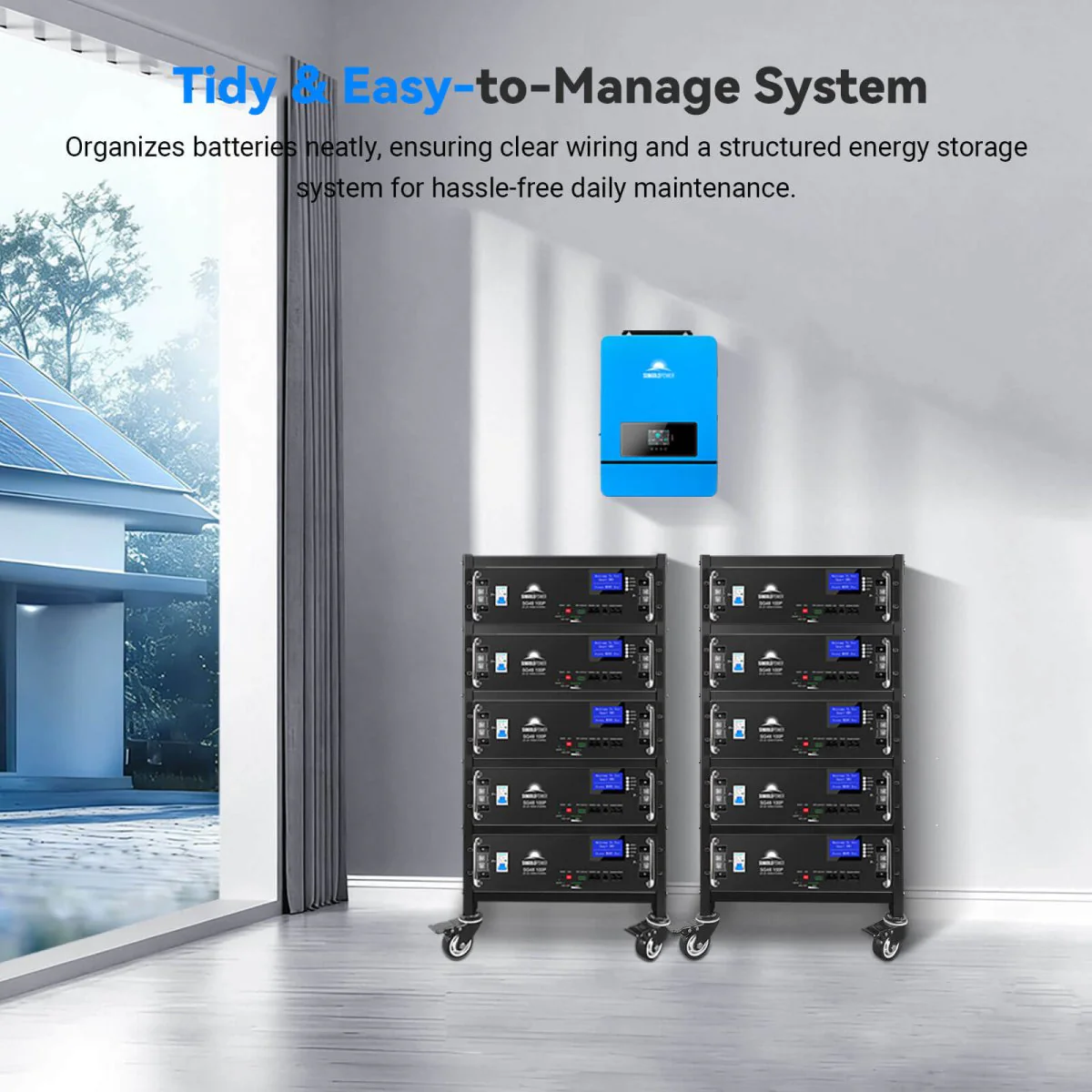
This 5-layer battery rack is purpose-built for 3U server rack-format lithium batteries — vertically stacking up to five units in a footprint that would otherwise hold a single floor-standing enclosure, while the heavy-duty swivel casters allow the entire assembled bank to be repositioned without disassembling the stack. The steel frame with rust-resistant coating handles long-term energy storage environments where humidity and time work against uncoated metal, and the open rack structure keeps wiring accessible and organised across all five slots simultaneously.
Table of Contents
- Vertical Stacking — Why Floor Space Is the Binding Constraint in Energy Storage
- Steel Frame and Rust-Resistant Coating — Built for the Long Installation
- Swivel Casters and What Mobility Changes About Energy Storage Installation
- Cable Management and the Wiring Argument for Open Rack Design
- Frequently Asked Questions
Vertical Stacking — Why Floor Space Is the Binding Constraint in Energy Storage
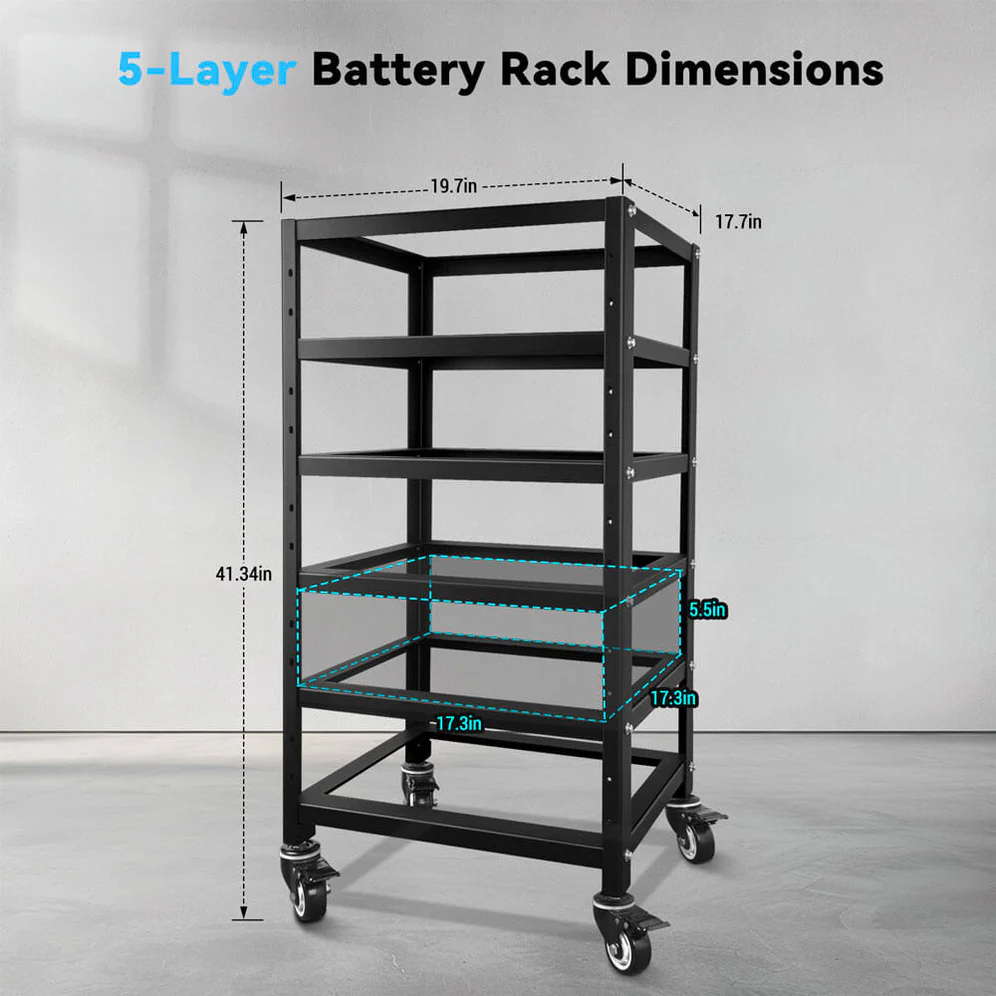
As server rack battery banks scale up — from two units to four to eight — the floor space they occupy becomes the practical limit on system growth before physical rearrangement of the entire installation is required. A five-slot vertical battery rack converts that horizontal expansion into vertical expansion, fitting the same capacity increase into the footprint of a single unit while keeping the entire bank self-contained and structurally integrated.
This is not simply a tidiness argument. In a residential utility room, a garage equipment corner, or a commercial electrical room, available floor area directly determines how large the energy storage system can grow before a relocation becomes necessary. A vertical rack that holds five 3U batteries in the space of one allows the bank to reach five times the single-unit capacity before that ceiling is hit.
The open rack structure — as opposed to an enclosed cabinet — allows airflow across all five batteries without active ventilation hardware. Server rack LiFePO4 batteries generate heat during charging and discharging, and ambient airflow across the cell surfaces maintains temperatures below the thermal derating threshold that reduces available charge and discharge current in sealed enclosures.
Steel Frame and Rust-Resistant Coating — Built for the Long Installation
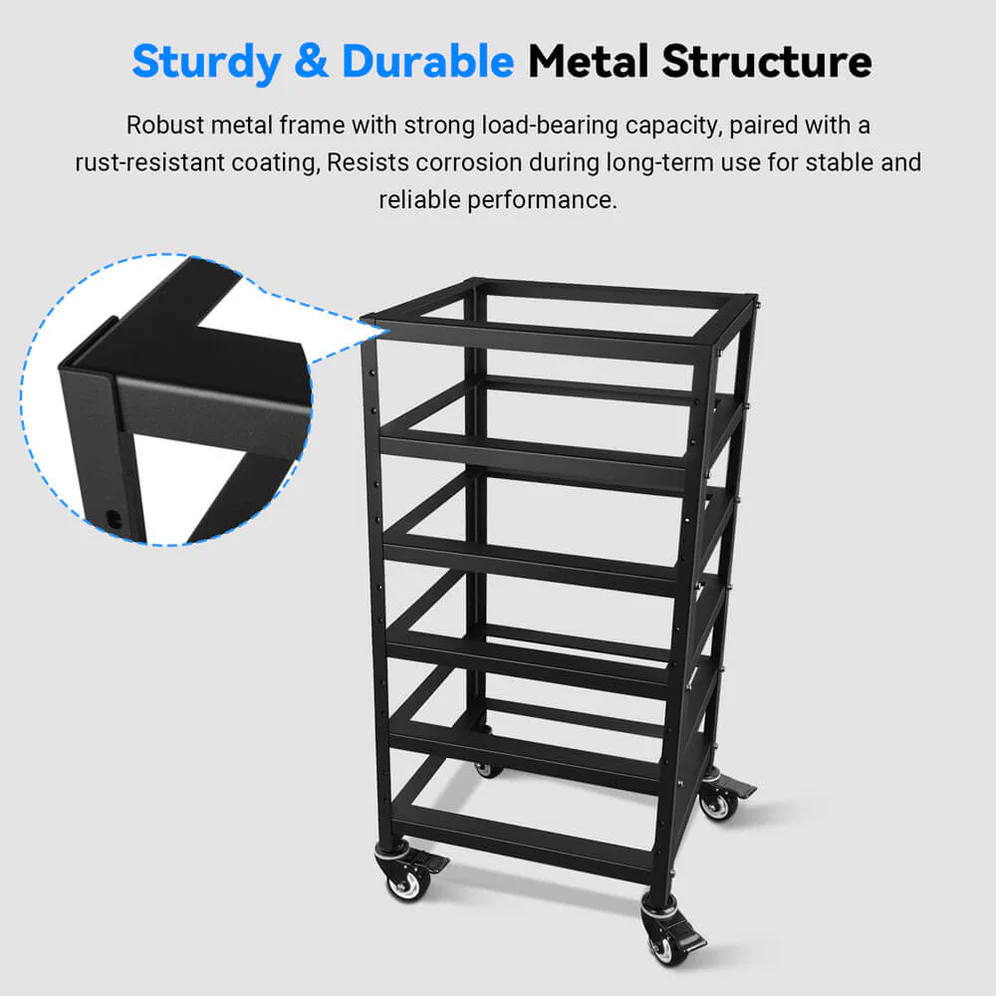
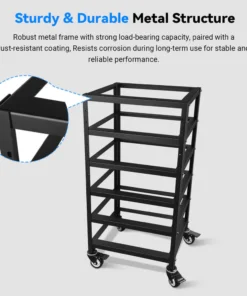
Energy storage hardware is typically installed and left in place for the design life of the battery — ten to fifteen years for the batteries in this rack format. The mounting structure needs to outlast that without requiring maintenance, and uncoated bare steel does not. The rust-resistant coating on this rack’s steel frame addresses the corrosion process that begins when bare metal is exposed to humidity, condensation, and the air movement that passes through an operating battery bank.
Battery installations are frequently located in basements, garages, and outdoor-adjacent equipment rooms — environments where ambient humidity regularly exceeds 60%. Bare mild steel in these conditions develops surface rust within months, progressing to structural corrosion over years. The coating interrupts that process at the surface level, maintaining structural integrity and load-bearing capacity for the duration of the battery bank’s service life.
The structural frame is designed around the weight of five fully loaded 3U server rack batteries. The SG48100P and SGH48100T units weigh approximately 44–55 lb each — confirm the specific maximum weight capacity with SunGoldPower before loading the rack to five batteries, particularly if floor surface or installation location has structural constraints.
Swivel Casters and What Mobility Changes About Energy Storage Installation
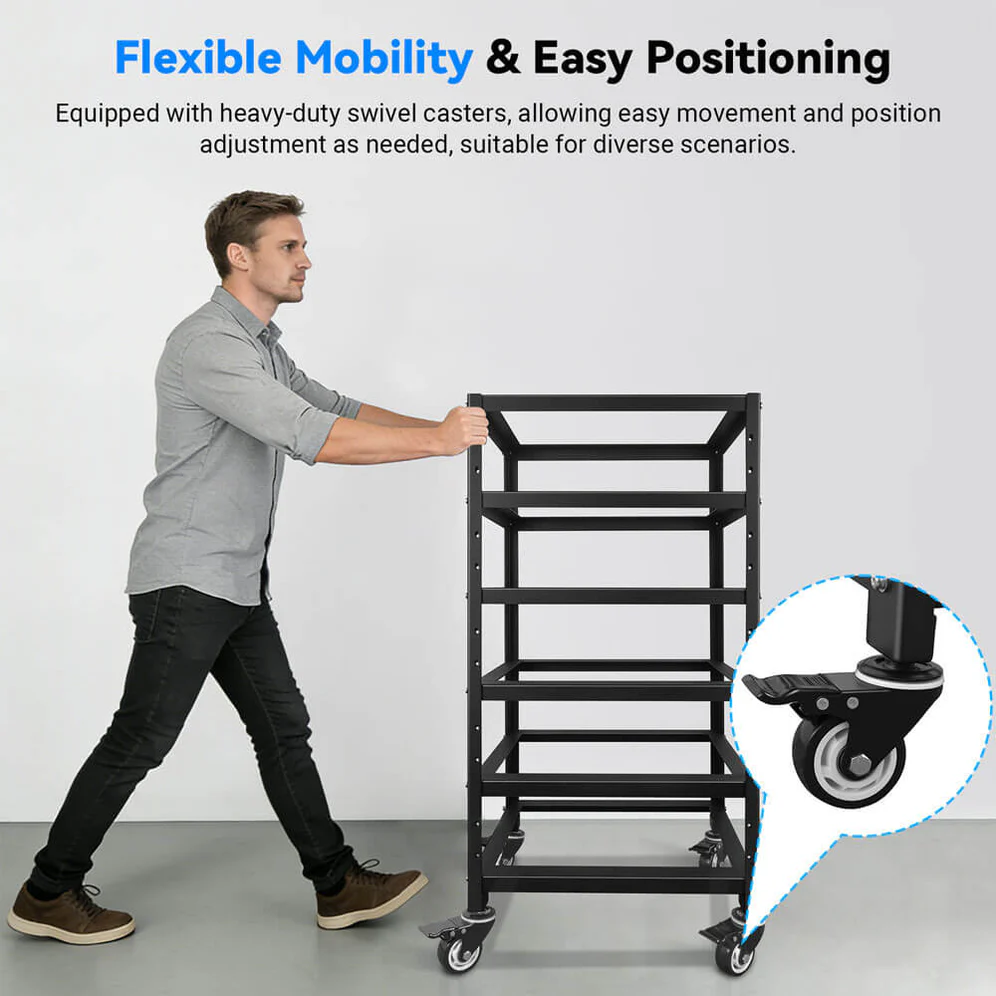
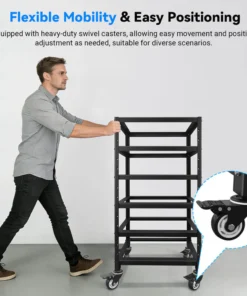
A stationary battery rack requires its final position to be decided before installation and maintained permanently thereafter. Moving a five-battery bank of fully loaded server rack units — potentially 220–275 lb of total assembly weight — without casters requires fully unloading the rack, moving the empty frame, and reloading. The heavy-duty swivel casters on this rack allow the entire loaded assembly to be repositioned freely, changing the installation layout without disassembling the bank.
This mobility changes how energy storage installations evolve over time. When additional batteries are added to an expanding bank, when inverter placement changes, or when the equipment room is reconfigured for other reasons, the rack rolls to its new position rather than requiring a disassembly-and-rebuild cycle. The “diverse scenarios” specification in the product description reflects exactly this — the same rack works in a residential garage, a commercial server room, and an industrial equipment bay without permanent fastening to any surface.
Cable Management and the Wiring Argument for Open Rack Design
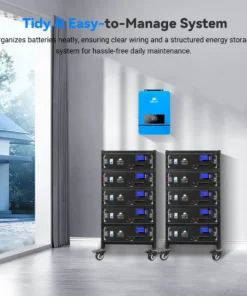
Five server rack batteries stacked in a vertical open rack create a wiring challenge that an enclosed cabinet handles differently than an open frame. In an open rack, all five battery terminals are simultaneously accessible from the front — positive and negative connections on each unit can be run to a shared busbar without routing cables around enclosure panels or through cable entry knockouts.
The result is a server rack batteries installation where wiring is inspectable at a glance, where each battery’s connections can be verified individually without removing panels, and where adding a sixth or seventh battery (in a larger rack configuration) does not require any modification to the wiring of the existing five. The swivel casters further support this by allowing the rack to be rotated for rear access if the installation site requires connections to be made or inspected from behind.
Browse our full 48V Server Rack Batteries, Battery Cabinets, and Off-Grid Power Systems for compatible batteries and complete energy storage system components.
Frequently Asked Questions
Q: What batteries are compatible with this rack? The rack is compatible with standard 3U server rack-format lithium batteries. SunGoldPower’s SG48100P and SGH48100T are confirmed compatible formats. Any third-party 3U server rack battery of standard rack-mount dimensions — typically 19-inch rack width — should fit, but confirm physical dimensions against the rack’s slot dimensions before purchasing.
Q: What is the maximum weight this battery rack supports? The maximum weight capacity per slot and total assembly capacity are not specified in the available product data. Confirm these figures with SunGoldPower before loading the rack — particularly important if the installation site has floor load limitations or if the batteries to be used approach or exceed 55 lb each.
Q: Does this rack require permanent floor anchoring? The swivel casters allow free-standing mobile operation without permanent anchoring. For installations in seismic zones or where local electrical codes require battery enclosures to be secured against movement, confirm applicable requirements with the local authority having jurisdiction before deciding against floor anchoring.
Q: How does a battery rack compare to an enclosed battery cabinet? A battery rack provides open access to all batteries, lower cost than an enclosed cabinet, and natural airflow without active cooling. An enclosed cabinet provides physical security through locking doors, active cooling through integrated fans, and a more finished appearance. The rack is appropriate when security and appearance are secondary to accessibility and cost — the cabinet is appropriate when locked access control and active thermal management are required.
Q: What is a rack battery and how is it different from a wall-mount battery? A rack battery is a server rack-format lithium battery designed to slide into a standard equipment rack — the same form factor used for network servers and data centre hardware. It mounts horizontally in a rack and can be stacked vertically. A wall-mount battery is designed to be fixed to a wall surface, typically in a larger single-unit format. Rack batteries are preferred when modular expansion and dense vertical stacking are priorities.
Be the first to review “Battery Rack 5-Layer Authentic 3U Server [Heavy-Duty Steel]”
Related products
premium solar panels
370W 415W 500W Mono Black PERC Solar Panel Multi-Wattage UL CEC
Lithium Solar Batteries
Reviews
There are no reviews yet.