
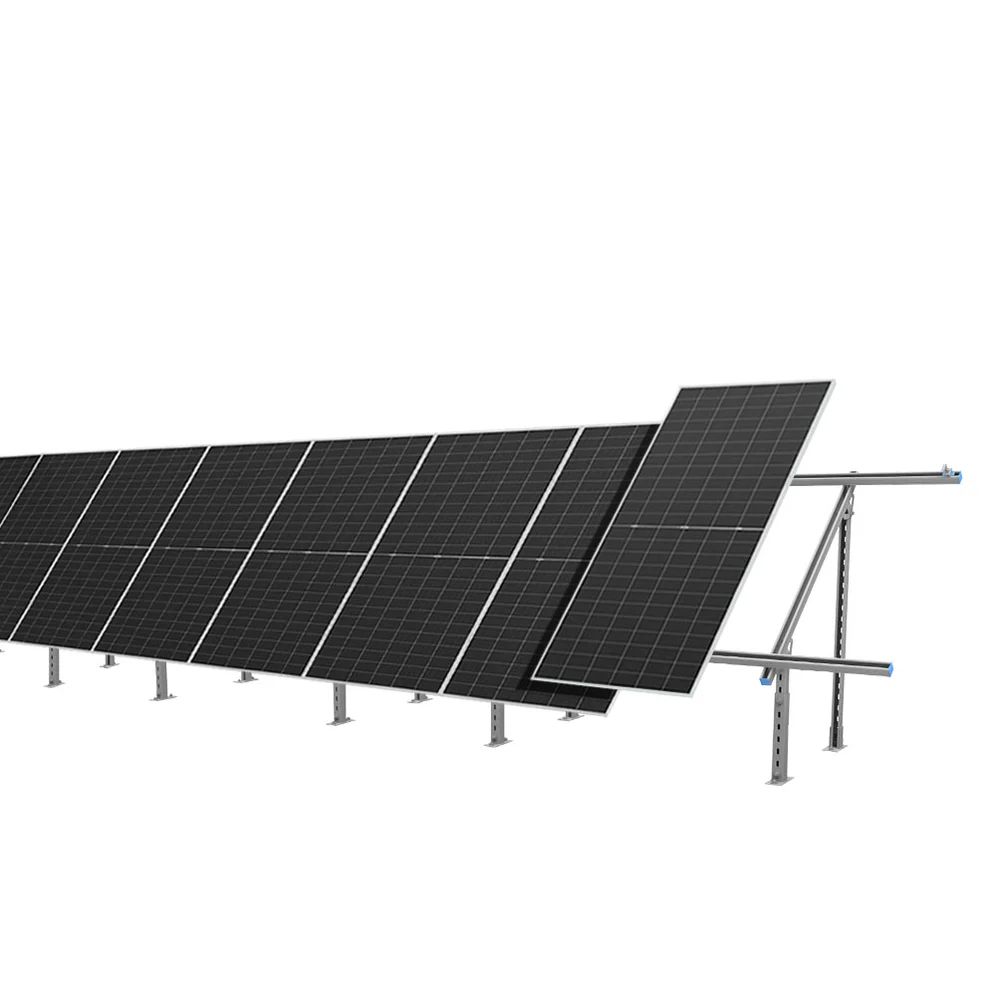
Solar Panel Mounting Bracket — 2-Panel Adjustable 20°–40° Tilt, Galvanized Steel, Modular Expandable
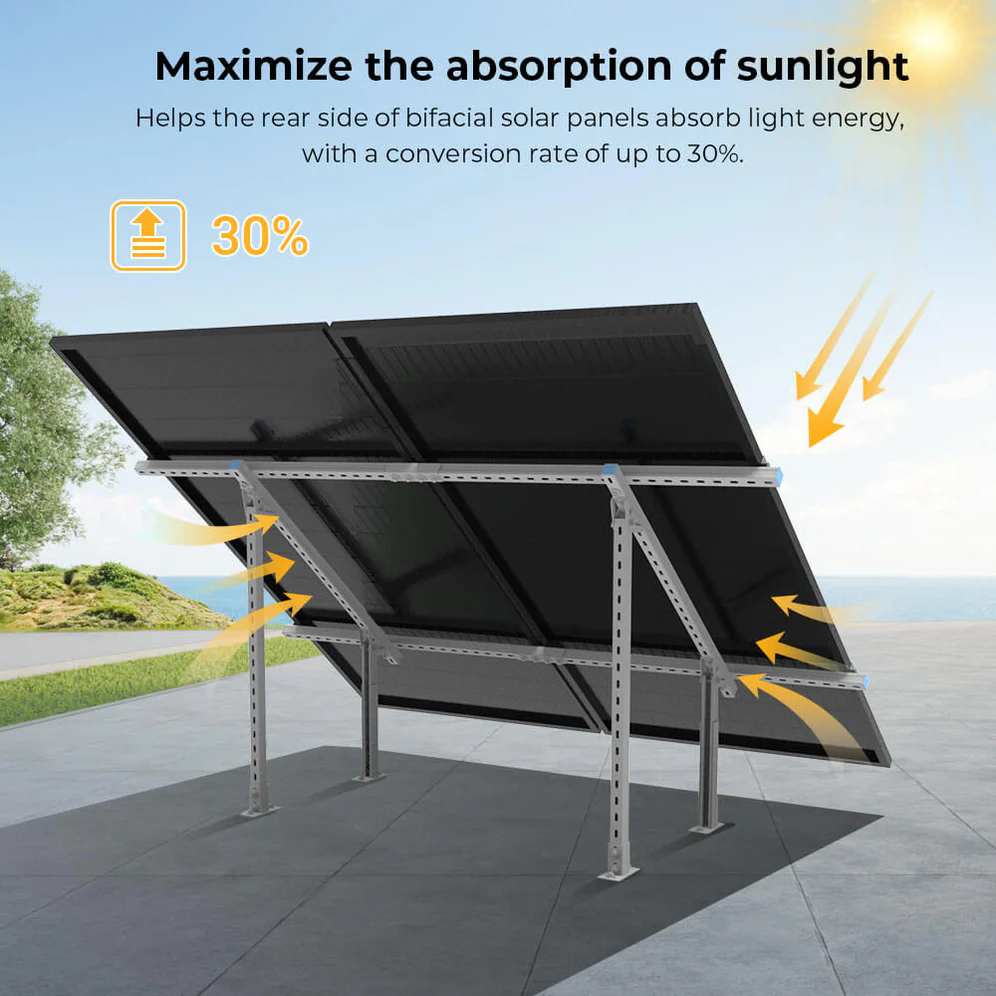
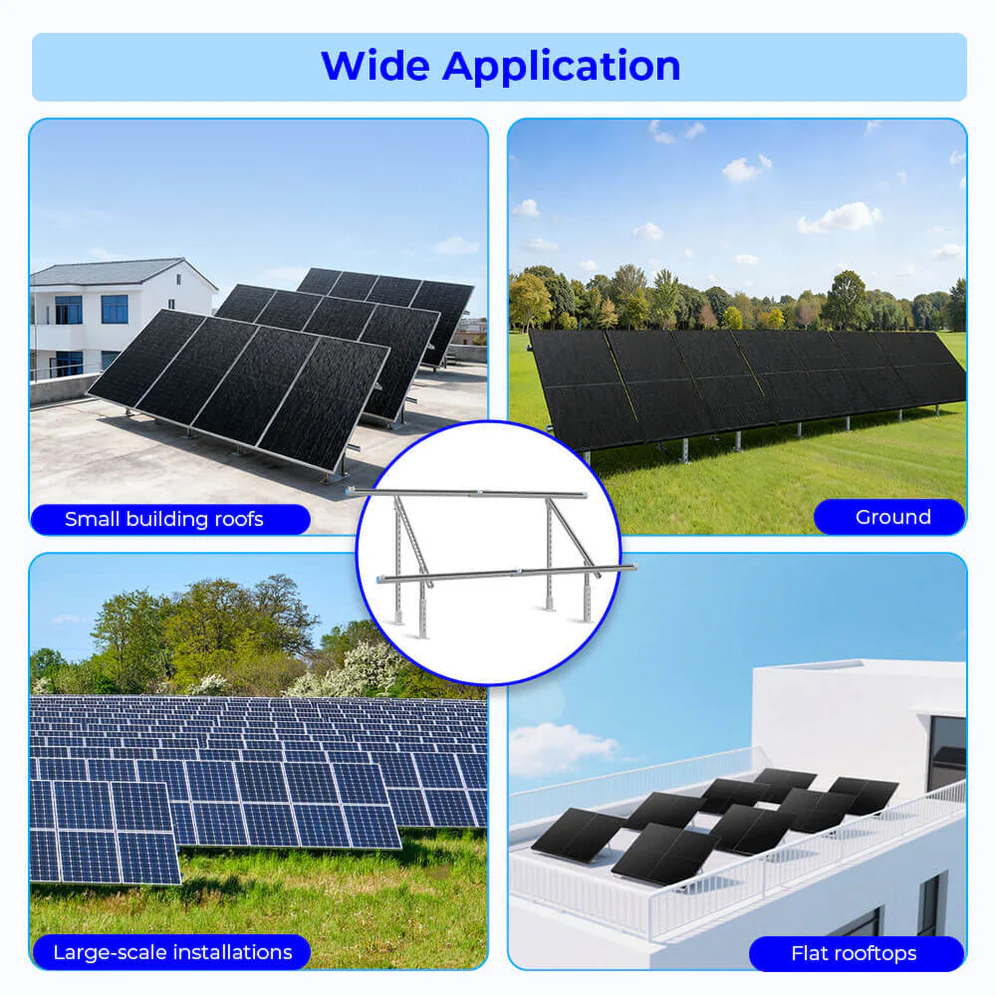
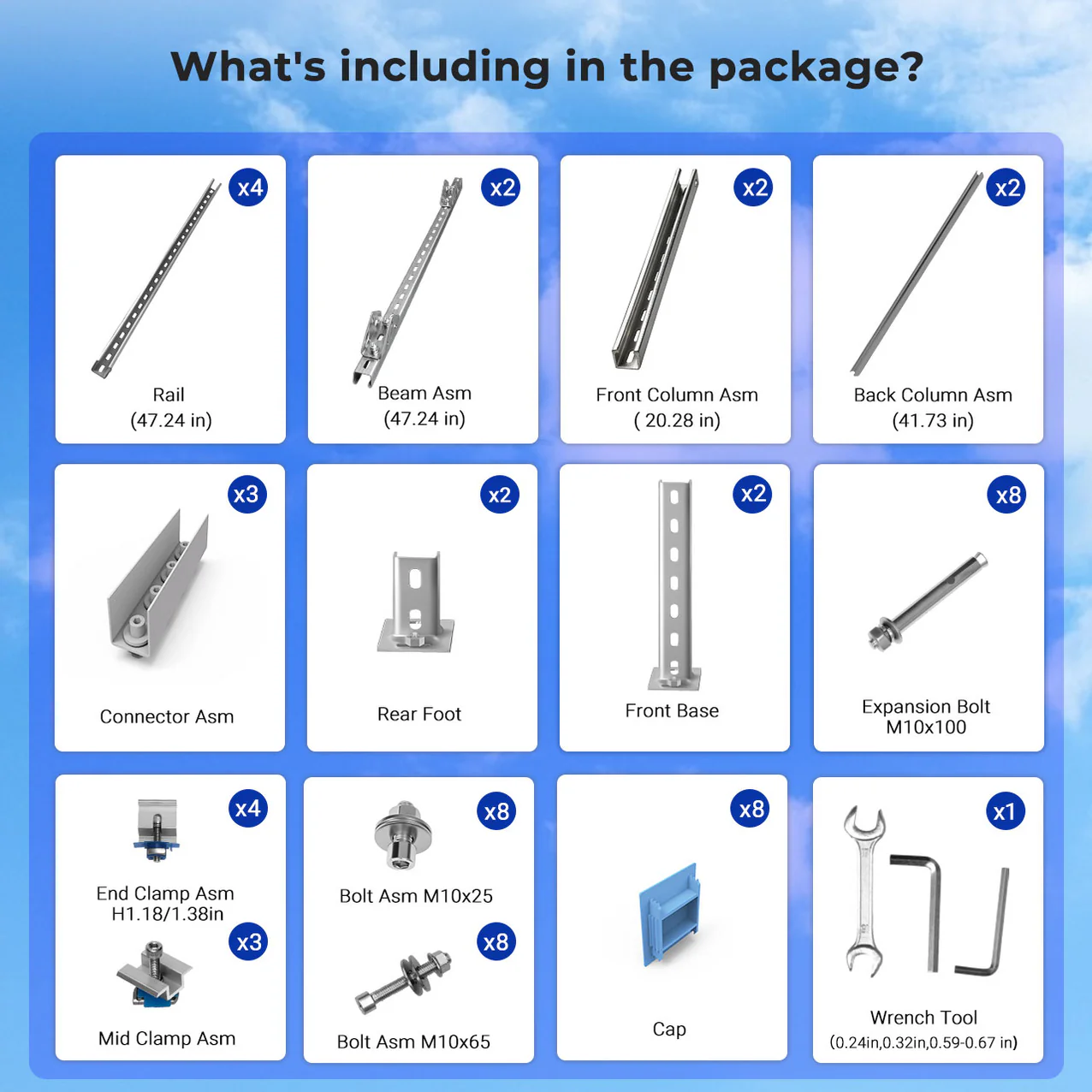
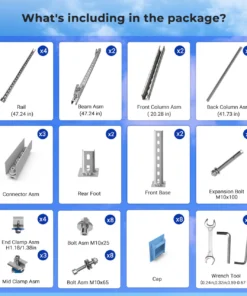
solar panel mounting brackets supports two 400W–590W large-format solar panels per rack unit, with a 20°–40° adjustable tilt angle, galvanized steel construction, and a modular design that connects multiple racks in series to scale from a two-panel starter installation to a full residential array without replacement of the original hardware. Compatible with SunGoldPower panels and most standard panels from other manufacturers, pre-drilled holes and semi-assembled components reduce installation time for both DIY and professional installers, and the ground-mount, flat-roof, cabin, and shed compatibility makes this a genuinely versatile foundation for any fixed solar installation outside of pitched roof applications.
Modular Expansion — Start With Two Panels, Scale Without Limits
The defining advantage of this solar panel mounting bracket over single-configuration fixed frames is the modular connection system that allows multiple rack units to connect together into a continuous array structure. A two-panel installation today becomes a six-panel installation when two additional racks are attached to the existing structure — no replacement of existing hardware, no separate foundation work, no new hole pattern in the ground.
This matters for buyers who are starting with a smaller array because budget, available panels, or grid-connection approval limits the initial installation size — but who plan to expand as the system grows. A non-modular mount means the initial investment is partially wasted when expansion requires a new larger frame. The modular design preserves that initial investment as the first section of the eventual full array.
For a solar panel mounting brackets with hardware installation that connects multiple racks, the structural connection between adjacent units distributes wind and snow load across the combined assembly rather than each two-panel unit carrying load independently. Confirm the connection hardware and load distribution design with SunGoldPower for installations beyond two or three connected units where combined wind and snow loads become significant.
20°–40° Tilt Adjustment — Matching the Angle to Latitude and Season
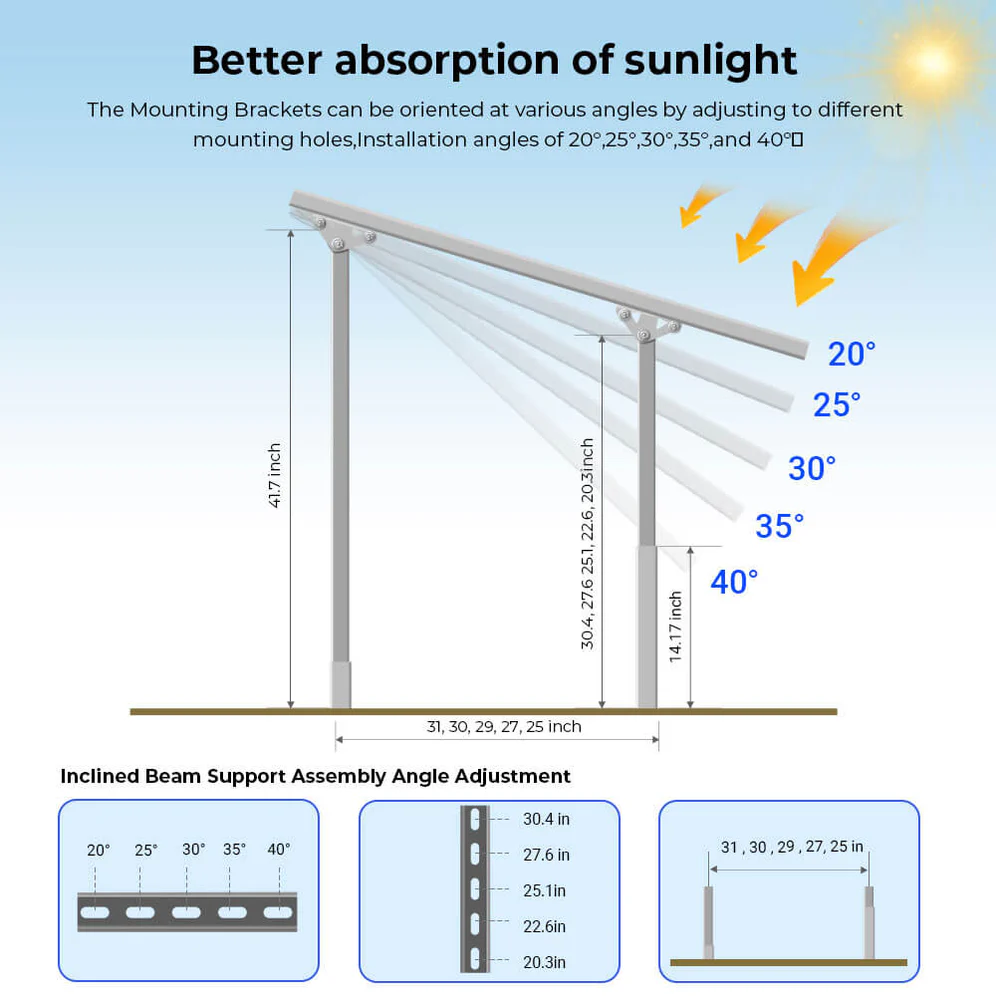
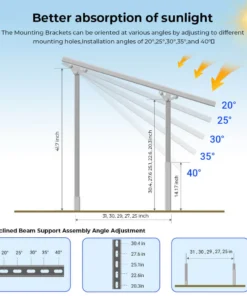
The optimal tilt angle for a fixed solar panel is approximately equal to the installation site’s latitude — a panel in Denver at 39° latitude performs best at a 39° tilt. At steeper angles, the panel is better oriented toward lower winter sun positions and produces more in winter but less in summer. At shallower angles, summer production increases but winter production drops more significantly.
The 20°–40° adjustment range covers the full contiguous US latitude band — from southern Florida at approximately 25° latitude to the northern border states at approximately 49° latitude — with adjustment granularity that allows matching the tilt to the specific installation latitude rather than accepting a single fixed compromise angle.
Seasonal adjustment is also possible within the range. At 30° latitude, a tilt of 20° maximises summer production, while a 40° tilt recovers more of the lower winter sun angle. For installations where seasonal adjustment is practical — a cabin accessed regularly, a ground mount with accessible tilt hardware — using the full 20°–40° range with seasonal changes meaningfully improves annual energy yield compared to a fixed mid-range angle.
Galvanized Steel — Why the Frame Material Determines Decade-Scale Durability
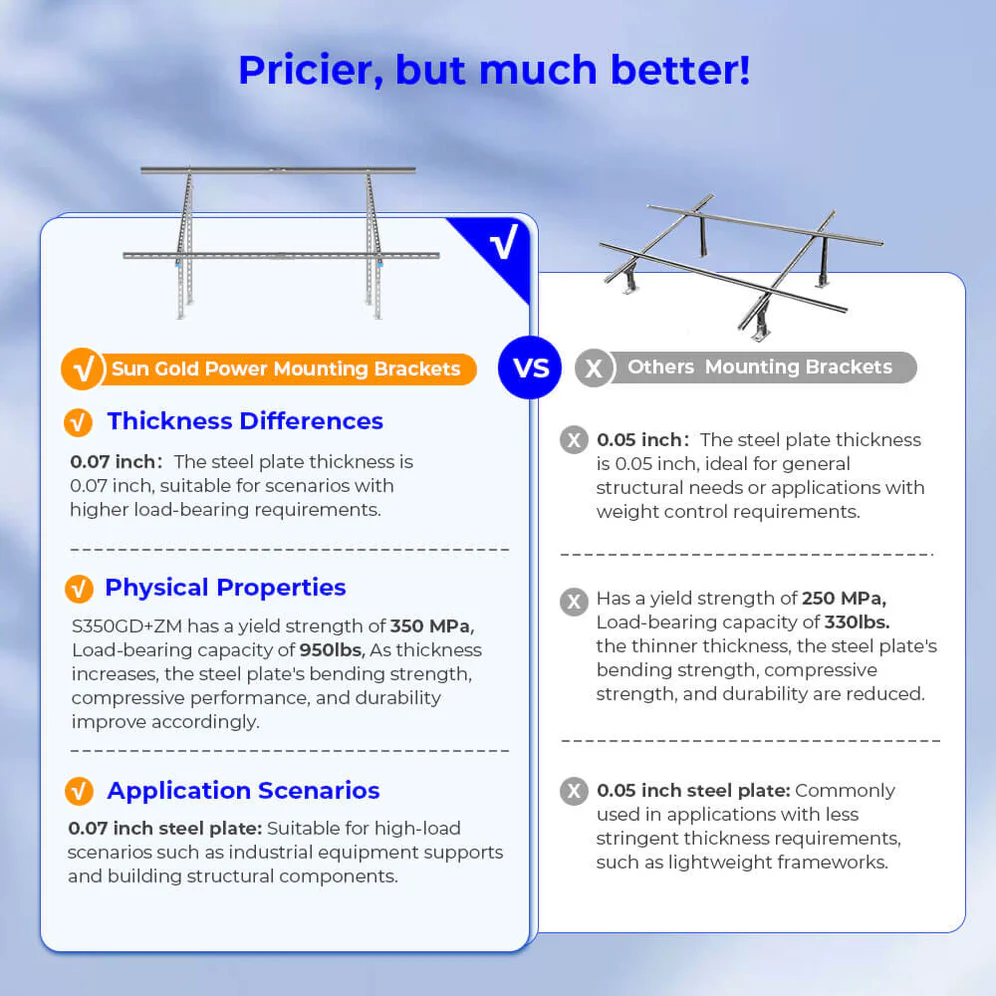
A solar panel mounting bracket is installed at ground level or on a flat roof is continuously exposed to rain, humidity, UV radiation, and in some climates, salt air — the combination of conditions that causes surface corrosion in unprotected steel within a few seasons. Hot-dip galvanizing coats the steel in a zinc layer that corrodes sacrificially, protecting the underlying steel even after the zinc surface is scratched or abraded during installation.
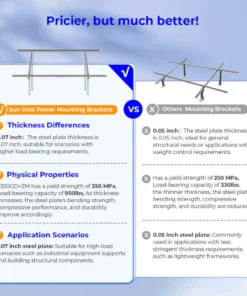
Galvanized steel is the industry standard for outdoor solar mounting structures precisely because of this durability — not because it is the cheapest available material, but because it is the material that delivers structural integrity across the panel’s 25-year performance warranty period without requiring maintenance or replacement. Aluminium is also used in premium mount hardware for its lighter weight and corrosion resistance, but hot-dip galvanized steel delivers superior load-bearing capacity at equivalent cost for ground and flat-roof applications where weight is less critical than structural strength.
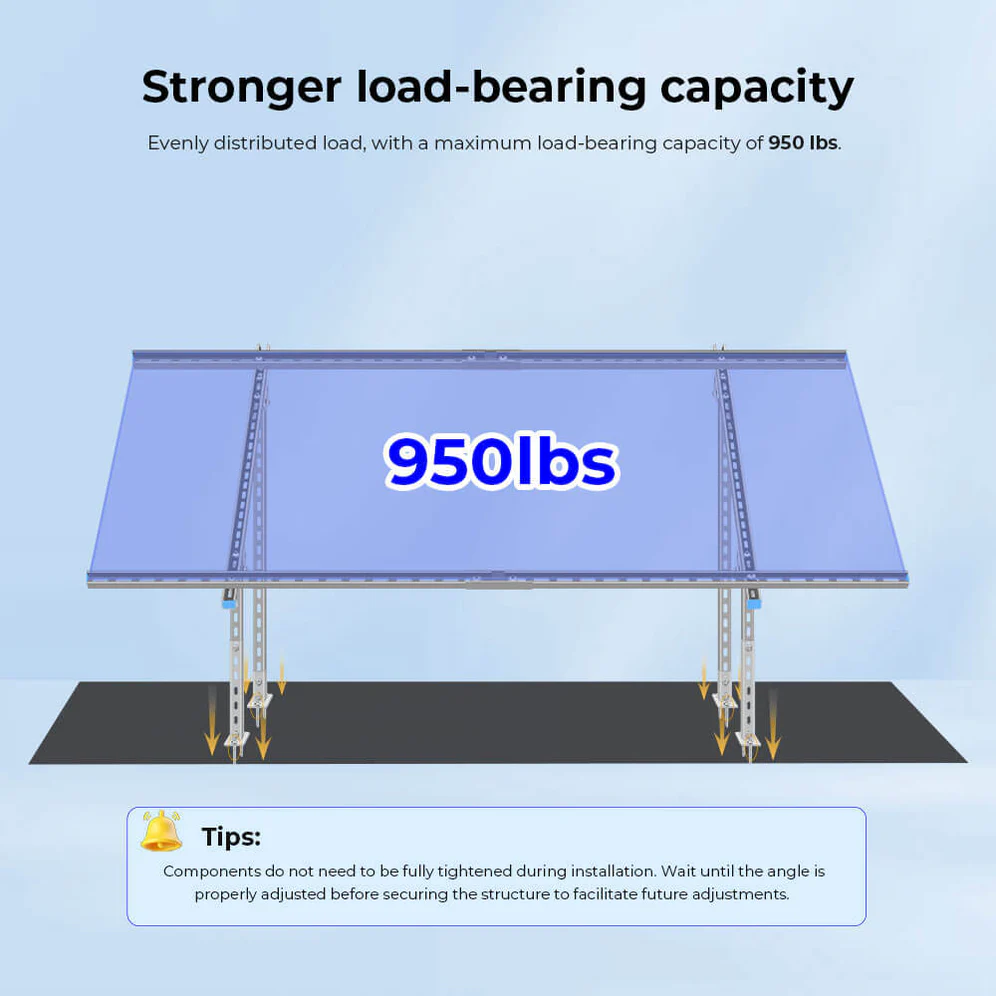
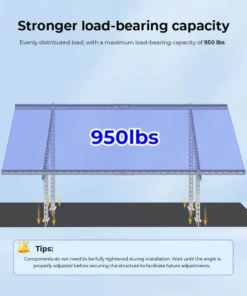
The reinforced load-bearing design referenced in the product specifications means the frame cross-section is sized to handle the combined weight of two large-format 590W panels — typically 55–70 lbs each — plus the dynamic loads from wind and snow without deformation at the maximum rated conditions. Confirm the specific wind and snow load ratings with SunGoldPower for the installation location’s climate zone.
Compatible Panel Range and Installation Scenarios
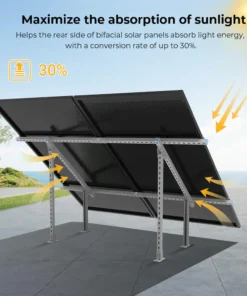
The 400W–590W compatibility range covers virtually every residential solar panel currently in production — from mid-range 400W–415W standard monocrystalline to 550W–590W large-format N-Type and bifacial panels. This range makes the mount effectively universal for current solar panel inventory rather than requiring a panel pre-selection before mount purchase.
Installation scenarios supported:
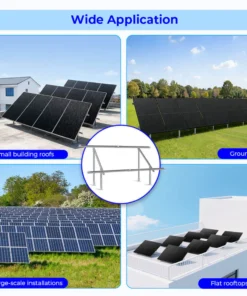
- Ground mount: The primary application — panels at adjustable tilt on a ground-level foundation, typically concrete ballasts or driven ground anchors. The specific anchor type and depth depend on local soil conditions and wind zone.
- Flat roof: Suitable for flat or low-slope roofs where ballasting the mount frame avoids roof penetrations — confirm local building code requirements for ballasted rooftop solar before assuming penetration-free installation is permitted.
- Cabin and shed: Off-grid cabin and shed installations where a permanent ground mount near the structure powers the cabin’s solar system — the modular expansion allows the array to grow as the cabin’s energy demand increases.
Browse our full Solar Mounting Hardware, Solar Panels, and Off-Grid Solar Systems for compatible panels, charge controllers, and complete system components.
Frequently Asked Questions
Q: How many panels can be connected using multiple modular bracket units? Each rack unit supports two panels. Multiple units connect in series to scale the array — three units hold six panels, five units hold ten panels, and so on. The practical limit is determined by wind and snow load ratings of the assembled structure — confirm the maximum connected unit count and associated load ratings with SunGoldPower for the installation climate zone.
Q: What anchor hardware is required for ground installation? The specific anchor requirements — concrete ballast blocks, driven ground stakes, or helical piers — depend on soil type, frost depth, and local wind zone. The product does not specify anchor hardware in the available data. For a permitted installation, the local building department or a structural engineer will specify the appropriate ground anchor design based on the installation site conditions.
Q: Is this mounting bracket compatible with panels from brands other than SunGoldPower? Yes. The bracket is described as compatible with SunGoldPower panels and most standard panels from other manufacturers. Standard large-format solar panels — 400W–590W — from brands including Jinko, Trina, Canadian Solar, and LONGi use the same 40mm frame profile that standard racking hardware is designed for. Confirm frame dimensions against the mount’s clamp specification before installation with a third-party panel brand.
Q: What is the metal roof solar mount suitability of this bracket? This bracket is designed for ground mounting, flat roofs, sheds, and cabins — not specifically for pitched metal roof applications. Pitched metal roof installations typically require clamps designed for the specific metal roof profile — standing seam, corrugated, or exposed fastener — with mounting hardware engineered for those specific panel-to-roof attachment points. For a metal roof installation, confirm with SunGoldPower whether this bracket accommodates that specific application before purchasing.
Q: Does the tilt angle adjustment require tools or can it be changed by one person? The tilt adjustment mechanism specifics are not detailed in the available product data. Confirm with SunGoldPower whether tilt adjustment requires tools, whether it can be performed with panels already installed, and whether the adjustment hardware locks securely at the selected angle under dynamic wind loading after setting.
Be the first to review “Solar Panel Mounting Bracket Authentic Adjustable [20°-40°]”
Related products
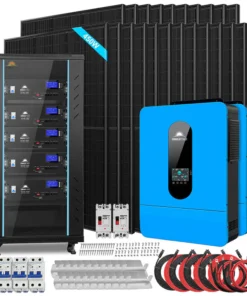
solar system kits
Off-Grid Solar Kit 13000W 48V 120V/240V 25.6KWH LiFePO4 22 x 450W SGR-13K25E
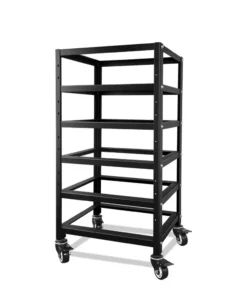
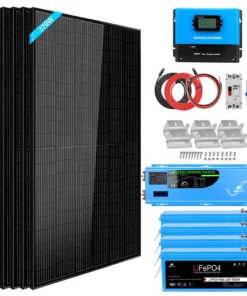
solar system kits
Off-Grid Solar Kit 6kW 24V/48V 120V/240V 10.24kWh LiFePO4 6×370W Solar Panels (SGK-PRO64/SGK-PRO62)
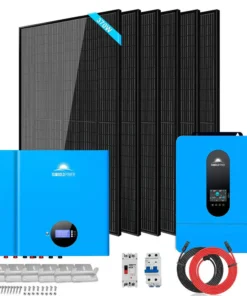
solar system kits
Off-Grid Solar Kit 6.5kW 48V 120V/240V 10.24kWh LiFePO4 6×370W Solar Panels (SGM-6510M)
best solar inverter
premium solar panels
Reviews
There are no reviews yet.