
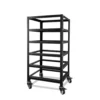
Battery Rack Cabinet — 6-Slot Enclosed, Built-In Busbar, 4-Fan Active Cooling, Locking Doors
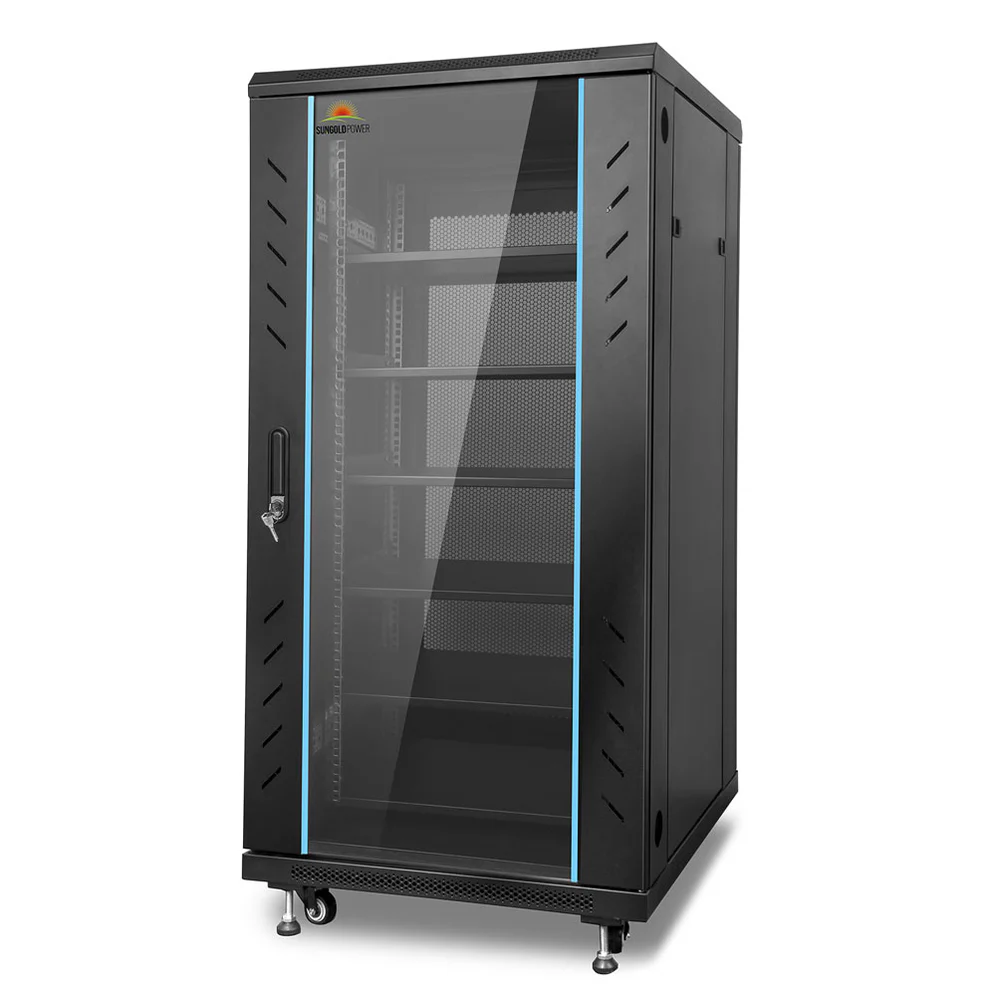
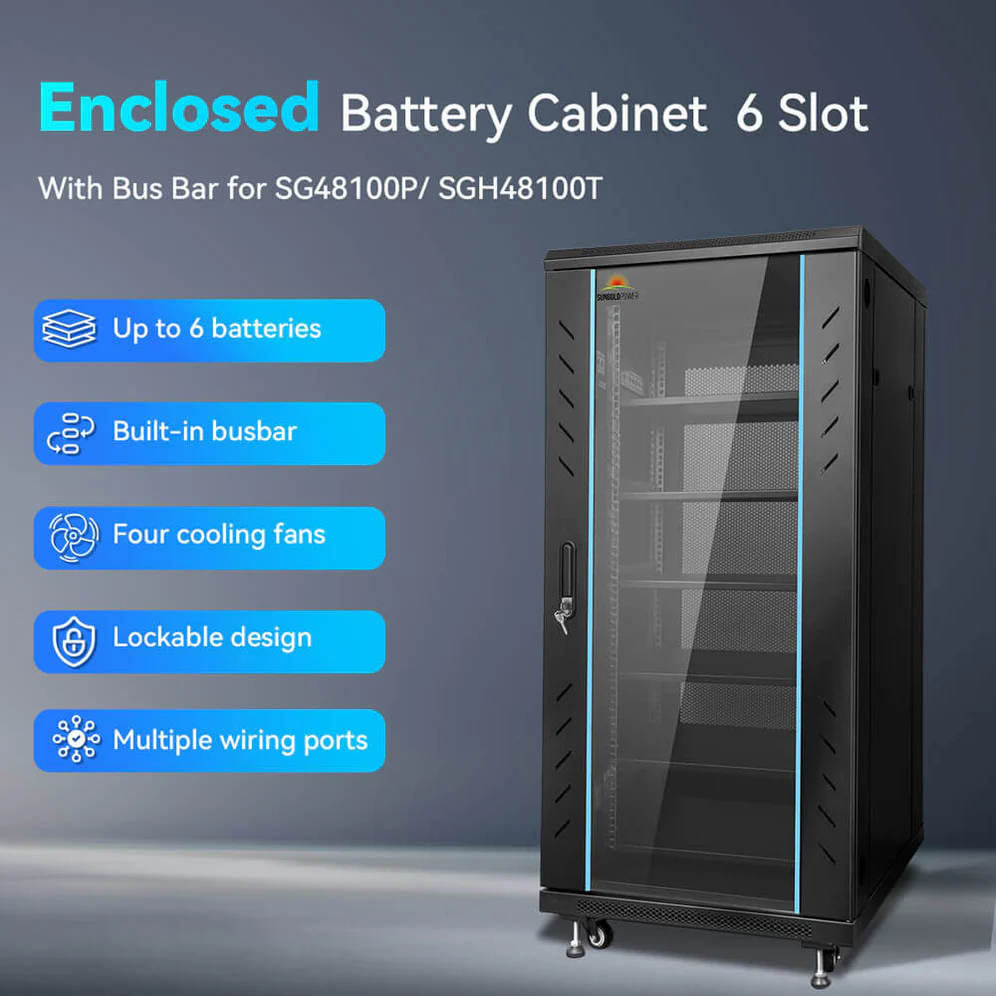
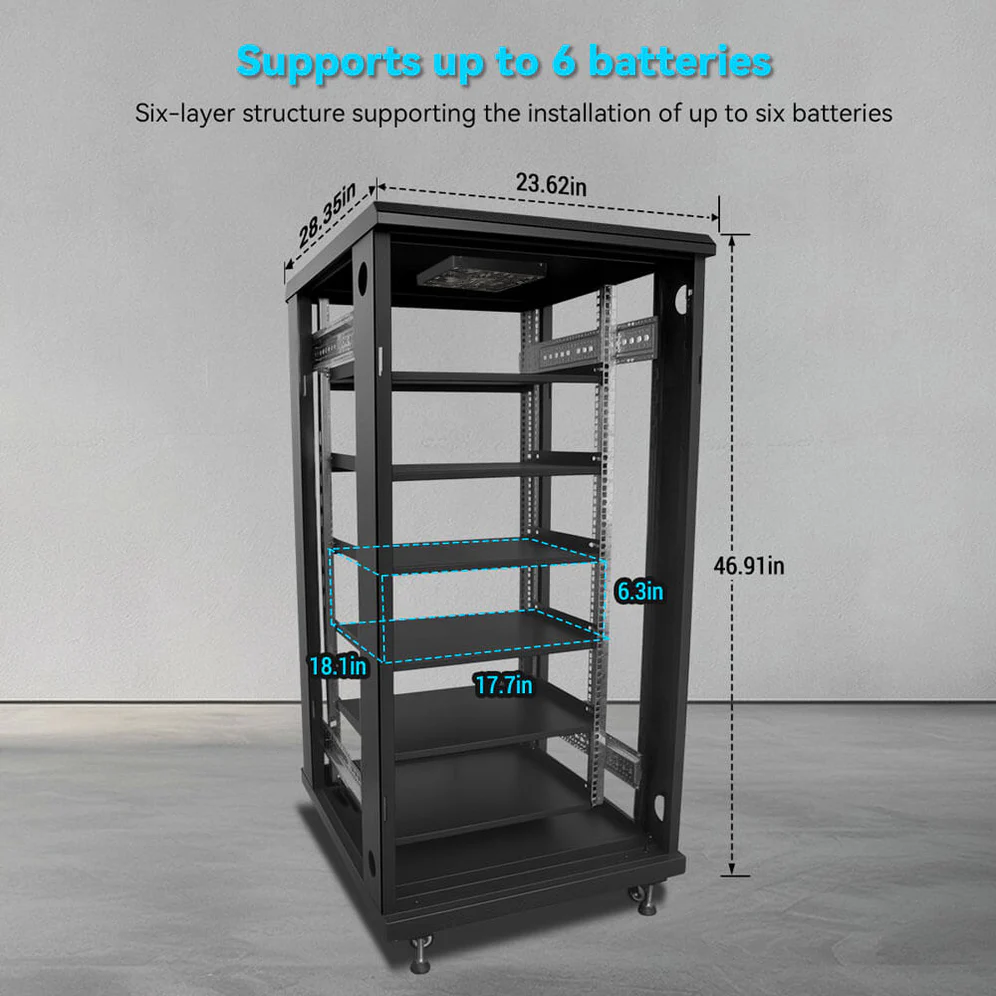
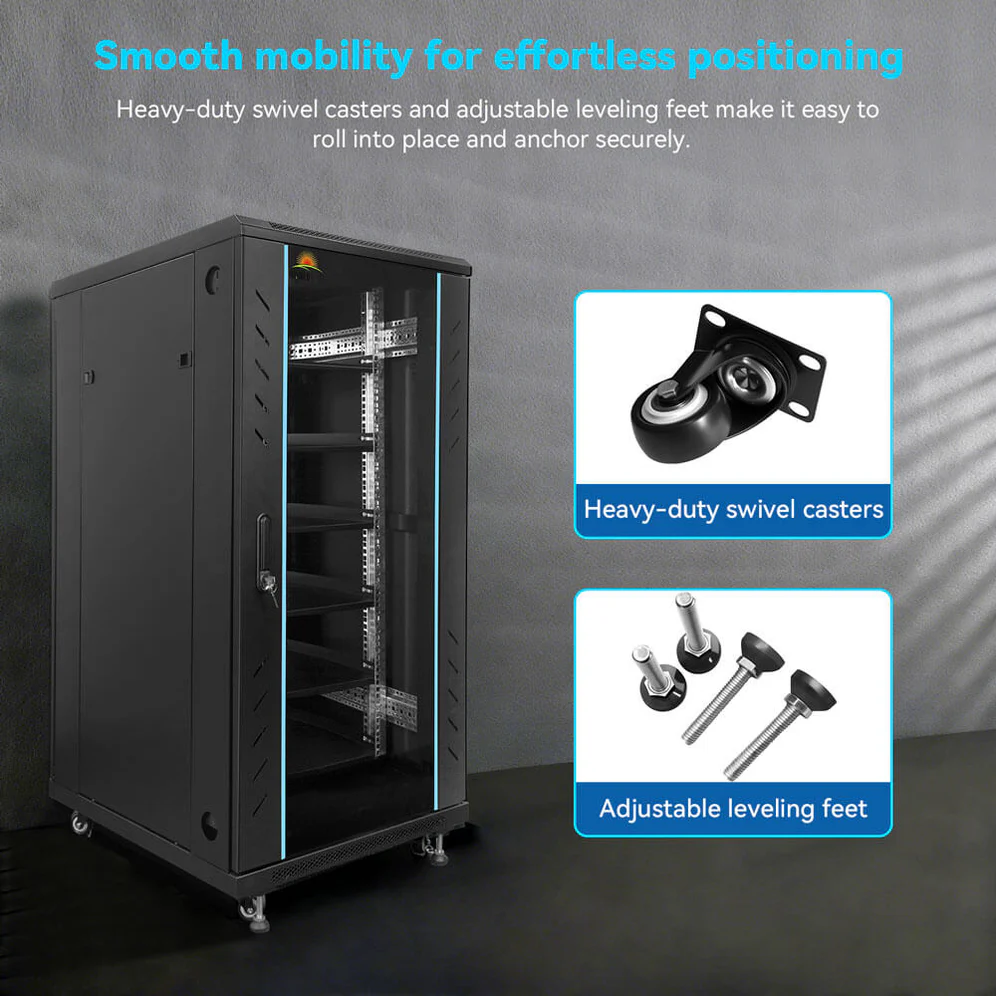
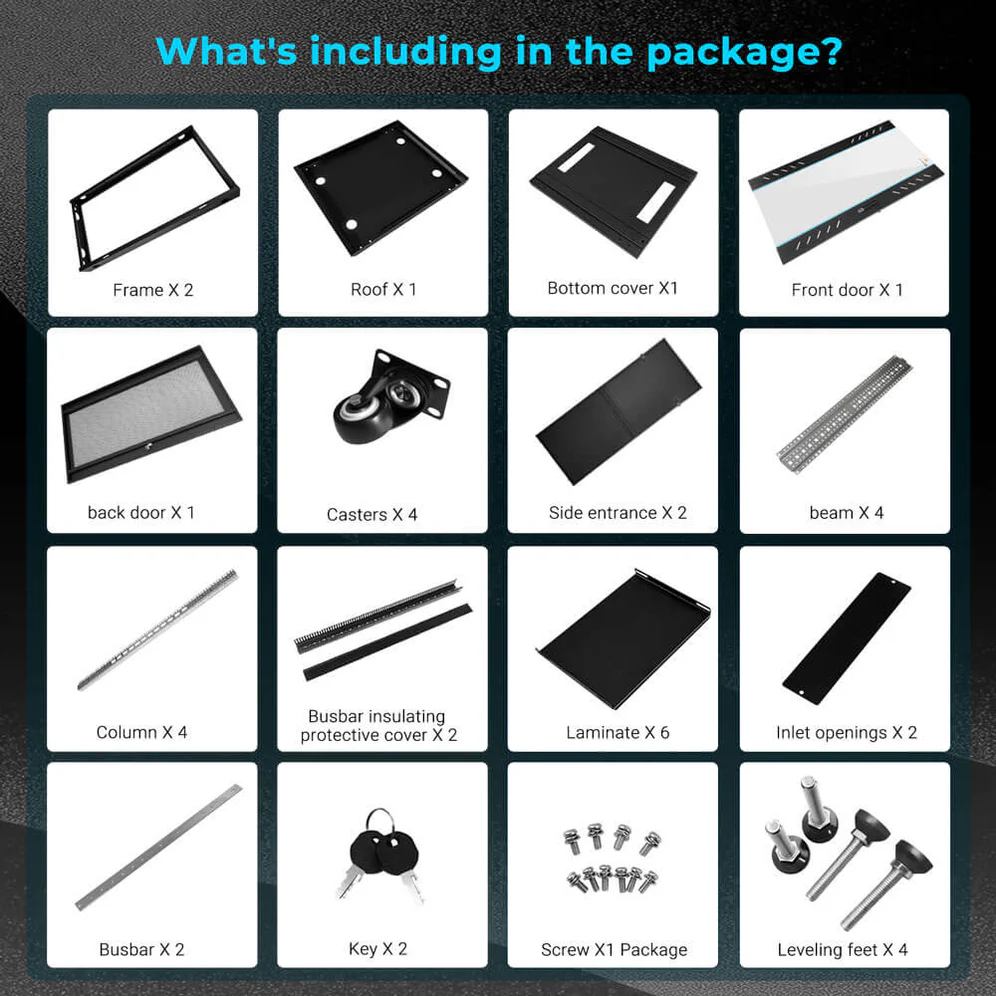
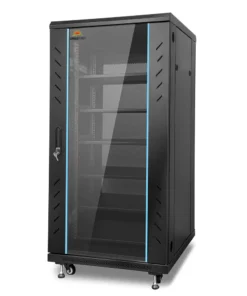
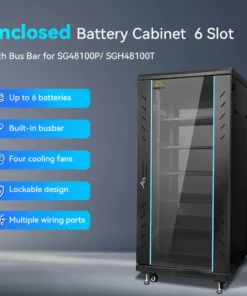
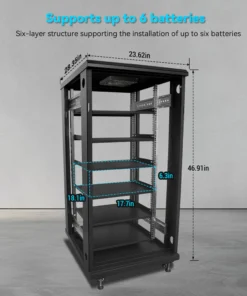
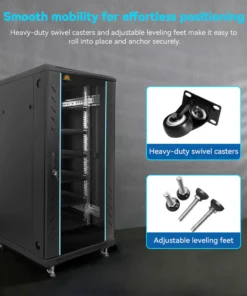
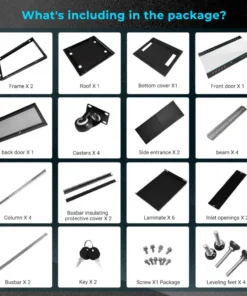
This battery rack cabinet holds up to six 3U server rack-format lithium batteries in a fully enclosed steel enclosure with built-in positive and negative busbars, four active cooling fans, dual locking doors, multiple cable entry points, and heavy-duty swivel casters with leveling feet. The built-in busbars eliminate the external hardware that open-rack installations require — no separate busbar purchase, no external wiring between units and a busbar — and the enclosed structure with locking doors provides physical security that open racks cannot. Designed for SG48100P and SGH48100T batteries and compatible with residential and commercial energy storage installations.
Table of Contents
- Built-In Busbars — Why This Changes the Installation Equation
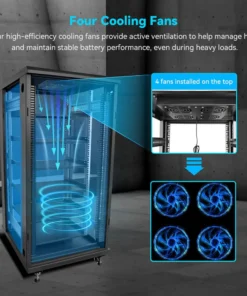
- 4-Fan Active Cooling — Thermal Management at Six-Battery Scale
- Dual-Door Locking and Physical Security for Energy Storage
- Cable Entry Points and Flexible Wiring Layout
- Frequently Asked Questions
Built-In Busbars — Why This Changes the Installation Equation
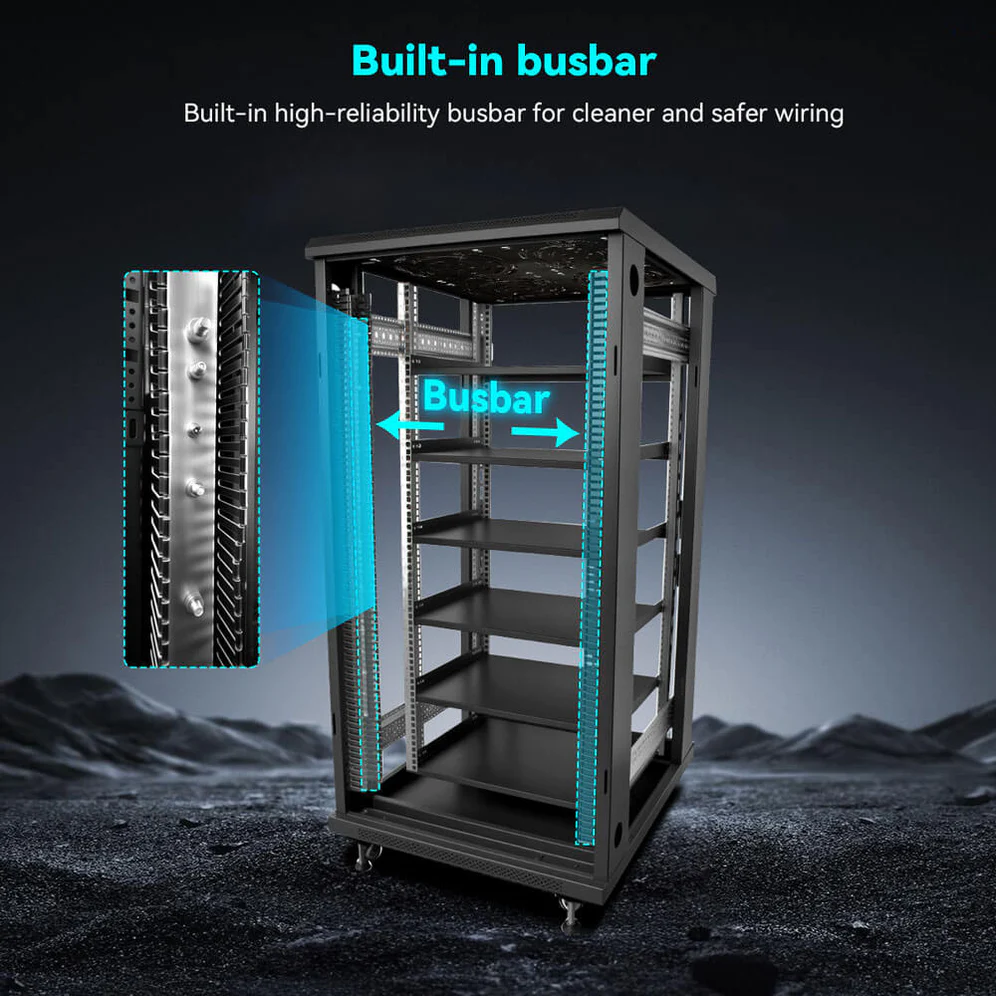
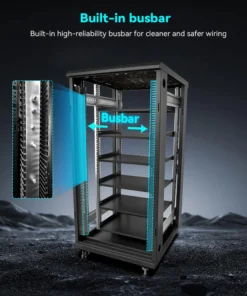
In an open rack installation, the installer sources a separate busbar, mounts it externally, runs individual cables from each battery to the busbar, and manages the wiring layout independently. In this cabinet, the positive and negative busbars are already installed inside the enclosure — each battery’s terminals connect directly to the internal busbar, and the total bank connects to the inverter through a single set of output terminals on the cabinet.
This matters for three reasons. First, it reduces installation labour — the wiring complexity of connecting six batteries to a common bus is handled at the factory rather than on-site. Second, it ensures equal cable routing — each battery connects to the busbar through a matched internal cable path rather than through whatever external cable the installer happened to cut. Third, it produces a finished installation that is easier to inspect, diagnose, and service than an external busbar wired independently.
At six batteries and up to 30.72kWh of total capacity, the energy content of this battery rack cabinet makes correct busbar design an electrical safety consideration as well as an installation convenience. The built-in busbar is designed and rated for the current levels that six parallel 100Ah batteries can deliver — confirm the specific busbar current rating with SunGoldPower before commissioning.
4-Fan Active Cooling — Thermal Management at Six-Battery Scale
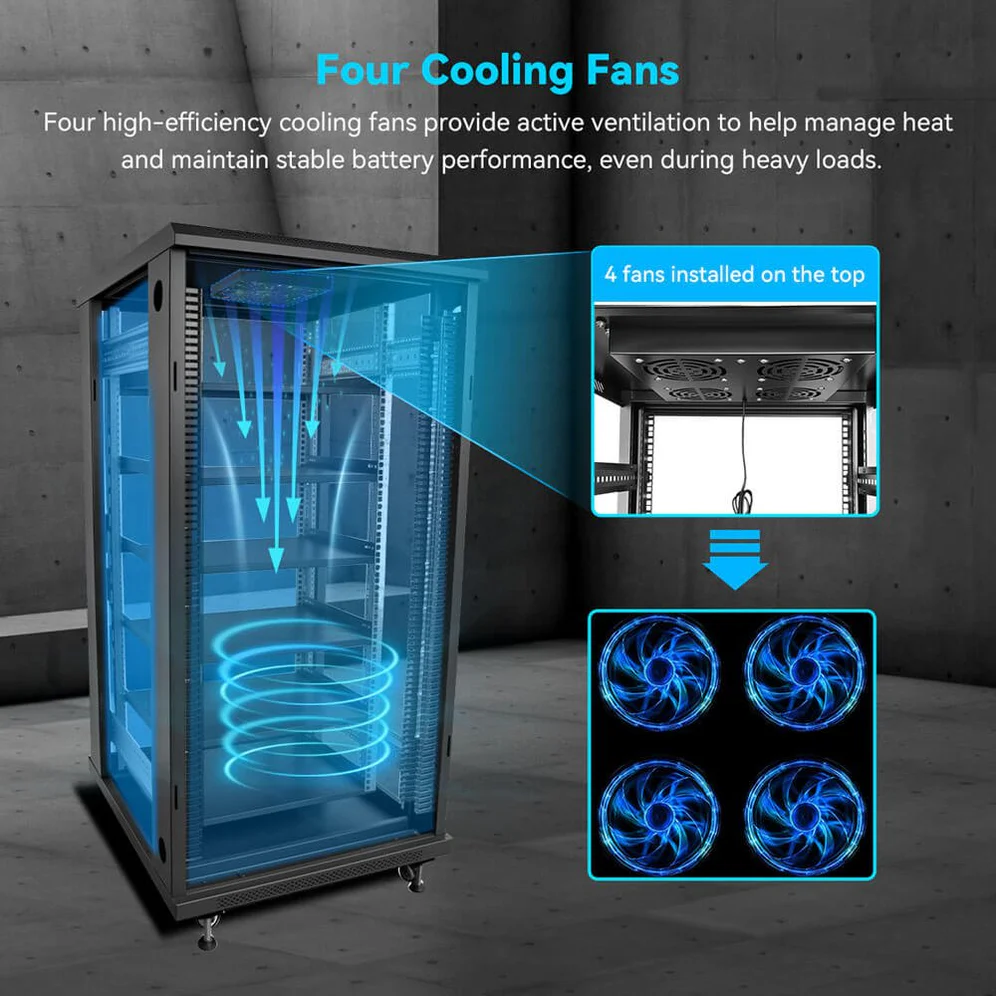
Six server rack LiFePO4 batteries in a sealed enclosure generate more heat during charging and discharging than natural convection can remove. Without active cooling, internal temperatures in a loaded battery cabinet rise during peak charge and discharge events, pushing cell temperatures toward the thermal derating threshold that reduces available current and accelerates long-term capacity fade.
The four cooling fans in this cabinet create forced airflow through the enclosure, maintaining internal temperatures in the range where LiFePO4 cells operate at full rated current without thermal derating. The specific airflow path — whether front-to-back, bottom-to-top, or through dedicated vent panels — determines how effectively the fans remove heat from each of the six battery positions. Confirm the fan airflow configuration with SunGoldPower and ensure installation clearance on the airflow intake and exhaust sides meets the minimum clearance specified in the installation manual.
Battery storage boxes and containers without active cooling are appropriate for smaller bank sizes where natural convection is sufficient. At six batteries, the combined thermal load during simultaneous high-current charge and discharge events exceeds what passive cooling handles reliably in an enclosed structure — the four-fan system is the specification that makes this cabinet suitable for serious residential and commercial cycling applications.
Dual-Door Locking and Physical Security for Energy Storage
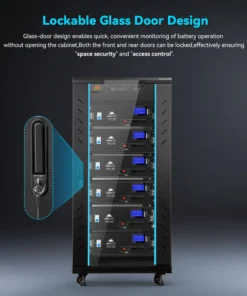
Locked front and rear doors on a battery cabinet are not primarily about theft prevention in most residential installations — they are about controlling access to a high-energy electrical assembly that should not be accessible without intent. A six-battery 30.72kWh cabinet at 51.2V holds enough energy to cause a serious arc flash event if the busbar terminals are accidentally short-circuited.
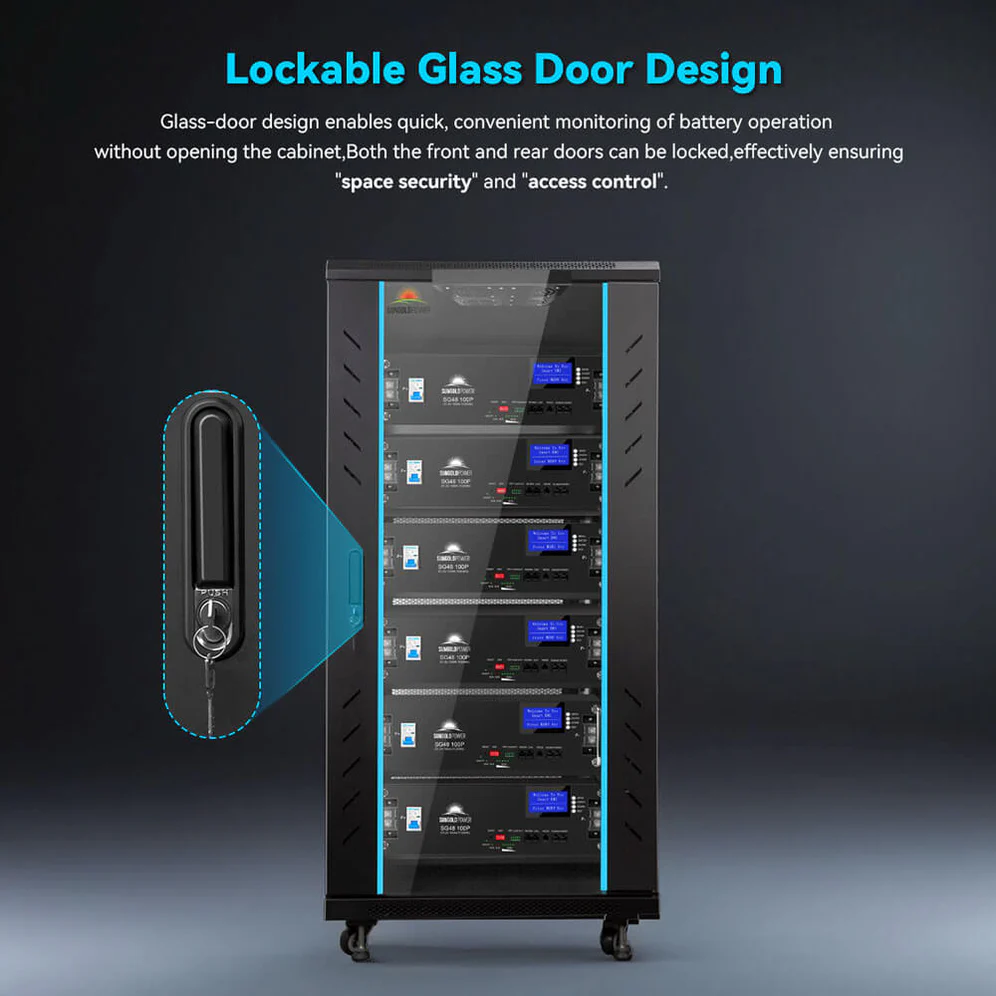
The dual-door design — front door for normal battery access and monitoring, rear door for cable access and inverter wiring — allows the installation to remain fully locked during normal operation while each door can be independently opened for the specific type of access needed. Rear access for cable work does not require opening the battery faces, and front access for battery monitoring does not require exposing the wiring compartment.
For commercial and light industrial battery storage container installations where electrical safety regulations and insurance requirements mandate locked access to high-energy equipment, locking doors move from a convenience to a compliance requirement. Confirm the specific locking mechanism type — keyed, combination, or electronic — with SunGoldPower.
Cable Entry Points and Flexible Wiring Layout
Cable entry points on the top, bottom, and sides of the cabinet accommodate virtually any wiring routing configuration that the installation site requires. Top entry suits overhead cable tray runs and ceiling-mounted conduit. Bottom entry is standard in North American residential and commercial installations where conduit runs below the cabinet along the floor. Side entry handles adjacent equipment rooms and horizontal cable tray installations.
This flexibility matters when the cabinet is positioned relative to the inverter, the main electrical panel, and the solar array disconnect during installation planning. A cabinet with only one cable entry direction forces the inverter into a specific relative position — flexible entry points allow the installer to optimise cabinet placement for the room layout rather than the wiring direction.
Browse our full Battery Cabinets, 48V Server Rack Batteries, and Off-Grid Power Systems for compatible batteries, inverters, and complete energy storage system components.
Frequently Asked Questions
Q: What is the maximum energy capacity of this battery rack cabinet fully loaded? Loaded with six SG48100P or SGH48100T units — each rated at 5.12kWh — the cabinet holds 30.72kWh of total battery capacity at 51.2V nominal. At 80% depth of discharge, 24.58kWh is accessible per cycle. This capacity range covers serious whole-house residential storage and light commercial daily cycling applications.
Q: Does this cabinet require a separate busbar for installation? No. The built-in positive and negative busbars eliminate the need to source and install external busbars. Each battery connects directly to the internal busbar through the cabinet’s wiring layout, and the inverter connects to the cabinet through the busbar’s output terminals. This is one of the primary cost and installation time advantages of an enclosed cabinet over an open rack configuration.
Q: What are battery storage boxes compared to this enclosed cabinet? Battery storage boxes are typically simple enclosures without active cooling, busbars, or locking security — suitable for single-battery or small two-battery installations where thermal management and security are not required. This enclosed cabinet is a purpose-built system enclosure for multi-battery banks where active cooling, integrated busbars, and locked access are all required for the application.
Q: Can the cooling fans be controlled or switched off when not needed? Fan control specifications are not detailed in the available source data. Confirm with SunGoldPower whether the four fans operate continuously, thermostatically, or through a manual control — thermostatically controlled fans that activate above a temperature threshold are the preferred configuration for minimising noise during low-load periods while ensuring cooling when the bank is cycling at high current.
Q: Is this cabinet suitable for outdoor installation? The cabinet material is described as high-strength corrosion-resistant steel, but no ingress protection rating is specified in the available data. IP ratings determine weather resistance — confirm the IP rating with SunGoldPower before planning an outdoor installation. Most enclosed battery cabinets designed for indoor residential and commercial use carry IP20 or IP32 ratings, which are not rated for direct outdoor weather exposure.
Be the first to review “Battery Rack Cabinet 6-Slot Authentic Busbar [4-Fan Cooling]”
Related products
Lithium Solar Batteries
Reviews
There are no reviews yet.