
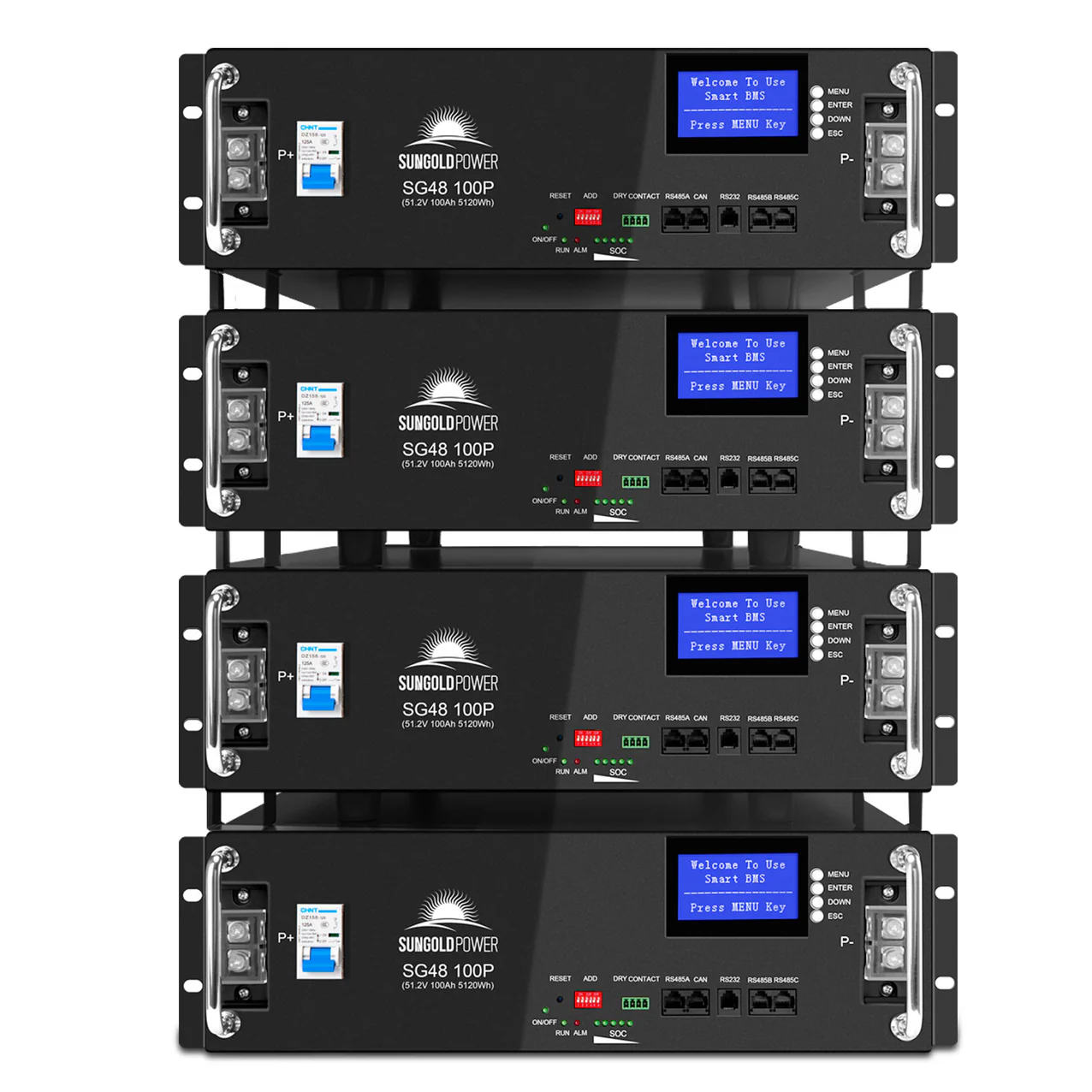
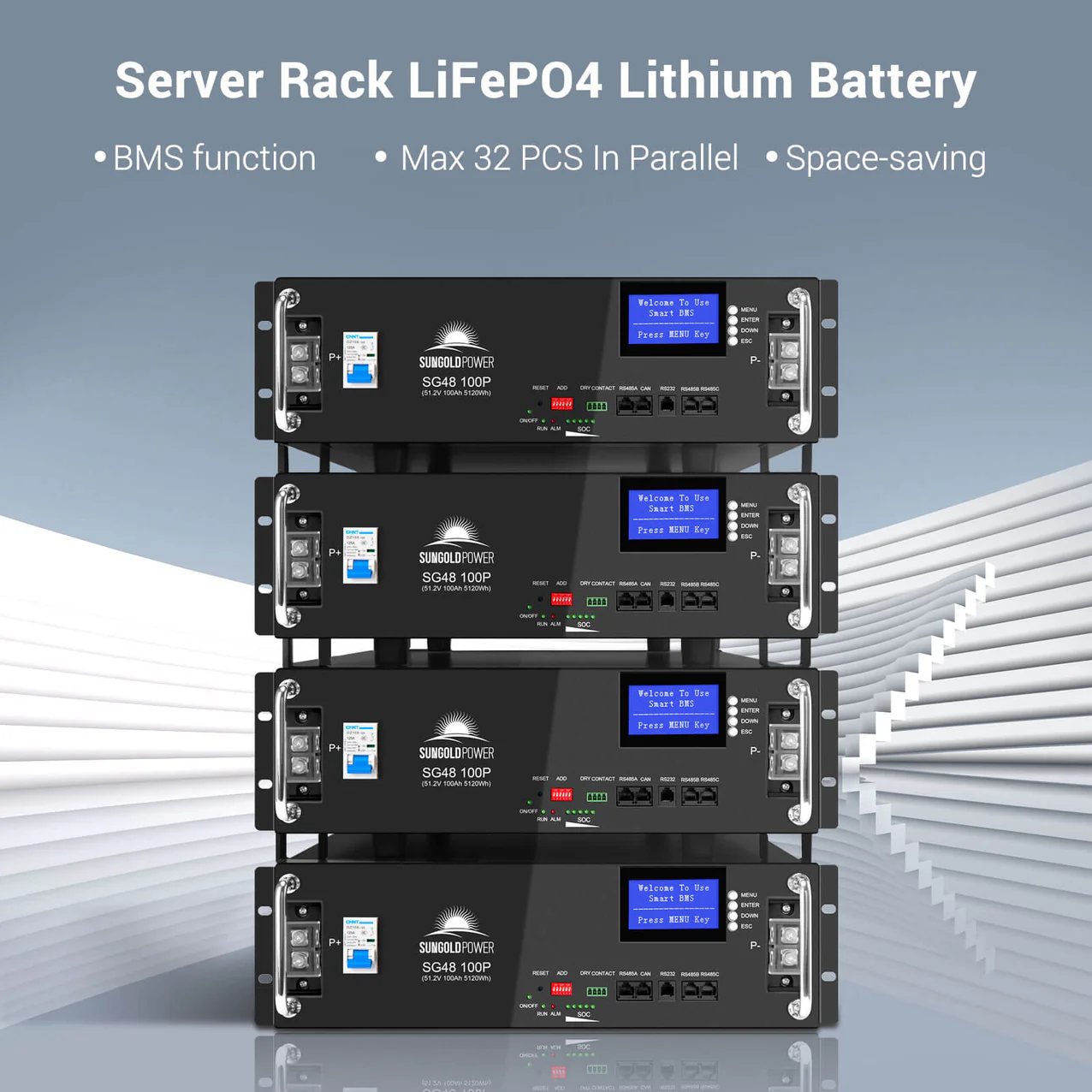
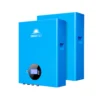
48V LiFePO4 Battery — 4 × SG48100P Server Rack, 20.48kWh, UL 1973, UL 9540A
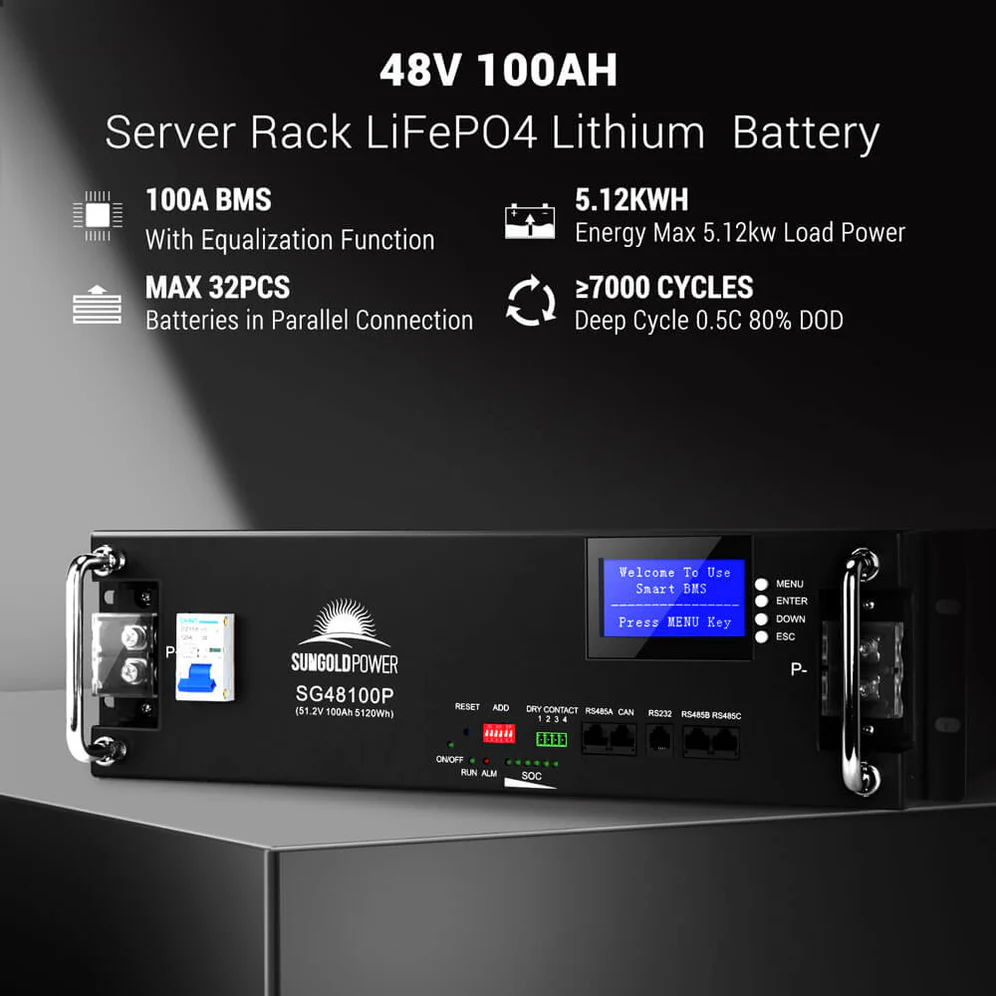
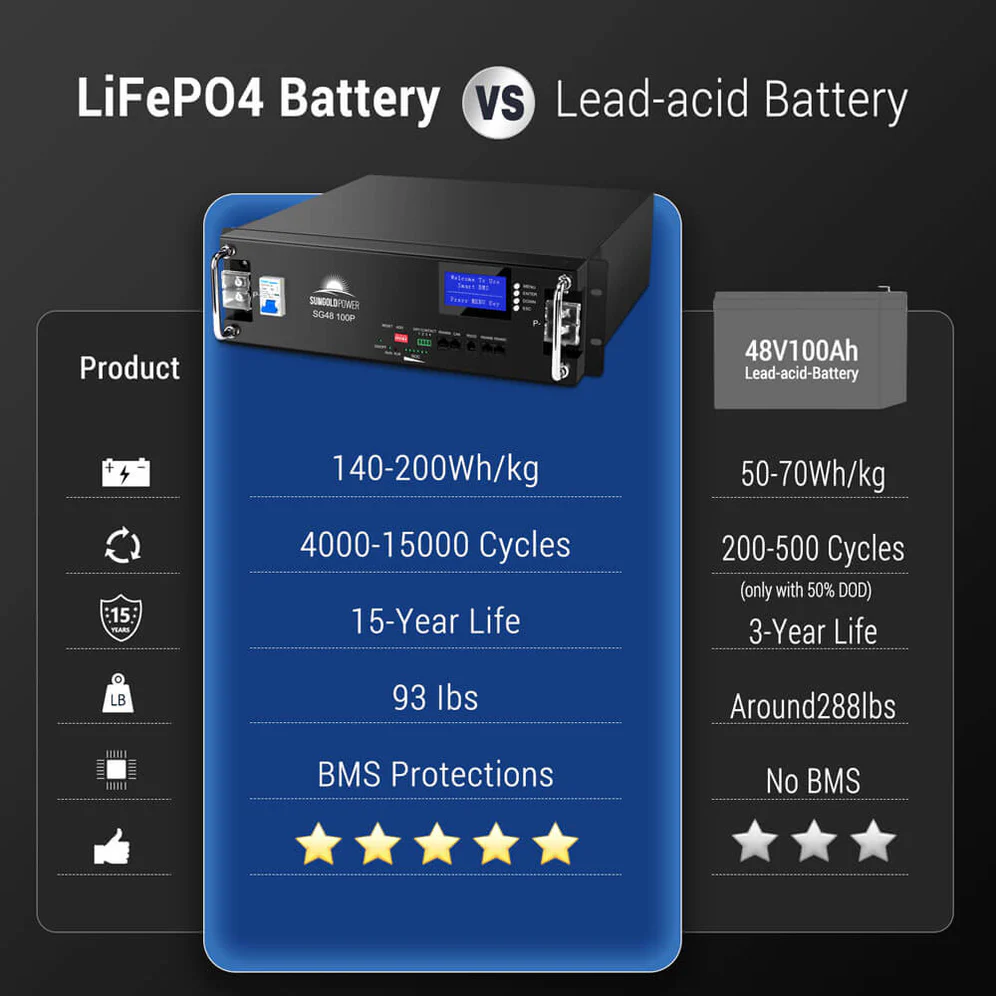
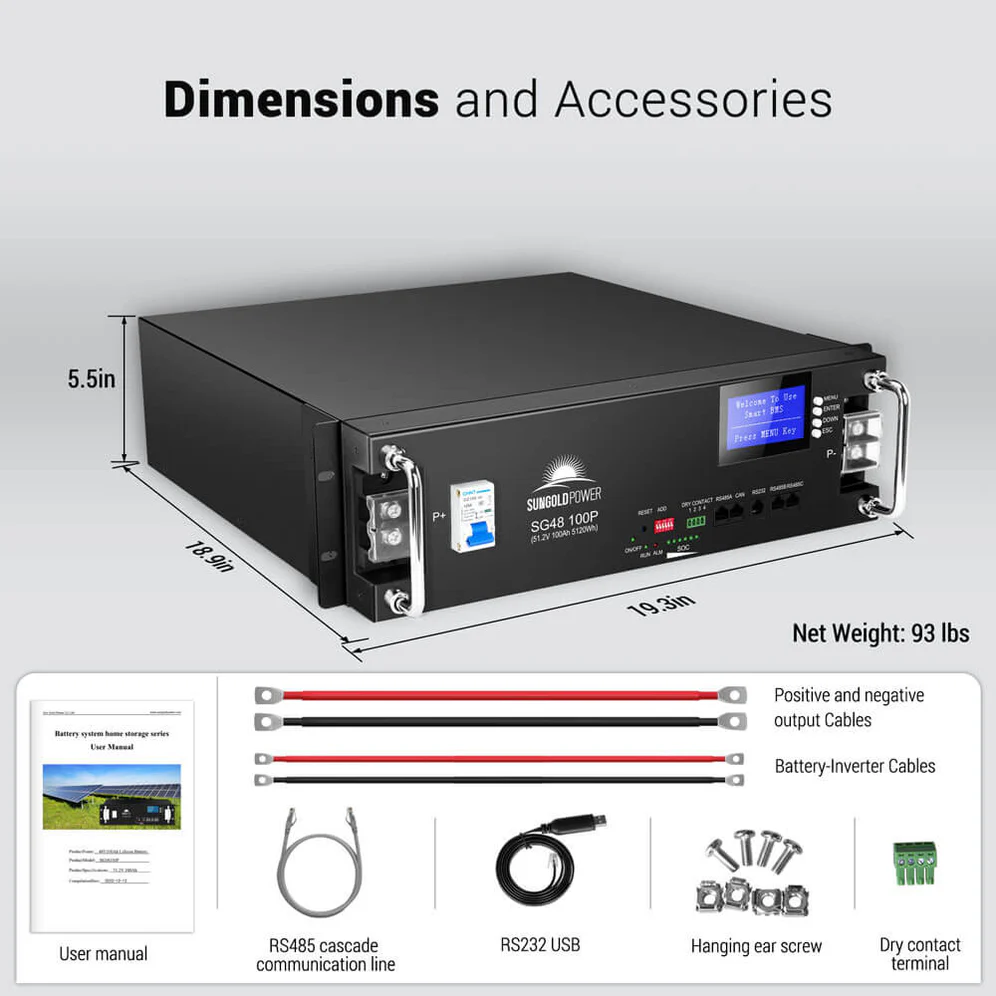
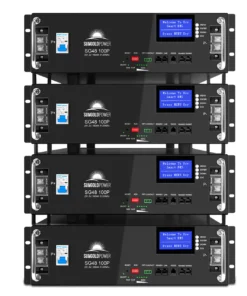
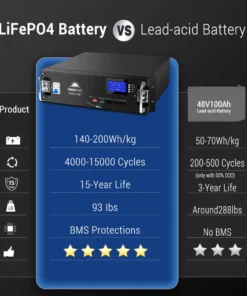
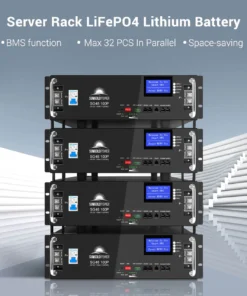
Four SG48100P units in parallel form a 48V LiFePO4 battery bank of 400Ah and 20.48kWh — a capacity level that covers the full daily energy consumption of an average US household with room for reserve, or provides serious multi-day autonomy in a smaller off-grid installation. Each unit is rated for more than 7,000 deep cycles with a 10-year warranty, certified to UL 1973 and UL 9540A, and communicates via CAN, RS485, and RS232 with the majority of inverters currently in the market. The four-unit bank can expand to 32 units total without any architecture changes.
Table of Contents
- What 20.48kWh Changes About Energy Independence
- Parallel Installation at Four Units — What to Do Differently
- UL Certifications and Why They Matter at This Scale
- Inverter Compatibility and Communication
- Frequently Asked Questions
What 20.48kWh Changes About Energy Independence
The difference between 10kWh and 20kWh of storage is not just twice the capacity — it is the threshold at which a solar storage system starts covering the full daily consumption of an average household rather than offsetting part of it. At 80% usable depth of discharge, a 20.48kWh 48v lifepo4 battery bank provides 16.38kWh of accessible energy per cycle.
The US Energy Information Administration reports average residential consumption of approximately 29kWh per day. At 16.38kWh of usable storage per cycle, a four-unit SG48100P bank covers 56% of that average daily consumption from storage alone. Combined with daytime solar self-consumption, a well-sized solar array in most US regions can eliminate grid draw entirely for 8–10 months of the year for a moderately efficient household.
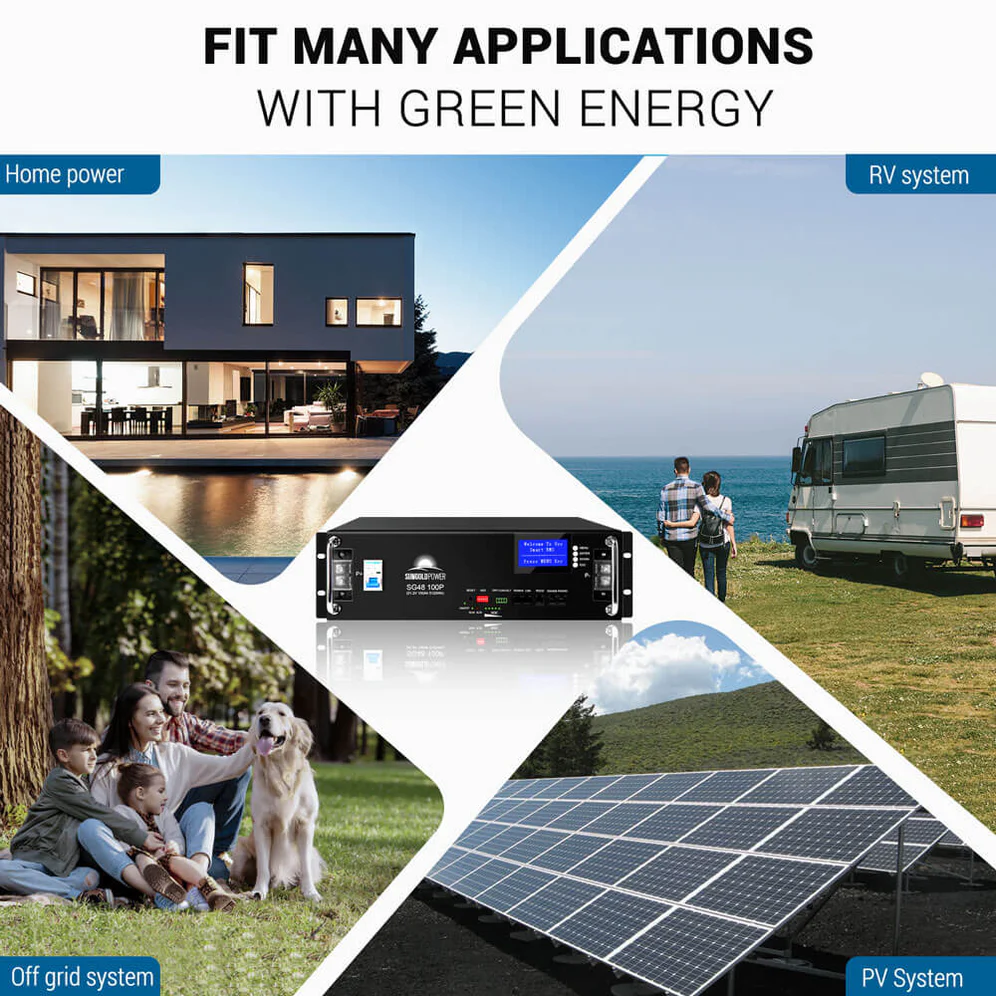
For an off-grid installation where grid elimination is the goal rather than a target percentage, 20.48kWh provides two days of autonomy for a household consuming 8–10kWh per day — the kind of reserve that bridges multiple consecutive overcast days without requiring a generator.
Parallel Installation at Four Units — What to Do Differently
Four units require stricter installation discipline than two, because the consequences of unequal current sharing multiply with each additional unit added to the bank.
- All four units at equal state of charge before connection. Charge each unit independently to 100% before connecting to the parallel busbar. This is non-negotiable at four units — the equalisation current between units at different charge levels is proportionally larger at this bank scale.
- Equal cable lengths and gauge from each unit to the busbar. Measure and cut each cable to the same length. Even a 10% difference in cable resistance between paths causes one unit to carry disproportionate current during high-demand events.
- Dedicated busbar, not daisy-chained terminals. Each of the four units connects independently to the common busbar — not battery to battery in sequence.
- Monitor all four BMS outputs after the first charge cycle. Confirm that all four LCD displays and CAN/RS485 communication outputs show consistent state of charge and current readings before declaring the installation complete.
UL Certifications and Why They Matter at This Scale
At 20.48kWh of stored energy, the safety certification question becomes more important than at smaller bank sizes. The energy density involved means that a serious fault event — though extremely unlikely in a properly installed LiFePO4 system — would be more consequential than in a smaller installation.
UL 1973 confirms that the SG48100P meets the system-level safety standard for stationary energy storage — evaluating BMS functionality, electrical protection, and fault behaviour at the battery pack level. UL 9540A confirms that a thermal runaway event in one cell cannot propagate to adjacent cells or modules. Together, these certifications are what most US local building departments require to approve a residential or light commercial 48 volt lithium ion battery installation under the International Fire Code.
Inverter Compatibility and Communication
Compatible inverters include Growatt, Deye, SunGoldPower, Luxpower, Victron Energy, Schneider, Phocos, and SMK via CAN, RS485, and RS232. At four units in parallel, all four BMS units communicate simultaneously — the inverter typically reads from the master BMS unit, which aggregates state of charge and current limits from all four units before communicating to the inverter.
Confirm the master-slave BMS communication setup procedure with SunGoldPower for the specific inverter being used before commissioning a four-unit installation.
Browse our full 48V LiFePO4 Batteries, Server Rack Batteries, and Off-Grid Power Systems for inverters, busbars, and system accessories.
Frequently Asked Questions
Q: What is the practical daily coverage of a 20.48kWh 48V LiFePO4 battery bank? At 80% usable depth of discharge, the four-unit bank provides 16.38kWh of accessible energy per cycle. For an average US household consuming 29kWh per day, this covers approximately 56% of daily consumption from storage. In a well-sized solar-plus-storage system, total grid elimination is achievable for 8–10 months per year in most US regions.
Q: Can I add more SG48100P units to this four-unit bank later? Yes. The SG48100P supports up to 32 units in parallel — the four-unit bank can expand to 32 units delivering 163.84kWh without architecture changes. Each additional unit must be the same model and connected at equal state of charge to the existing bank at the time of installation.
Q: What 48v batteries are compatible for mixing with SG48100P units? Only identical SG48100P units should be used in a parallel bank. Mixing different models — even those with the same nominal voltage and capacity — creates BMS communication conflicts and current sharing imbalances that reduce performance and can void warranty coverage.
Q: How does the 48v battery bank communicate with a Victron inverter? The SG48100P communicates with Victron inverters via the CAN Bus protocol using the relevant communication cable. In a Victron system, the battery BMS connects to the VE.Can port on the Victron inverter or Cerbo GX, and the system recognises the battery and adjusts charge and discharge parameters based on live BMS data. Confirm the specific cable and protocol configuration with SunGoldPower for Victron installations.
Q: What is the 48v battery charger setup for this bank? The SG48100P charges through the connected hybrid or off-grid inverter — the inverter acts as the charge controller for grid and generator input, and the MPPT stage handles solar charging. A standalone 48v battery charger is not required for solar-plus-storage installations — only for installations where AC charging without an inverter is needed for battery maintenance during extended storage periods.
Be the first to review “48V LiFePO4 Battery 4×100Ah Authentic 20.48kWh UL1973”
Related products
Lithium Solar Batteries
2× 24V 100Ah LiFePO4 Deep Cycle Lithium Battery — Bluetooth / Self-Heating / IP65
Lithium Solar Batteries
Lithium Solar Batteries
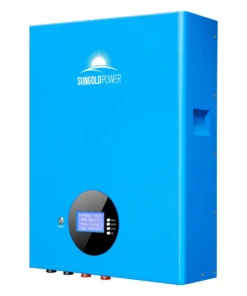
5.12KWH Wall-Mounted LiFePO4 Lithium Battery – Reliable Solar Battery Near Me
Lithium Solar Batteries
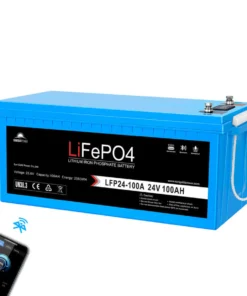
Premium Solar Batteries for Sale-24V 100Ah LiFePO4 Lithium Battery
Lithium Solar Batteries
Lithium Solar Batteries
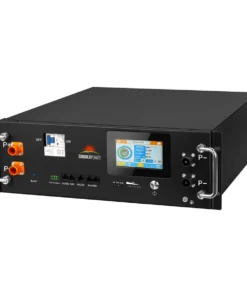
CoreX 5 Pro Server Rack 48V 100Ah Residential Energy Storage Battery — WiFi and Bluetooth
Lithium Solar Batteries
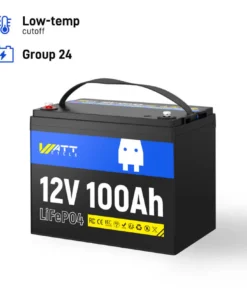
WattCycle 12V 100Ah LiFePO4 Battery – Reliable Power for Solar, RV & Off-Grid Use
24V Battery
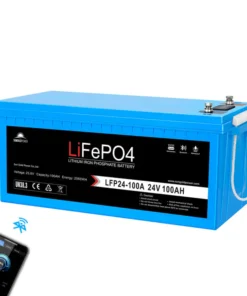
24V 100Ah LiFePO4 Battery – Reliable Deep Cycle Lithium Power for Solar, RV & Off-Grid Applications
Reviews
There are no reviews yet.