
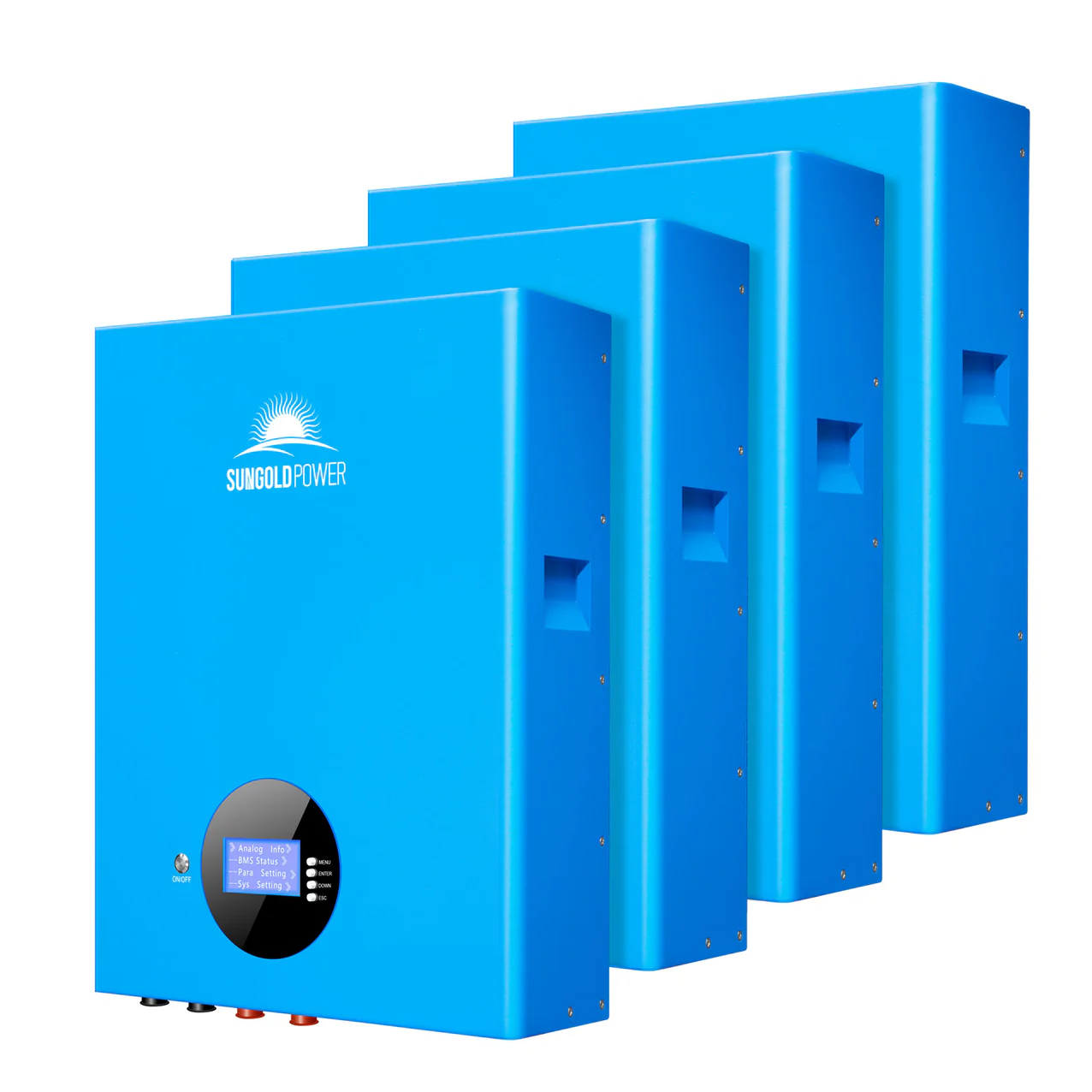
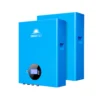
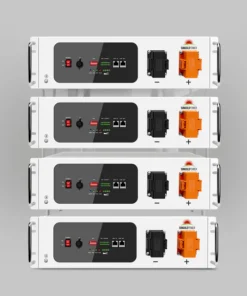
48V Batteries — 4 × SG48100M Wall-Mounted LiFePO4, 20.48kWh, UL 1973
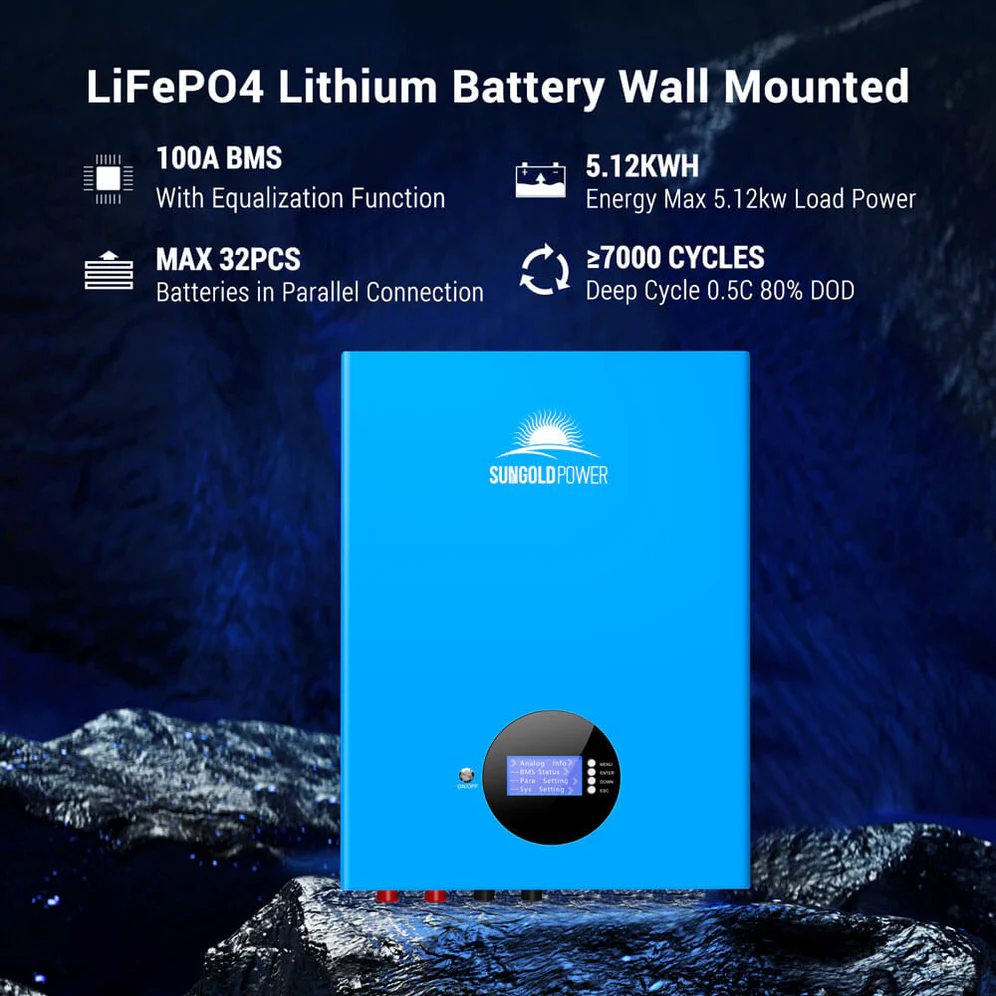
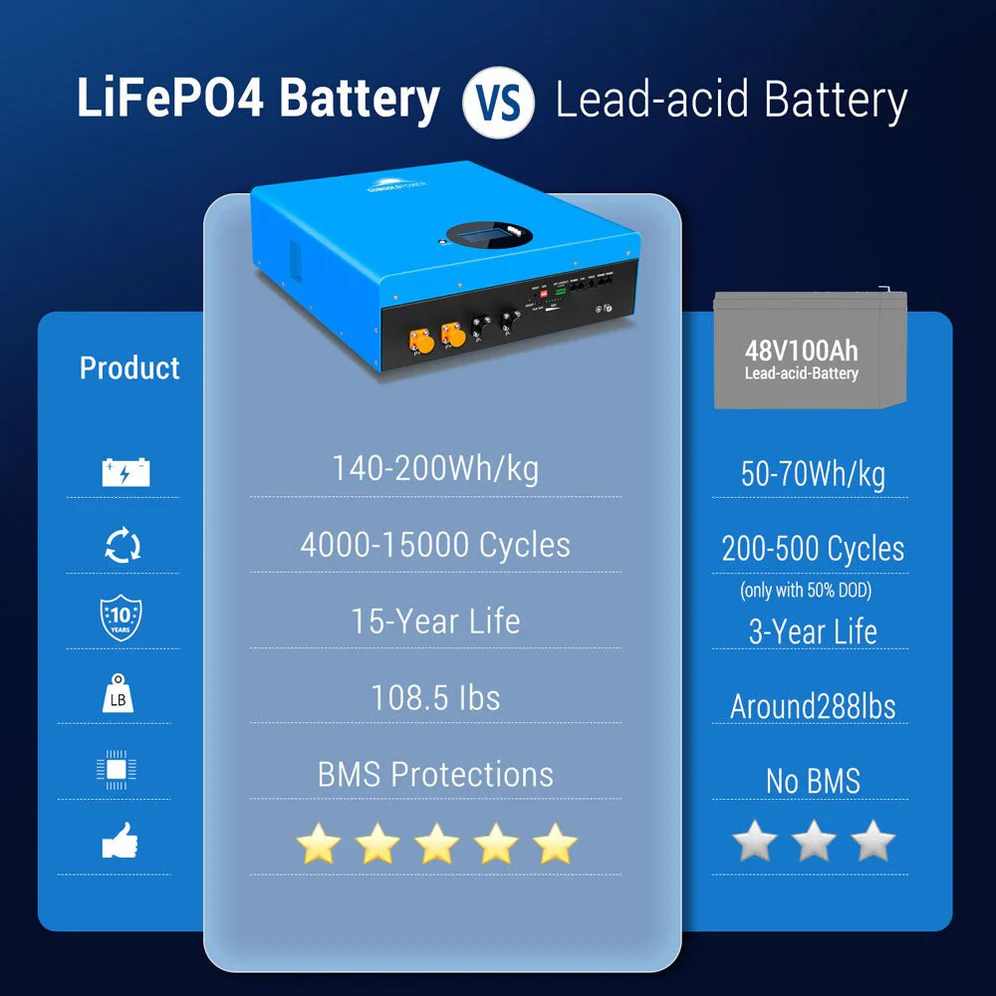
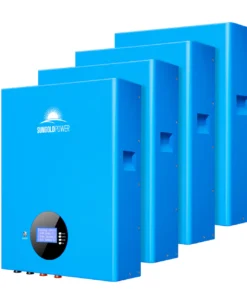
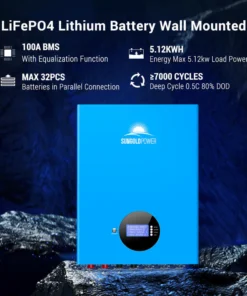
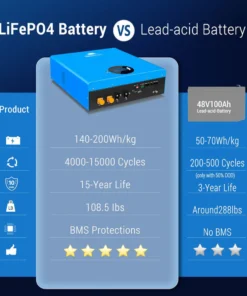
Four SG48100M wall-mounted units deliver 20.48kWh of 48V batteries storage in a parallel bank that covers the full daily energy consumption of an average US household from storage alone — at 80% usable depth of discharge, 16.38kWh is accessible per cycle. Each unit is rated for more than 7,000 deep cycles with a 10-year warranty and 15-year design life, certified to UL 1973, and compatible with most major inverters via CAN, RS485, and RS232. The wall-mount configuration keeps all four units off the floor in a clean, space-efficient installation that expands to 32 units without any system architecture changes.
Table of Contents
- 20.48kWh — The Capacity Level Where Self-Sufficiency Becomes Real
- Four-Unit Wall-Mount Installation
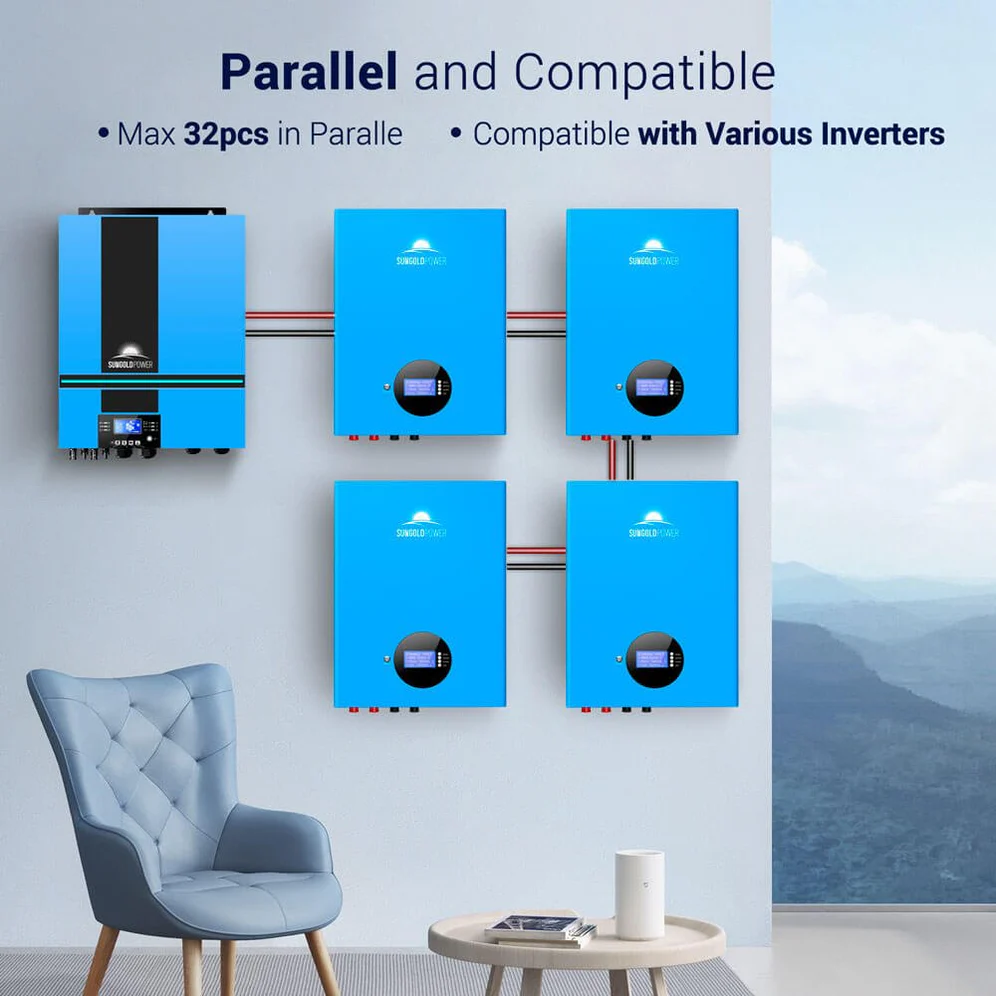
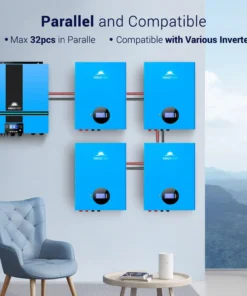
- Expanding Beyond Four Units
- BMS Communication at Scale
- Frequently Asked Questions
20.48kWh — The Capacity Level Where Self-Sufficiency Becomes Real
There is a meaningful difference between a battery bank that offsets part of grid consumption and one that covers it entirely. For most US households, 20.48kWh is the threshold where a well-sized solar array plus storage eliminates grid draw across most of the year.
At 80% usable depth of discharge, these four 48v batteries provide 16.38kWh of accessible storage per cycle. The average US household consumes approximately 29kWh per day — at 16.38kWh of battery plus typical daytime solar self-consumption of 12–18kWh depending on system size, the combined coverage exceeds daily consumption in most months outside peak summer cooling demand.
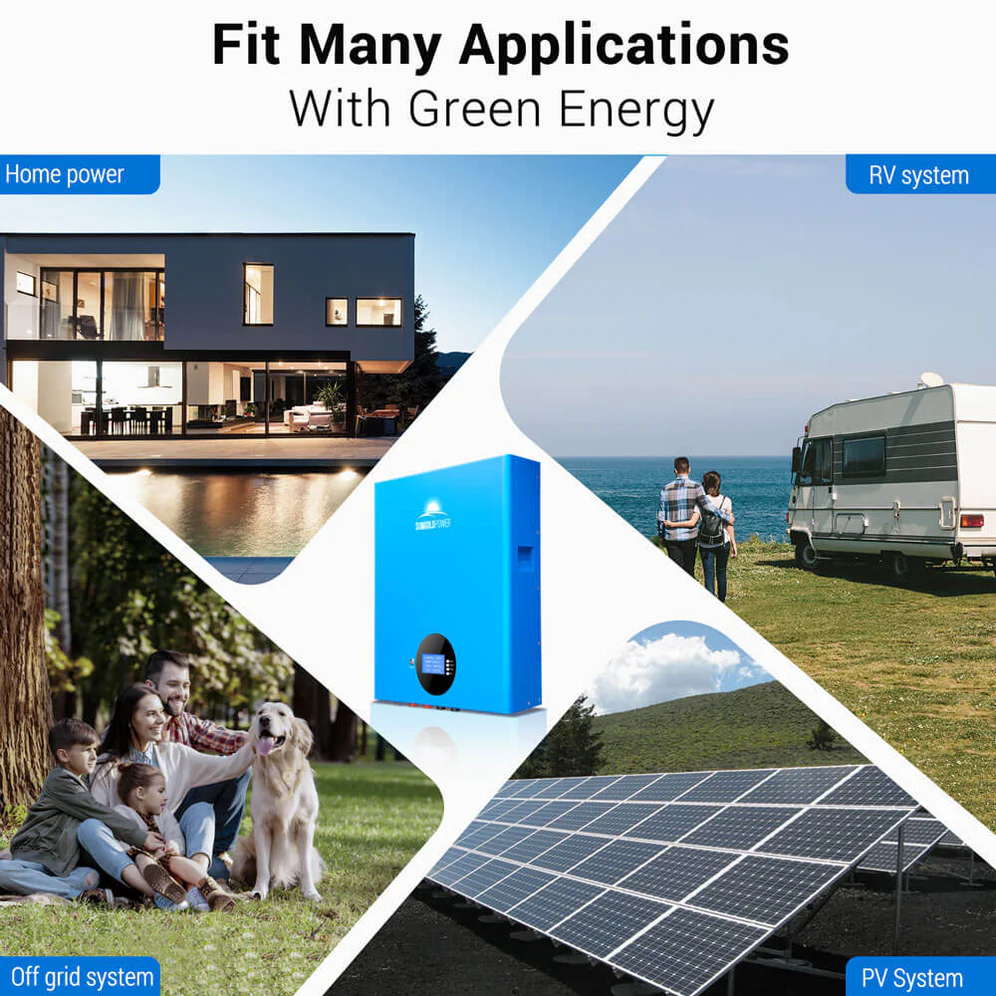
For off-grid applications where grid independence is the explicit goal, 20.48kWh provides two full days of autonomy for a modestly efficient household consuming 8–10kWh per day — the reserve depth that makes a solar-plus-storage off-grid system genuinely weather-resilient rather than dependent on generator backup after every overcast day.
Four-Unit Wall-Mount Installation
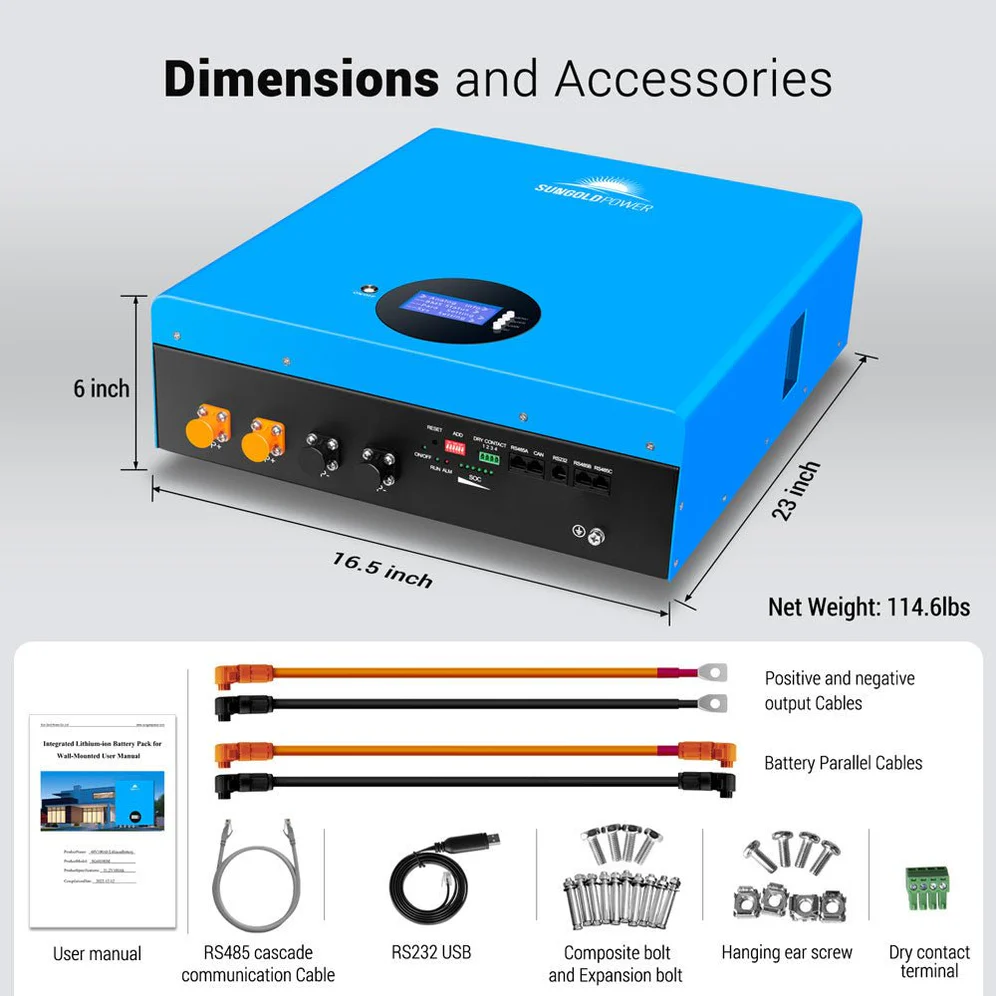
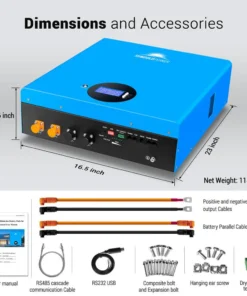
Four wall-mounted units require a wall section that can support the combined weight of all four units simultaneously. Before installation, confirm the wall structure — stud spacing, stud material, and load-bearing capacity — against the SG48100M’s per-unit weight specification with the product documentation.
Installation sequence:
- Mark mounting positions for all four units, confirming equal spacing and level alignment.
- Install mounting hardware into wall studs — not drywall anchors, which are not rated for battery weights.
- Mount all four units before making electrical connections.
- Connect all four units to a common busbar with equal-length cables.
- Confirm all four units are at equal state of charge before energising the parallel bank.
The wall-mount configuration makes cable management cleaner than floor-standing alternatives — all four units at the same height means the DC cables to the inverter and busbar run a predictable, manageable path.
Expanding Beyond Four Units
The four-unit 20.48kWh bank is expandable to 32 units and 163.84kWh without changing the inverter, the BMS communication setup, or the system architecture. Adding units requires:
- Matching SG48100M units only — no mixing with other models.
- Units at equal state of charge at time of connection.
- Busbar and cabling resized for the higher combined current at the expanded bank size.
- Additional wall mounting capacity for the new units.
For installations that anticipate future expansion, planning the busbar and cabling for the final target bank size — rather than the current four-unit configuration — avoids rework when additional units are added.
BMS Communication at Scale
Each SG48100M operates an independent BMS with its own CAN, RS485, and RS232 outputs. In a four-unit parallel bank, the inverter typically communicates with a master BMS unit that aggregates state-of-charge data from all four units. The specific master-slave BMS daisy-chain configuration varies by inverter brand — confirm the correct setup procedure with SunGoldPower for the specific inverter being used.
After commissioning, monitor all four LCD displays and confirm consistent state-of-charge readings across all units at the end of the first full charge cycle. Persistent imbalance between units indicates a wiring or connection issue that should be resolved before the bank enters regular service.
Browse our full 48V Wall-Mounted Batteries, Solar Battery Storage, and Residential Energy Storage for inverters, busbars, and system components.
Frequently Asked Questions
Q: What is the usable capacity of a 20.48kWh 48V LiFePO4 battery bank? At 80% depth of discharge — the standard daily cycling limit for maximising LiFePO4 cycle life — the four-unit bank provides 16.38kWh of accessible energy per cycle. At 100% depth of discharge, the full 20.48kWh is available, but cycling to 100% DOD daily accelerates capacity fade compared to the 7,000-cycle rating which should be confirmed at the specific DOD the system operates at.
Q: How does this 48V battery bank connect to a hybrid inverter? Each SG48100M connects to the parallel busbar, and the busbar connects to the inverter’s battery terminals. The BMS communication cable — CAN or RS485 depending on the inverter brand — connects from the master battery unit to the inverter’s BMS communication port. The inverter reads state of charge, voltage, and current limits from the battery BMS and manages charge and discharge accordingly.
Q: Can these 48v batteries handle a whole-house backup load? At 20.48kWh and 51.2V nominal voltage, the four-unit bank can supply a connected whole-house backup inverter rated up to the bank’s maximum discharge current. For a 10kW inverter operating at full load, the bank delivers approximately 195A at 51.2V — confirm the inverter’s input current rating and the battery’s maximum discharge current against each other before specifying this combination.
Q: What is the 48 volt lithium ion battery cycle life claim based on? The ≥7,000 cycle rating is based on cycling at defined charge and discharge current rates and depth of discharge under controlled laboratory conditions. In a real residential solar installation where depth of discharge averages 60–80% and charge rates are moderate, actual cycle life typically meets or exceeds the rated figure. Cycling to 100% DOD daily or at high C-rates reduces cycle life relative to the rated figure.
Q: What certifications are required for a 20kWh battery installation in a home? Requirements vary by jurisdiction. Most US localities that have adopted IFC (International Fire Code) 2021 require UL 9540 system certification and UL 9540A fire propagation test data for energy storage installations above a threshold capacity — typically 20kWh or more triggers additional requirements. The SG48100M carries UL 1973 — confirm whether UL 9540A data is also available from SunGoldPower for this model if local requirements demand it.
Be the first to review “48V Batteries 4×5.12kWh Authentic Wall Mount 20.48kWh”
Related products
Lithium Solar Batteries
Lithium Solar Batteries
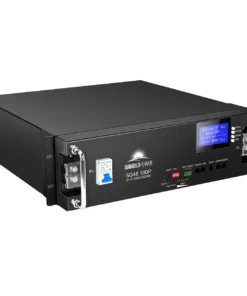
48V 100Ah Server Rack LiFePO4 Lithium Battery SG48100P — UL1973 / UL9540A
Lithium Solar Batteries
Lithium Solar Batteries
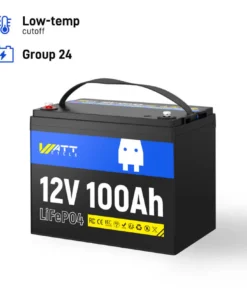
WattCycle 12V 100Ah LiFePO4 Battery – Reliable Power for Solar, RV & Off-Grid Use
Lithium Solar Batteries
Lithium Solar Batteries
Premium Solar Batteries for Sale-24V 100Ah LiFePO4 Lithium Battery
Reviews
There are no reviews yet.