
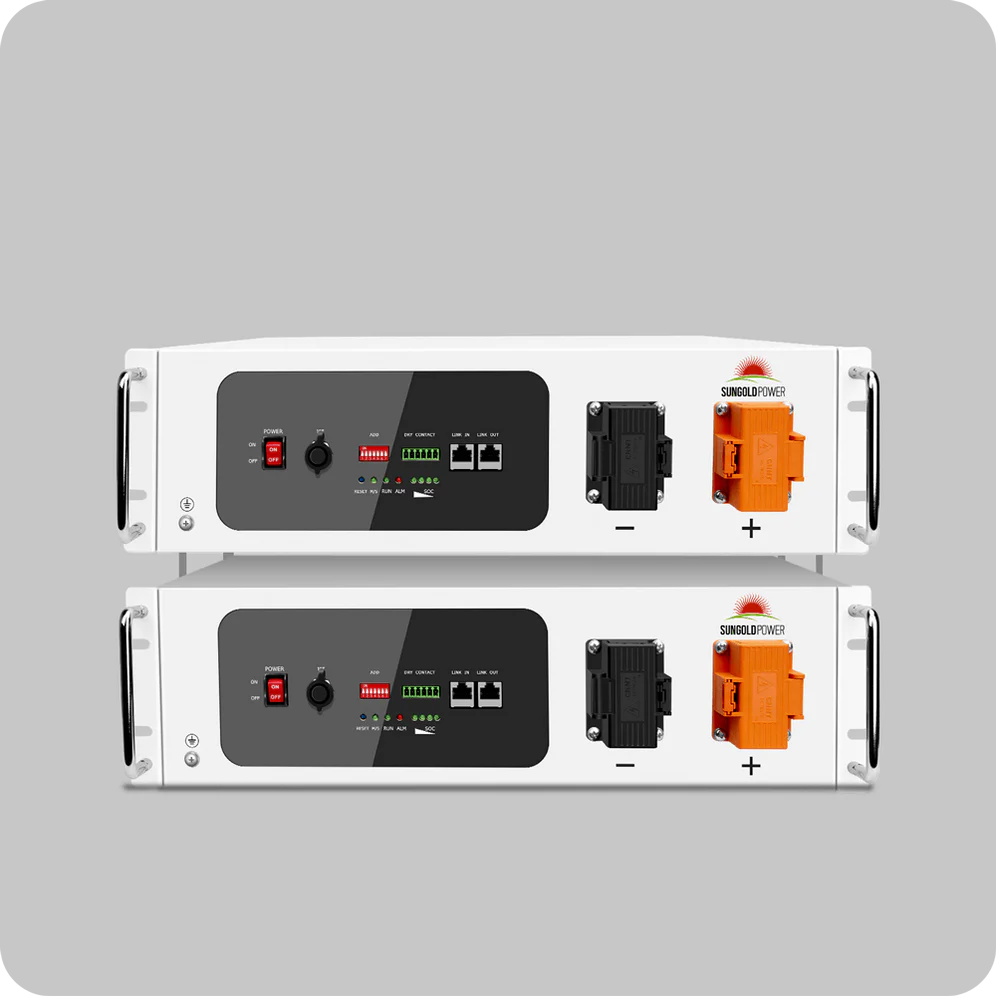
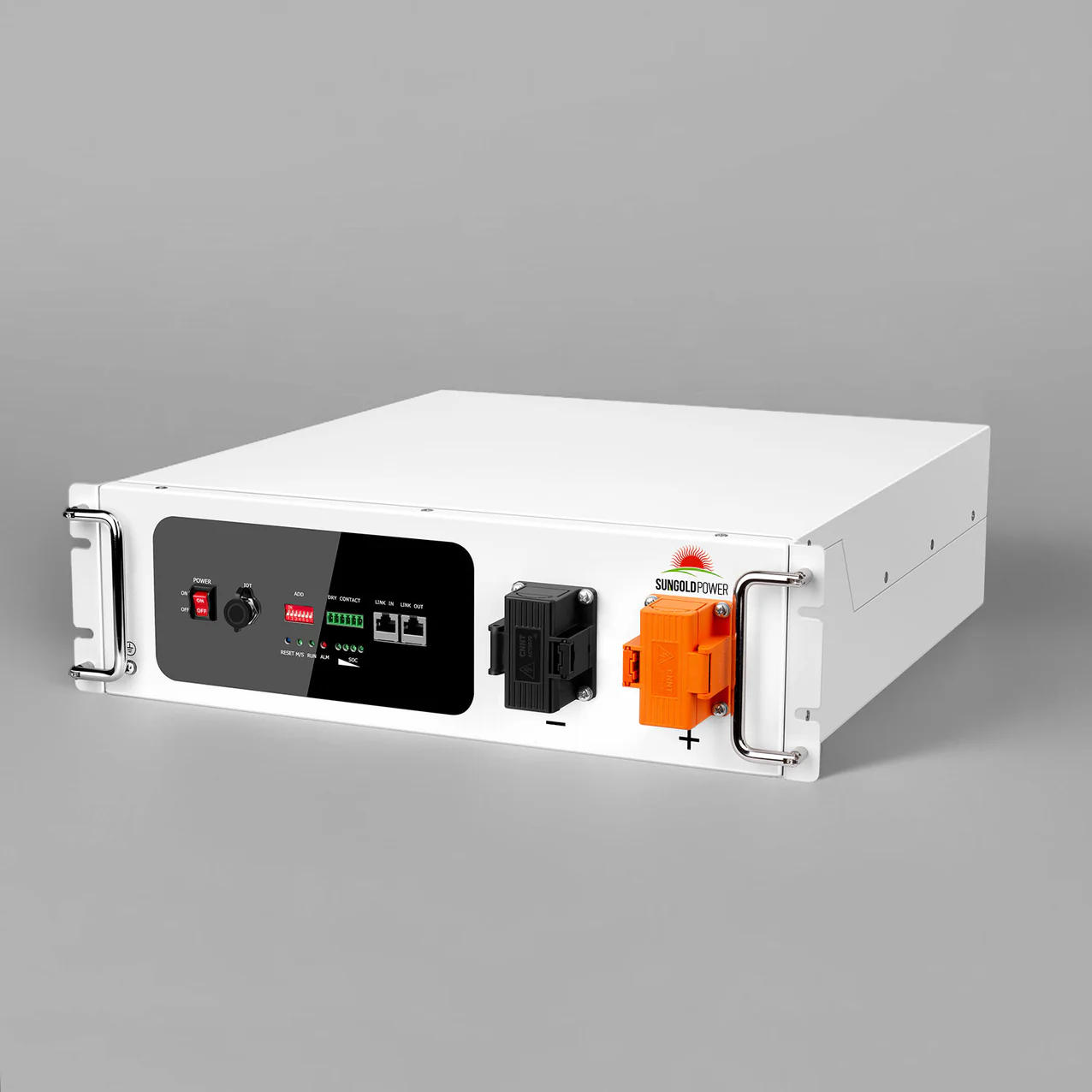
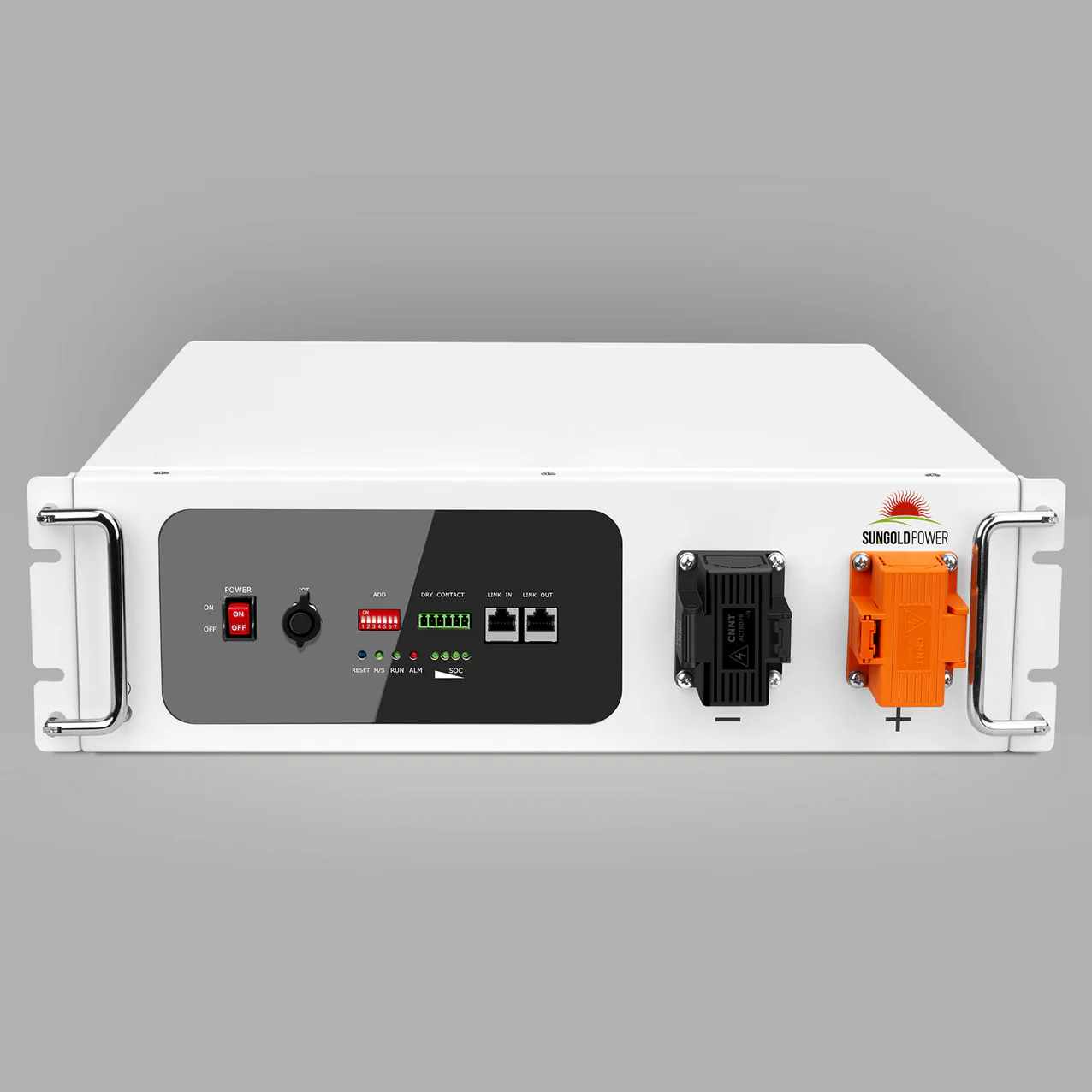
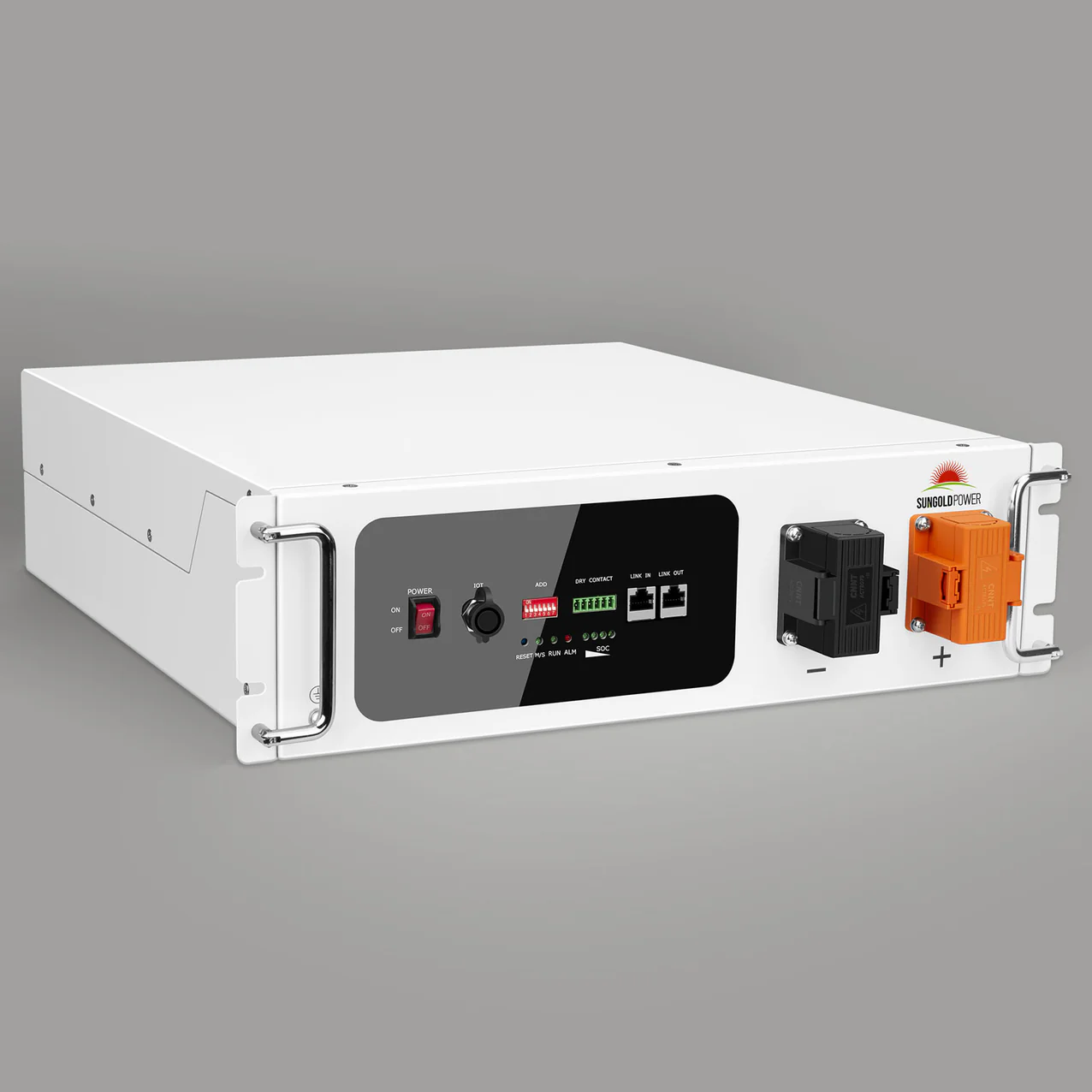
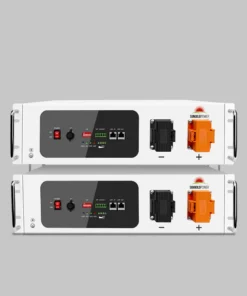
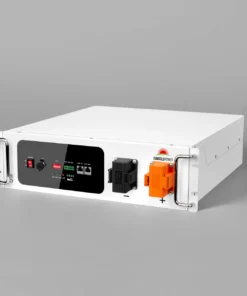
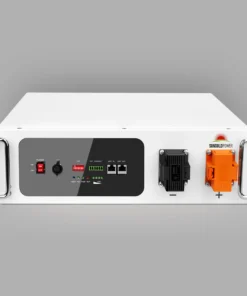
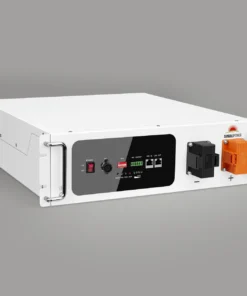
Battery Lithium Ion 48V — 2 × SGH48100T Server Rack, 10.24kWh, Self-Heating, 7,000 Cycles
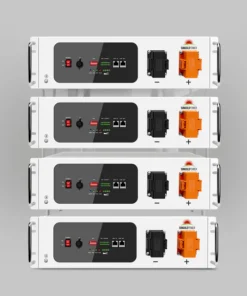
Two SGH48100T units form a battery lithium ion 48V bank of 200Ah and 10.24kWh with built-in self-heating in both units — the configuration for a residential or small commercial solar storage installation in a climate where overnight temperatures regularly fall below freezing. Each unit activates its heating element automatically when cell temperature drops below 41°F, warms cells to 53.6°F before accepting any charge current, and delivers more than 7,000 deep cycles over a 15-year design life with UL 1973 certification. Up to 32 units can be paralleled for larger capacity requirements.
Table of Contents
- Two Self-Heating Units — Why the Cold-Climate Case Is Stronger at 10.24kWh
- What 10.24kWh Delivers Overnight
- Parallel Connection — Both Units Operating Together
- Inverter Compatibility
- Frequently Asked Questions
Two Self-Heating Units — Why the Cold-Climate Case Is Stronger at 10.24kWh
A single 5.12kWh self-heating battery is useful in a cold climate but limited by its capacity — the bank depletes faster, reaches lower state of charge overnight, and has less energy available for the morning solar charge cycle. Two units at 10.24kWh address both problems simultaneously: more stored energy means the bank ends the night at a higher state of charge, and both units heat independently and accept the morning solar charge at the same time.
The compounding benefit is that a 48v battery solar bank that starts the day at higher state of charge captures more of the available solar production — a bank at 70% state of charge accepts charge more aggressively than one at 20%, and in a cold-climate installation where winter days are short, every hour of maximum-rate solar charging matters.
Both heating elements draw from the bank’s own stored energy when activating — at the 10.24kWh scale, this draw is a small percentage of total stored energy and does not meaningfully reduce overnight capacity.
What 10.24kWh Delivers Overnight
At 80% usable depth of discharge, the two-unit bank provides 8.19kWh of accessible energy per cycle. For a residential off-grid or hybrid installation:
- An off-grid home averaging 800W overnight — LED lighting, a refrigerator, a fan, and standby loads — consumes 6.4kWh over eight hours. The bank covers this with 1.79kWh in reserve.
- An RV or cabin with moderate loads — 500W continuous — consumes 4kWh overnight. The bank provides ample reserve for an early start or cloudy morning before solar production begins.
- A grid-tied home using battery storage for peak-rate avoidance — shifting 8kWh of consumption from evening peak rates to daytime solar generation — the bank handles this cycle cleanly within the 8.19kWh usable capacity.
Parallel Connection — Both Units Operating Together
Connect both SGH48100T units to a common busbar using equal-length cables of identical gauge from each unit to the connection point. Do not daisy-chain from one unit to the other — each unit connects independently to the common bus to ensure equal current sharing during charge and discharge.
Before energising the parallel bank, confirm both units are at equal state of charge. The self-heating function operates independently on each unit — if one unit is significantly warmer than the other at startup, their heating cycles may activate at different times, which can create a brief current imbalance during the heating period. This is normal and resolves automatically once both units reach operating temperature.
Inverter Compatibility
RS485 and CAN Bus communication is supported with confirmed compatibility across Growatt, Deye, Sol-Ark, SunGoldPower, Luxpower, EG4, Victron Energy, Schneider, SMA, and Solis. When both units communicate with the inverter — through a daisy-chain or master-slave RS485 configuration — the inverter receives aggregated state-of-charge and current-limit data from both BMS units.
Browse our full 48V Server Rack Batteries, Solar Battery Storage, and Off-Grid Power Systems for compatible inverters and accessories.
Frequently Asked Questions
Q: Why choose two self-heating SGH48100T units over two standard SG48100P units? If the installation is in a location where overnight temperatures regularly fall below 40°F, the SGH48100T is the correct choice. Standard LiFePO4 batteries reject charge below approximately 32°F — in a cold climate, this means the bank loses the morning solar charge cycle on cold nights, reducing daily throughput. The SGH48100T’s self-heating function eliminates this problem automatically.
Q: Do both heating elements activate simultaneously in a two-unit bank? Each unit’s heating element activates independently based on its own cell temperature reading. In a well-insulated equipment space, both units typically cool to similar temperatures overnight and activate heating simultaneously. If one unit is in a slightly warmer location, its heating cycle may activate later or not at all on milder nights.
Q: What is the 48v battery charger setup for a two-unit SGH48100T bank? The bank charges through the connected hybrid or off-grid inverter. The RS485 or CAN communication cable connects from the master battery unit to the inverter’s BMS communication port — the inverter manages charge parameters based on live BMS data from both units. No standalone 48v battery charger is required for a solar-plus-inverter installation.
Q: Can this bank be expanded to accommodate higher capacity needs? Yes. The maximum parallel configuration is 32 SGH48100T units — 163.84kWh. Adding units requires matching SGH48100T models at equal state of charge, with equal-length cables from each unit to the common busbar. The busbar and cabling may need to be resized for the higher combined current at the expanded bank size.
Q: What is the battery lithium ion 48V charge voltage for LiFePO4 chemistry? The standard upper charge voltage for a 48V nominal LiFePO4 battery lithium ion 48V pack — a 16S configuration at 3.65V per cell maximum — is 58.4V. Most inverters with a LiFePO4 charging profile are pre-set to this voltage. Confirm the inverter’s lithium charging voltage setting before commissioning, and do not use an AGM or gel profile which sets higher equalisation voltages incompatible with lithium chemistry.
Be the first to review “Battery Lithium Ion 48V 2×SGH48100T Authentic Self-Heating”
Related products
Lithium Solar Batteries
Lithium Solar Batteries
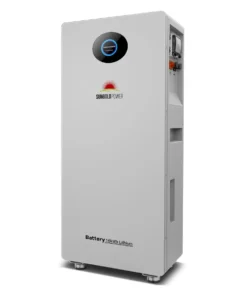
Wall-Mounted 5.12kWh LiFePO4 Lithium Battery SG48100M — 48V 100Ah UL1973
Lithium Solar Batteries
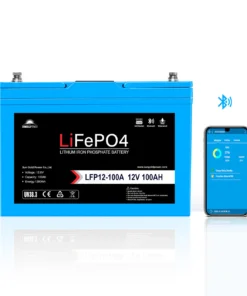
PowerMax 51.2V 314Ah Outdoor Energy Storage Battery — UL1973 / UL9540A / CEC Listed
Lithium Solar Batteries
Lithium Solar Batteries
Lithium Solar Batteries
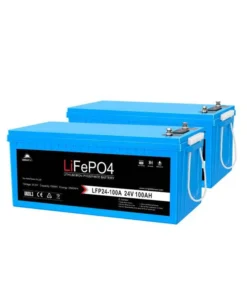
2× 24V 100Ah LiFePO4 Deep Cycle Lithium Battery — Bluetooth / Self-Heating / IP65
Lithium Solar Batteries
Lithium Solar Batteries
5.12KWH Wall-Mounted LiFePO4 Lithium Battery – Reliable Solar Battery Near Me
Reviews
There are no reviews yet.