
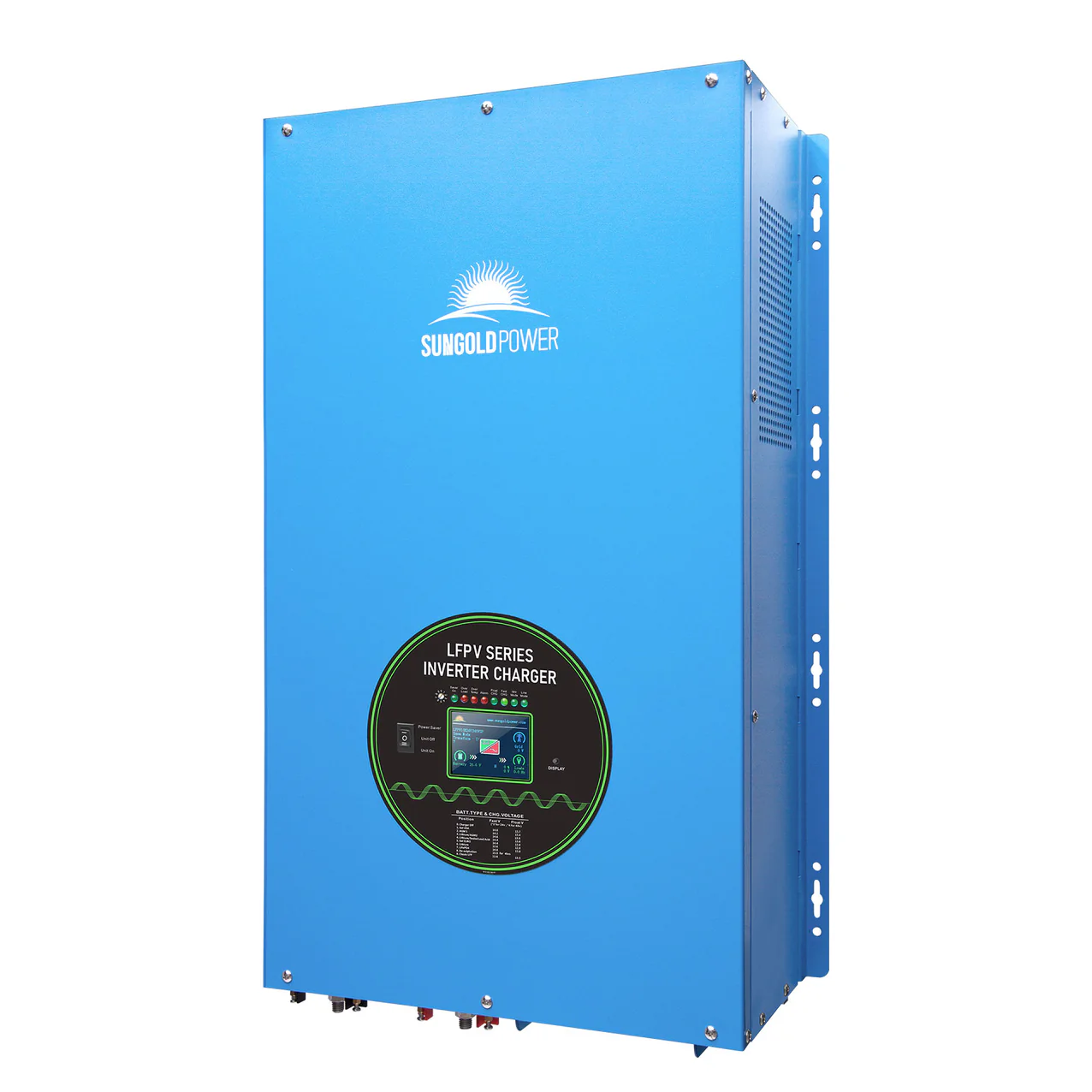
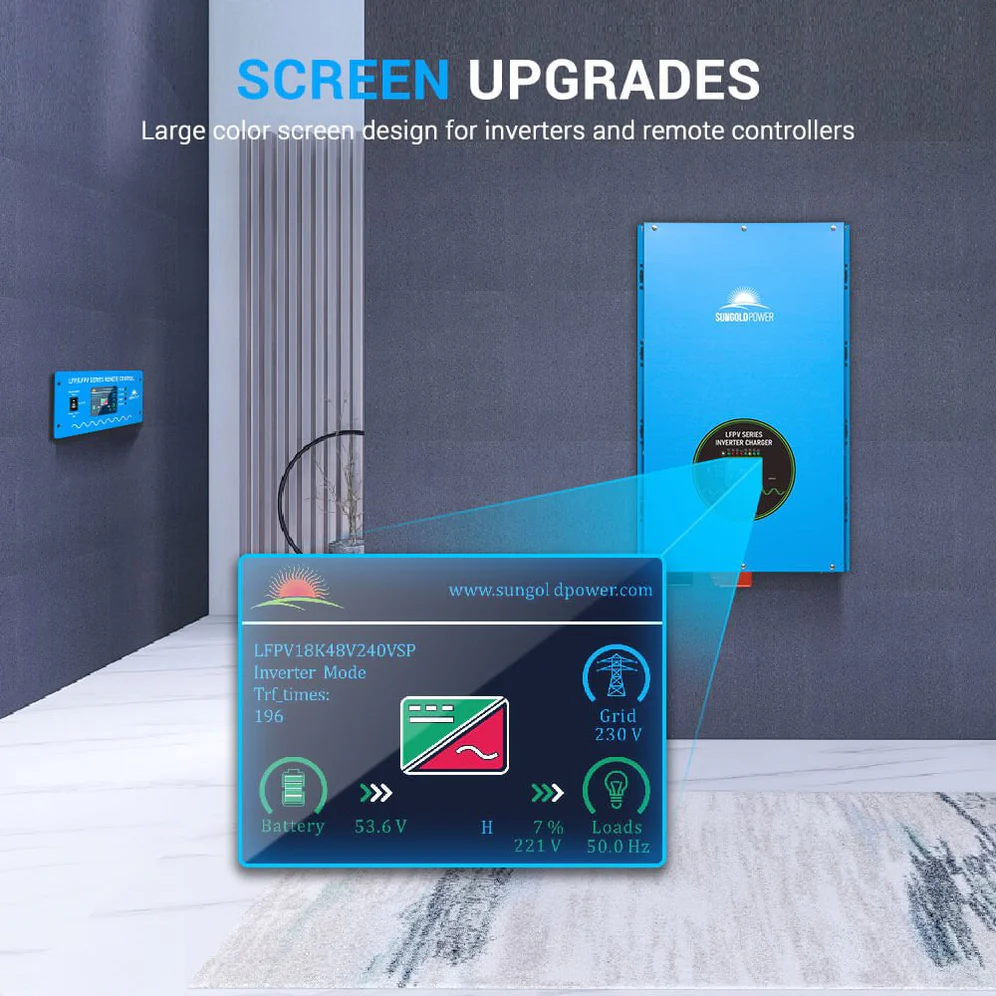


Off Grid Inverter 15kW 48V — Authentic [100A + AGS + BTS]
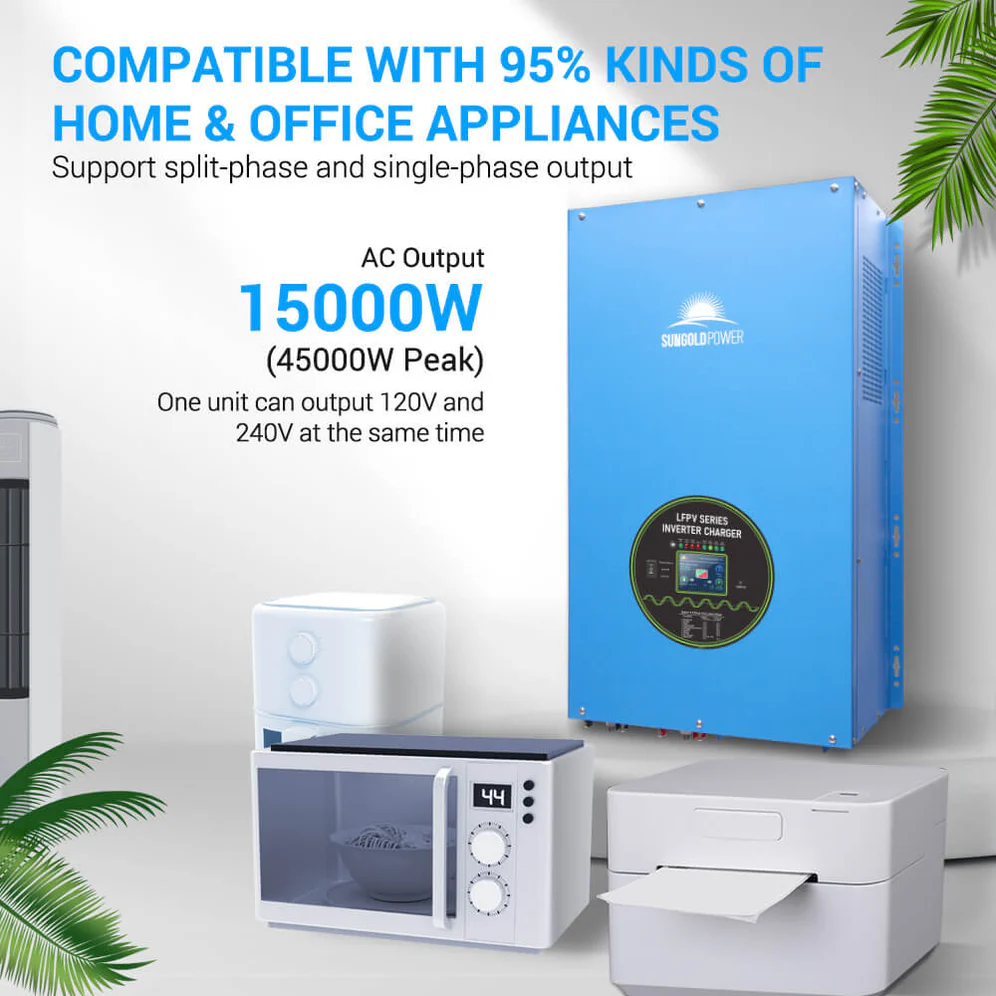
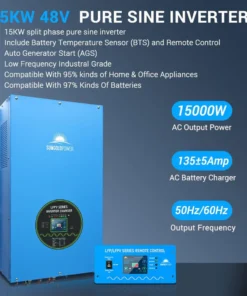
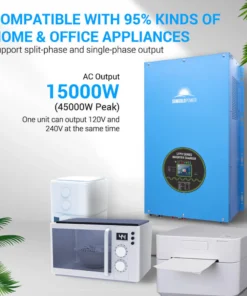
The off grid inverter at 15kW represents the top of residential-class and the beginning of light commercial off-grid power — this 48V split-phase pure sine wave inverter charger delivers 15,000W of continuous 120V/240V output with 45,000W of surge capacity, a 100-amp integrated battery charger, auto generator start, battery temperature sensing and 8-millisecond transfer time. It covers the complete electrical demand of large estate properties, farms, commercial premises and any off-grid installation where the realistic simultaneous load exceeds what a 12kW unit can deliver without output limiting. The solar and power inverter architecture is low-frequency — physical transformer-based — providing the surge handling reliability that high-frequency switching inverter designs cannot match at this output level.
Table of Contents
- Product Specifications
- 15kW Continuous — When 12kW Is Not Enough
- 45kW Surge Capacity
- 100-Amp Battery Charger with PFC
- Auto Generator Start with 15-Second Safety Delay
- Solar Panel With Inverter Integration
- Applications
- FAQ
Product Specifications
| Parameter | Detail |
|---|---|
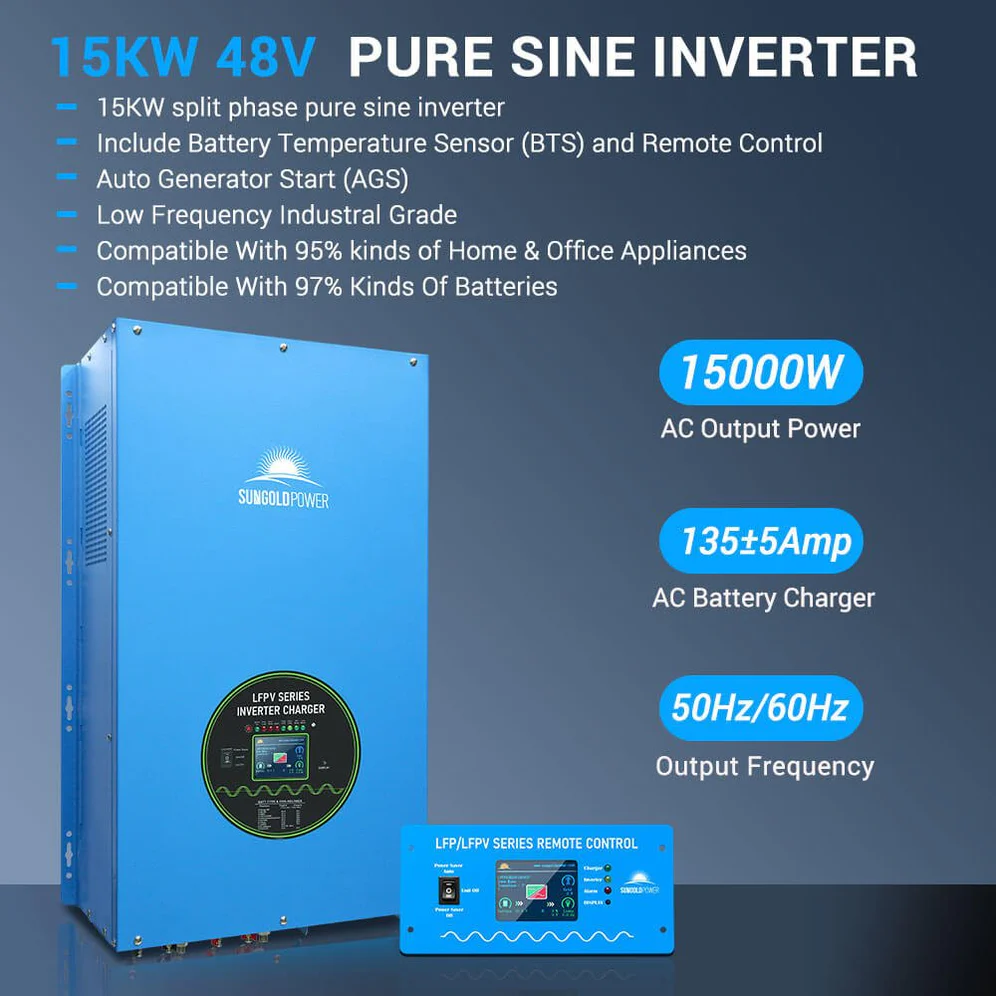
| Continuous Output Power | 15,000W |
| Surge Rating (20s) | 45,000W (300%) |
| Output Waveform | Pure Sine Wave |
| DC Input Voltage | 48V DC |
| AC Output Voltage | 120V and 240V |
| AC Input Voltage | 240V AC |
| Battery Charger | 100 ±5A |
| Charger Breaker | 100A |
| Transfer Time | 8ms typical, 10ms maximum |
| Output Frequency | 50Hz / 60Hz |
| Idle Power (saver on) | 45W |
| Idle Power (saver off) | 225W |
| Battery Start Voltage | 40–62.8V DC |
| Overcharge Protection | 62.8V DC |
| AC Input Range | 184–253V AC / 140–270V AC |
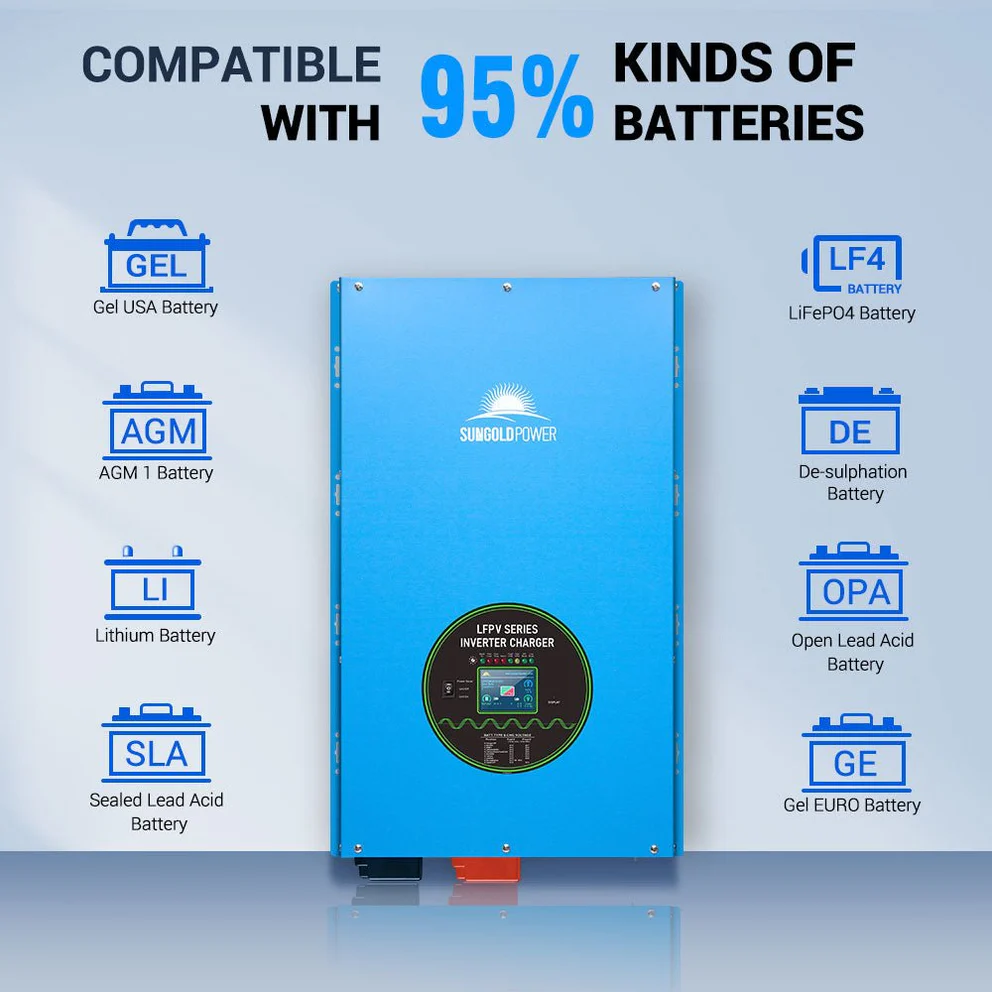
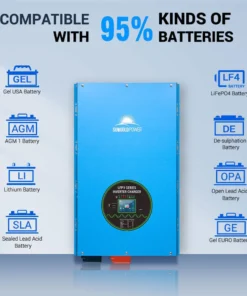
| Battery Types | 8 (LiFePO4, gel, AGM, lead-acid, user-defined) |
| Transfer Mode | AC/Battery Priority (selectable) |
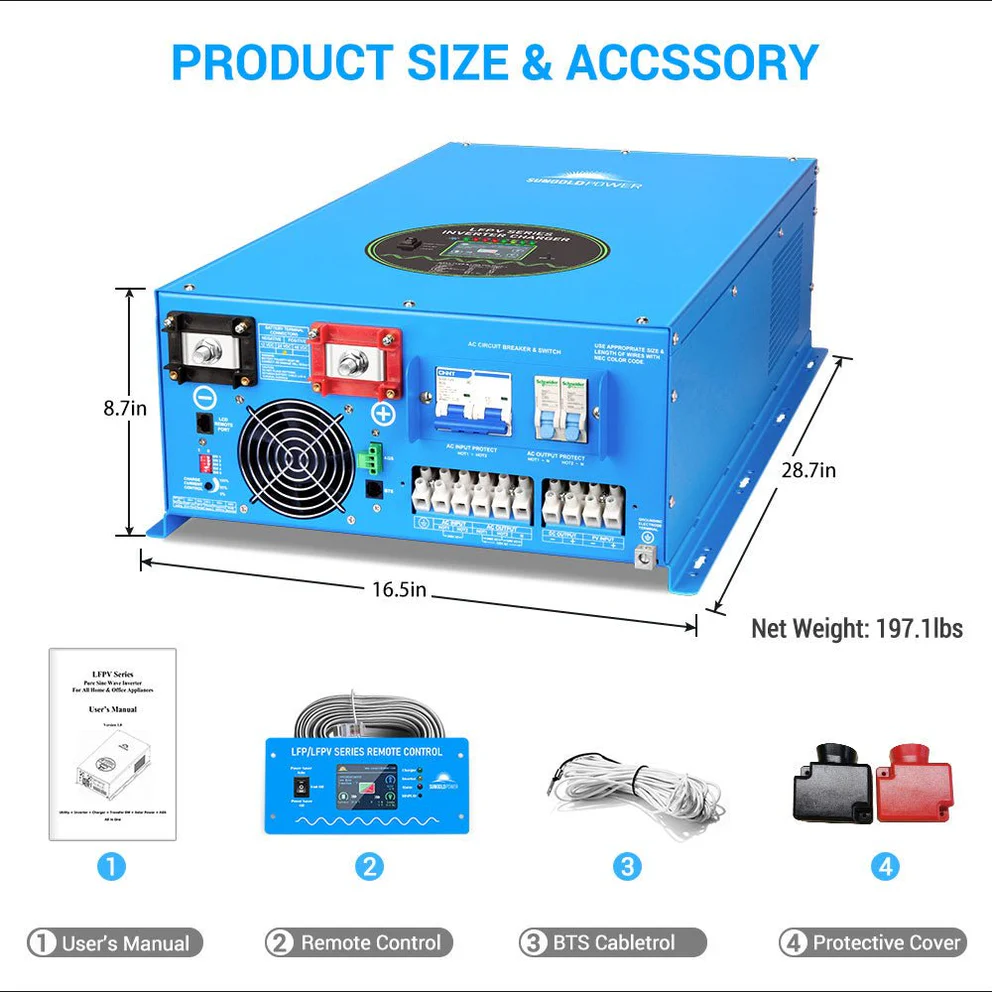
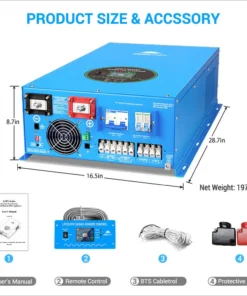
| Unit Weight | 176.6 lb |
| Unit Dimensions | 28.7 × 16.5 × 8 inch |
| Shipping Weight | 213 lb |
| Shipping Dimensions | 34.25 × 21.3 × 16.2 inch |
| Includes | Manual, Remote Control, BTS Cable |
DC Input Thresholds:
| Parameter | Value |
|---|---|
| Nominal Input | 48.0V DC |
| Minimum Start | 40.0 / 42.0V DC |
| Low Battery Alarm | 42.0 / 44.0V DC |
| Low Battery Trip | 40.0 / 42.0V DC |
| High Voltage Alarm | 64.0V DC |
| Low Voltage Recover | 62.0V DC |
15kW Continuous — When 12kW Is Not Enough
The 12kW off grid inverter covers most large residential properties at their typical load profile. The 15kW specification exists for properties where 12kW of continuous output is genuinely insufficient — where peak simultaneous load regularly approaches or exceeds 12,000W during normal operation.
Typical scenarios where 15kW is the correct specification include:
- Large HVAC systems: Properties with 5-ton or larger central air conditioning plus auxiliary cooling zones running simultaneously.
- Agricultural facilities: Cold storage refrigeration, irrigation pumps and processing equipment operating concurrently.
- Home with electric vehicle charging: A Level 2 EV charger alone draws 7,200W, leaving only 4,800W for all other loads on a 12kW inverter.
- Combined residential and commercial loads: A home-based business with commercial kitchen equipment, workshop machinery or server infrastructure running alongside residential loads.
The 3,000W additional continuous headroom of the 15kW over the 12kW specification is not marginal — it directly determines whether the inverter runs at 80% rated capacity (healthy, cool, long service life) or at 95–100% rated capacity (hot, stressed, reduced service life) during peak demand periods.
45kW Surge Capacity
The 45,000W surge rating — 300% of the 15,000W continuous rating — provides motor-starting current for the largest single-phase motors encountered in residential and light commercial applications.
Well pumps in deep wells with long pipe runs may require 3–5× their running current for startup. At a 2kW running draw, startup surge can reach 8–10kW momentarily. This solar and power inverter at 45kW surge handles that load alongside the full residential simultaneous running load without tripping.
Industrial compressors and HVAC equipment with large compressor motors exhibit similar startup surge characteristics. The 20-second surge duration — rather than the 5–10 seconds of lower-grade inverters — provides additional margin for hard-start motors and compressors in cold conditions where startup time is extended.
100-Amp Battery Charger with PFC
The 100-amp integrated charger delivers 4,800W of charging power into the 48V battery bank — appropriate for rapid recovery of large residential battery banks during generator runs or shore power connections.
Power Factor Correction (PFC) on the charger circuit reduces reactive power demand from the generator or shore supply. This matters in practice because a non-PFC charger drawing 100A from a 240V generator input has a significantly higher apparent power demand than its real power — potentially overloading generators that would otherwise be adequately sized. PFC corrects this, enabling the use of a smaller, more economical generator for battery charging.
The selectable 0–100% charge rate allows matching charger output to available generator headroom — running at 50A charge rate when the generator is also powering loads, increasing to 100A when generator power is available exclusively for charging.
Auto Generator Start with 15-Second Safety Delay
Auto Generator Start activates a connected generator when the battery bank drops below a configurable low-voltage threshold and shuts it down when batteries reach the target charge. The 15-second delay before load transfer when AC input recovers is an engineered safety feature — not an arbitrary delay.
Generators take several seconds after starting before their alternator output stabilises to the correct frequency and voltage. Transferring loads to an unstabilised generator output can cause voltage spikes, frequency errors and equipment damage. The 15-second delay ensures the generator is producing clean, stable AC before any loads are transferred from battery to generator-powered inverter output — a protection detail that distinguishes professional-grade off grid inverter hardware from lower-grade alternatives.
Solar Panel With Inverter Integration
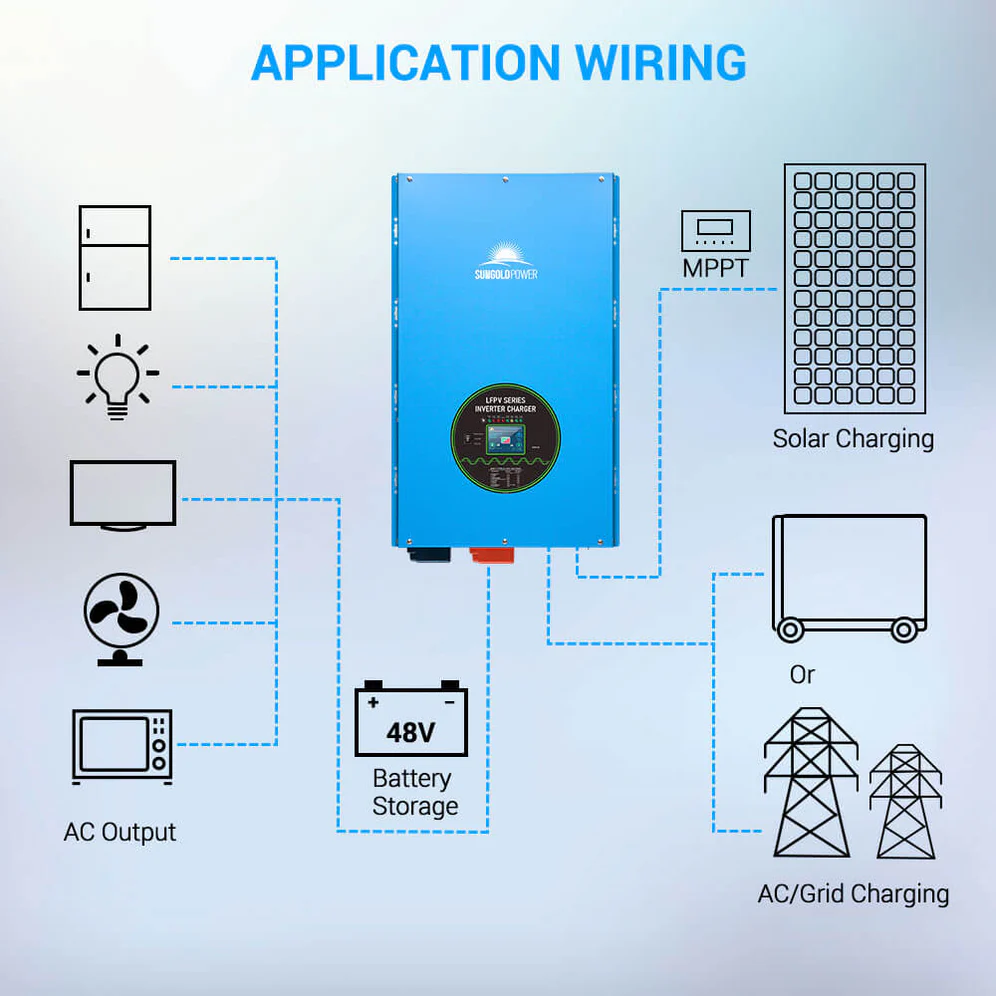
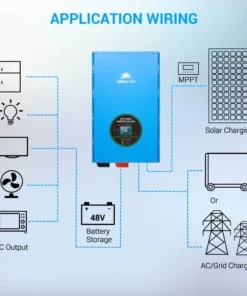
This unit is the inverter-charger component of a solar panel with inverter off-grid system. Solar panels connect to a separate MPPT solar charge controller that feeds the 48V battery bank. The inverter draws from that battery bank for AC output. The built-in 100-amp AC charger provides generator and shore power battery charging independently of the solar charge pathway.
The result is a fully managed energy flow: solar charges the battery during the day, the inverter powers loads continuously, and the generator provides backup charging during extended low-irradiance periods — all managed automatically with zero manual intervention required.
Applications
- Large residential estates requiring 15kW primary off-grid power
- Farms and agricultural facilities with combined residential and equipment loads
- Commercial premises requiring 240V backup power at light commercial scale
- Off-grid hospitality — lodges, eco-resorts and remote accommodation facilities
- Properties with EV charging alongside standard residential loads
Explore additional high-output inverter options in our Off-Grid Solar Inverters, Solar Kits and Off-Grid Power Systems categories.
FAQ
What distinguishes this off grid inverter from the 12kW version at a practical level? The primary distinction is 3,000W of additional continuous output headroom — the difference between a 12,000W continuous rating and 15,000W. This matters for properties where peak simultaneous load regularly exceeds 10–11kW, where EV charging is part of the load profile or where agricultural and commercial equipment operates alongside residential loads. The 15kW specification also provides 9,000W of additional surge capacity (45kW vs 36kW) for starting larger motor loads.
What is the solar and power inverter architecture of this unit? This is a low-frequency transformer-based solar and power inverter architecture — the most robust inverter design for sustained high-current operation and motor surge handling. The physical low-frequency transformer provides the instantaneous surge current response that motor-start loads demand, without the thermal limitations that high-frequency switching designs encounter at sustained high output.
Does this unit require a separate solar charge controller? Yes — solar panels connect to a separate MPPT controller that feeds the 48V battery bank, not directly to this unit. The built-in 100-amp charger handles AC input from generator or shore power. For a complete off-grid solar system, pair this inverter charger with a correctly sized MPPT controller and a 48V battery bank of appropriate capacity.
What is the significance of the solar panel with inverter specification at 15kW? At 15kW of continuous output, this is a solar panel with inverter system core that can fully replace utility grid power for large properties. The inverter processes all household AC demand while the solar array (via MPPT controller) handles daily battery recharging. The 45kW surge capacity ensures that no motor load in a large residential or light commercial property causes inverter tripping during startup.
Can this off grid inverter operate in parallel with identical units? Parallel operation is supported — consult the technical manual for parallel connection protocol, maximum unit count and phase configuration options (single-phase, split-phase or three-phase). Parallel installations enable scaling from 15kW to significantly higher combined output as load requirements grow.
| Battery Option | 4 X SG48100P [20.48kwh], Only Inverter [Brand New], Only Inverter [Refurbished] |
|---|
Be the first to review “15000W 48V Split Phase Pure Sine Wave Inverter Charger”
Related products
best solar inverter
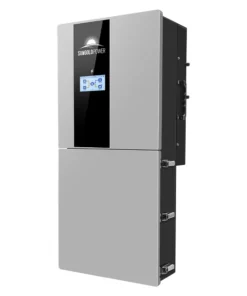
11.4kW 48V Split Phase Hybrid Solar Inverter SGN-11K15PRO — Whole Home Backup 200A
best solar inverter
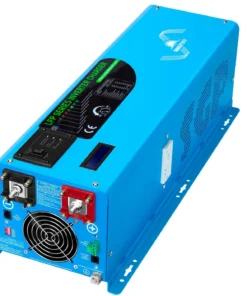
4000W DC 12V Pure Sine Wave Power Inverter With Charger 120VAC
best solar inverter
best solar inverter
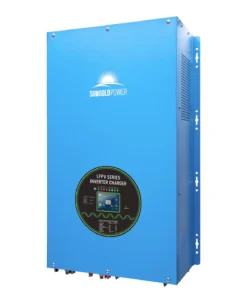
12kW / 15kW / 18kW 48V Split Phase Pure Sine Wave Inverter Charger
best solar inverter
4000W DC 24V Split Phase Pure Sine Wave Inverter With Charger 120/240VAC
best solar inverter
12kW / 15kW / 18kW 48V Split Phase Pure Sine Wave Inverter Charger
best solar inverter
best solar inverter
Reviews
There are no reviews yet.