

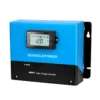
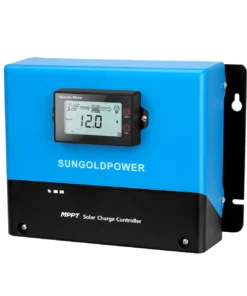
Solar Charge Controller — 60A MPPT, 48V Auto-Detect, Bluetooth 4.0, SGC482560A
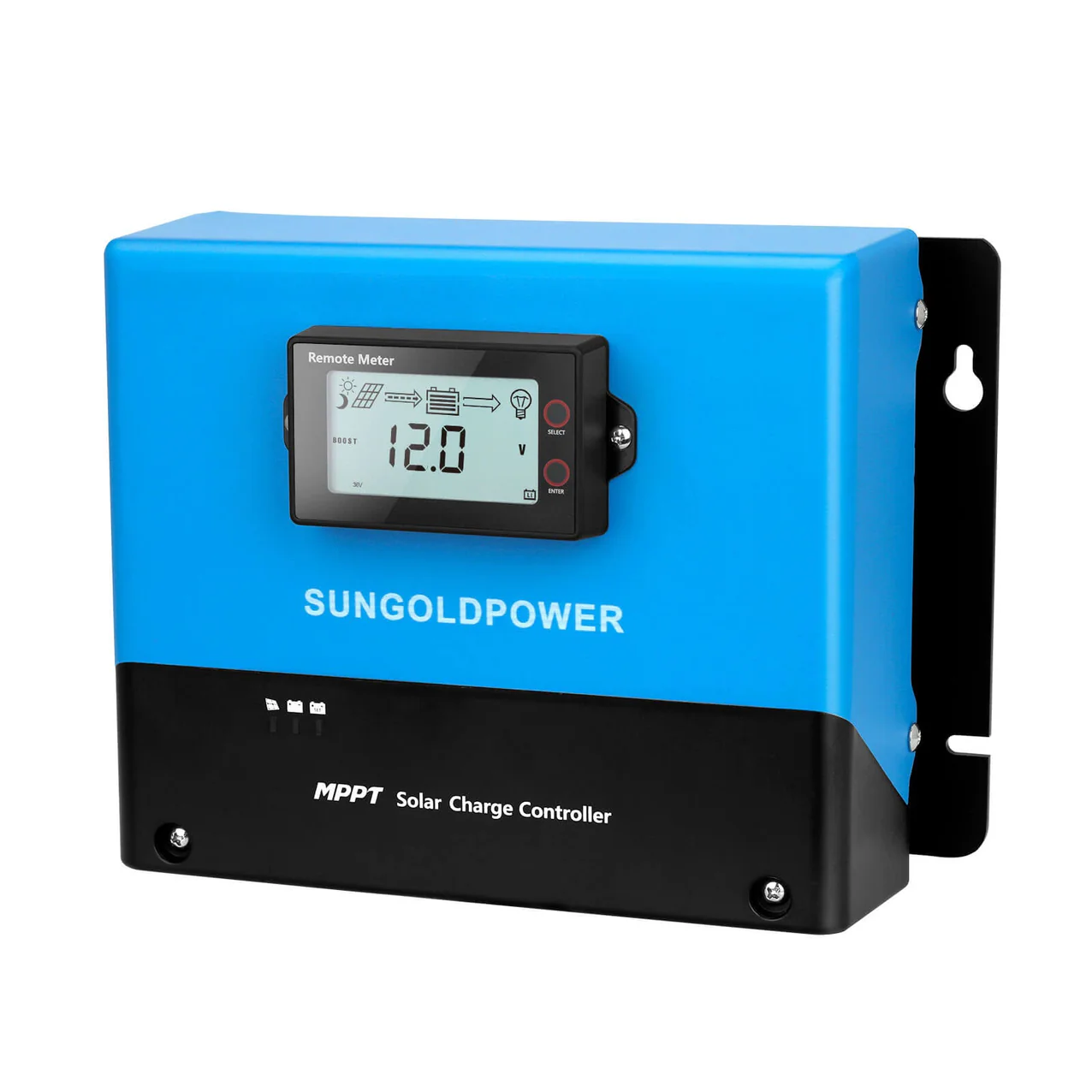
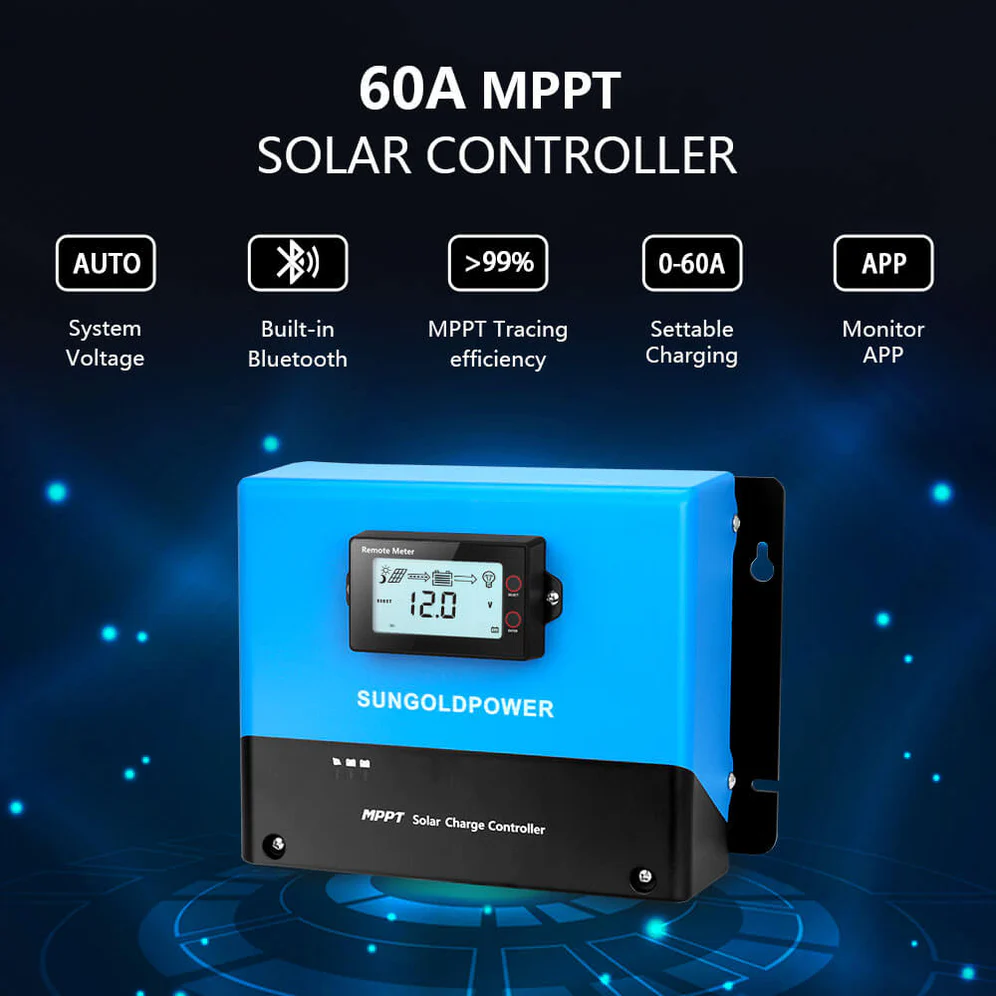
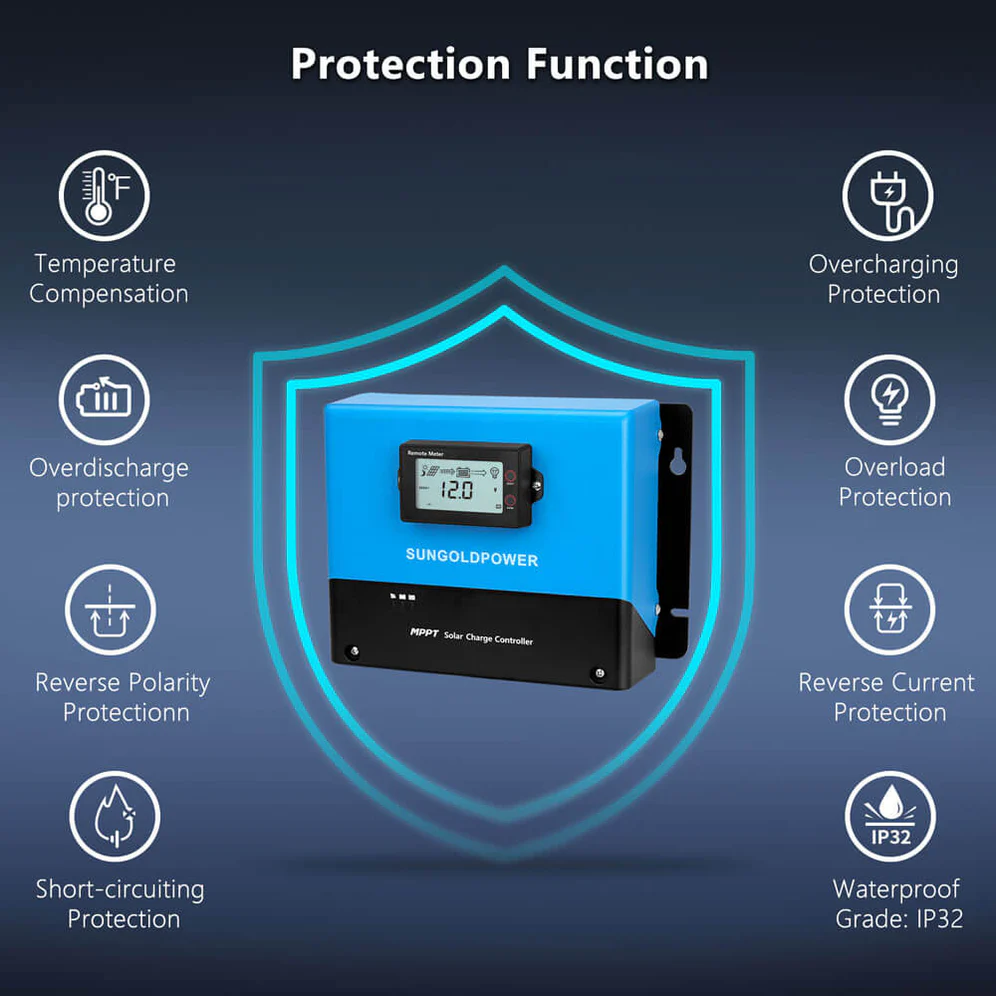
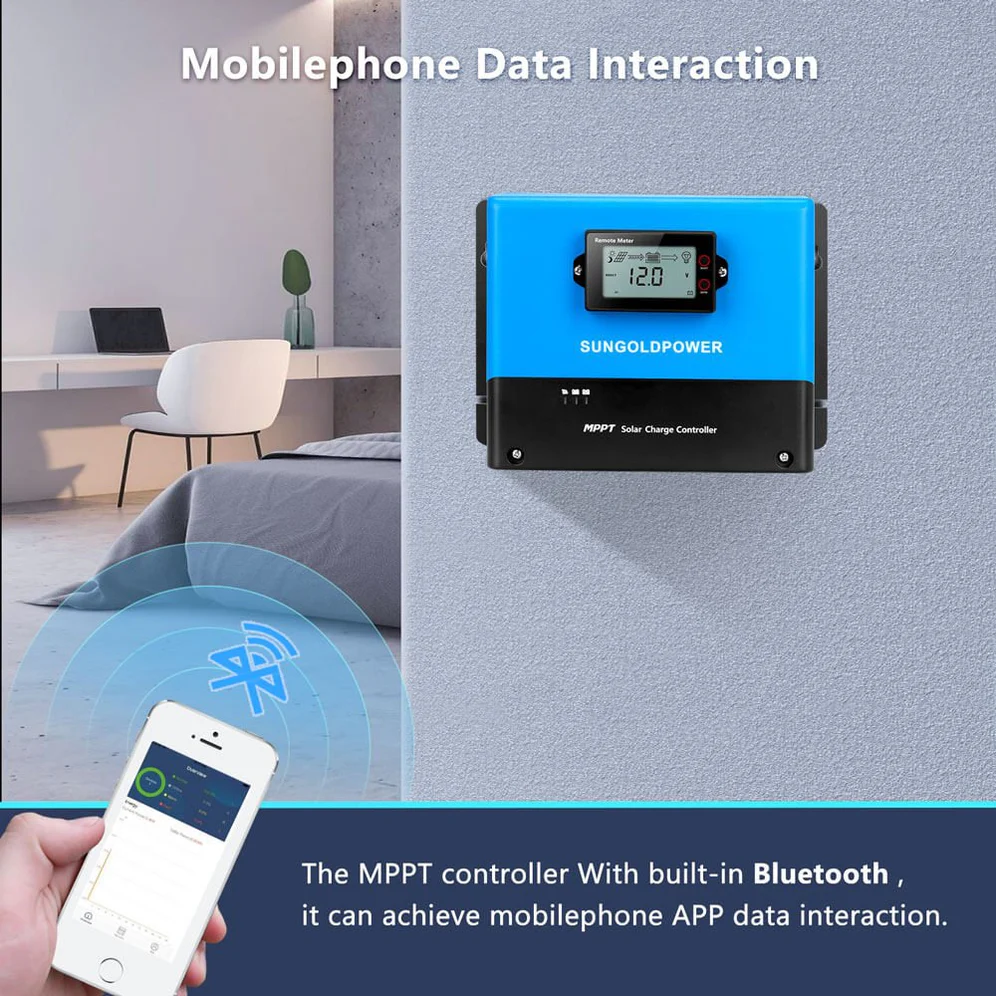
The SGC482560A is a 60A solar charge controller built on MPPT technology with 99.9% tracking efficiency — the right-sized controller for mid-scale residential, cabin, and RV solar installations where a 100A unit would deliver more capacity than the array and battery bank can use. Automatic voltage detection covers 12V, 24V, 36V, and 48V systems, a 250V maximum open-circuit PV input handles modern high-voltage panels, and built-in Bluetooth 4.0 BLE connects to a smartphone app for real-time monitoring without additional hardware. Parallel operation is supported, and the 7.9 lb unit is compact enough to install in most RV battery compartments and cabin utility rooms without dedicated equipment space.
Table of Contents
- Specifications
- What a Solar Charge Controller Does — and Why MPPT Makes the Difference
- 60A Sizing — When This Controller Is the Right Choice and When It Is Not
- Battery Type Flexibility From AGM to Custom Lithium Profiles
- Parallel Operation and Expanding Beyond 60A
- Frequently Asked Questions
Specifications
| Specification | Value |
|---|---|
| Model | SGC482560A |
| System Voltage | 12V / 24V / 36V / 48V — auto-detect |
| Max PV Open-Circuit Voltage | 250V |
| Max PV Input — 12V | 800W |
| Max PV Input — 24V | 1,600W |
| Max PV Input — 48V | 3,200W |
| Rated Charge Current | 60A |
| Battery Voltage Range | 9V–64V |
| MPPT Tracking Efficiency | >99% |
| Self-Consumption | 0.54W |
| Temperature Compensation | -3mV/°C/2V (default) |
| Communication | TTL / Isolated RS485 |
| Bluetooth | Built-in 4.0 BLE |
| Display | LCD |
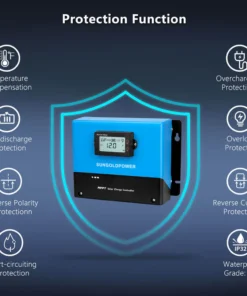
| Protection Grade | IP32 |
| Operating Temperature | -35°C to +65°C |
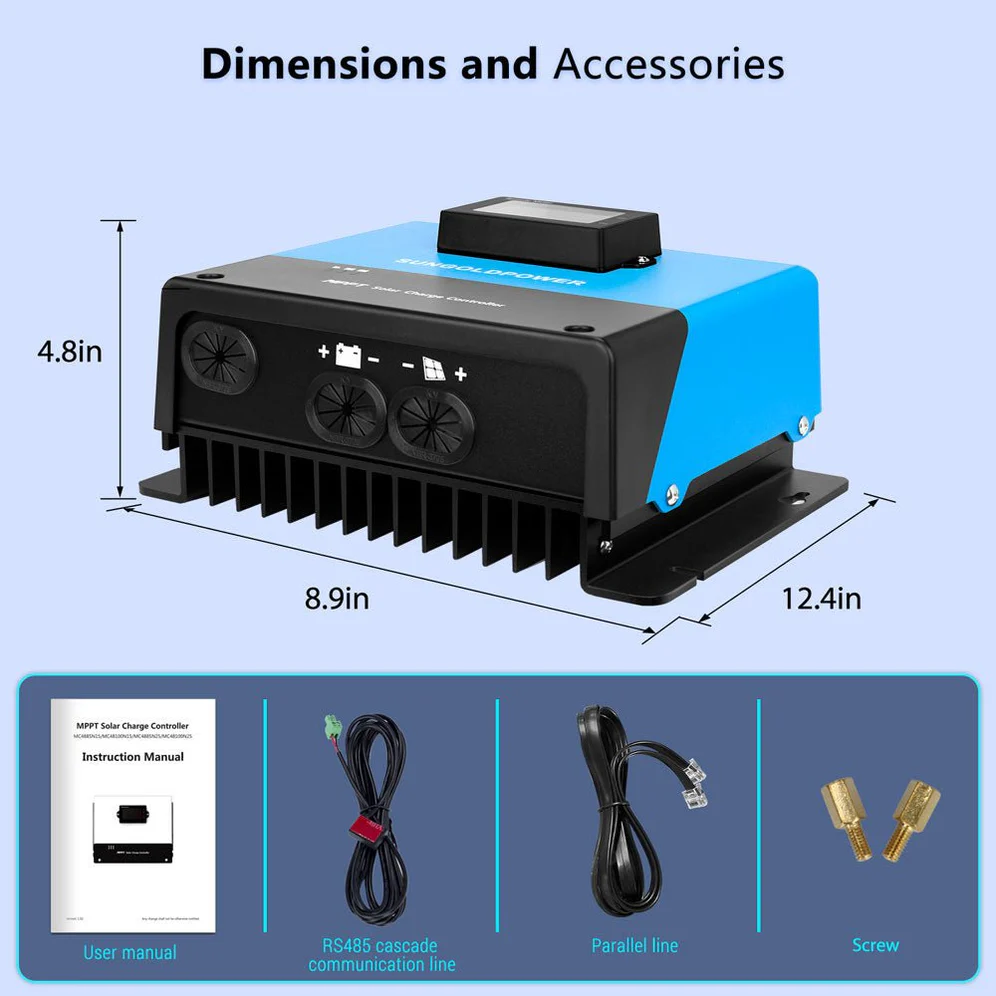
| Weight | 7.9 lb |
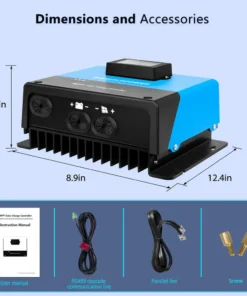
| Dimensions (L×W×H) | 10.5 × 7.6 × 4.7 inch |
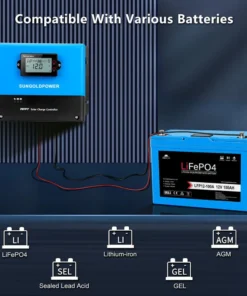
| Supported Battery Types | Lithium, Sealed, AGM, User-Defined |
| Parallel Operation | Supported |
What a Solar Charge Controller Does — and Why MPPT Makes the Difference
A solar charge controller sits between the solar panel array and the battery bank, managing the flow of energy from panels to batteries in a way that charges efficiently, protects the batteries from overcharge, and extends battery life through proper charging profile management. Without a charge controller, a panel connected directly to a battery applies unregulated voltage that overcharges and damages the battery within hours of installation.
The distinction between PWM and MPPT controller technology determines how much of the available panel power actually reaches the battery. A PWM controller connects the panel directly to the battery when charging, forcing the panel to operate at battery voltage — typically 14.4V for a charging 12V battery — regardless of where the panel’s maximum power point sits, which is usually much higher. A solar regulator using MPPT technology runs its own DC-DC conversion stage, allowing the panel to operate at its optimal voltage while the controller steps that voltage down to the battery’s charging voltage, converting the difference into additional charging current. In a modern system where high-voltage panels feed a 12V or 24V battery bank, MPPT typically delivers 20–30% more energy than PWM under real-world conditions.
60A Sizing — When This Controller Is the Right Choice and When It Is Not
System sizing is the decision that determines whether 60A is correct for a given installation. The maximum PV input capacity at each voltage class — 800W at 12V, 1,600W at 24V, and 3,200W at 48V — defines the largest array this controller can fully utilise. A 3,200W array at 48V charging through 60A delivers approximately 2,880Wh per hour at peak production — well-matched to a 48V LiFePO4 battery bank of 100Ah–200Ah capacity.
The 60A controller is correctly sized when:
- Array size matches the input capacity. A 6–8 panel array at 415W–450W at 48V produces 2,490W–3,600W — the 3,200W upper limit means the largest arrays at this configuration may occasionally clip on the highest-irradiance days, which is acceptable design practice.
- Battery bank is 100Ah–200Ah at 48V. Charging a 100Ah LiFePO4 bank at 60A represents a 0.6C charge rate — within the recommended range for most lithium batteries.
- Single-unit installation is preferred. The 7.9 lb compact form factor suits installations where a 100A controller’s larger housing is impractical.
The 100A SGC4825100A is the appropriate choice when the array exceeds 3,200W at 48V or when the battery bank exceeds 200Ah and benefits from higher charge current for faster daily replenishment.
Battery Type Flexibility From AGM to Custom Lithium Profiles
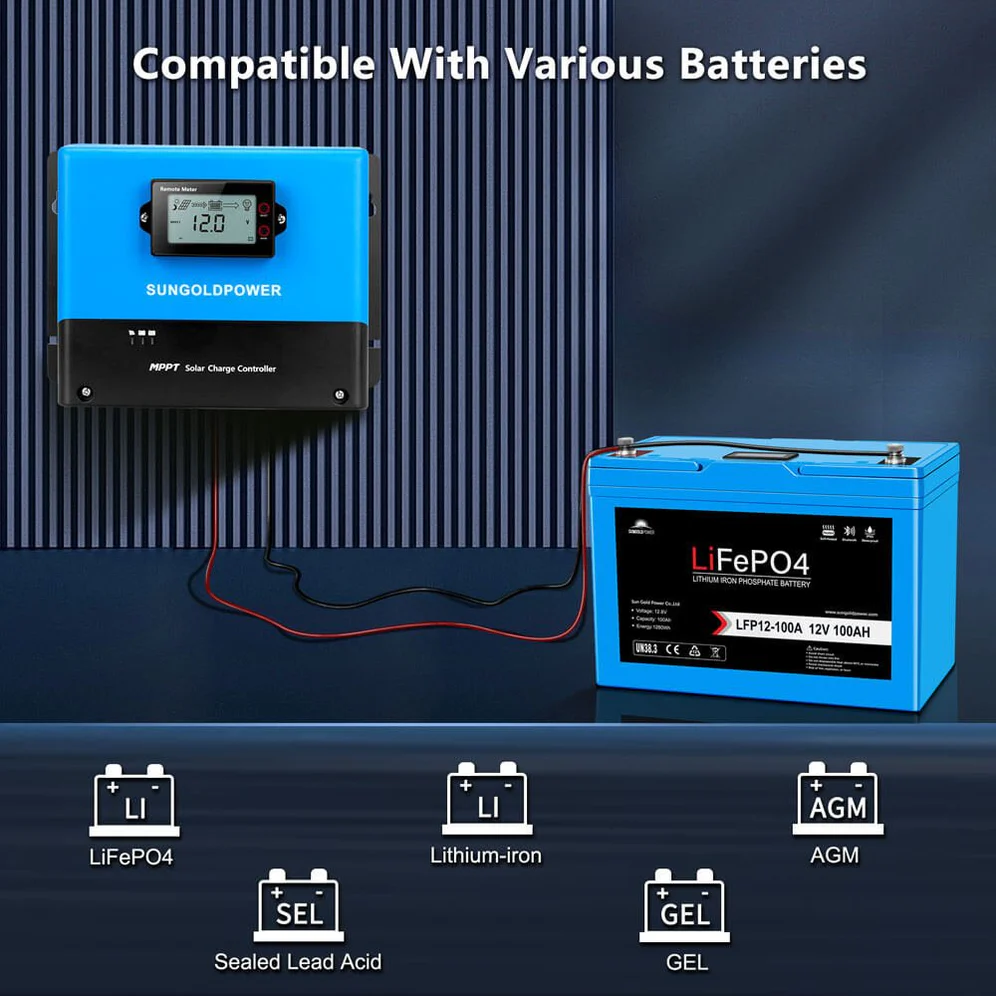
The SGC482560A supports four battery profile categories, covering the full range of battery chemistries in current residential and RV solar installations:
- Lithium — a dedicated LiFePO4 and lithium-ion profile that applies the correct absorption and float voltages for lithium chemistry, without the equalisation cycle that damages lithium cells.
- Sealed lead-acid — for sealed maintenance-free lead-acid batteries, applying the absorption and float voltages appropriate for sealed chemistry.
- AGM — for absorbed glass mat batteries, which require slightly different charge voltages than standard sealed lead-acid to achieve full charge without electrolyte loss.
- User-Defined — fully configurable absorption voltage, float voltage, and charge current limits for custom battery chemistries, unusual configurations, or batteries whose manufacturer specifies parameters outside the standard profiles.
The user-defined profile is the specification that makes this controller genuinely future-proof — as battery chemistry continues to evolve and as manufacturers specify increasingly precise charging parameters, a programmable profile accommodates new chemistries without requiring controller replacement.
Parallel Operation and Expanding Beyond 60A
When a solar installation grows beyond the 60A single-unit capacity — whether through a larger panel array, a larger battery bank, or both — parallel operation allows multiple SGC482560A units to share the load cooperatively. Each additional unit contributes its full 60A of rated charge current to the shared battery bank, and both units draw from the same PV array through separate string connections or a shared combiner.
Two SGC482560A units in parallel deliver 120A of charge current and accept up to 6,400W of PV input at 48V — enough for a 14–16 panel array at 415W–450W. Three units deliver 180A and 9,600W. The parallel function is the mechanism that allows an initial controller investment to grow with the system without replacement.
Browse our full Solar Charge Controllers, Solar Panel Kits, and Off-Grid Solar Systems for compatible panels, batteries, and complete system configurations.
Frequently Asked Questions
Q: Is this solar charge controller suitable for a lithium battery system? Yes. The SGC482560A includes a dedicated lithium charging profile that applies correct LiFePO4 absorption and float voltages without the equalisation cycle that would damage lithium cells. For a specific LiFePO4 battery, confirm the manufacturer’s recommended charge voltages and set the user-defined profile if the standard lithium profile’s voltages differ.
Q: What is the difference between a solar regulator and an MPPT solar charge controller? “Solar regulator” is a general term for any device that regulates the power flow from solar panels to batteries — it includes both PWM and MPPT technologies. A solar charge controller specifically refers to the same device category. MPPT is the more efficient and capable implementation, typically delivering 20–30% more energy to the battery than PWM alternatives in systems where panel voltage significantly exceeds battery charging voltage.
Q: What solar panel charge controllers work as a solar battery charge controller? All MPPT solar charge controllers function as solar battery charge controllers — the device manages the charge process from the panel to the battery. The SGC482560A specifically is a solar battery charge controller for 12V, 24V, 36V, and 48V battery banks, with Bluetooth monitoring of battery state of charge in real time.
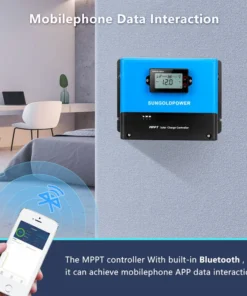
Q: How does Bluetooth monitoring work on this solar charge controller? The built-in Bluetooth 4.0 BLE module pairs with a smartphone app — no WiFi required. Once paired, the app displays PV input power, battery voltage, charge current, state of charge, daily and cumulative energy production, and any active protection events. The connection range is typically 30 feet — sufficient for monitoring a controller installed in most residential equipment rooms or RV battery bays from the living area.
Q: Can solar charge controllers be used with a generator? Solar charge controllers regulate power from solar panels specifically — they are not designed to handle AC generator output. Generator charging requires a separate AC charger or an inverter-charger with a built-in AC charging function. Some off-grid solar system designs include both an MPPT charge controller for solar input and a separate AC charger for generator backup — both feed the same battery bank through the busbar.
Be the first to review “Solar Charge Controller 60A Authentic MPPT [Bluetooth]”
Related products

solar system kits
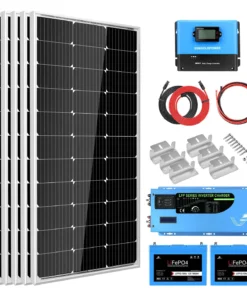
Off-Grid Solar Kit 3000W 12V 120V LiFePO4 600W Solar Panels SGK-PRO3
Reviews
There are no reviews yet.